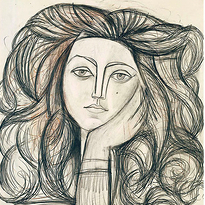
Art x Fashion Edit #50
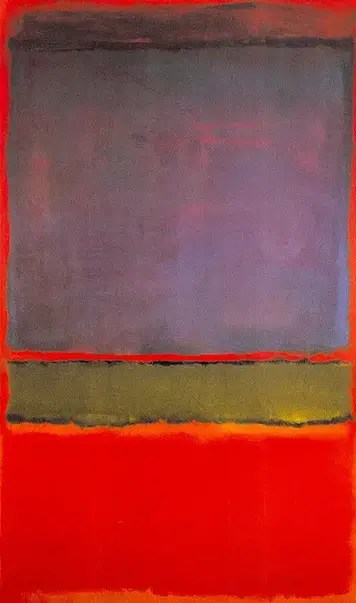
Mark Rothko’s work resists the vocabulary often used to describe it. “Minimal” feels insufficient, even misleading, because what appears reduced is in fact intensely concentrated. By the early 1950s, Rothko had stripped away figuration but in fact not to reach emptiness, to access something more total: an emotional field where color itself becomes the subject and the vessel. In No. 6 (Violet, Green, and Red), the stacked planes do not sit on the canvas; they hover, bleed, and pulse against one another, dissolving the boundary between painting and atmosphere. The eye does not read them as shapes but as states.
This is where Rothko’s spiritual dimension emerges, not in symbolism, but in experience. He conceived of painting as an encounter, almost liturgical in its quiet intensity. The absence of line or narrative forces a kind of stillness, a prolonged looking that becomes introspective. Color is not decorative but psychological. The violet presses inward, the green suspends, the red expands outward. Together, they create a tension that is less about contrast and more about coexistence, an equilibrium that never fully resolves.
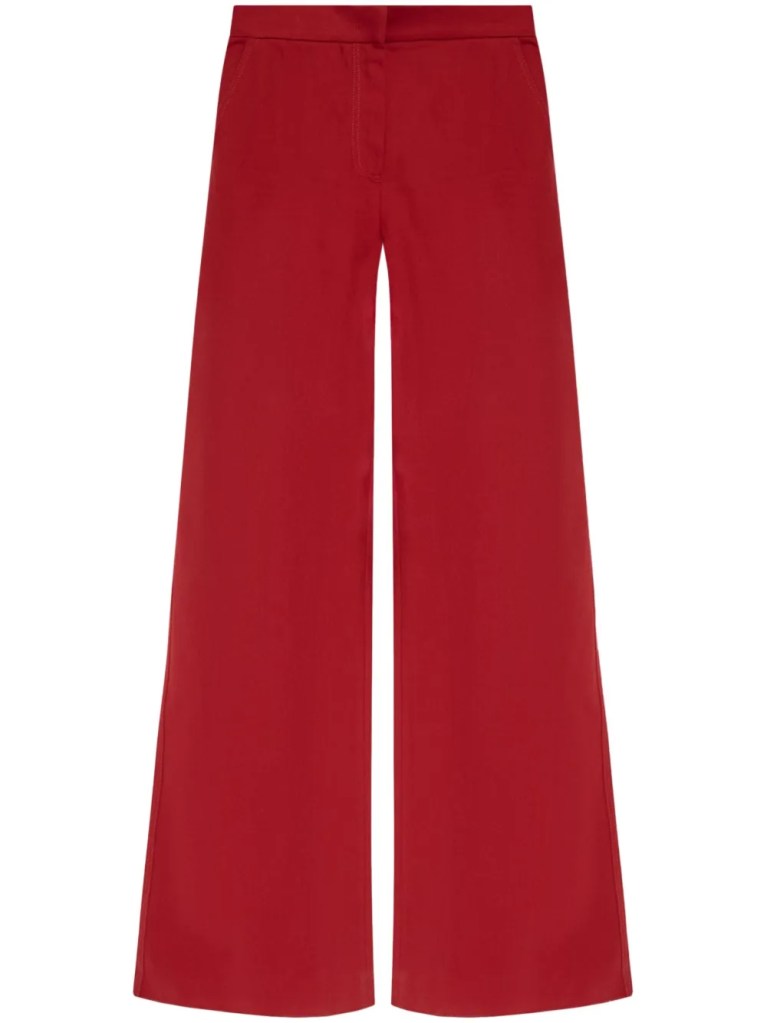
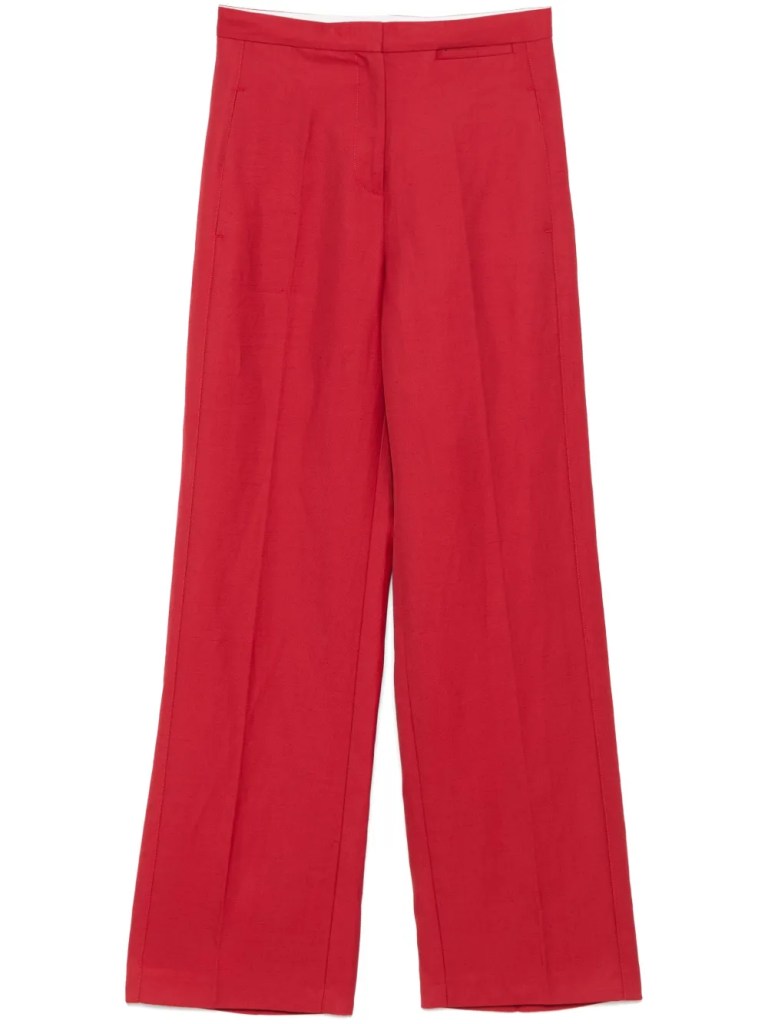
Translating this sensibility into fashion requires a similar discipline. The instinct to embellish or literalize must be resisted. Instead, the garments operate as fields, as blocks of color and form that derive their meaning from proportion and adjacency. The red trousers establish the foundation of the composition, their volume and clarity echoing Rothko’s lower bands. They carry a certain gravity, not through weight but through saturation, asserting presence without excess. The cut remains precise, almost austere, allowing the color to communicate without interference.
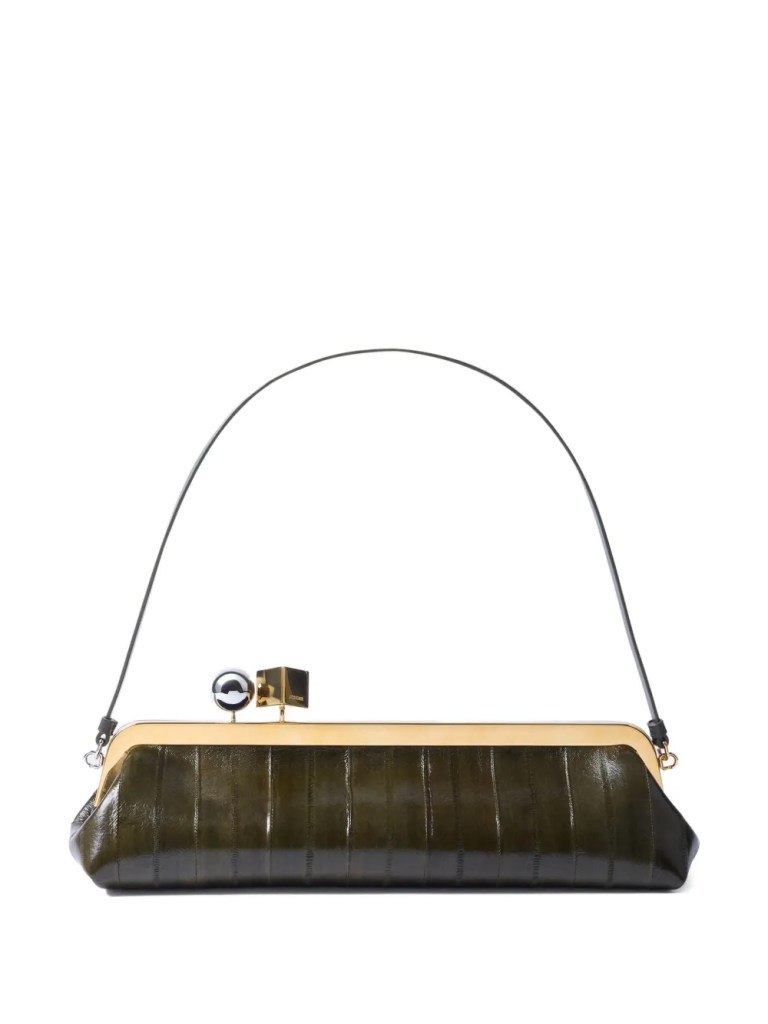
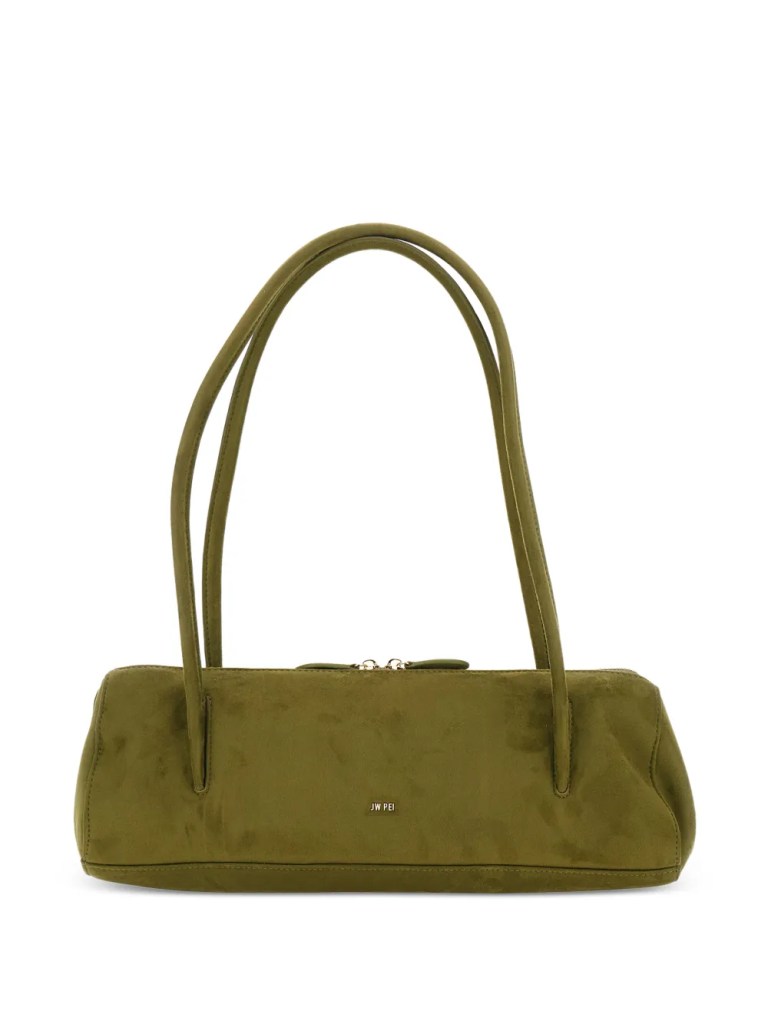
Against this, the olive-toned bag introduces a mediating force. Its structured frame contains the fluidity of the hue, much like Rothko’s green stabilizes the emotional oscillation of the canvas. It is neither foreground nor background, but a hinge holding tension in place. The object’s compactness contrasts with the expansiveness of the trousers, creating a dialogue of scale that mirrors the painting’s internal balance.
The brown leather jacket deepens the palette, functioning as a near-violet register that absorbs light rather than reflecting it. Its minimal construction with clean lines and an absence of extraneous detail, aligns with Rothko’s refusal of distraction. It is a garment that invites closeness, where the subtleties of tone and surface become perceptible only through attention. In this way, it carries the same introspective weight as the darker passages of the painting, suggesting an inward turn rather than outward display.
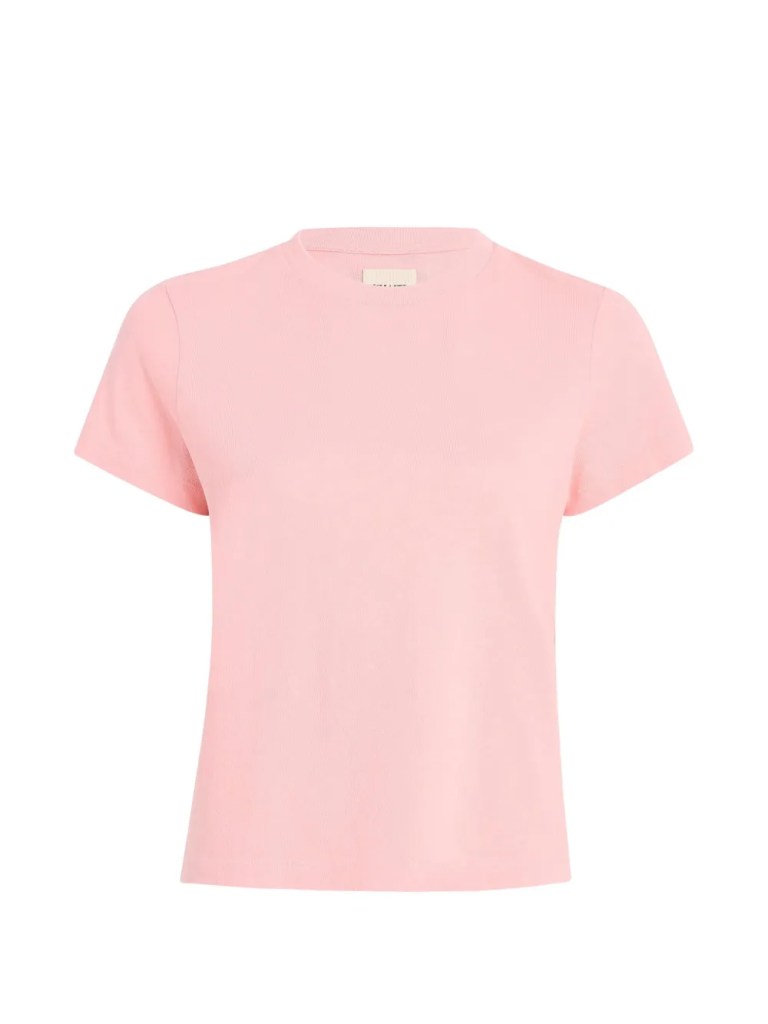
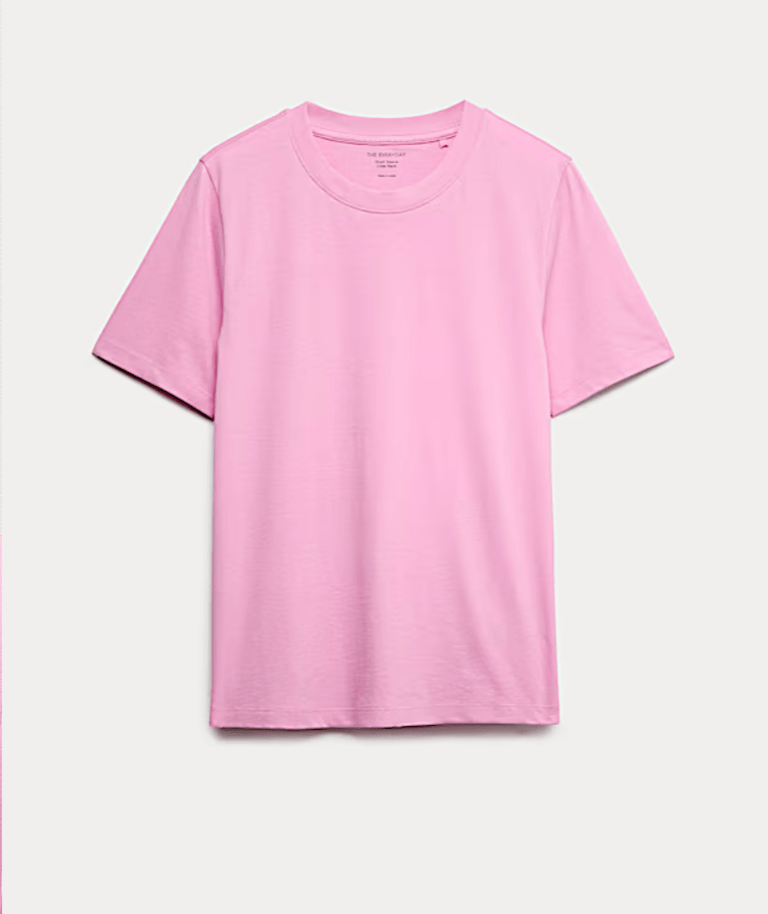
The pale pink T-shirt disrupts this density with a softness that is not entirely comforting. In Rothko’s work, lighter tones often introduce ambiguity rather than relief, and here the effect is similar. The simplicity of the silhouette heightens the fragility of the color, allowing it to hover within the composition rather than anchor it. It becomes a moment of suspension, a breath that neither resolves nor escapes the surrounding intensity.
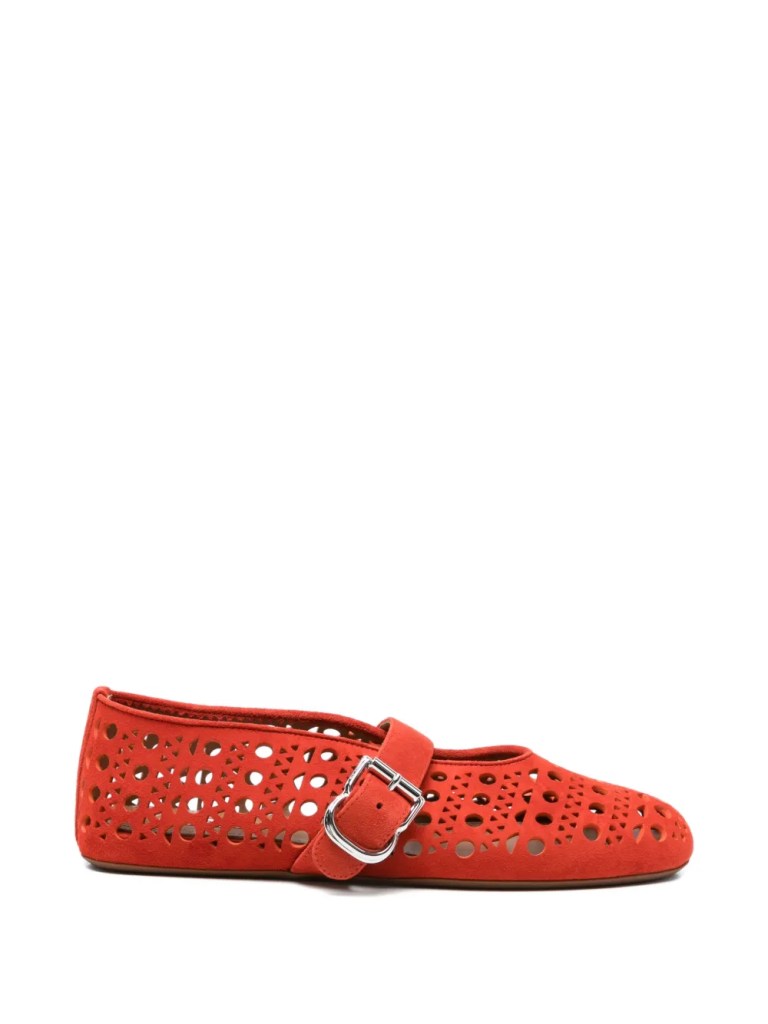
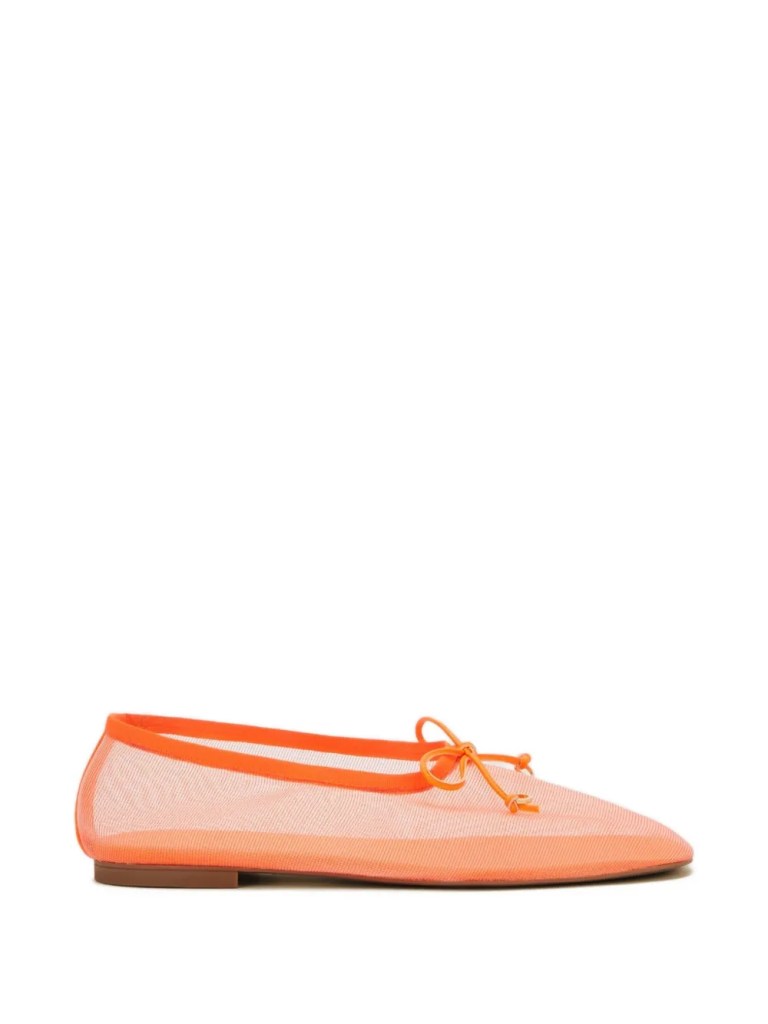
The perforated orange shoe returns to the initial note of saturation but alters its texture through absence. The cut-outs introduce a sense of permeability, a subtle erosion of the solid field akin to the structuring edges of the painting. Where Rothko achieves this through blurred edges, the shoe does so through literal openings, allowing light and air to pass through the color. It complicates the idea of red as purely grounded, suggesting instead a more dynamic, shifting presence.
What binds these elements is not styling in the conventional sense, but a shared commitment to restraint. Each piece is reduced to its essential qualities: color, proportion, surface, yet none feels empty. This is the paradox Rothko articulates so precisely: that simplicity, when held with intention, becomes charged. The emotional resonance lies not in accumulation, but in the relationships between things, in the spaces they create and the tensions they sustain.
The Splurge
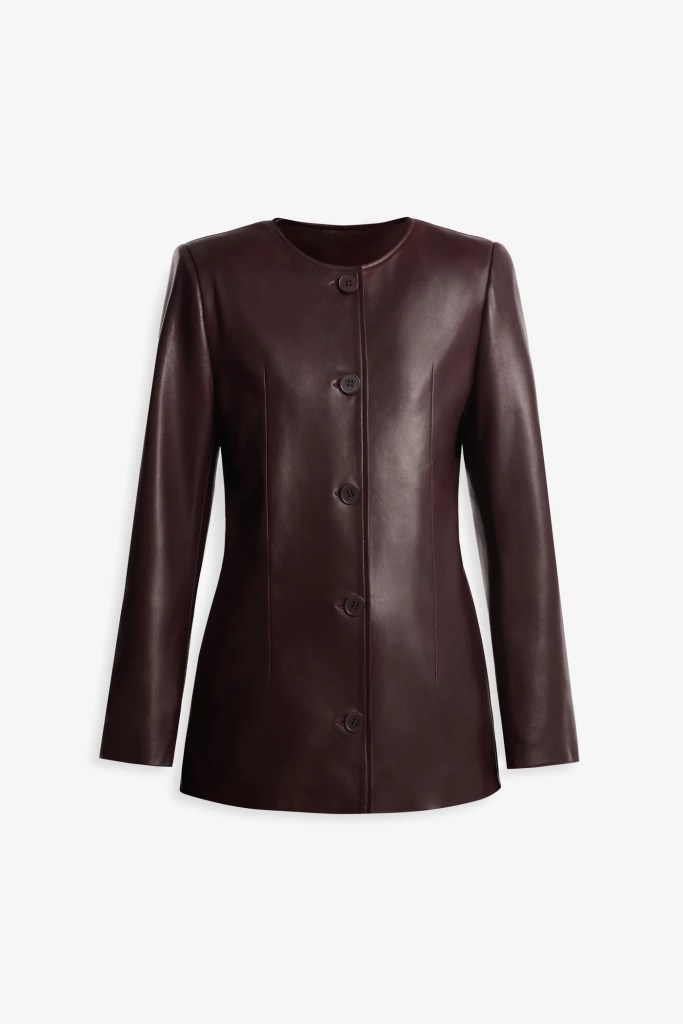
Nour Hammour Leather Jacket ($1,630)
KHAITE T-shirt ($320)
Jacquemus bag ($1,770)
MaxMara Pants ($508)
Alaïa Flats ($1,217)
(More) Affordable Options
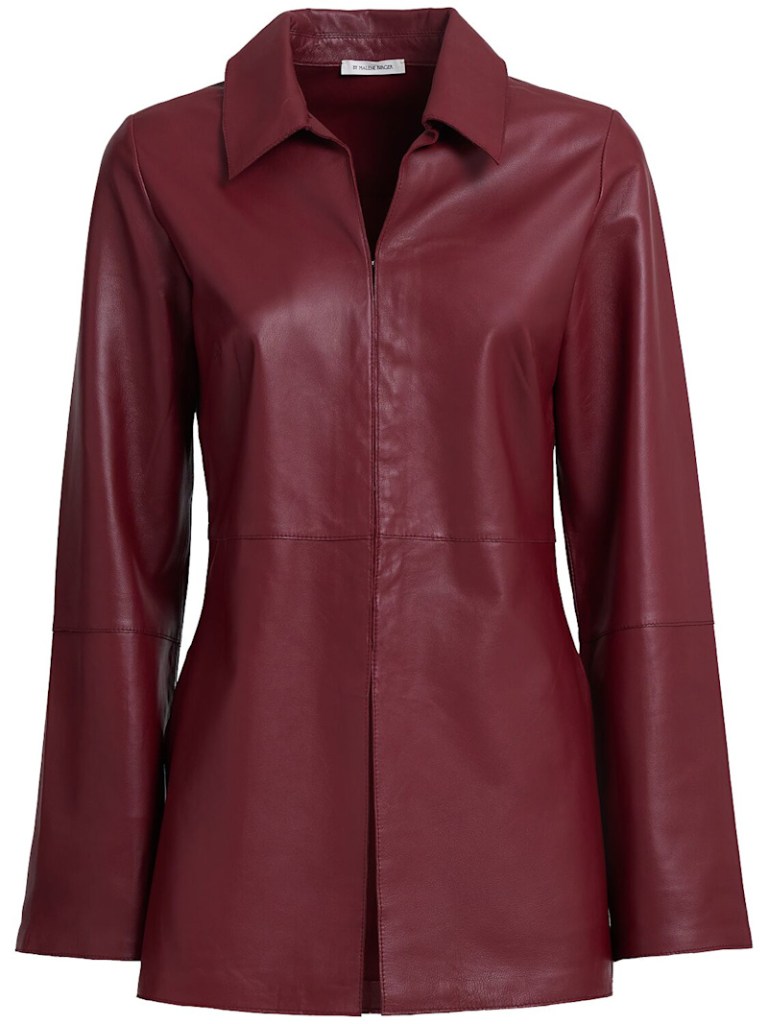
By Malene Birger Leather Jacket ($921)
M&S T-shirt ($17.99)
JW Pei Bag ($225)
Loulou de Saison Pants ($160)
Odissì Flats ($374)
 mabou
mabou 
Leave a comment