I discovered Fashion Neurosis quietly, the way you discover something that feels like it was always meant to find you. I was scrolling Instagram and Le Magazine du Monde had an article on it. It didn’t announce itself as a fashion podcast in the conventional sense. It felt slower, more observant, less interested in trends than in the emotional residue clothes leave behind.
What struck me most was the way Bella Freud asks questions. They’re simple, almost disarming, but they create a space where people speak more honestly than they intend to. Listening, I realized the conversations weren’t really about fashion at all. They were about identity, power, memory, and the ways we protect ourselves while being seen.
So imagining myself on that couch felt strangely natural, and slightly terrifying.
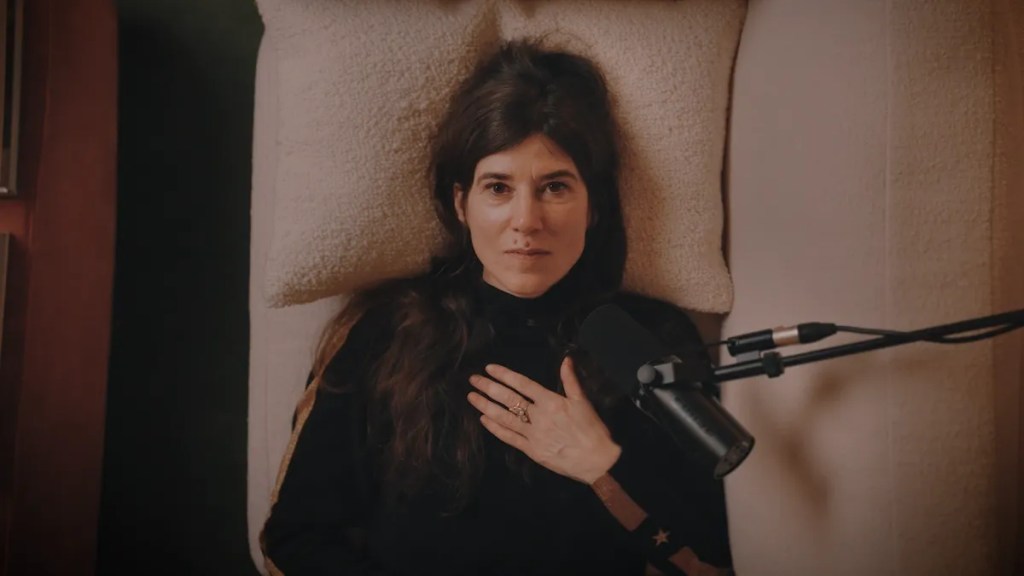
Bella Freud’s couch is often described as intimate, but intimacy isn’t quite the right word. It’s a place where you agree, willingly, to be taken apart with care. You know the questions will be simple. You also know the answers won’t be.
So you dress like someone who understands what’s about to happen.
Bella: What are you wearing today?
I’m wearing clothes that speak before I do.
I know that sitting here means I’ll have to undress myself through language, emotionally, psychologically, and that feels dangerous. So I arrive armored. Not hidden, but reinforced.
A red tailored shirt. It signals decisiveness before I’ve had the chance to hesitate. A balloon-cut pair of deep indigo jeans, exaggerated in shape, grounding me physically. A black oversized blazer, structured, almost architectural. And branded loafers, because I want my power to feel deliberate, not abstract.
I like simplicity, but I need one strong element, something that asserts itself without asking permission. These clothes don’t soften the experience. They make it survivable.
Bella: When did you first become aware of fashion?
In middle school.
That’s when I became conscious not just of how people dressed, but of how I responded to it, and how differently people responded to me depending on what I wore. Fashion revealed itself as a system of behavior, a social code that preceded words.
It gave me a way to perform myself before I fully understood who that self was. Clothing became a method of constructing identity in real time, of testing how I might exist in the world.
My parents still tell the story of “the red dress.” As a child, I went through a phase where I wanted to wear only that dress, over and over again. No alternatives, no negotiation. I think about that often, how instinctive it was. Desire before explanation. Attachment without irony.
Fashion was strategic before it was playful. Play came later, once I felt safer.
Bella: Do you remember the first time clothing made you feel different?
Yes. As a teenager.
It was the moment when men stopped seeing me as a girl and started seeing me as a woman. That shift wasn’t announced, it was felt. Clothing became charged overnight.
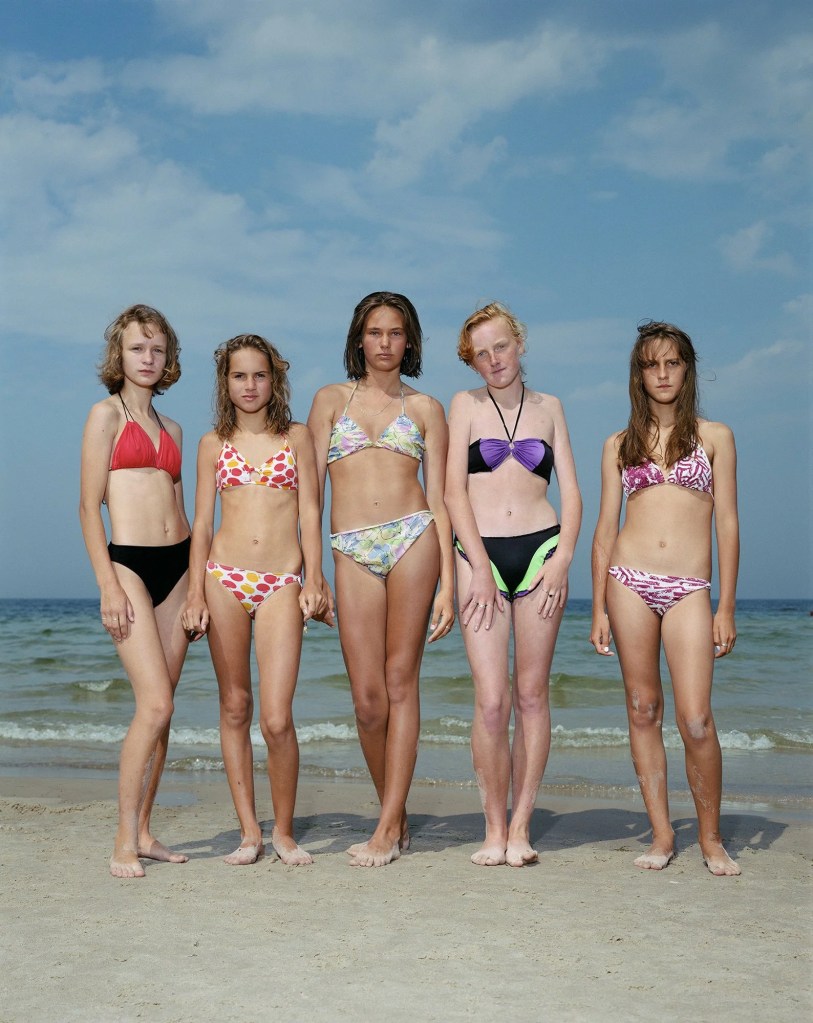
Navigating sexy outfits wasn’t just about attraction; it was about learning how visibility works. I became aware of the way I could hold someone’s gaze, the way attention moved toward me, lingered. There was power in that realization, but also a kind of responsibility I hadn’t asked for.
It taught me that power can arrive through the body before the mind is ready to name it.
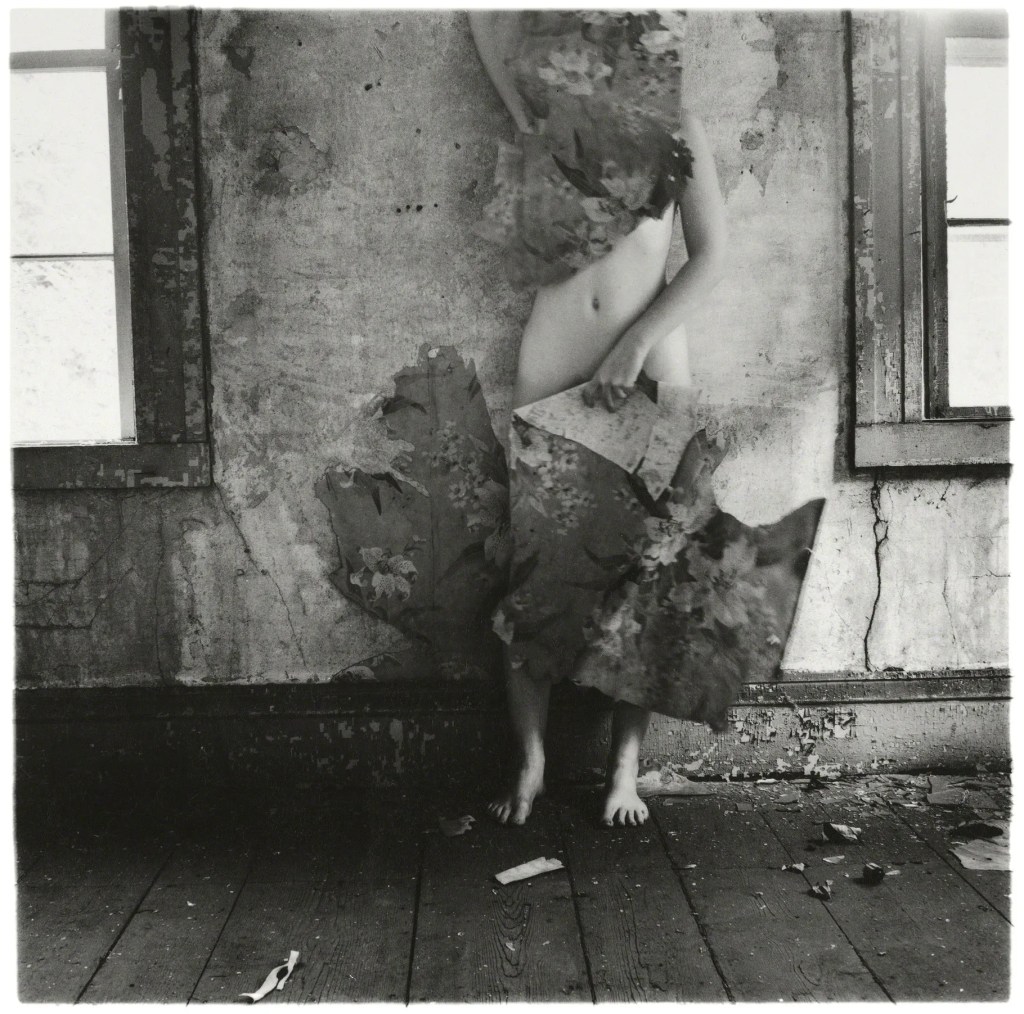
Foam Fotografiemuseum Amsterdam, Courtesy Artsy
Bella: Do you think clothes tell the truth?
No. I don’t think they do.
They tell a version of the story, often the most controlled one. Fashion is less about truth than about positioning. It allows us to say something that may be adjacent to reality, or even compensatory.
A power outfit, for instance, is rarely worn when power is fully internalized. It’s worn when power is needed, when certainty is being assembled from the outside in. Clothes don’t reveal stability, they reveal what’s being negotiated.
And that doesn’t make them dishonest. It makes them human.
Bella: If you fancy someone and they wear something you don’t like, does it kill the attraction?
No. Not at all.
Attraction, for me, is rooted in the person, their presence, their intelligence, their way of moving through the world. Taste is not fixed; it’s responsive.
That said, if we were to be together, fashion would inevitably become a conversation. Not out of control, but out of care. How we present ourselves is not neutral, it’s a form of communication. I’d want that communication to be intentional.
Style, like intimacy, evolves through proximity.
Bella: Is there something you’re trying to resolve through fashion?
On a personal level, it reflects growth. My style keeps evolving because I keep evolving. My identity is not finished, and my wardrobe reflects that state of becoming.
But there’s also a broader dimension. Fashion operates as a reflection of the zeitgeist, of collective uncertainty, desire, contradiction. It’s transient by nature, constantly rewritten. Each season revisits the same questions under different conditions, different silhouettes.
That repetition isn’t failure. It’s acknowledgment that there is no final answer. Fashion is a continuous inquiry, not a solution.
Bella: What do your clothes say about you when you’re not in the room?
That I’m paying attention.
That I question myself. That I curate rather than consume. I want my clothes to suggest a strong personality, but also ease, a sense that nothing is being forced.
When I wear bold or unconventional pieces, it doesn’t feel like performance. It feels aligned. Natural. I want that alignment to be legible, even in my absence.
Bella: What do you think about being naked?
I love this question because my answer has changed completely.
I used to hate being naked, because I hated my body. Nudity felt exposing in a way that was almost violent.
Now, I don’t mind it. I’ve accepted my body, and with that came a quiet comfort. Being naked feels neutral. Sometimes even gentle.
Still, I prefer clothes. Nudity removes the filter, but clothes allow choice. They give you agency over how you’re seen, how much you offer.
Authenticity isn’t about bareness. It’s about intention.
Bella: What would you never wear?
Crocs.
They don’t align with me, my sensibility, my rhythm, my way of seeing. They don’t inspire me, and inspiration is essential. Without it, clothing becomes noise.
Afterthought
The clothes didn’t protect me from the questions. They didn’t soften them either. But they gave me structure while I answered.
Fashion isn’t the opposite of vulnerability. Sometimes, it’s the framework that allows vulnerability to exist without collapse.
 mabou
mabou 
Leave a comment