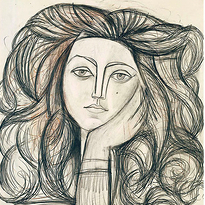

At La Galerie Dior, 30 Avenue Montaigne, a quiet tension unfolds, one of contemplation. The new exhibition, dedicated to Azzedine Alaïa’s private collection of Christian Dior garments, is both elegant and conceptually charged. On view are over a hundred looks from the nearly 600-piece archive Alaïa amassed over decades, with a particular focus on Dior’s founding decade, 1947 to 1957, a period not just foundational for the house, but for the silhouette of postwar fashion itself.
What begins as an homage gradually reveals itself to be something more intimate and intricate. The show resists easy binaries. It does not position Dior and Alaïa as equals, nor as mentor and disciple. Instead, it offers a meditation on proximity, of one designer’s lifelong, near-obsessive fascination with another. Alaïa’s connection to Dior was never about emulation. It was about stewardship, about studying construction not to reproduce it, but to understand its architecture.
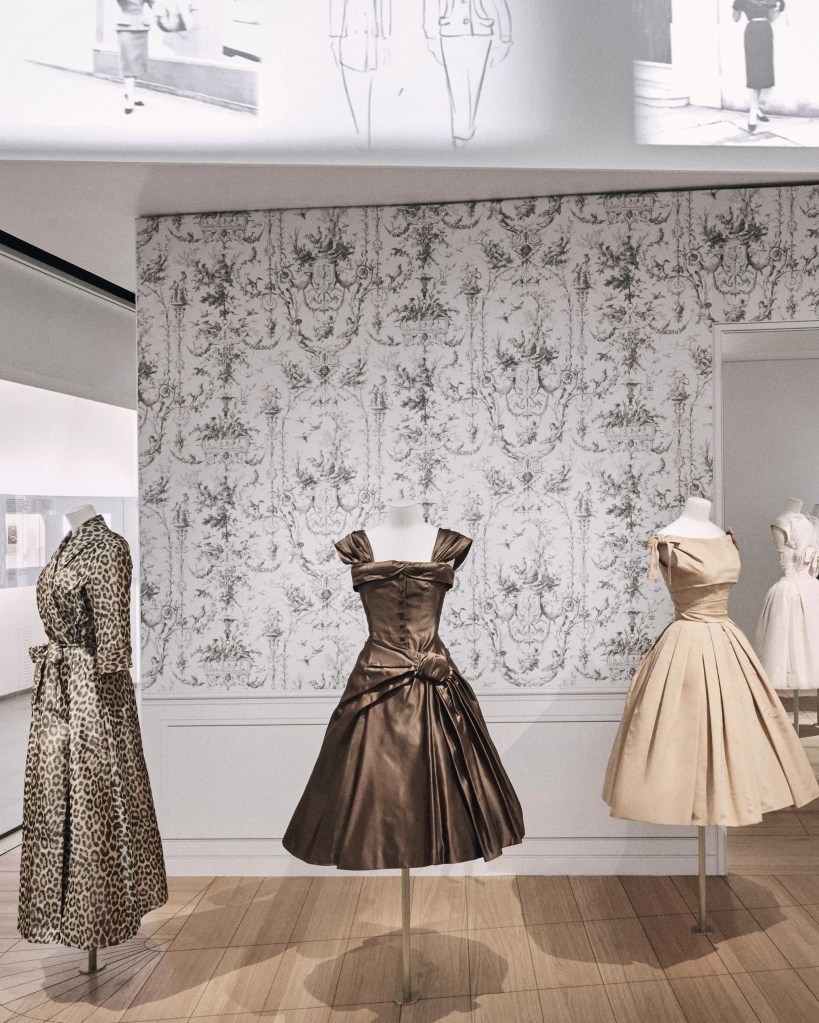
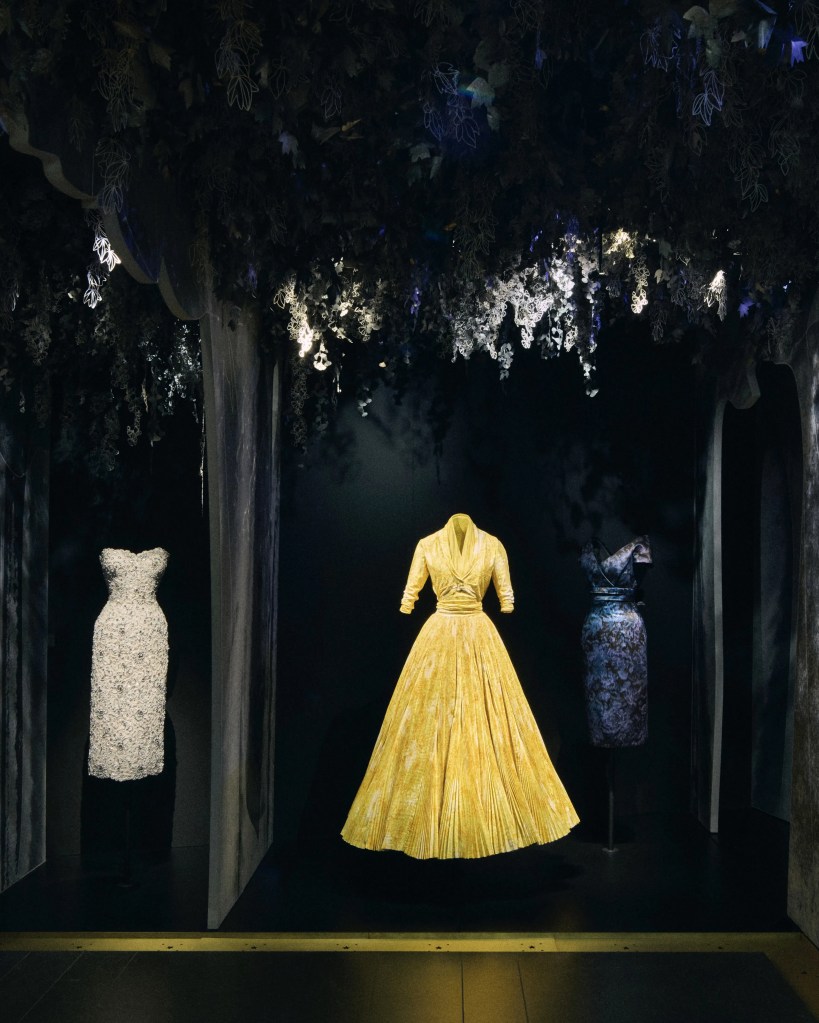
Alaïa’s collecting was intensely private. These Dior garments were never exhibited, rarely discussed. They were stored and remembered not by catalogue, but by touch, silhouette, line. “He recognized the line of a Dior jacket at first glance,” said Olivier Flaviano, director of La Galerie Dior. Alaïa’s training in sculpture, his first love before fashion, instilled in him a sensitivity to form that made labels unnecessary. He understood garments not as adornment, but as anatomy, structure, discipline.
The garments on view reflect that sensibility. They are displayed with grace, free from vitrines, mounted on bespoke forms, lit with restraint. Nothing interrupts the garment’s presence, not glass, not digital overlays. The curatorial choice is telling: it mirrors Alaïa’s own mode of presentation, where clothes were shown in silence, in space, without spectacle. Here, the viewer is invited to slow down. To look closely. To observe how a curve is built, how a seam holds tension, how weight shapes fall.


This is where Alaïa’s architectural sensibility aligns with Dior’s original mission. Dior, too, was an architect of the female form. His “New Look” was not just a postwar flourish, it was a rigorous study in proportion, structure, and silhouette. From the Bar jacket to the A-line, the Y-line, the H-line, Dior’s early work was a taxonomy of shape. Alaïa, decades later, would return to those lines with almost forensic curiosity. His collecting was technical. He wanted to know: what made the structure hold?
The exhibition becomes, then, a kind of internal conversation, between two couturiers separated by time but united in method. There is no imitation here, only recognition. Dior sculpted softness into structure; Alaïa carved sensuality into control. Both treated the body as landscape, as site. Both understood that couture begins not with embellishment but with engineering.

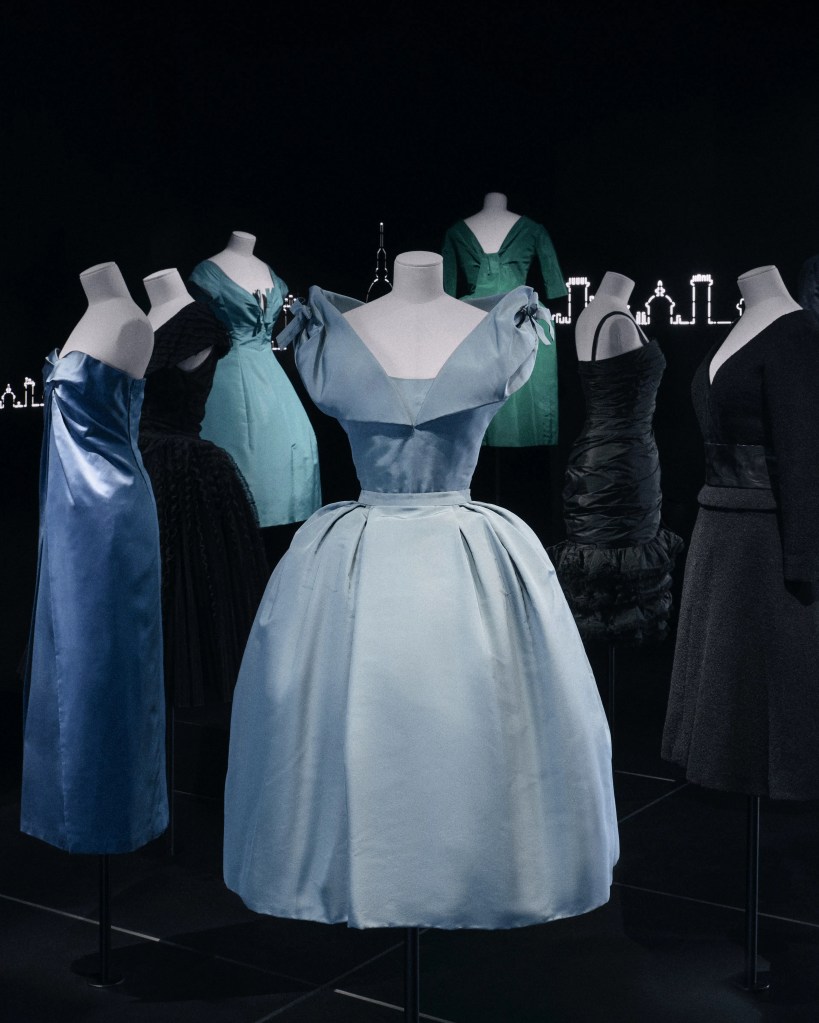
There is an institutional dimension that complicates the reverie. That this show unfolds at Dior, not at the Fondation Azzedine Alaïa, subtly recalibrates the dynamics of legacy. Dior becomes host to its own mythology, refracted through the archive of a man who resisted the fashion system for most of his life. Yet the gesture reads as generous, not possessive. These pieces are not relics. They are traces of a dialogue between two minds, two ways of seeing.
That dialogue will continue. On December 15, the Fondation Azzedine Alaïa will open a complementary exhibition exploring how Dior’s legacy shaped Alaïa’s own designs. Together, the two shows form a diptych, two perspectives on discipline, preservation, and vision. If this first chapter shows how Alaïa saw Dior, the second will show how he transformed that gaze into his own language.
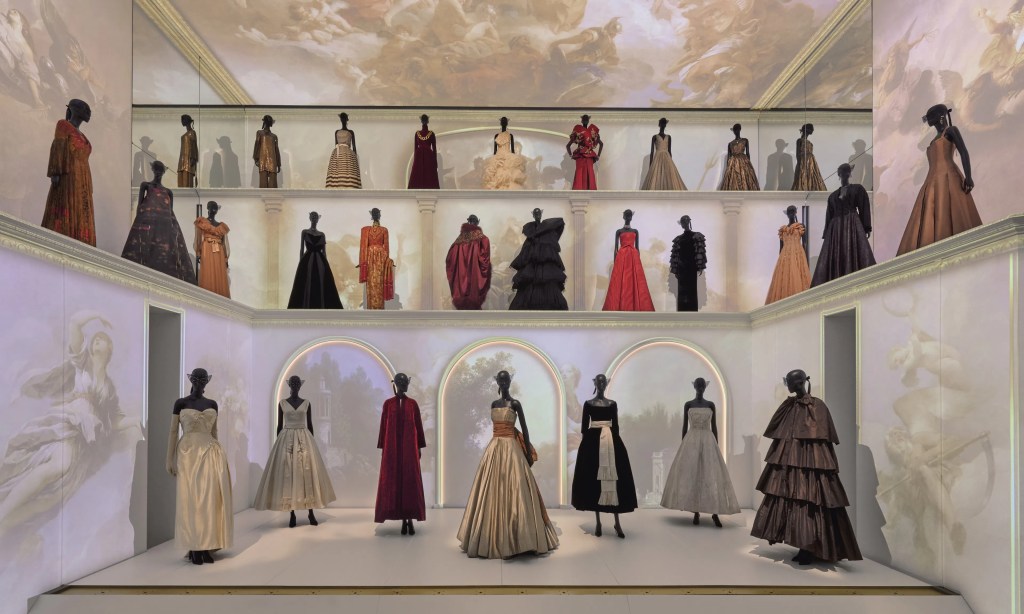

In the end, this is less a retrospective than a reflection. The garments do not narrate history, they illuminate attention. Alaïa did not collect Dior to possess him, but to study him. In doing so, he gives Dior back to us, not through homage, but through exacting, unsentimental reverence. A reverence that never flinches from the technical, that sees in every dart, every hemline, the ghost of a blueprint.
This is fashion viewed not as theatre, but as architecture. Not as image, but as construction. In a culture addicted to speed and surface, such restraint is radical.
 mabou
mabou 
Leave a comment