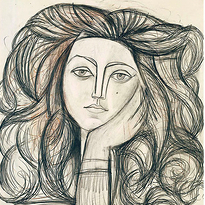

Ten years ago, Dior initiated what has become one of the quiet revolutions in the interplay between fashion and contemporary art. The Lady Dior bag, already an emblem of French elegance and the Maison’s savoir-faire, was transformed into a canvas for artistic expression. With the launch of Dior Lady Art, the house offered artists full carte blanche, not just to adorn the object but to reinvent it entirely. Now in its tenth edition, the project has matured into a cultural landmark, a platform for both experimentation and legacy.
This year’s collection gathers ten artists from across the globe, each bringing a singular visual language, philosophy and poetic imagination to the iconic bag. What distinguishes the 2025 edition is not only the diversity of origins but the deliberate inclusion of practices that challenge the boundaries between painting, sculpture, memory and material. There is a heightened sense of narrative this year, as if each bag were an artefact of a parallel world, whispering stories through texture, color and form.
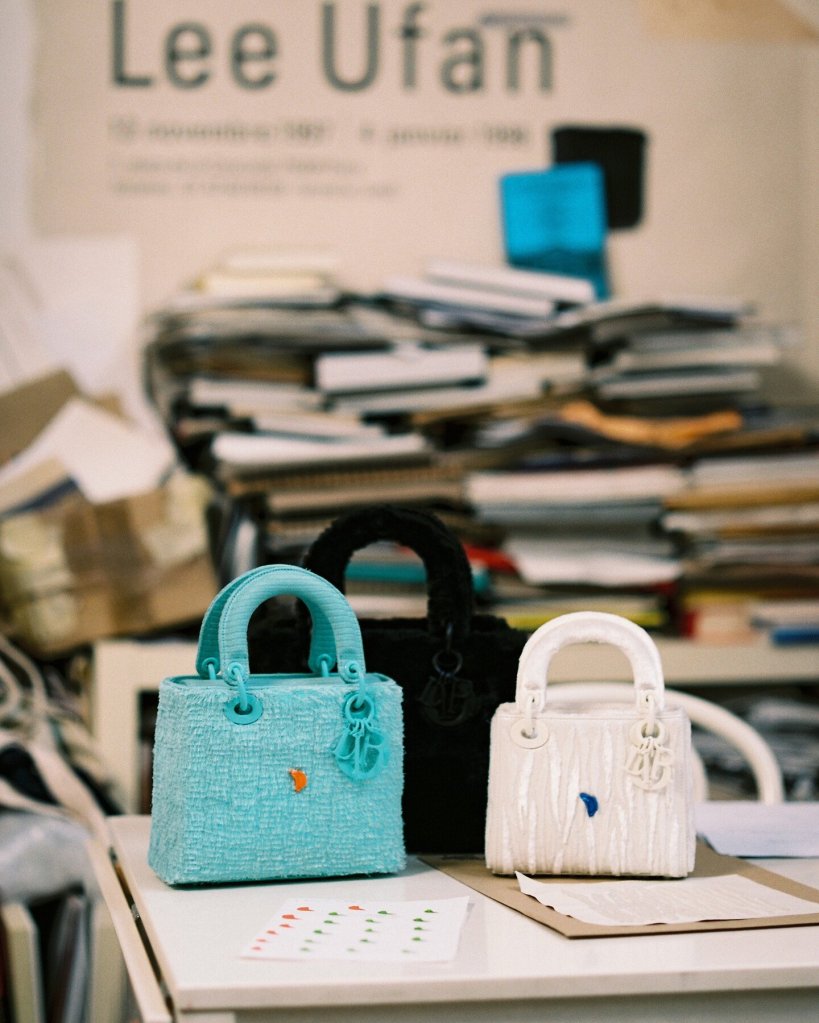
Among the standouts is Lee Ufan, whose minimalist interventions draw on the quiet power of absence and gesture. His monochrome Lady Dior bags recall his painted canvases, where a single brushstroke can carry the weight of silence, tension and time. By wrapping the bag in faux fur, miniature fringe or velvet, then interrupting it with a single field of pigment, Lee Ufan repositions the accessory as a philosophical object, a proposition rather than a product. It is one of the rare instances where a fashion object seems to recede in order to reveal something more essential.
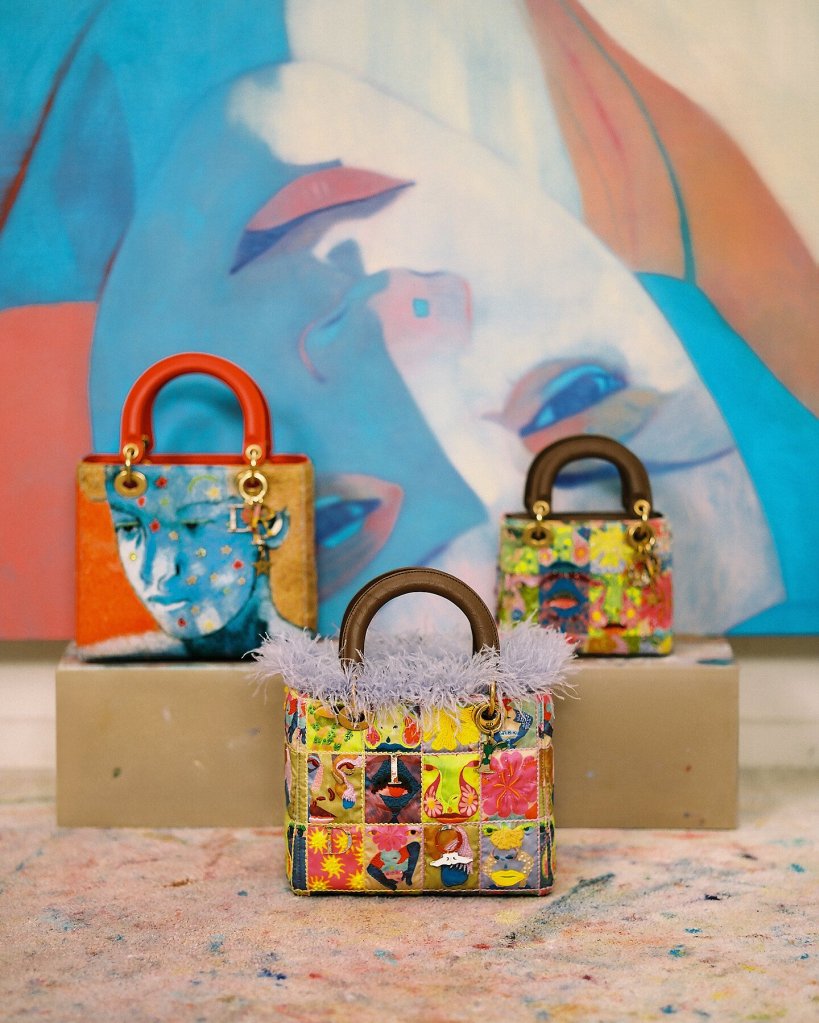
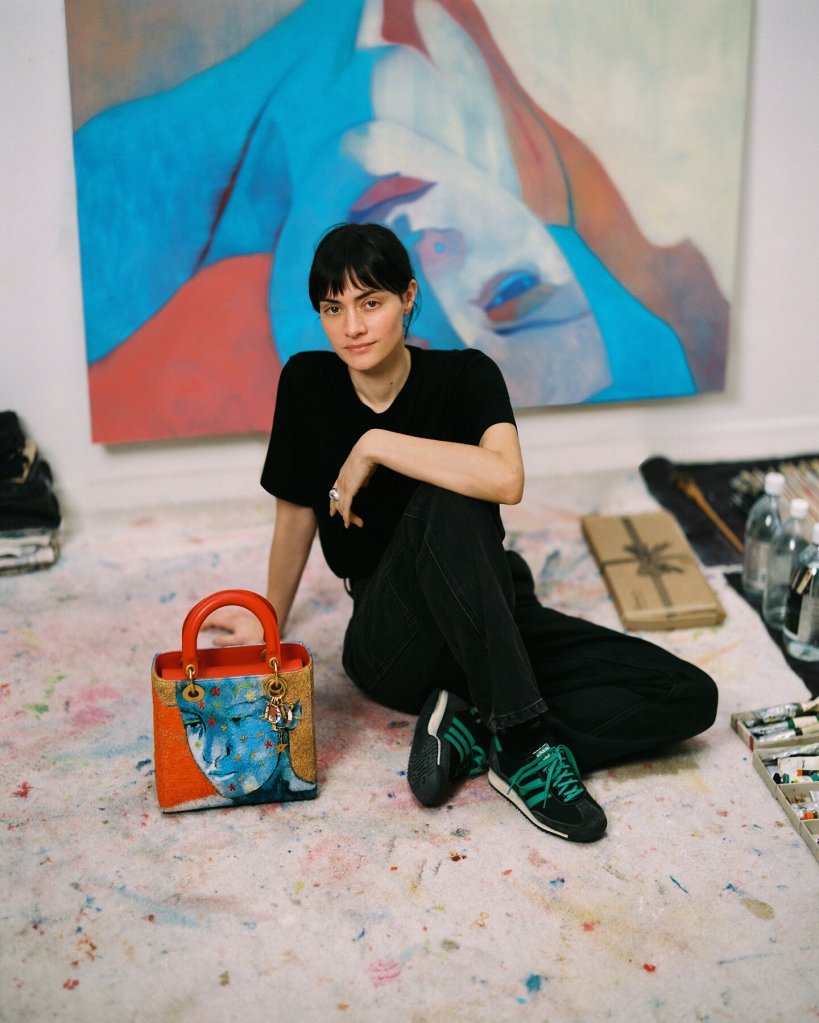
Inès Longevial, by contrast, works from a place of sensory fullness. Her contribution is rooted in the portrait, in the intimacy of gaze, shadow and light. Her bags are embroidered with faces that appear suspended in thought, poetic fragments materialized in threads and beads. The use of feathers, multicolored constellations and celestial motifs invite the viewer to experience the bag less as a utilitarian object and more as a dream fragment, a portable talisman of emotion and memory. She makes the face speak, and in doing so, the bag begins to listen.


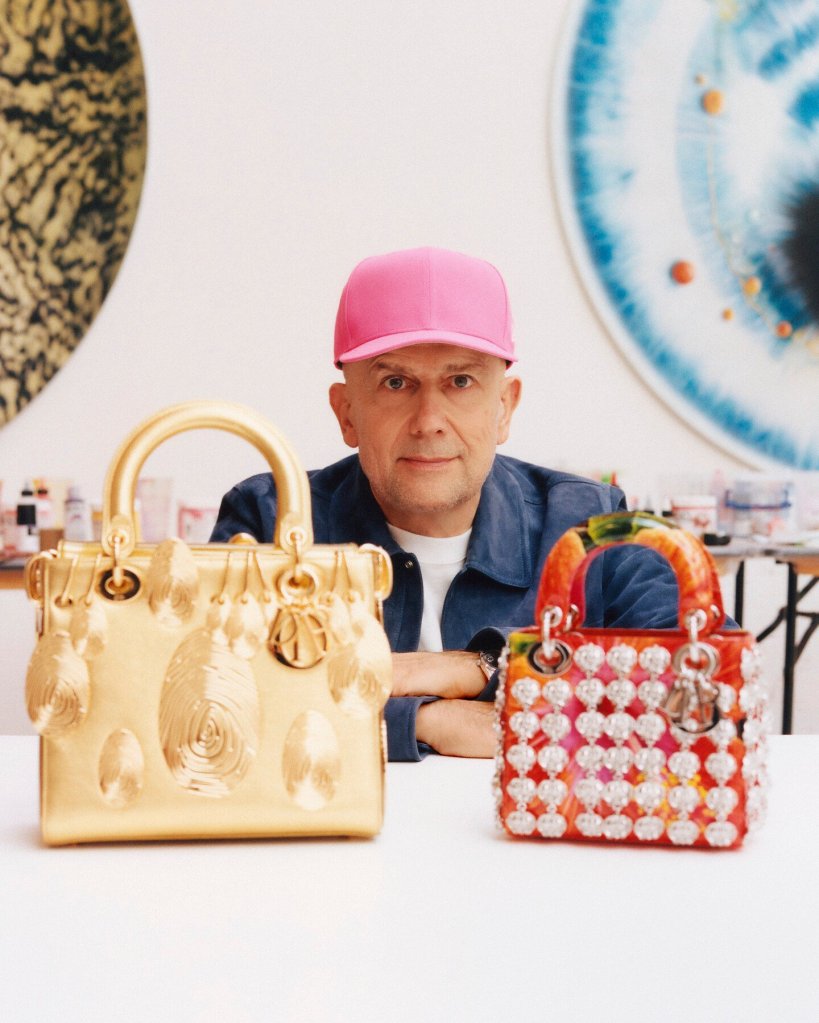
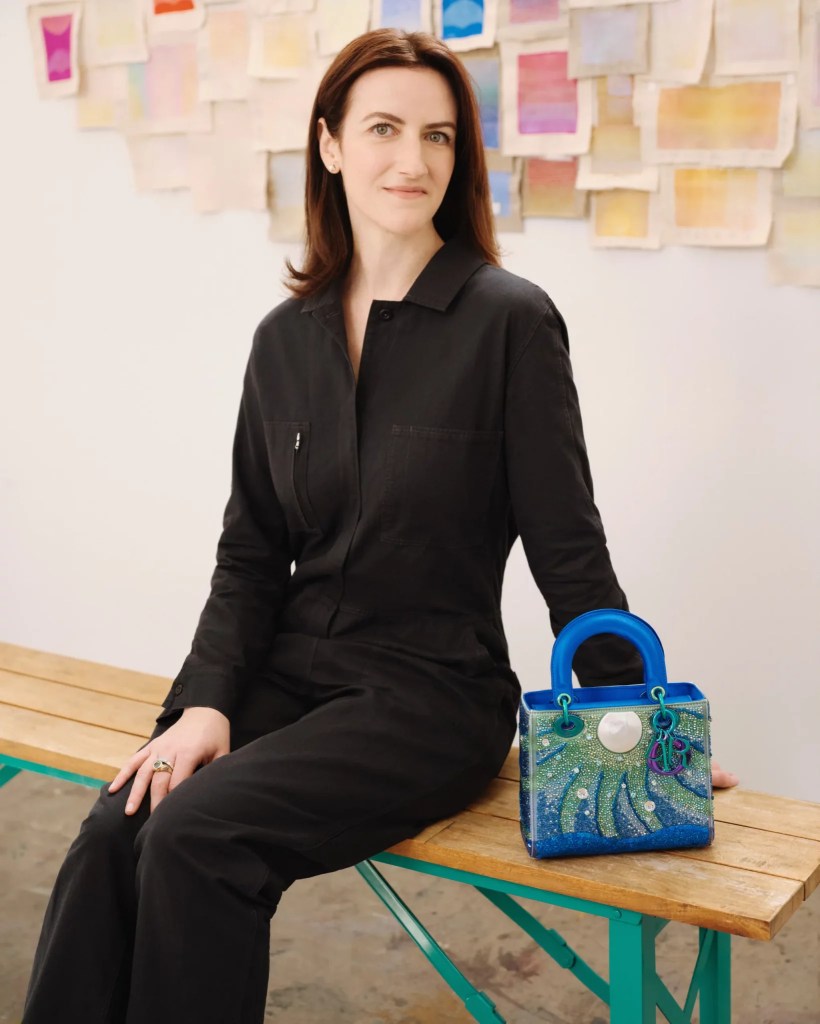
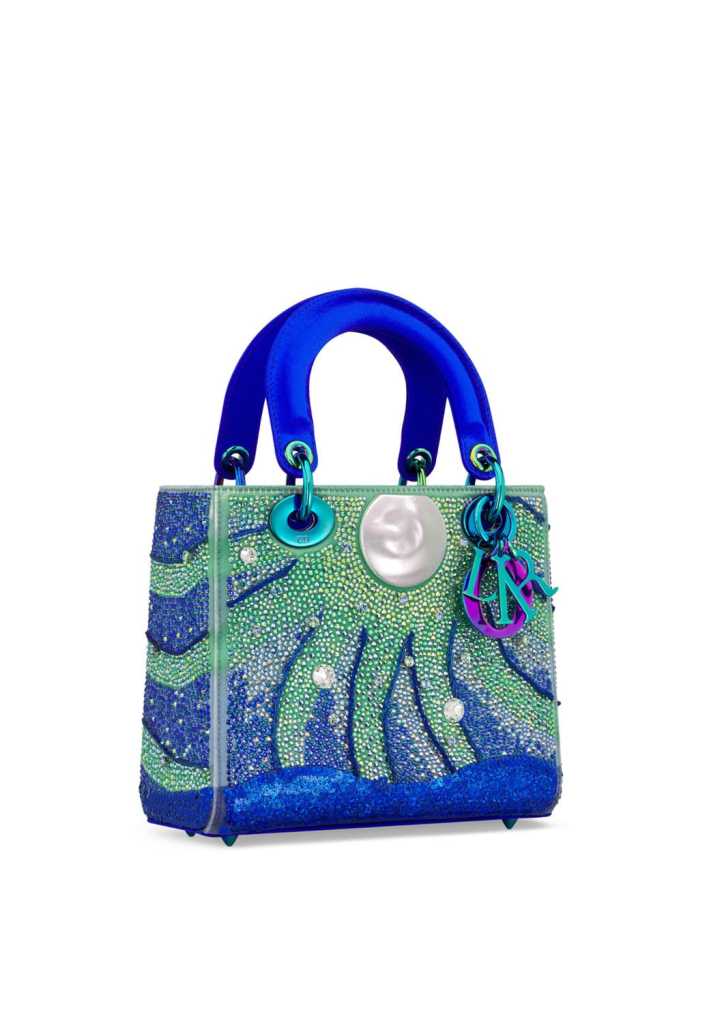
Jessica Cannon’s work brings a cosmic dimension to the collection. Her palette is meditative, her motifs celestial. Sun and moon, rendered in mother-of-pearl and crystals, become centers of gravity on each bag, radiating energy through pleats and tulle. Cannon’s bags are less accessories than rituals of light, evoking spiritual landscapes and cycles of renewal. In this way, the bag becomes a form of sacred geometry, where couture meets cosmology.
The significance of this project for the Maison cannot be overstated. In an industry increasingly driven by novelty and visibility, Dior has carved a space for continuity and dialogue. Dior Lady Art is not about fast content or limited drops but about cultivating a lineage of artistic voices. Over ten years, the project has established a discreet yet potent archive, one that charts not only the evolution of the Lady Dior bag but the changing face of global contemporary art. The house’s commitment to this format suggests a brand strategy that values curation over spectacle, collaboration over trend.

And yet, the cultural question lingers: is this art infused into luxury, or luxury disguised as art? One could argue that by offering artists total control, Dior resists the flattening effect of commodification. The artists are not asked to endorse or decorate but to deconstruct, to disassemble the form and rebuild it. Each edition becomes a subtle act of authorship, where the bag is absorbed into the artist’s world rather than the reverse. The object does not eclipse the work, it carries it.
For the audience, collectors, patrons, creative connoisseurs, Dior Lady Art speaks to a shift in what luxury means. It is no longer only about craftsmanship or exclusivity but about the power of narrative, meaning and emotion. These bags are not designed for seasonal wear but for permanent contemplation. Their value lies not in logo visibility but in the intimacy of the story, the patience of the technique, and the resonance of the artist’s voice.

In its tenth year, Dior Lady Art is no longer a gesture of brand experimentation. It is a statement of cultural intent. It asserts that a heritage house can remain rooted while reaching outward, that couture can be a host for contemporary critique, and that the bag, a symbol of mobility, of carrying, of holding, can be a site of aesthetic intelligence. This is not art applied to fashion but fashion extended into the realm of the contemplative.
What Dior has created with Lady Art is not a collection. It is a cultural infrastructure. A form of sustained generosity toward artists, and a proposition to its audience to read deeper, to engage slower, and to appreciate objects not just for their surface but for their soul. In a moment where the line between art and commerce is often drawn too neatly, Dior Lady Art blurs it, gently, thoughtfully, with elegance and conviction.
 mabou
mabou 
Leave a comment