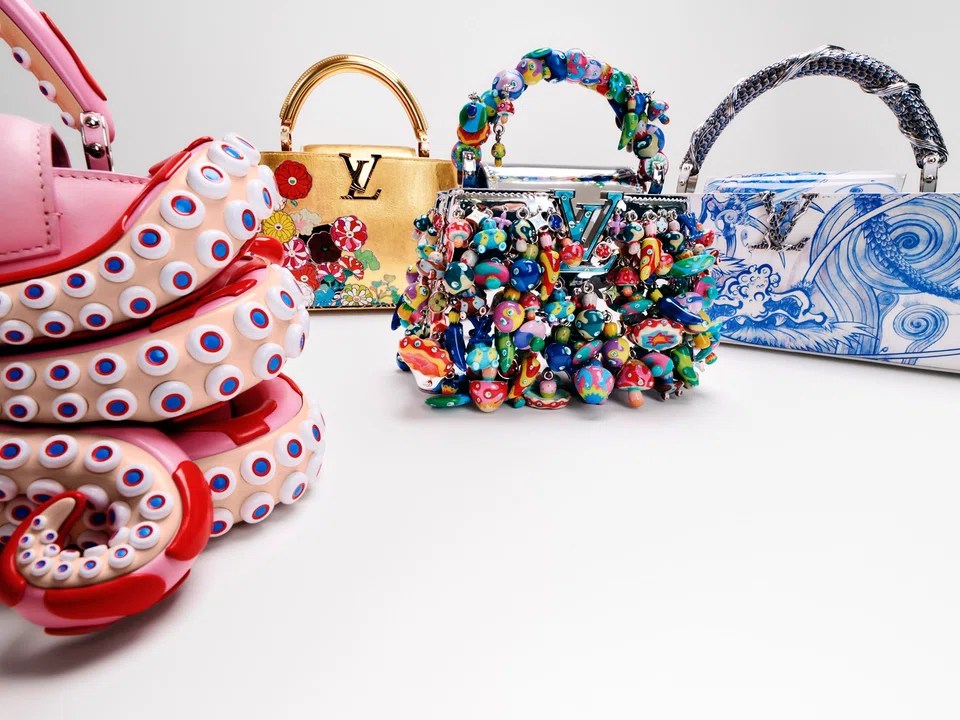
When Louis Vuitton unveiled its latest chapter of the Artycapucines series during Art Basel Paris 2025, the “Artycapucines VII – Louis Vuitton × Takashi Murakami” collection, it did more than drop a limited‑edition bag line. It staged a deliberate interplay between art, luxury, brand legacy and spectacle under the glass roof of the Grand Palais. The collaboration draws on a relationship that spans over twenty years, which began in 2003 when Murakami reinterpreted Louis Vuitton’s Monogram canvas.
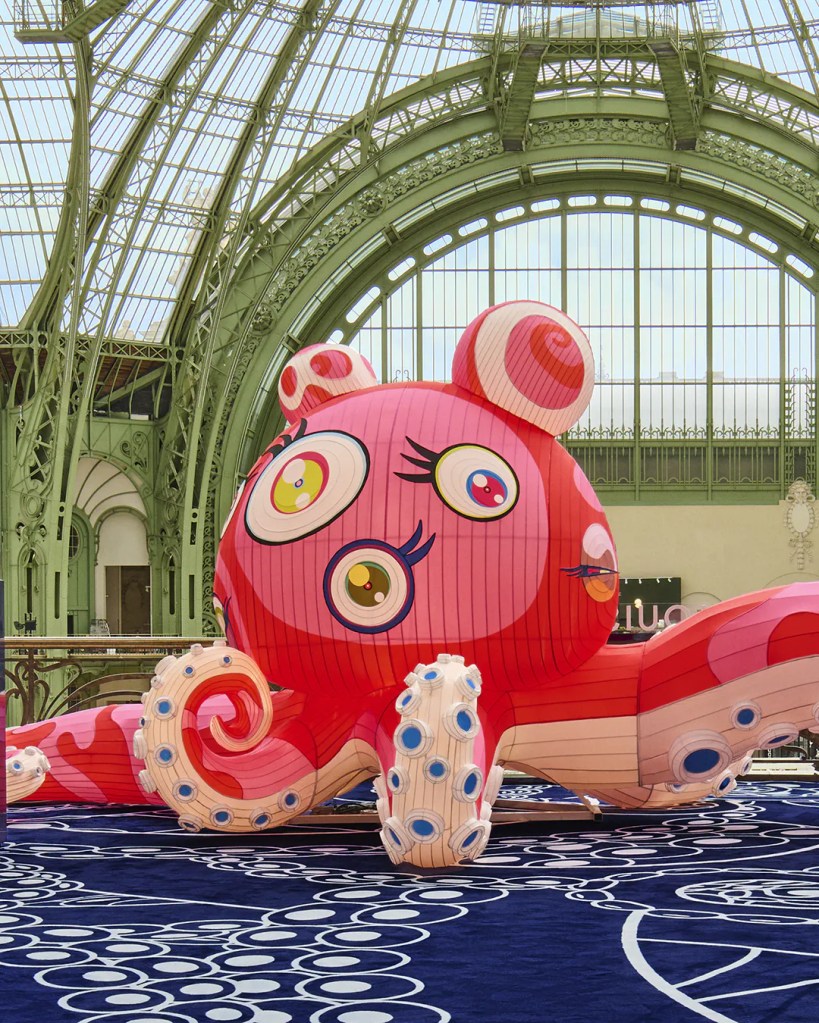
Murakami’s world of smiling flowers, pandas, mushroom motifs and tentacles now inhabits the Capucines bag, itself a design born of heritage (named after the rue Neuve‑des‑Capucines, where Louis Vuitton opened its first Paris store in 1854). The presentation at Art Basel took the form of a monumental eight‑metre‑high octopus sculpture sprawling across the Balcon d’Honneur of the Grand Palais, litres of colour, texture, and a sense of immersive environment that turned a luxury‑brand stand into an art installation.

Why this collaboration at this time matters is worth unpacking. For Louis Vuitton and by extension LVMH, it is a reaffirmation of the Maison’s identity as both a custodian of heritage and a contemporary creative engine. The brand shows that it can sit in the art world without being passive: it can commission, it can partner, it can produce. Simultaneously, for Murakami, the platform allows his work to travel further into lived luxury expression: the bag becomes both wearable object and gallery piece, blurring lines between accessory, art object and status symbol.
The placement of Louis Vuitton’s installation within Art Basel Paris is strategic as much as it is symbolic. Art Basel’s audience sits at the intersection of high‑end collecting, cultural tourism, luxury consumption and art‑market sophistication. By locating the maison’s stand in prime vantage within the fair, the brand signals that it belongs in this ecosystem, not beside it, not outside of it, but as a first‑class participant. The environment is one of galleries, institutional gravitas, deep monetary value and cultural signaling. Louis Vuitton is not only selling bags; it is crafting presence, authority and narrative in one of the most significant art‑market moments of the year.
Yet this also raises critical questions. When a luxury house stages an art‑scale installation and releases ultra‑limited bags at an art fair, is this commodification of art, or artification of luxury? In one reading, the risk is that the art becomes a backdrop, the brand uses cultural capital to sell and the bags become objects of speculation rather than creative discourse. But in the other reading, and one arguably more apt here, the Maison invites the artist’s vision into its own DNA and elevates the accessory to the realm of collectible via artisanal craft, conceptual depth and limited‑edition scarcity. The result is hybrid: luxury anchoring gives art reach; art imbues luxury with cultural legitimacy.
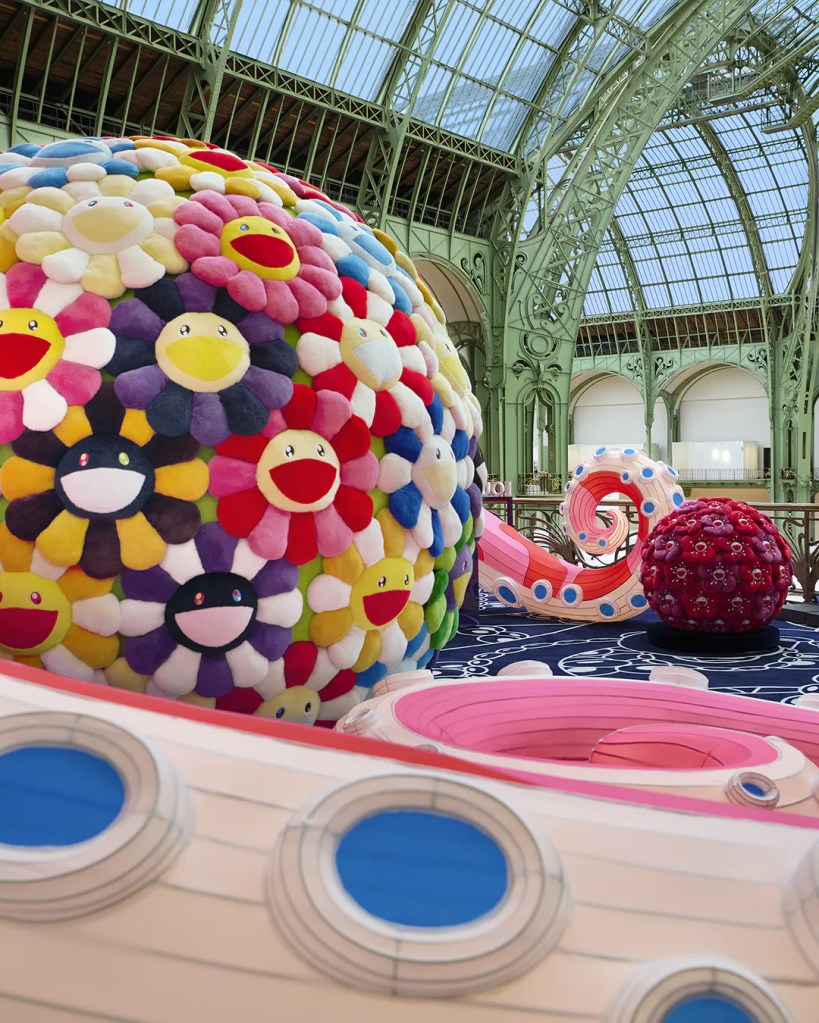
There is also intriguing tension in the audience dynamic. The fair‑goer at Art Basel Paris is not the typical runway buyer or the fast‑fashion consumer. Rather this person is accustomed to browsing galleries, negotiating acquisition, and valuing provenance and exclusivity. Placing the Capucines collection in that context means these bags are presented as much as art pieces as they are fashion goods. Their value lies partly in aesthetics and craftsmanship, and partly in their association with Murakami, Louis Vuitton heritage, and the venue of their launch. The luxury house thereby accesses a collector mindset: buying becomes curatorial, ownership becomes cultural.
From a brand‑strategy vantage, the collaboration works on several levels. First, it revitalises the Capucines model by giving it fresh artistic vitality and media moments. Second, it anchors Louis Vuitton in contemporary art discourse, not simply as sponsor but as creator partner, an important shift in luxury communications where brand‑as‑platform is increasingly the currency. Third, it signals to luxury consumers and collectors that the maison operates beyond fashion season cycles: this is about legacy, investment, cultural deposit, and value over time.
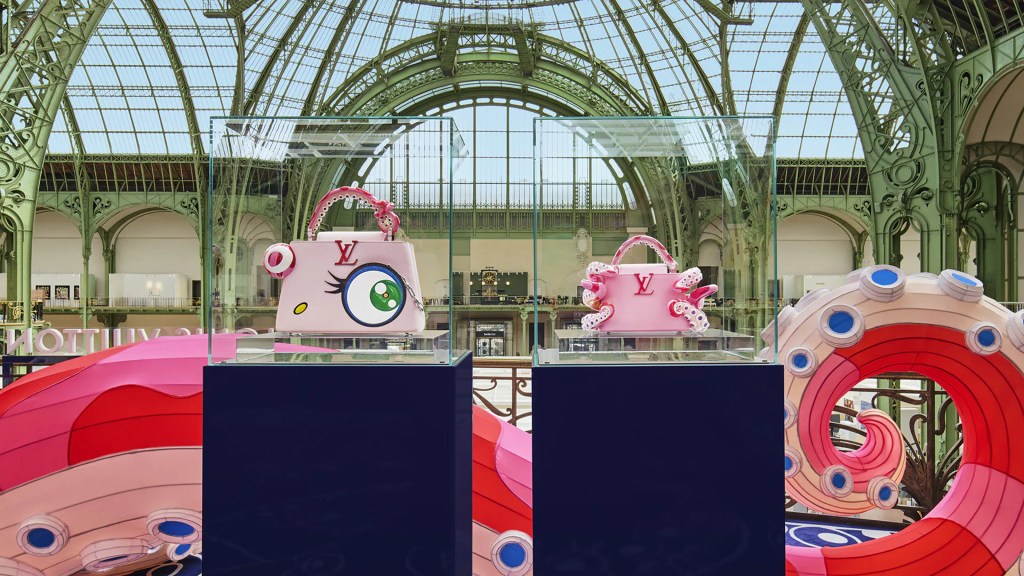
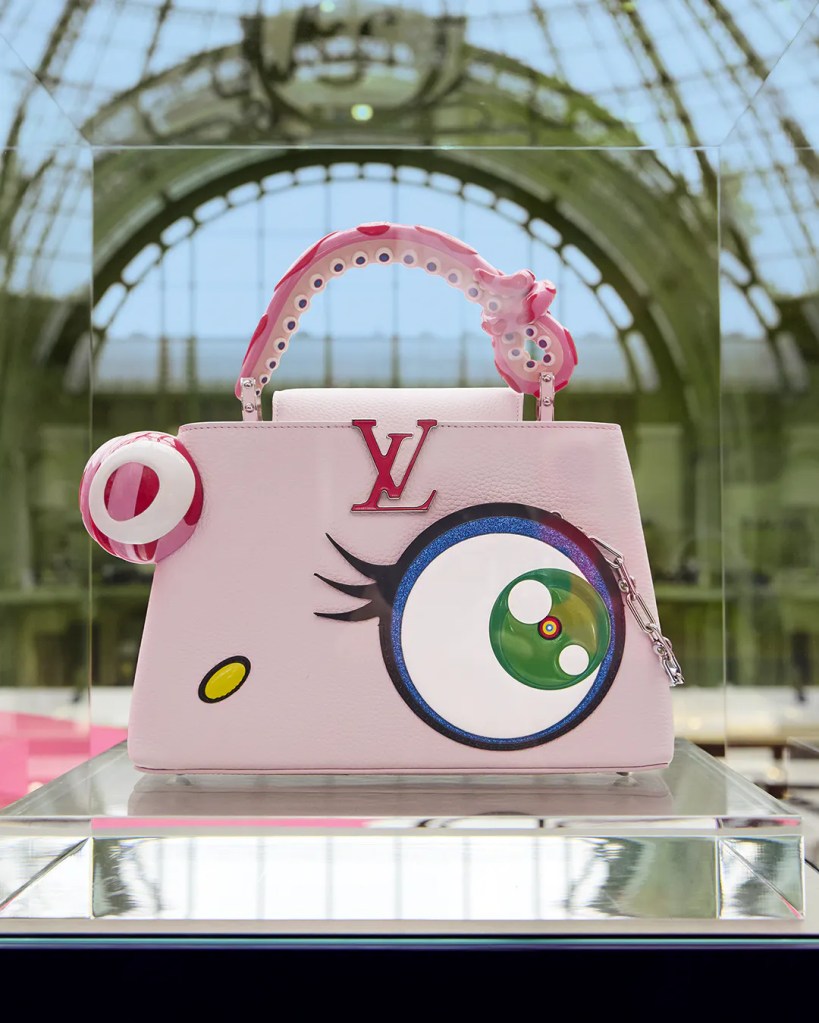
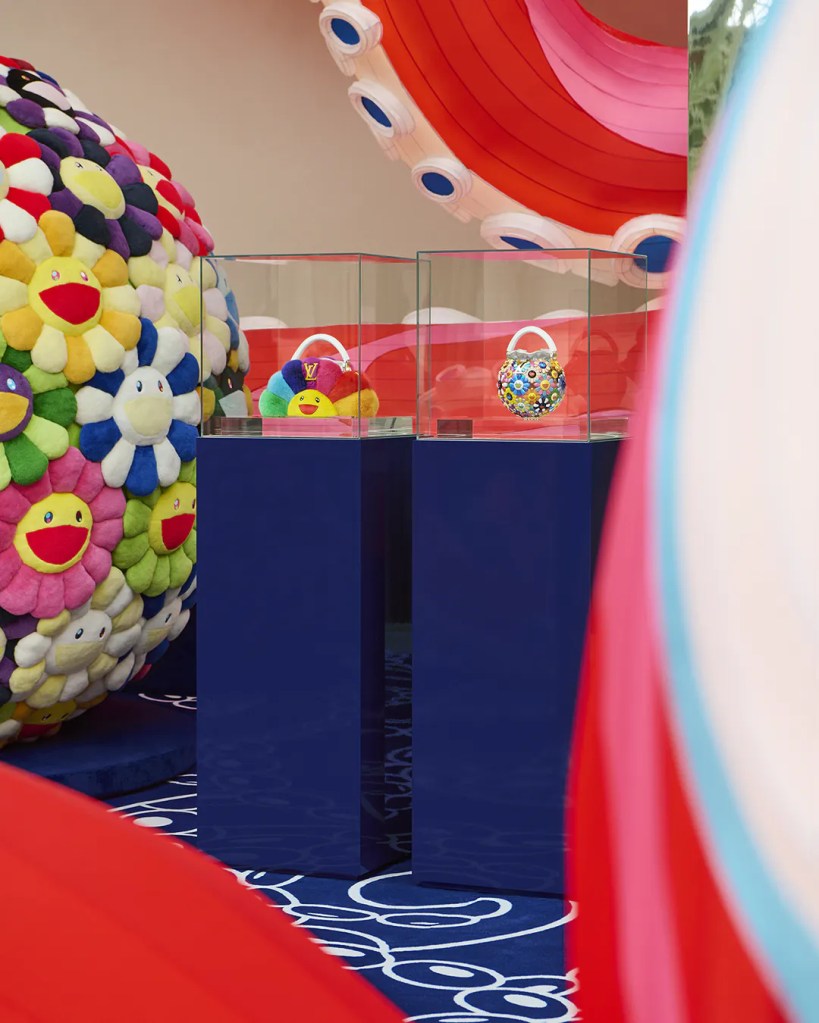
Still, one should challenge the move: when every luxury house seeks to create art‑house intersections, the differentiation becomes how deeply the collaboration is rooted rather than how loud it is. In this case the depth of Murakami‑Louis Vuitton history (two decades), the choice of the Capucines as artistic canvas, and the choice of Art Basel Paris as venue suggest substance. But the spectacle is undeniable. The risk is that the message becomes: “buy‑me‑now because this is art” rather than “reflect on the boundaries of art and luxury.” Whether the audience engages that second layer is less certain.
In total, the Louis Vuitton × Takashi Murakami activation at Art Basel Paris is a statement of modern luxury strategy: merge art‑world credibility, brand heritage, limited scarcity, and collector psychology into an experiential moment. It shows that LVMH and Louis Vuitton understand the art‑market logic and are moving from mere brand‑storytelling to brand‑ecosystem creation. For the art world, it demonstrates that luxury has become a site of cultural production, not just consumption. And for the audience, it invites a reframing of the bag as art object, the art fair as runway, and the brand as both patron and producer.
 mabou
mabou 
Leave a comment