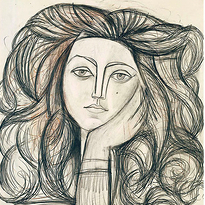

Art x Fashion Edit #45
Hilary Pecis paints in a language of objects: carefully chosen, deliberately placed, yet never sterile. In Breakfast Nook (2021), the domestic sphere becomes a charged site for aesthetic assembly. A vase of carnations and marigolds sits alongside citrus fruit, vintage stationery, and art books stacked like cultural citations. The mise-en-scène evokes presence: a moment suspended in time and in intention. Every pattern, color, and texture asserts itself with conviction. This is not a neutral interior. It is a portrait of someone who curates her everyday as carefully as any gallery wall.
There is something particularly feminine, and quietly radical, in Pecis’ approach to space. Her paintings inherit from Matisse and Vuillard, yet are filtered through a distinctly Californian palette: sun-drenched, acid-tinged, casually luminous. She rejects the hierarchy between the decorative and the intellectual. Here, the geometry of a ceramic tile holds as much meaning as the spine of a Giorgio de Chirico monograph. The visual language of the home becomes a site of personal semiotics. One begins to read pattern as code.
In fashion, this tension between ornament and assertion finds new relevance. The aesthetic proposition is no longer about minimalism or extravagance, but rather about intimacy. The lived-in beauty of print-on-print, the embrace of clashing motifs, the ease of pieces that speak different visual dialects. Much like Pecis’ tablecloth, bright red, jewel-patterned, unbothered by its own boldness, clothing becomes a space of aesthetic accumulation. A place where Bauhaus meets folk embroidery, and sportswear sits comfortably next to surrealist intention.
To dress in the spirit of Breakfast Nook is to let go of cohesion as a virtue. It is to treat the self as a composition, beyond a uniform. There is courage in aesthetic layering, in wearing history with humor, in allowing texture to contradict itself. Like the stacked art books in Pecis’ scene, Woodman, Klee, de Chirico, our choices accumulate over time, building a personal canon. The point is not to dress perfectly, but to dress consciously, to recognize fashion as cultural vocabulary.
And perhaps that is the quiet legacy of Pecis’ work: a reframing of taste as authorship. In a world that moves fast, flat, and filtered, her still lifes invite us back into slowness. Into the rituals of arranging, selecting, noticing. Into a relationship with objects that is neither consumerist nor nostalgic, but sensorial. Fashion, in this context, becomes not escape but presence. Not fantasy, but foreground. A still life we carry with us, daily.
The Splurge



ETRO Jacket ($3,597)
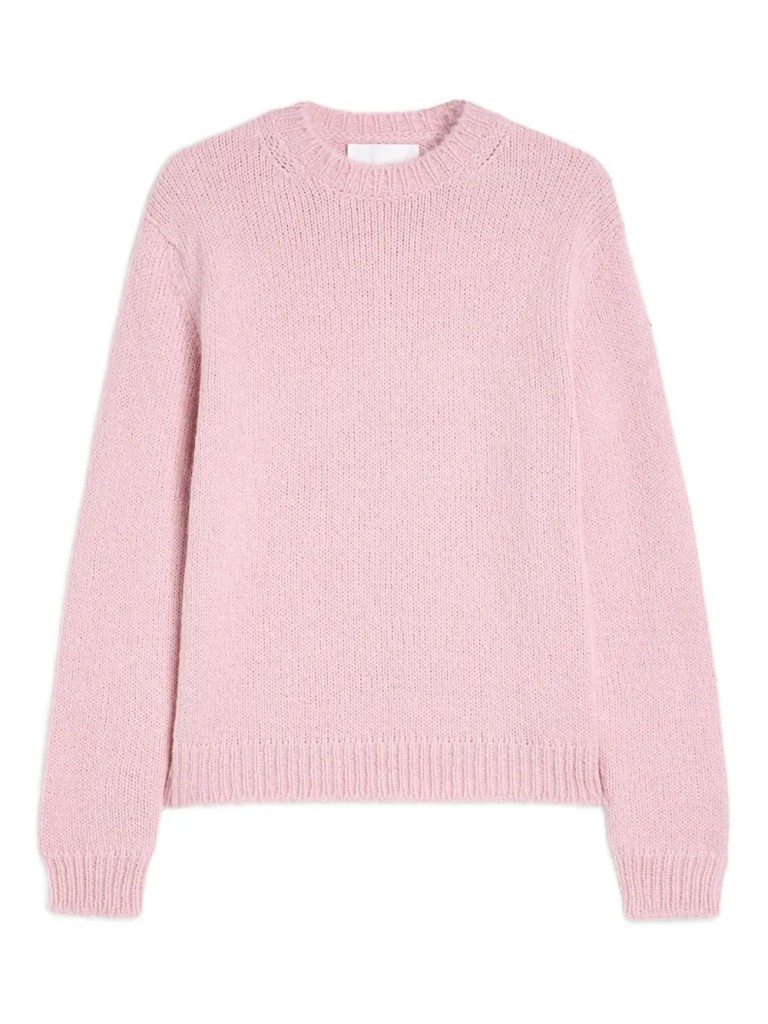
Jil Sander Sweater ($981)
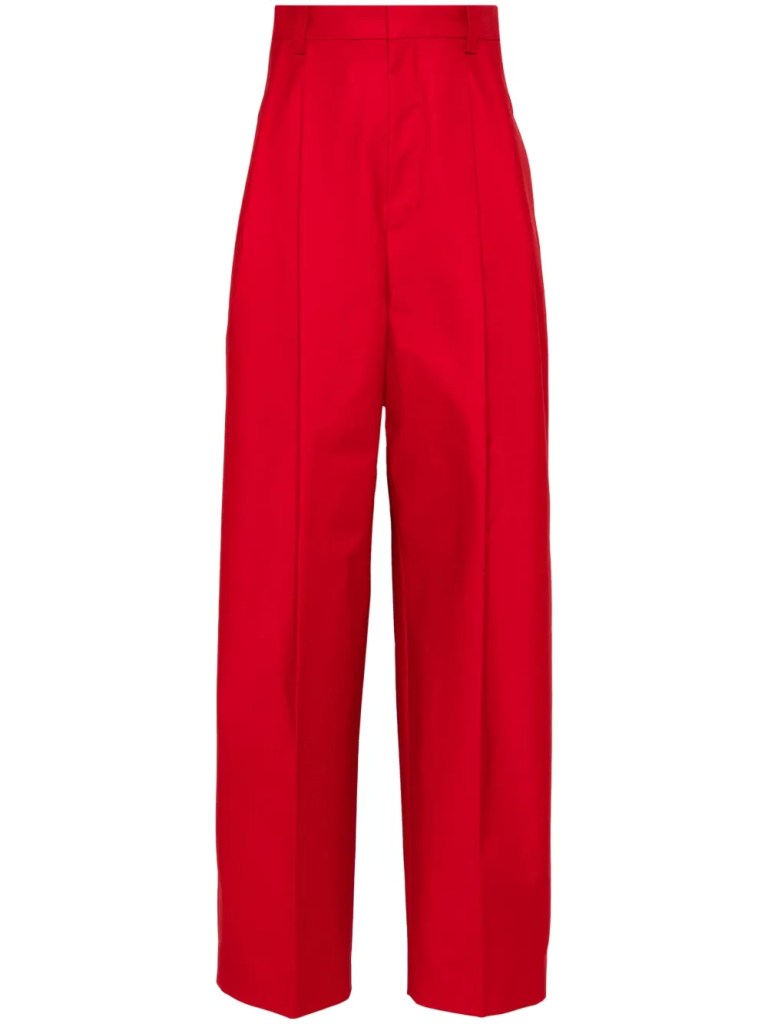
Jacquemus Trousers ($862)
Valentino Garavani Tote Bag ($1,092)
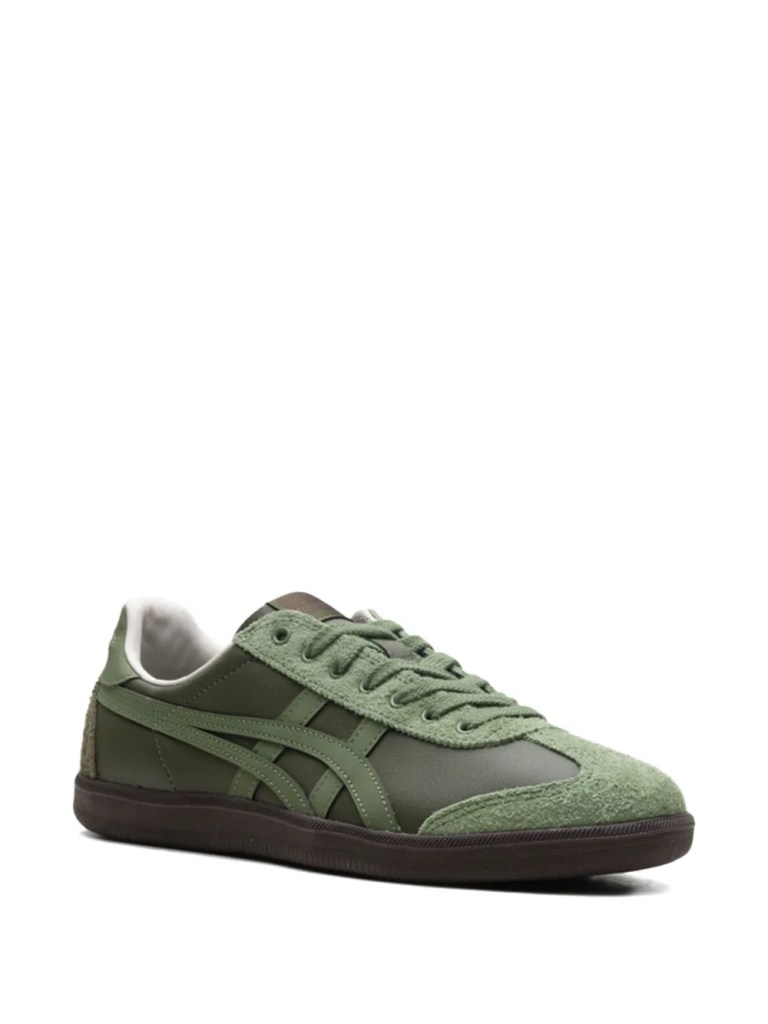
Onitsuka Tiger Tokuten Sneakers ($293)
Lapima Sunglasses ($551)
(More) Affordable Options




Maria de la Orden Jupiter Jacket ($297)
SEROYA Sweater ($298)
LouLou de Saison Trousers ($165)
Zadig & Voltaire Tote Bag ($248)
Adidas Samba ($74)
Oliver Peoples Sunglasses($328)
 mabou
mabou 
Leave a comment