
This week, Sabato De Sarno, Gucci’s new creative director, presented his Cruise collection in London – a city central to Gucci’s history. Also central to De Sarno’s vision for Gucci is his bold reinterpretation of the brand identity, diametrically opposed to Alessandro Michele’s high energy and extravaganza.
In fact, de Sarno’s classically Italian flair is tasked with repositioning Gucci upmarket. It is to reach a more deep-pocketed audience than the fleeting aspirational consumers still associated with Gucci clients.
The show, held at the Tanks in Tate Modern embodied a fresh urban spirit. Despite some obvious incongruities (read: suede), Sabato’s collection explored themes of desirability, sensuality, romance, and contradiction with clashing colors adorning simple but perfectly cut clothes.
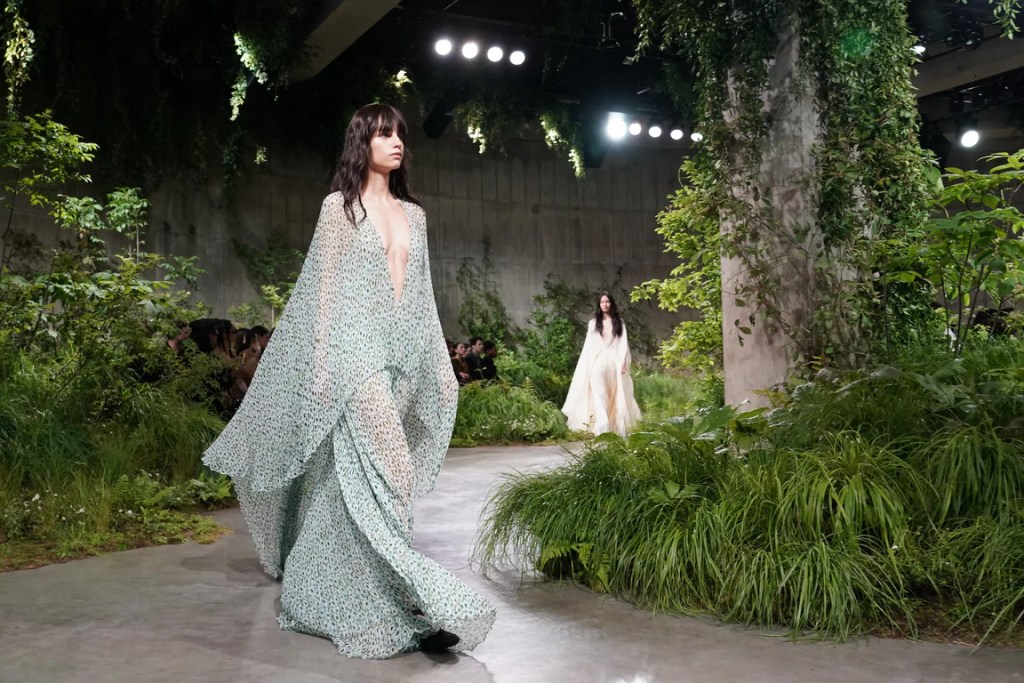


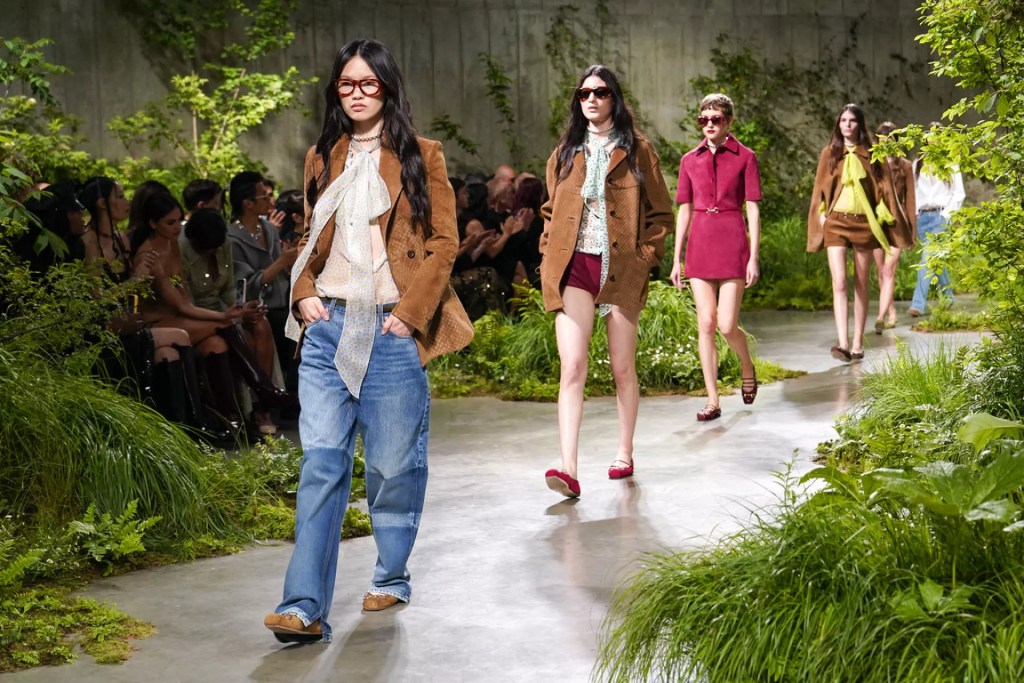
“Ancora”, the name given to the on-going reinterpretation of Gucci, means “again”. It stresses the continued relevance of Gucci’s icons, as well as its ability to speak to the zeitgeist. But it is currently struggling to express what it stands for both due to the scale and extent of the turnaround.
Looking into it in more details, the brand really seems to have it all in order to be successful, but there are gaps in marketing and communication. One of the prime example is the fact that I – covering the very intersection of art and fashion – was unaware of the links between Sabato’s inspirations and art, especially Milanese artists.
Indeed for the moment, Sabato’s mind seems more interesting than his clothes. Which, you’ll tell me, is promising and probably explains why Pinault chose him instead of promoting internally, as has been mostly done at Gucci. In an article for Vogue in January, Sabato opened Roman residence, adorned with contemporary artworks.
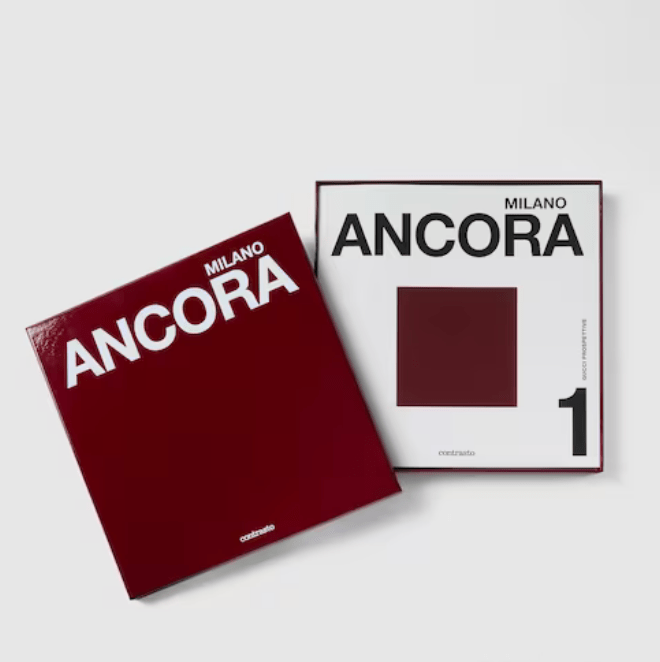


Unsurprisingly therefore, for his first collection, he introduced the first volume of the Gucci Prospettive series to create a dialogue between art and fashion. Stefano Collicelli Cagol, Director of the Luigi Pecci Center for Contemporary Art in Prato, describes it as “a love letter to Milan and its art”, where Gucci moved its headquarters.
Together with De Sarno, they curated a selection of artworks that reflect fragments of the city’s cultural and creative heritage from the post-war era to the present day. From Lucio Fontana’s slashed canvases to photographs of Milanese nightclubs by Pietro Agostini or Riccardo Banfi, as well as the poetic provocations of Franco Mazzucchelli, Sara Leghissa, Vincenzo Agnetti, these works depict Milan as a place of beauty and carnal sensuality. A city inventing new spaces and relationships with the self beyond traditional narratives. A philosophy de Sarno applies to his clothes.
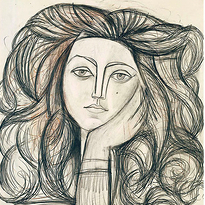
Just focusing on two artists (which I arbitrarily particularly like), Lucio Fontana and Franco Mazzucchelli one can grasp de Sarno is interested in aesthetic tension, in the simplicity of the design but the complexity of the message.

Lucio Fontana was an Italian-Argentinian artist particularly known for his pioneering work in Spatialism. One of Fontana’s most iconic contributions to art is his series of slashed or punctured canvases, known as his “Spatial Concept” works, which he began in the late 1940s. These radical gestures, in which he physically pierced the canvas to create a sense of depth and space, challenged traditional notions of painting and sculpture, blurring the boundaries between two-dimensional and three-dimensional art forms.
Mazzucchelli’s work often explored themes of consumerism, mass production, and the relationship between humans and technology. He was known for his large-scale installations that transformed gallery spaces into immersive environments, inviting viewers to engage with the artwork on a sensory level.
Both of these artists are represented in the new Milan store on Via Montenapoleone showcasing the brand’s new merchandising direction. Despite not yet fully implementing his vision, De Sarno’s influence resonates through the store’s emphasis on art and design within a minimalist elegance.
This integration of contemporary art and design in luxury boutiques isn’t novel, as demonstrated by other Kering-owned brands like Saint Laurent. But, Gucci’s communication does not put art at the center of Sabato de Sarno’s reinterpretation, loosing an opportunity to contextualize the brand’s and designer’s new story.
Communication has been focusing on reviving a vintage, à la Tom Ford image of Gucci that not only feels boring but also out of touch with what the industry currently expects: outstanding creativity or thoughtful entertainment. The potential is undoubtedly here, but it is not fully exploited. Completely changing its communication might not solve Gucci’s woes, but it might for sure not worsen them, right?
 mabou
mabou 
Leave a comment