Season after season, Loewe is unsurprisingly mind blowing. JW Anderson just keeps pushing the boundaries of creativity and infuses a multiplicity of meanings into his creations. Indeed, in order to speak to the Zeitgeist, he focuses not only on proposing original, truly out of the box designs. In an era where many designers just seem to copy each other or fail to renew themselves, Anderson dares to question the status quo of the creative process.

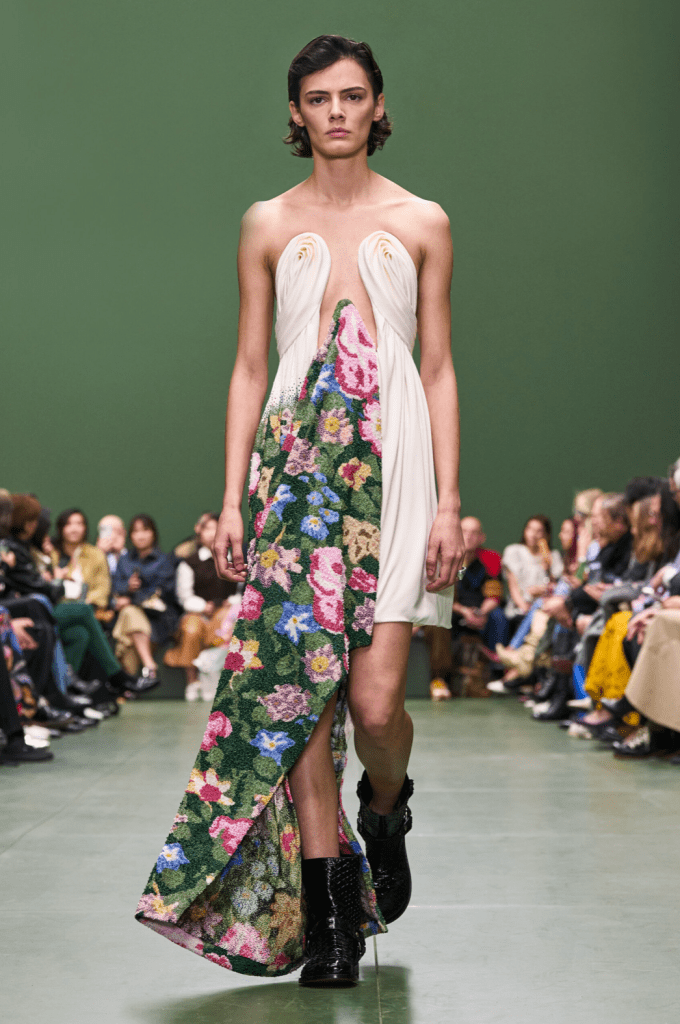


For Fall/Winter 24/25, the artist was inspired by Albert York, an arguably and quite interestingly relatively lesser known artist. The designer, who struggles to find comfort in the craze of fashion world, identifies with the artist, who was himself an outsider. He created a collection that does not play by the same rules most other brands currently play by.
Albert York was an American artist who focused on small-scale contemplative landscapes and still lives while his contemporaries are known for Abstract Expressionism or Pop Art. The artist Fairfield Porter once said of his work, “York’s paintings do not look like the next fashion but, rather, old-fashioned. Instead of mural-sized and bland, they are small and intense.”



York painted in a vacuum, and barely left Long Island, isolating himself from the intensity of New York City. Like Anderson, he was not a very public figure and did not particularly enjoy speaking about his work. Asked on why he painted, the artist reflected “I think we live in a paradise, this is a Garden of Eden, really it is. It might be the only paradise we ever know, and it’s just so beautiful, with the trees and everything here, and you feel you want to paint it. Put it into a design.”
His paintings call to mind references across many different points in times, making them difficult to date and giving them a form of timeless quality. It makes them impressively contemporary. They have the aura of impressionist landscapes conveying a feeling of plenitude and a dream-like quality so dear to Impressionism. Some of his motifs seem to purposely ignore dimensionality, referencing Middle Ages tapisseries of real or imaginary animals. Additionally, some of his still lives could be compared to the spared figuration of Alex Katz.

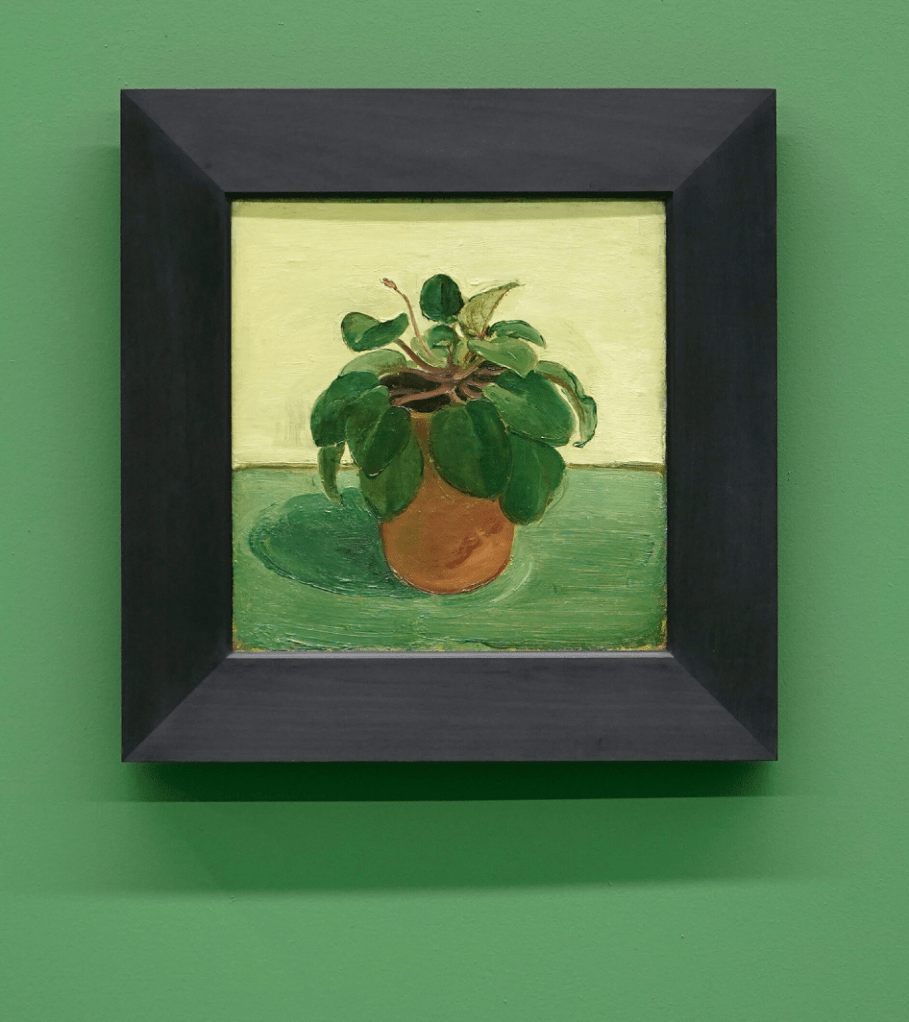


A common characteristic across his paintings is the use of pistachio green, used on the walls, floors and benches of the structure used for the Loewe runway show. This immersive design, reminiscent of museums or galleries architecture featuring eighteen pieces by York, was bolder than previous collections for which JWA favored a minimalist set which would not overshadow the clothes. At the same time, this is the first time the artistic inspiration takes such a central position in the designer’s work, who usually discreetly references rather than overtly borrows.
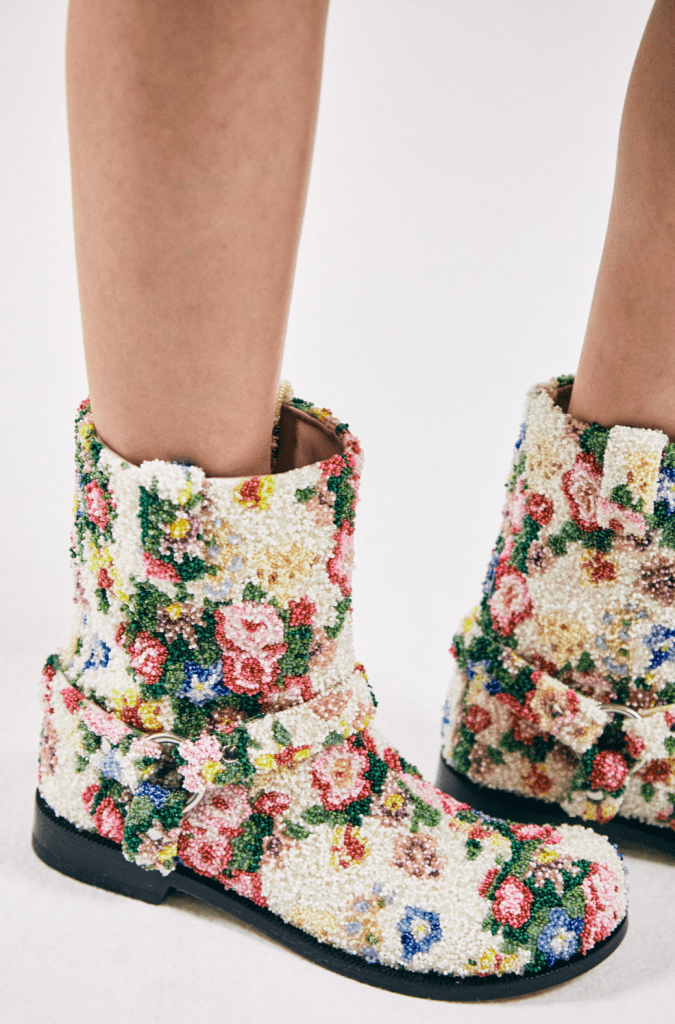
Down the runway went a compendium of references to English interiors and 18th century kitsch porcelains on overcoats, tailored jackets and oversized tea-pot shaped dresses featuring floral prints. JWA not only borrowed the motifs of York’s paintings but their material quality. The texture of the paint was rendered through tiny almost invisible beads reflecting light and giving a dimensionality to the decorative motifs.

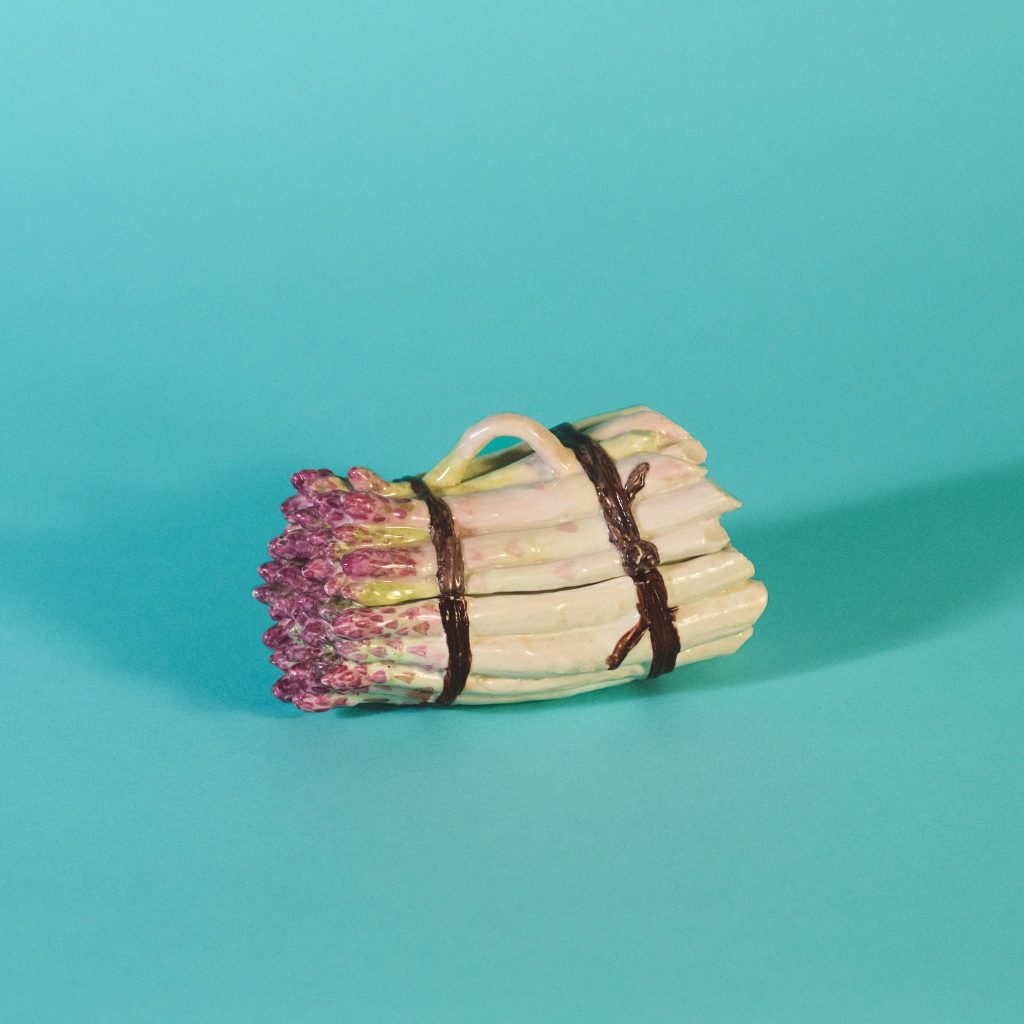
Bundle of asparagus, Courtesy Loewe

One dress reinterpreted a dog painting by the artist, billowing pants gave life to pastoral nature and a beaded bag was even made into the shape of a bunch of asparagus… A reference to the famed Manet painting? The color palette focused on tame hues of browns greens and blues, with pops of reds and whites you could find in an English countryside landscape, tying together York’s and Anderson’s creativity.
Once again, the designer proves he is in a league of his own, being able to merge his signature creative process and the one of an artist that, on paper, could not seem further away from what he had shown until then. Some pieces raise eyebrows, but others are so interesting that it opens the door to new realms of possibilities. Quite surprisingly, Anderson seems to make work even what should not. He also pushes the boundaries of collaboration between fashion and art proving that creating a conversation between any house and any artist is possible as long as all aspects of the creative process are addressed.


Indeed, JWA not only focuses of the aesthetic correspondance but also on the material, spatial, and most importantly meaning-making layers of creation. He gives a new relevance to York’s work for contemporary audiences and complexifies the patrimoine of the Loewe house, leaving space for interpretation for both the fashion and art worlds.
 mabou
mabou 
Leave a comment