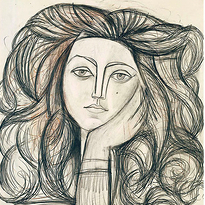

Visiting the exhibit « La traversée des apparences » at the Centre Pompidou, I stumbled upon a dress from the 2015 Viktor & Rolf Houte Couture collection called “Wearable Art”. The exhibition focuses on the links between modern and contemporary art and fashion, with a particular focus on younger up and coming creatives such as Charles de Vilmorin or Kevin Germanier.
The versatility of the definition of art serves as a structuring thread across the exhibition. The fashion sphere and the art world have always shared grounds, and many creatives have used paintings or sculptures as references for motifs or silhouettes. On the other hand, fashion has always been a subject for artists and has become a more prominent playing ground recently, as testified by this blog.
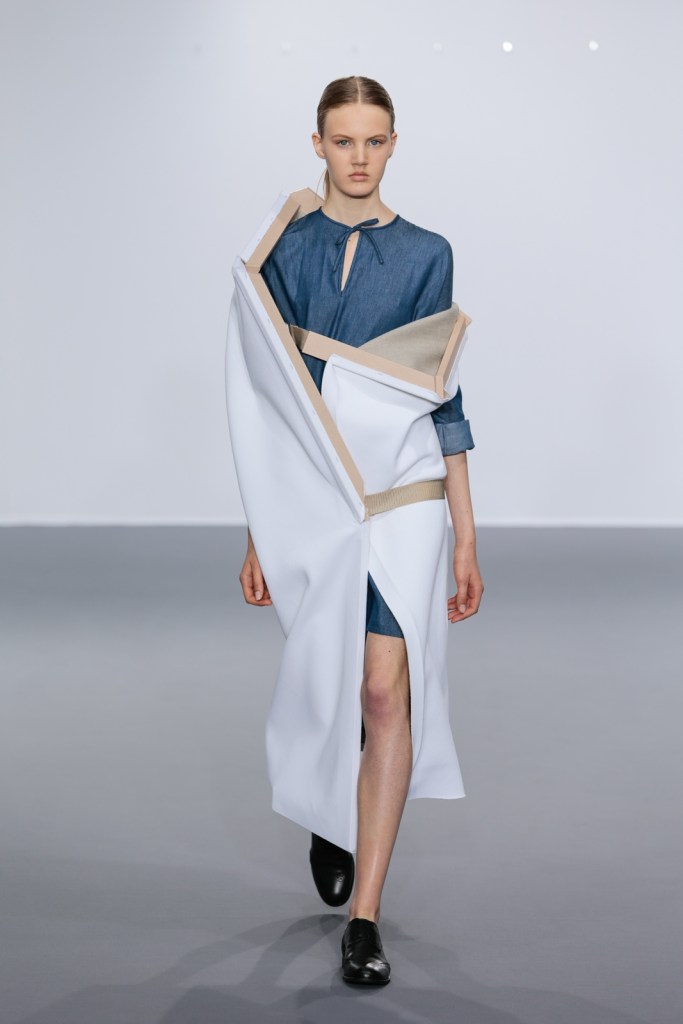
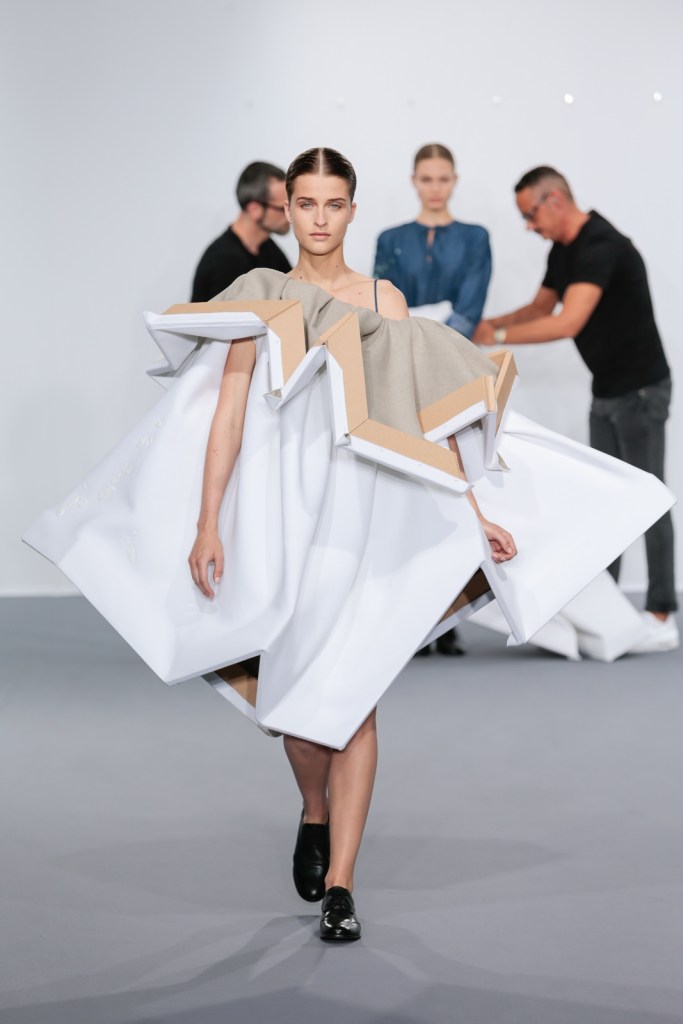
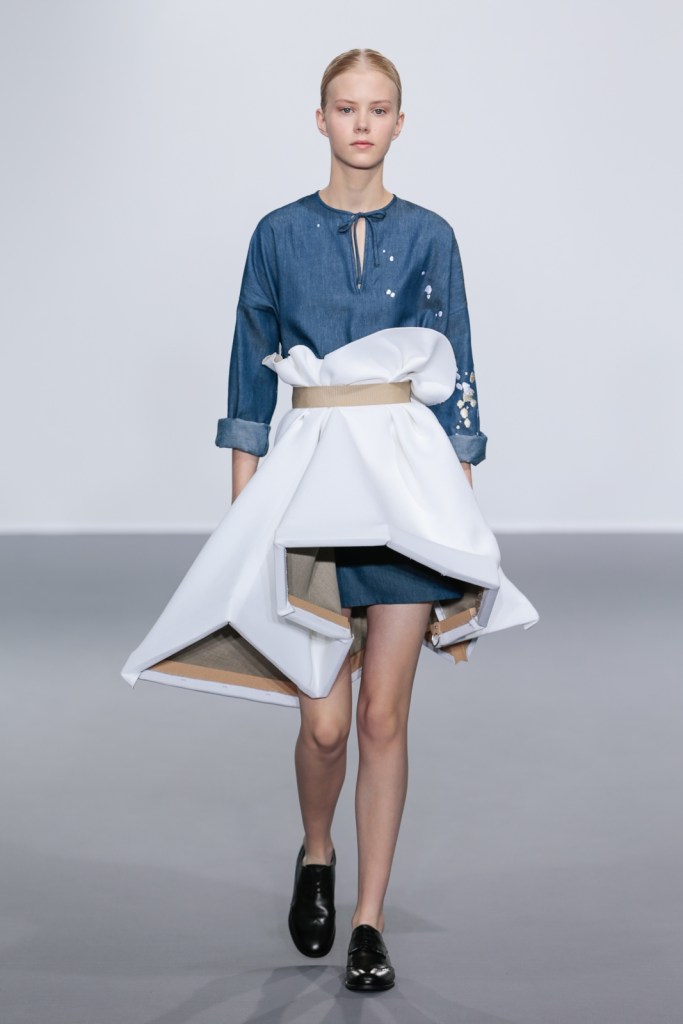
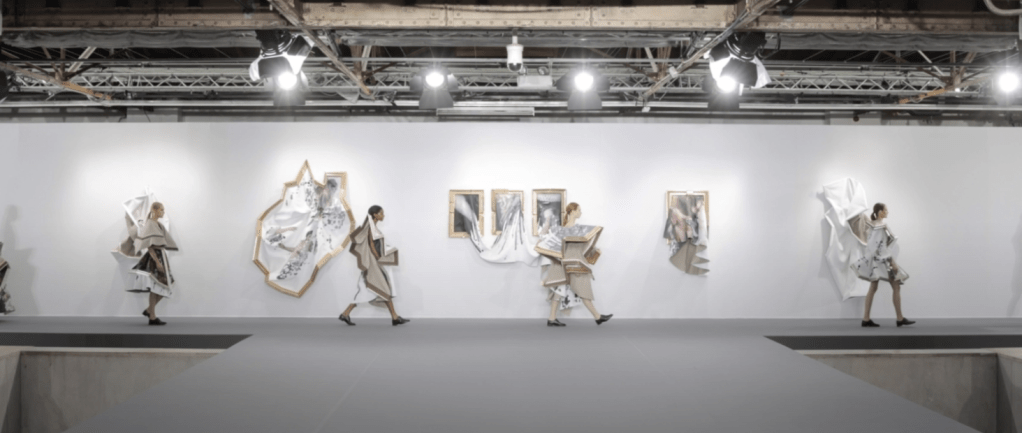
But the opening piece of the exhibition caught my attention for its full circle exploration of the interdependence of art and fashion, both through a literal physical and highly conceptual manner. The Viktor & Rolf dress is made of a broken, smashed white canvas that falls around the body to create a unique skater dress.
The piece is an opportunity to consider clothing as a legitimate canvas of expression, in an institutional environment that stills – more or less – strictly separates art and fashion. The focus here is on the material dependence of both disciplines. It leaves room not only for interpretation but for meaning-crafting. Viktor & Rolf for that matter, are often called fashion artists.


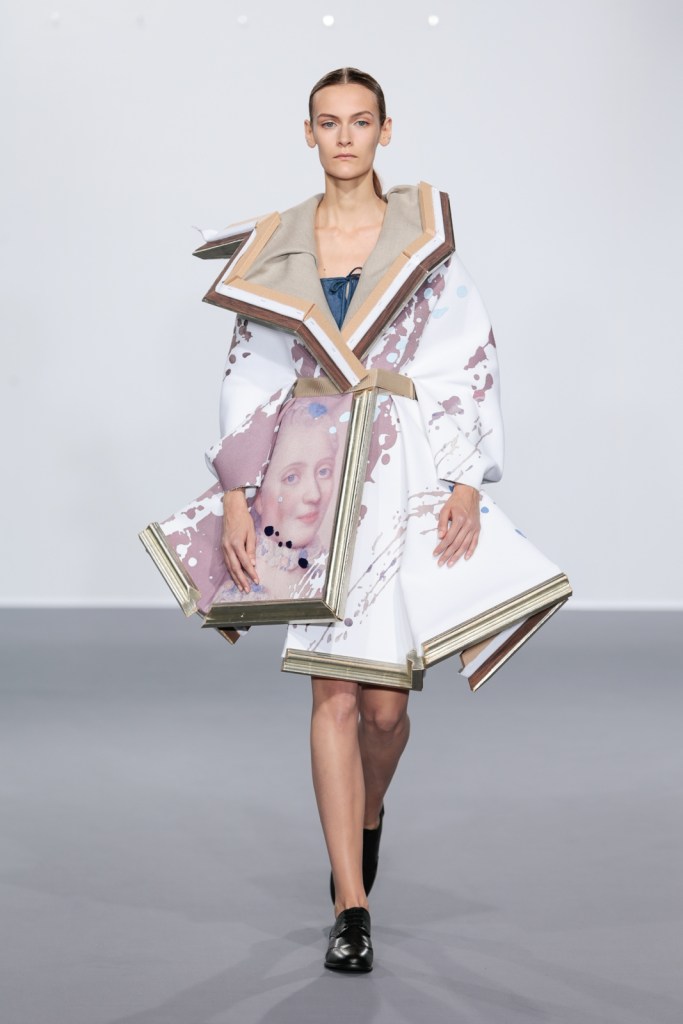
But the full collection that went down the runway further complexified the message, and the designs. The show opened with white canvases broken in various ways and tied around stained jeans dresses referencing the overalls artists wear to create their works. Progressively, motifs started to appear in a crescendo of creativity.
Representing Dutch Golden Age masterpieces sprinkled in an action painting à la Pollock way, the designers aimed at connecting past and present. And in fact, action painting could not have existed without a willingness to move away from figurative classical painting. While being seemingly diametrically opposed, the two movements are deeply interdependent.
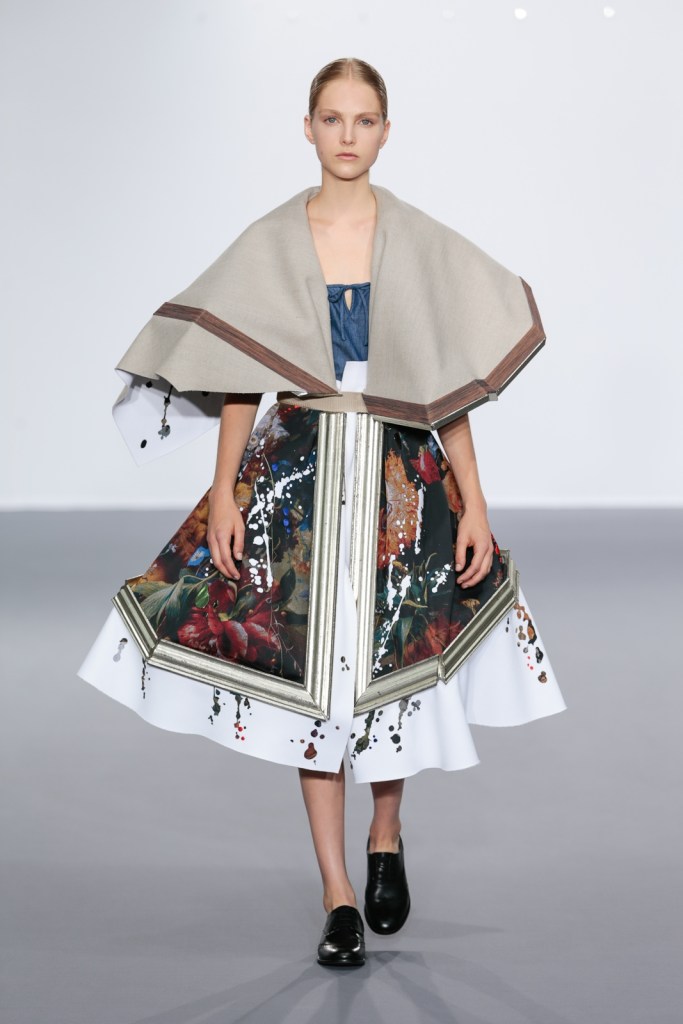
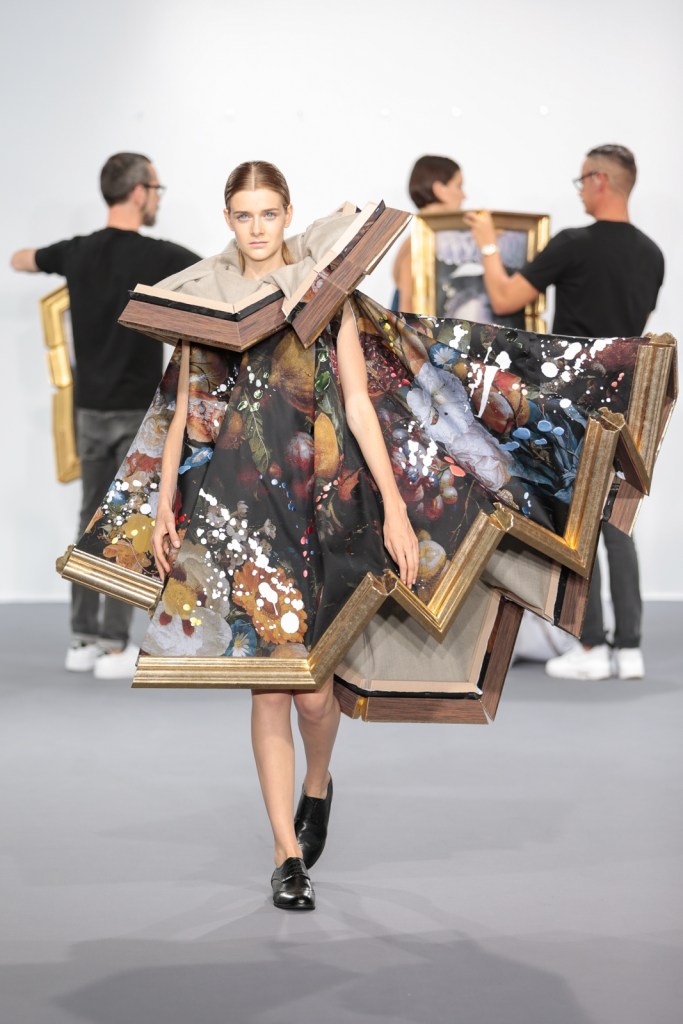
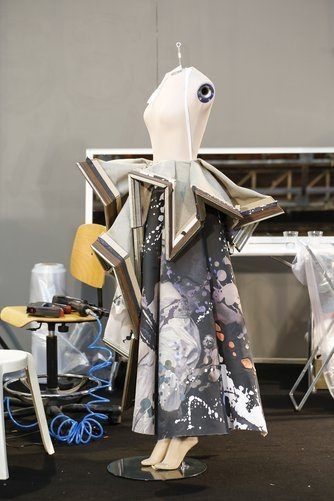
But the full circle moment goes one step further. After sending the models down the runway in intricate, various iterations of canvas breaking and bending to create coats, skirts, or over-the-top collars, the two designers undressed the models to hang the pieces on the wall. Thereby, they returned them back to the state of artworks.
The final piece even unfolded in a triptych from which fabric poured, connecting the three gold frames. Here, pieces are fashion, craftsmanship, painting, and sculpture. The designers ask the question of what is art and what is fashion and answer by refusing to give an answer.
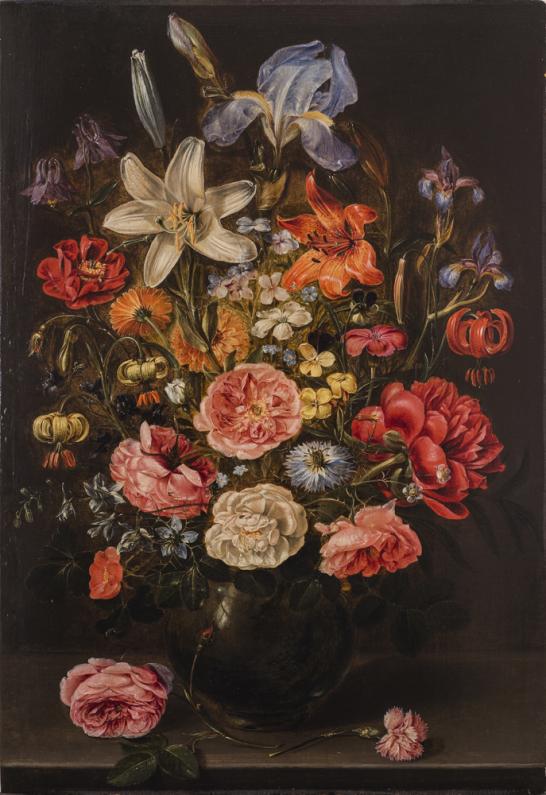
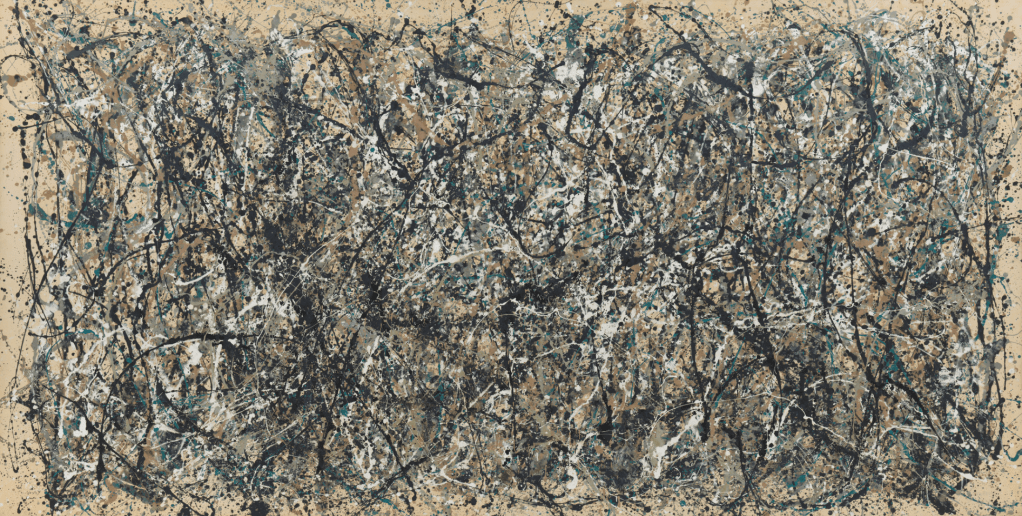
Sure, the lack of practicality tilts the choice towards these outfits being artistic pieces before being clothes. But the Dutch Golden Age outfits were questionably practical for a 21st century audience…
All in all, maybe what needs to be remembered here is that constricting things in categories stifles both creativity and interpretation. Art, like clothes, is experienced with the body. There is nothing like seeing an artwork in real life or wearing an item of clothing and feeling the fabric against one’s skin. Perhaps this deeply personal relationship in relation to beautiful things is what unquestionably reconciles art and fashion.
 mabou
mabou 
Leave a comment