This blog covers the intersection of art and luxury, so, of course, I could not not cover the last show of the prodigy child of French “pop luxury”, as labelled by the designer himself. Jacquemus last show’s, Les Sculptures took place on January 29th at the Fondation Maeght in Saint-Paul-de-Vence, at the heart of Simon’s dear Sud.
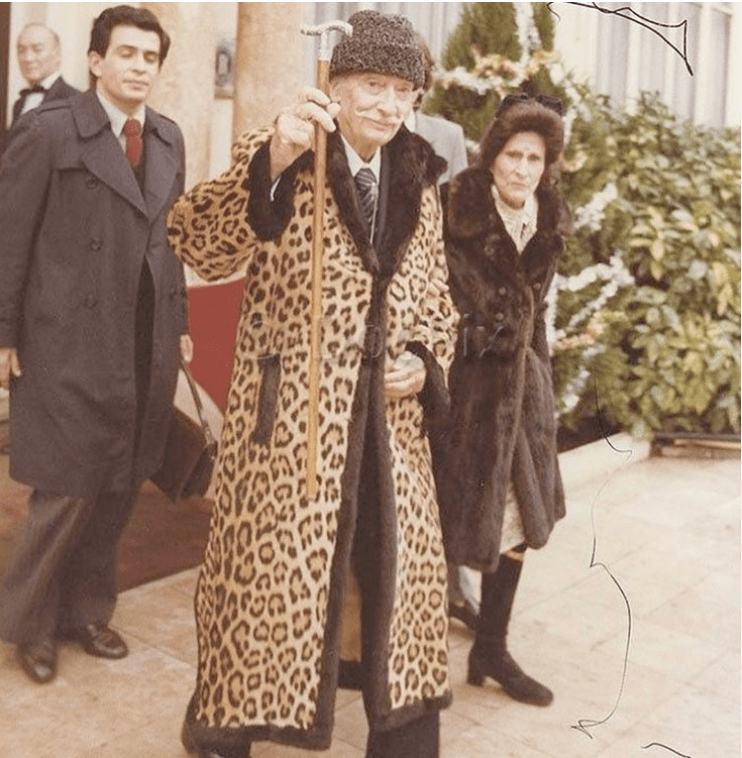
Beyond the obvious aesthetic appeal of the clothes inspired by the likes of Alberto Giacometti or Salvador Dalí – still paying homage to surrealism, a trend that has been pervasive since the end of the pandemic, as visible at other labels such as Loewe or Schiaparelli -, the collection speaks to the upmarket strategy of the house.

First, the clothes, while not being totally “quiet luxury” are definitely quieter than the decadent Versailles shapes and fabrics of last year. The round but sharp, meticulously tailored cuts, as well as the black, grey, creams with only a pop of red palette target a more mature, sophisticated audience. But the playful DNA of the brand is still strongly identifiable in trompe-l’oeil preppy sweaters or cheeky double heels, in the middle of femme fatale croc-embossed trench coats and shirt-dresses with bulging hips à la Christian Dior’s Bar.
The presence of Giacometti was visible not only in the space, but in the cuts, from the rounded sleeves echoing the Spoon Woman (1927) or the longiline sleek transparent dresses engaging with the idea of moving stillness. This concept fascinated the artist and motivated his latest studies including The Walking Man (1960), inspired by both Rodin and Egyptian art.

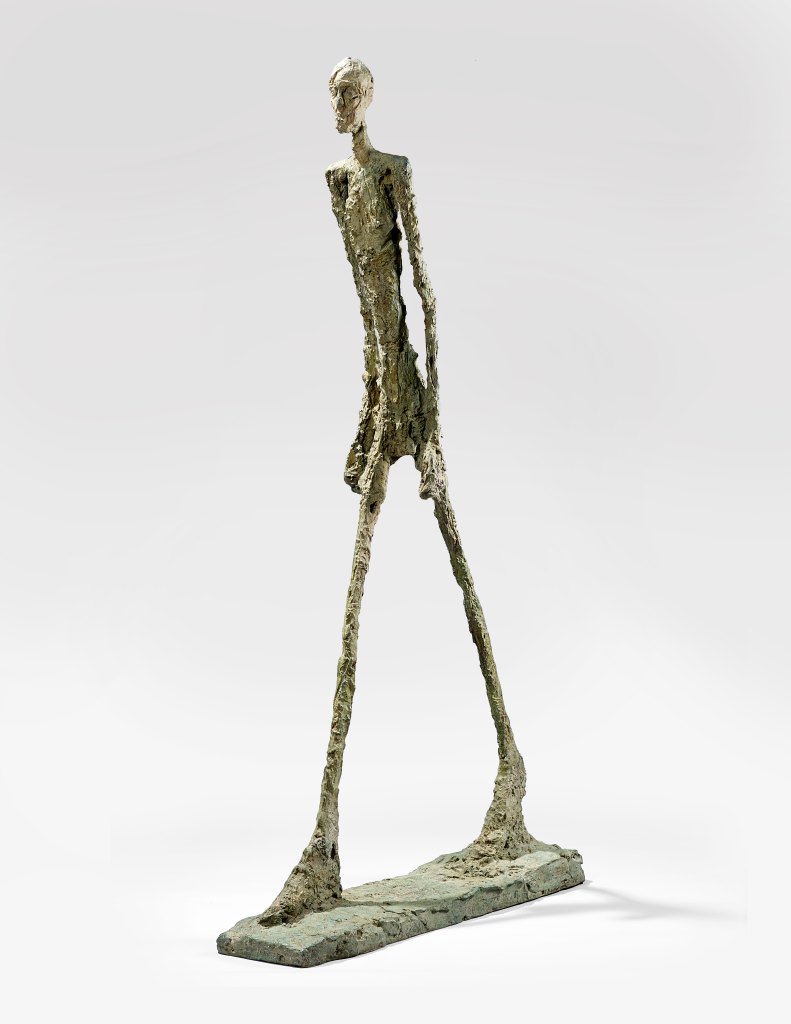
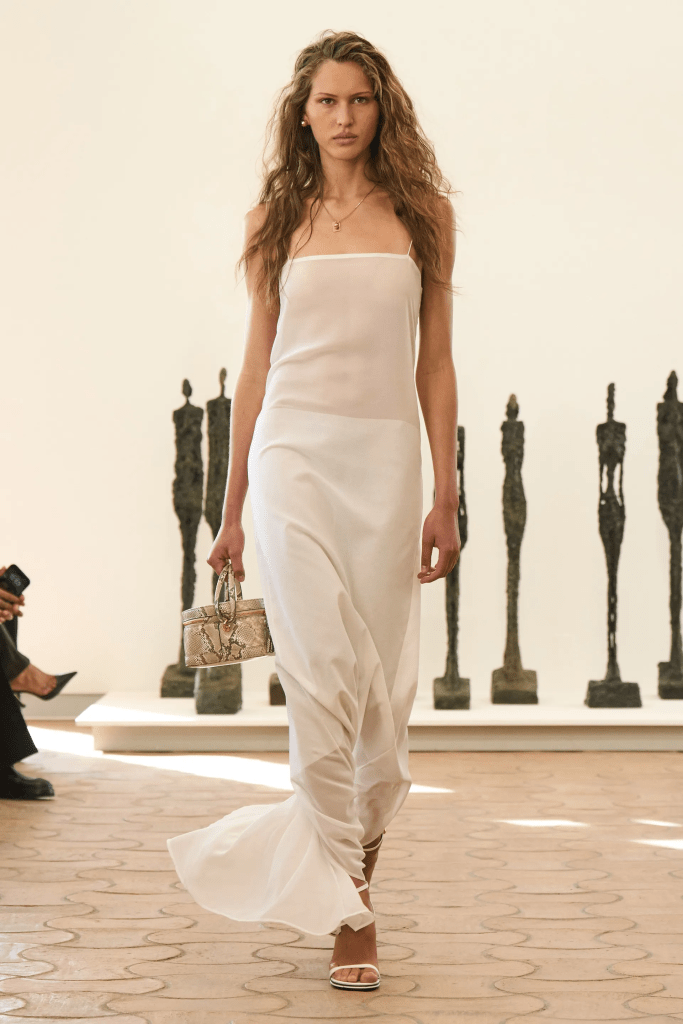
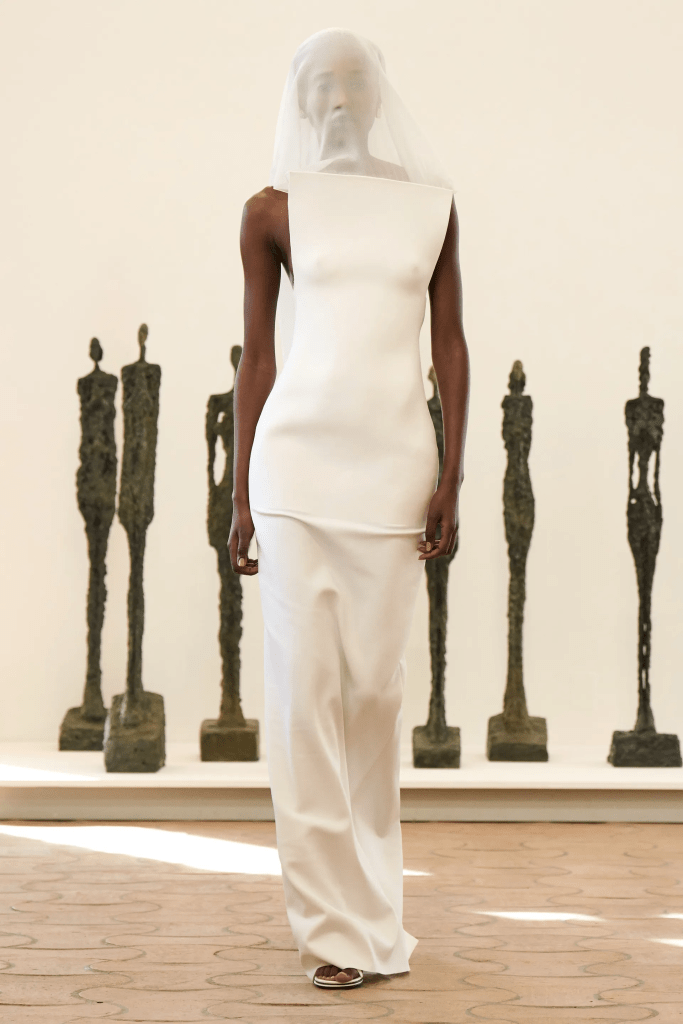
This tension between stasis and movement is a reflexion on the passing of time and change of geographical location. It engages the viewer in a sense of where and when. The notion of space and time is to be understood in relationship to the tension between the individual and the world that surrounds her or him. This deeply philosophical reflexion underlines the notion of both timelessness and modernity so dear to luxury, and, here, so dear to Jacquemus.
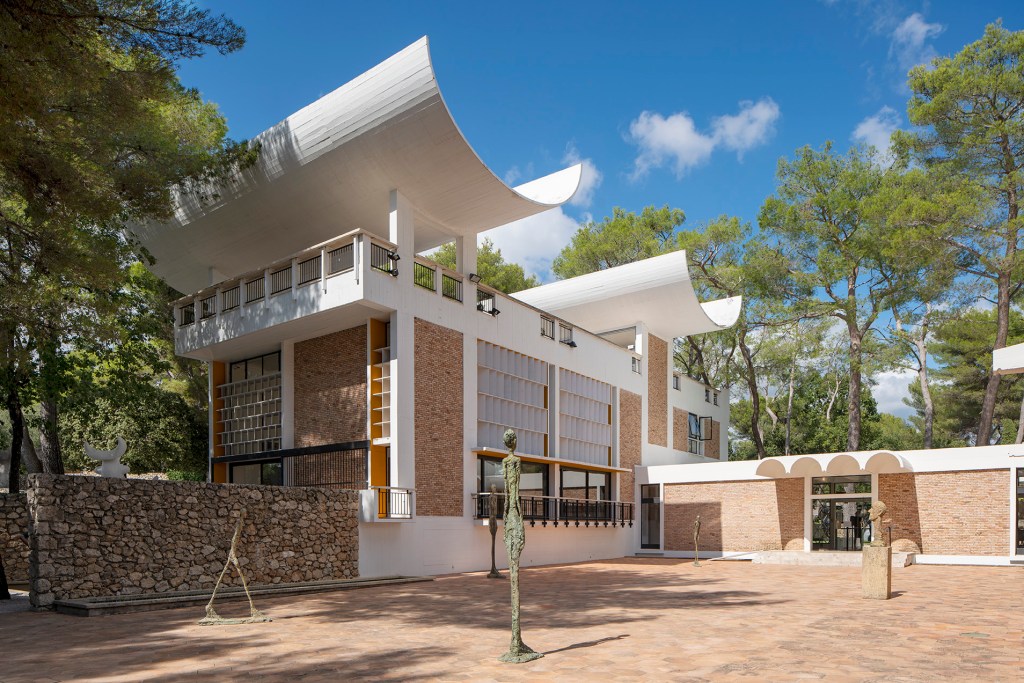
Therefore and secondly, the location, where the luxury leader Louis Vuitton held its Cruise show in 2018, is critically part of the artistic performance. It echoes the message of last year: Jacquemus belongs with the big names. Indeed, Chanel held a show at Versailles too. It is also a come back to the South as the Fondation designed by Josep Lluis Sert represents a typically Mediterranean village. Plus, by choosing to hold it in the first private art foundation established in France, in 1964, Jacquemus focuses on the human link between artists and gallerists or collectors, between his brand and his ambassadors or customers.

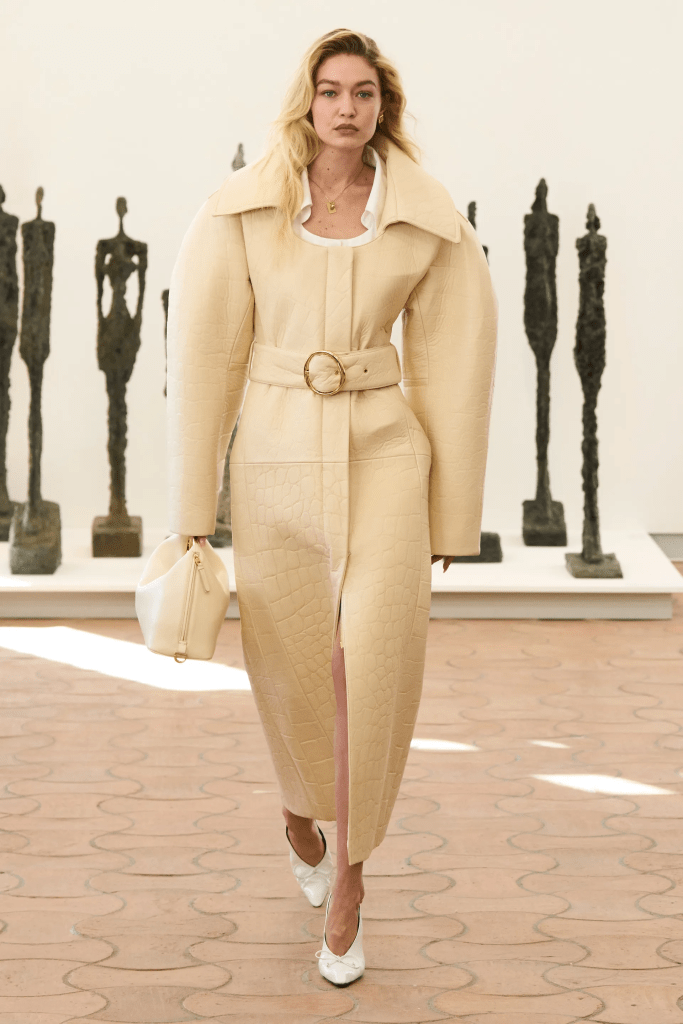
Echoing the model of private foundations in the US, like the Getty in LA, the Barnes in Philadelphia, or the Isabella Stewart Gardner in Boston, the Fondation Maeght is about presenting a couple and their family’s taste. It is a real parti pris where art historical accuracy is not as important as personal curation, and story-telling. Personal expression is more important than public approval.
Similarly, Jacquemus has been playing by his own rules, and invites his customers to do the same : fashion should not be about rules, trends or performativity, but about self-expression and uniqueness. Jacquemus himself freely interprets the work and legacy of Alberto Giacometti and offers his own vision of his work.


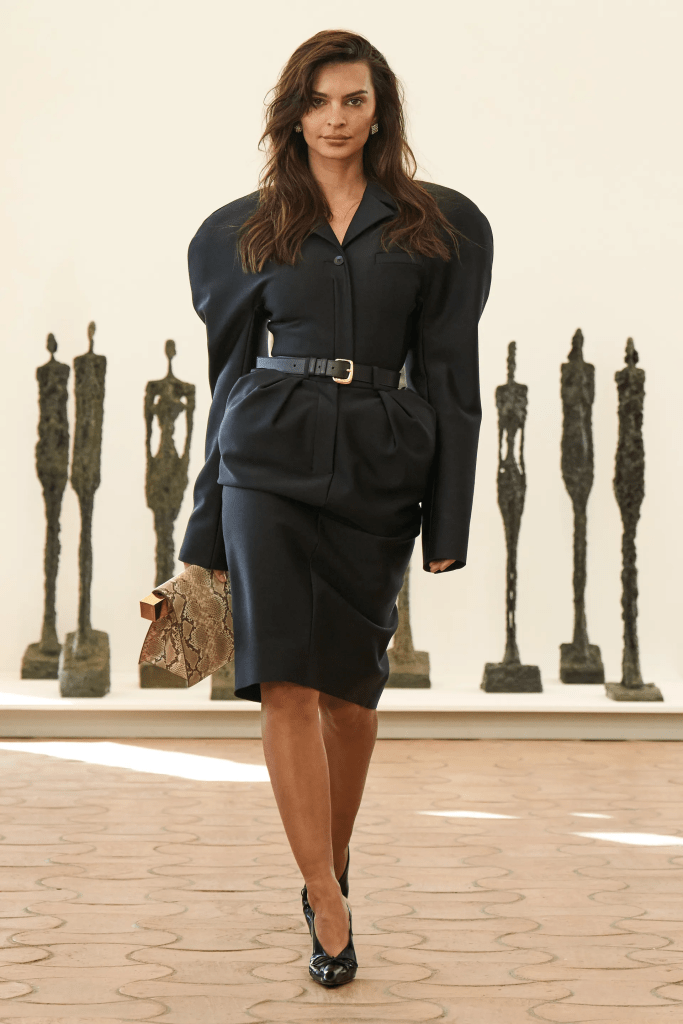
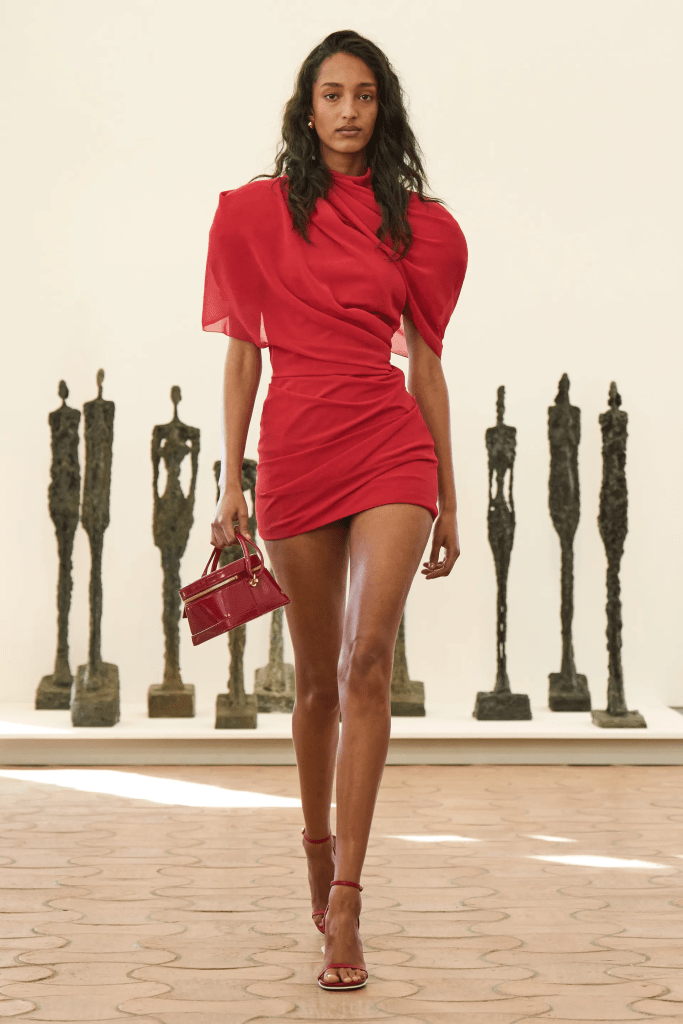
My third point is about the nature of artistic inspiration. While not really a collaboration, deciding to associate his work with an artist as important, not to say high brow,as Giacometti is a clear message of brand status. It also swiftly and seemingly elevates the brand image. While it is true that Giacometti, Miró or Braque, who are particularly well represented at the Fondation Maeght, are not really niche artists, they are not pop either. They are famous, but they deal with strikingly more serious subject matters than the ideas Jacquemus is associated with.
Right now, his brand is about drenching sun, lightness, playfulness, boldness and, well, the un-worrying South of France. The surrealist artists were dealing with metaphysical questions, the human condition, and the absurdity of life, concepts that are more of an invitation to ponder and reflect than to grab a pastis and chill. “I’ve never said ‘bourgeois’ in 15 years in fashion, but this time I wanted something so bourgeois and at the same time, an opposite idea: the artist,” shares the designer.
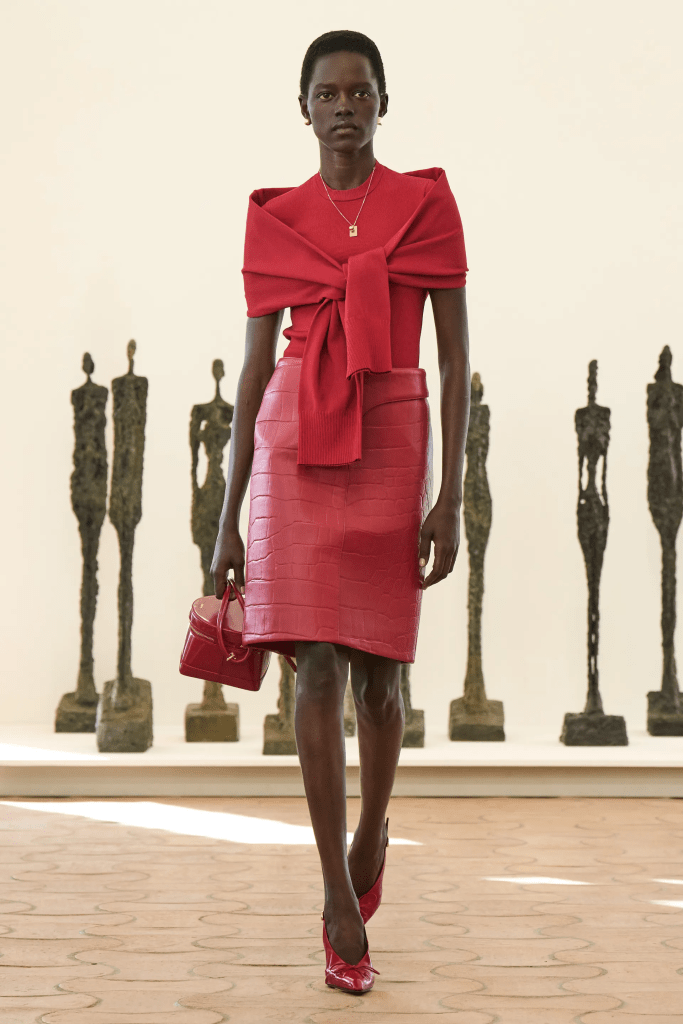
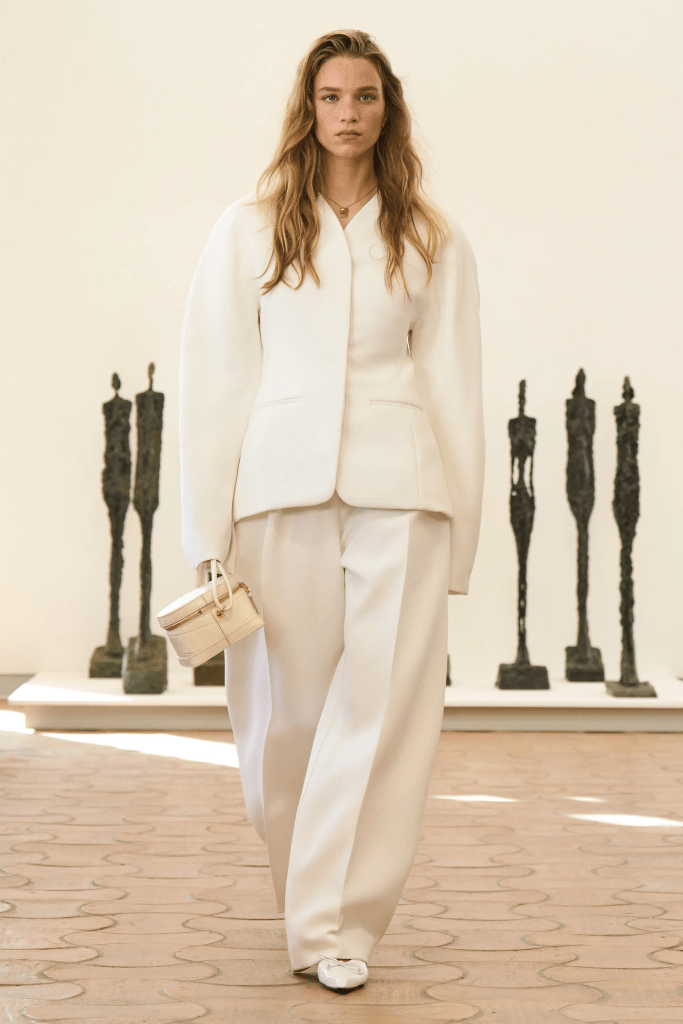
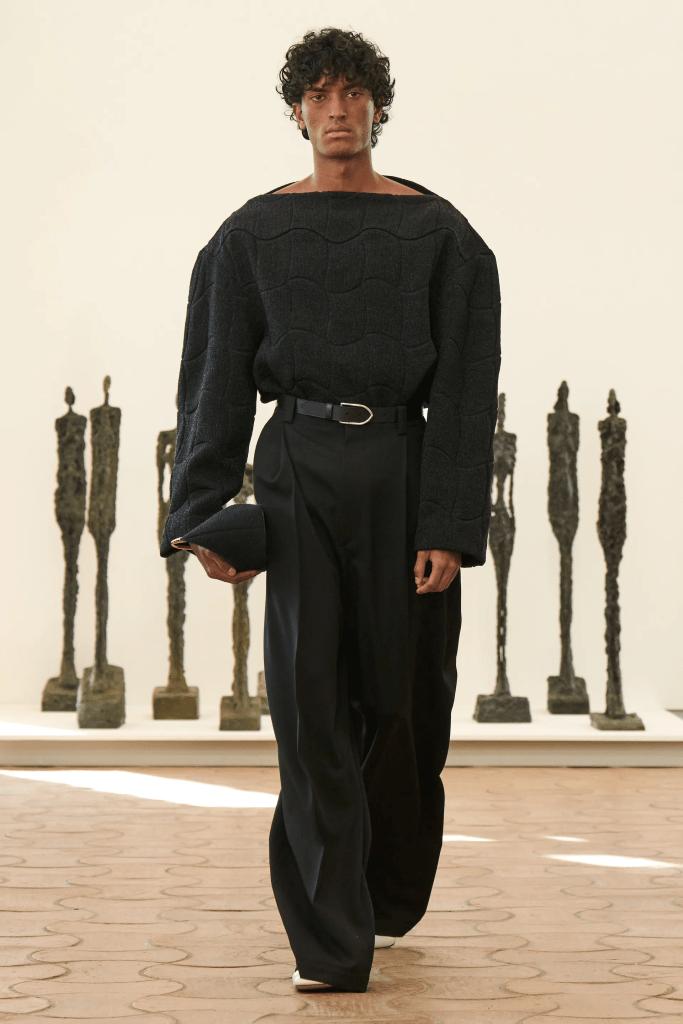
This invitation to think about our condition beyond our conceited daily lives is new and reflects Jacquemus’ willingness to anchor the continuity of his house and name. His deliberate focus on products, or “sculptures” as artworks is part of this upscaling strategy of focusing the narrative on the outstanding craftsmanship so defining of luxury houses.
At the same time, Jacquemus understands that there is no room for precipitation. He is as luxurious as he is pop and playful, as most of his communication shows. To counterbalance this definite foray into the art world, Jacquemus enlisted the iconic Kristin Davis aka Charlotte York Goldenblatt of Sex and the City (plus And Just Like That but I might not want to remember this) as the art dealer presenting the sculptures on social media as numbered and labels artefacts. “It was a way to have fun with the quiet luxury trend.” he says.
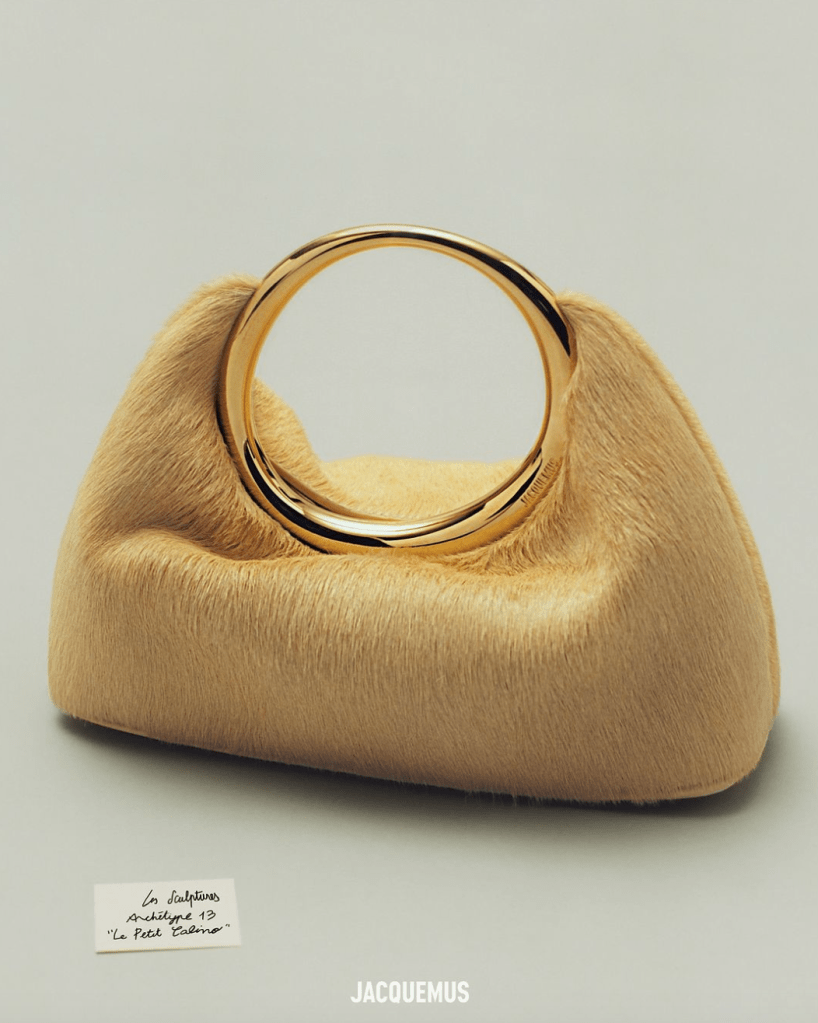


Clearly, his strategy is well-rounded and thought-through, but also critically, it his uniquely his. “I think it’s going to be super natural, this next journey for Jacquemus. I still want to keep the relation I have with my customer and the audience because it’s who I am. I always have in mind when I design also the price. It’s my balance between the entrepreneur and the designer.” Sorry, Karl, I know you said designers are not artists, but clearly, lines (yes this is totally a reference to last year’s Met Costume Institute exhibit A Line of Beauty) are moving and Simon is an artist.
 mabou
mabou 
Leave a comment