
As we ring in the New Year and with a few weeks of delay, I wanted to discuss the recent collaboration between the starchitect Frank Gehry and Louis Vuitton, unveiled at Art Basel Miami Beach in December.
The relationship between the house and Gehry is not new, as the first time he collaborated on a bag with the brand was 10 years ago, in 2014. A reedition is part of the new vintage. The architect also designed a trunk for the brands’ travelling exhibit, “200 Trunks, 200 Visionaries” that travelled around the globe, and he even designed perfume bottles in 2021.


But, the most prominent testimony of the fruitful collaboration between the two giants is the Fondation Louis Vuitton in the Bois de Boulogne. Designed to resemble a ship and quintessentially representative of the aesthetic of the designer who signed buildings from Bilbao (Guggenheim) to LA (Walt Disney Concert Hall) – which inspired some of the bags’ designs -, the FLV embodies the institutionalization of fashion curating high-brow culture.
Louis Vuitton has been collaborating with artists in various forms through its storied past, and more prominently since at least 1988. But a notable institutional turn is taking place. Last year already, Louis Vuitton had a booth at Art Basel Miami Beach showcasing their collaboration with Yayoi Kusama. They had another one featuring some of their Artycapucines pieces at Paris+. The message is clear, their bags are not only luxury pieces, they are art, and should be considered as such.

The display is museal: glass cases, capitols, explanation labels, dates, exclusive materials and designs are all important, sometimes new features that LVMH is embracing. For the skeptical reader thinking this strategy is location and event specific, let me share my experience a few days ago at the Tiffany&Co (LVMH Group) Landmark store on Fifth Avenue. As I walked into the elevator (which you cannot call by yourself for lack of button to press), the sales associate said “the store is like a museum where you can shop”…
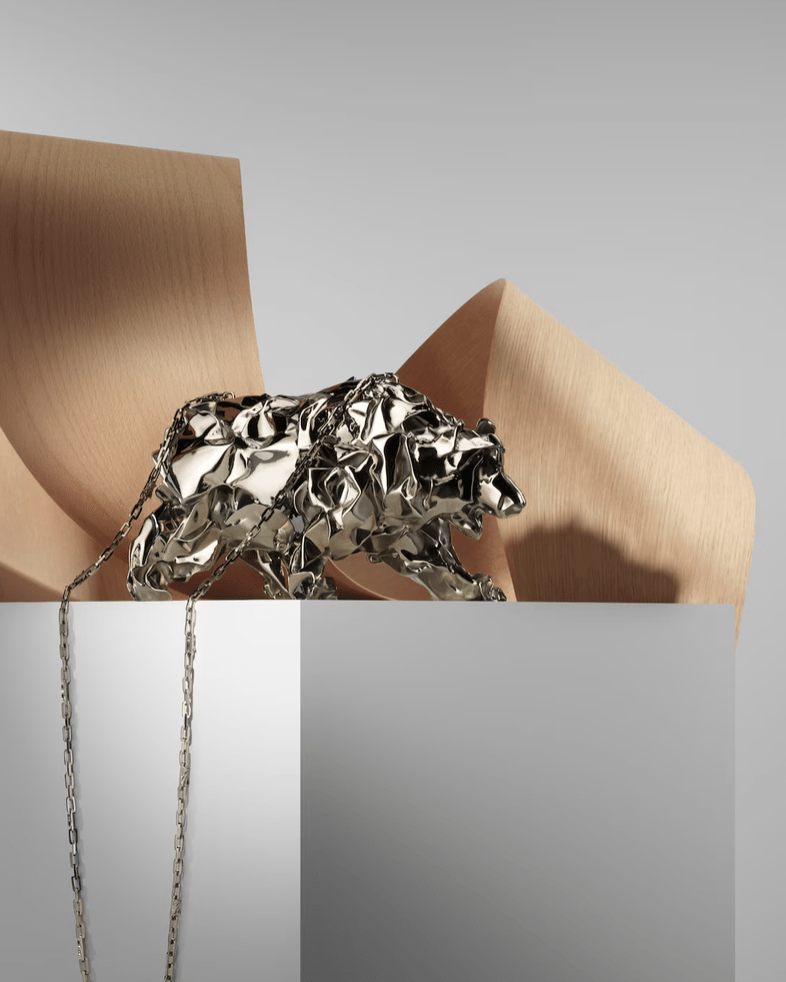
The pieces of the Gehry x LV collaboration, obviously – elephant in the room – are museum-worthy. They all combine the unique vision of Gehry to the exceptional craftsmanship abilities of the Louis Vuitton Ateliers using advances 2-D and 3-D printing techniques. The Capucines MM Concrete Pockets is inspired by the Guggenheim Bilbao. The Capucines BB Analog Bag pays tribute to the IAC Building in New York. The Capucines BB Shimmer Haze is inspired by the Seattle’s Museum of Pop Culture. The Bear With Us Clutch is a metal replica of the Bear with Us sculpture from 2014.


And of course, the Capucines MM Floating Fish is a direct reference to the piscine light fixtures of the FLV. For LV’s building, a more intimate and unique reference was preferred. It is not enough to have seen the building from outside, you need to have walked in and experience the space, the art, in order for this reference to speak to you.
At surface level, the Capucine handbag is the subject of the collaboration. But it is only the support. The subject is the FLV, the corporate museum that is a window into the artistic references LVMH deems worthy. This collaboration is another foray into the group become a cultural curator and shaping global references not only in the streets.

In France at least, arts and culture are a State affair, with museum directors and curators being public servants entrusted with intangibly valuable assets that belong to humanity’s “patrimony”. Yet, this role is increasingly shared with the private sector. Specifically, the luxury sector.
This is a critical shift. Fondations are common in the US, and many museums are private, endowed institutions like the Getty in LA – the richest private museum in the world -, the Isabella Stewart Gardner in Boston, or the Barnes Foundation in Philadelphia. Art, then, can be seen as public good in private hands. Yet, these foundations do not have any commercial interest.
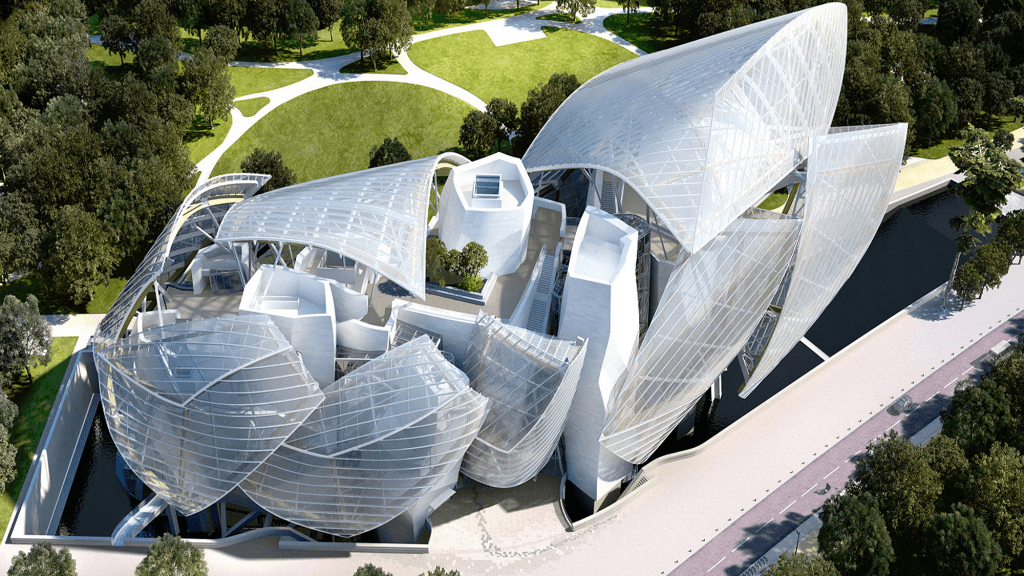
The FLV is a peculiar beast because it is unique in terms of the private/public dichotomy, but also because of the commercial/non-profit aspect of the question. Unsurprisingly, the Gehry collaboration is offered at price points matching the exclusivity of the goods. Ranging from $11,400 for the black Twisted Box to $34,500 for the Crocodile Capucine Mini embroidered with a fish skeleton, the prices are investment-worthy.
To conclude, this collaboration not only elevates the LV brand, but also positions it as a cultural reference, akin to galleries and museums. Luxury, for all it shares with the arts, used to be seen as an industry of its own. This collaboration is another example of the collusion of the art market and the luxury industry going in the direction of becoming one. This shift has been gradual, accelerating over the past ten years, and in my opinion, reaching a critical point when the collaboration between LVMH and Art Basel started materializing last year.
 mabou
mabou 
Leave a comment