After a quiet Summer in the land of luxury collabs and even more in the land of luxury x art collabs, September is off to a stellar start with the collaboration between the French make-up and skincare brand Lancôme – under the helm of L’Oréal – and no less than the most famous temple of art, the iconic Louvre Museum.
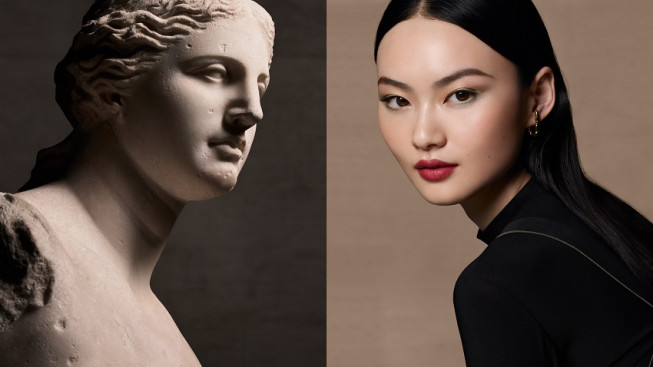
On September 4, the two parties released images of the campaign shot in the Richelieu aisle of the museum welcoming some of the most important Antique statues of goddesses, the focus of the campaign. To be precise, it includes the Venus de Milo, the Victory of Samothrace, Corine, Diana of Gabies, Nymphe with a Scorpion, Echo, Hygieia, the Venus of Arles and, finally, Hermaphrodite.

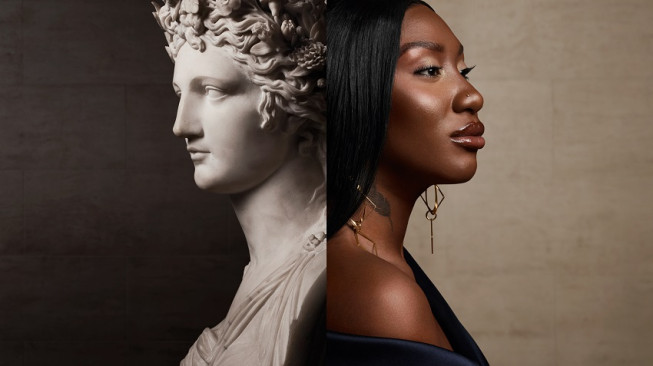
The campaign also features four ambassadors of the brand: Zendaya, Aya Nakamura, Amanda Seyfried and He Kong, modern beauty icons. The goal of the juxtaposition is to question the evolution of beauty standards from Antiquity to nowadays. It also questions how, as a society, we can continue to make these standards evolve to represent the increasing interconnectedness and multiculturalism of our daily lives.
Among some of the most striking images are Aya Nakamura in front of Corine, poet from the 5th century BC sculpted by Edme-François-Etienne Gois in 1836, He Kong standing by the Venus de Milo, Amanda Seyfried alongside Diane of Gabies, and Zendaya floating by the Victory of Samothrace at the top of the Daru stairs. She wears a dress echoing the wings of the statue and the famous scene in Funny Face (1957) with Audrey Hepburn.

The Louvre was founded in 1793 after the French Revolution and was converted from a Royal Palace to a cultural Palace for the people. It is a symbol of tradition adapting to a changing modern society. It has since been a place of constant inspiration for artists globally, including for Elsa Eldridge, the Director of Make-Up Creation for Lancôme. “Art and History, alongside vanity and beauty, are extremely telling concerning human nature, social changes and the humain mind. I find creativity to be a much more insightful way of learning history.” she says.
For Lancôme, the collaboration is a way to advocate for wider beauty standards and expand their audience. For Françoise Lehmann, Lancôme Global Brand President, “beauty is art in motion; beauty itself, as a personal ritual, is a means of expressing and distinguishing oneself, through constantly evolving codes – or no codes, to be honest.”

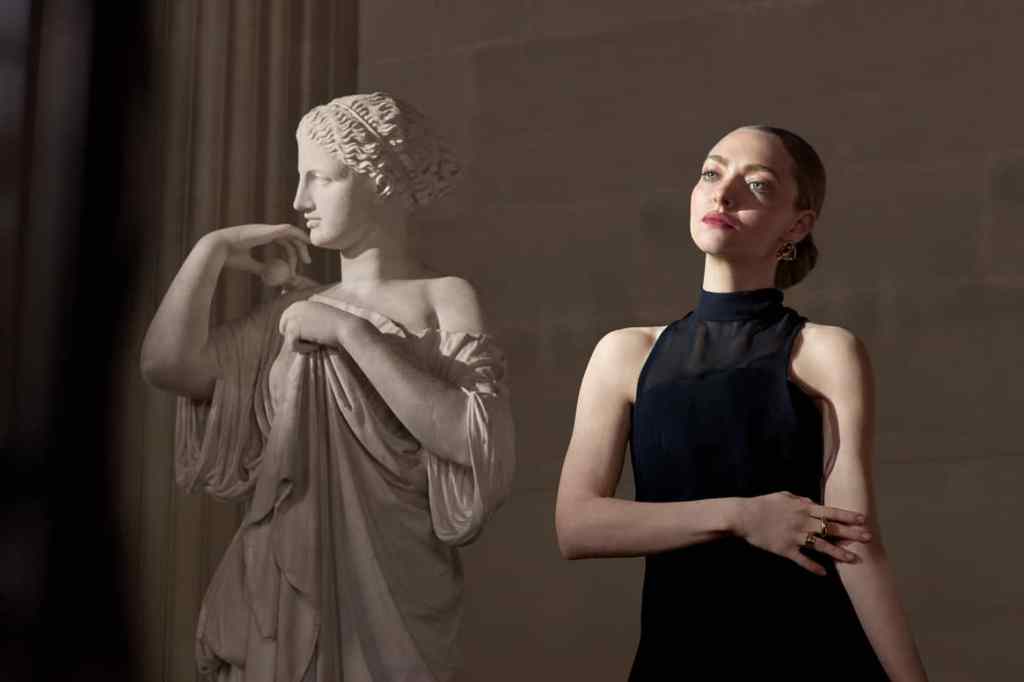
The choice of Antique statues alongside women of different skin colors establishes that white skins are not the central audiences anymore. At the same time, the fact that these statues were originally painted and not white strengthens the legitimacy of the message. The dominant idea that white skin was an ideal of beauty was entirely constructed in the following centuries by a European continent willing to assert its perceived superiority.
Collaborating with the Louvre, one of the most important art historical institutions underlines that this position of diversity and inclusivity is now mainstream. It is not a niche marketing stint but a high-profile collaboration with a key authority concerning beauty standards.


“The history of art and beauty, the “making” of beauty, the quest for beauty, are intimately linked. Pop culture – the culture of moving images, advertising, social media and our daily lives – is often inspired by these timeless images and representations, sometimes very scholarly, sometimes very ancient. (…) With this collaboration, the Louvre as a modern-day artistic space is contributing to the rewriting of beauty in the present.” says Laurence des Cars, President-Director of the Musée du Louvre.
This collaboration has a dual reflexive effect on the two brands: it inscribes Lancôme’s work in the long history of beauty standards, and therefore belonging to the classical culture of Western civilizations. At the same time, the Louvre is acknowledged as a laboratory spurring modern ideas able to be relevant to changing societal expectations. For both, it places them as shapers of global trends, addressed to a diverse audience navigating a multicultural landscape on a daily basis. Like the visitors of the Louvre. Like the clients of Lamcôme.
 mabou
mabou 
Leave a comment