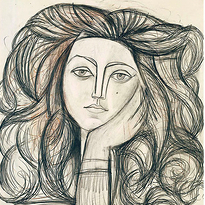
It is no debate that Schiaparelli is one of the houses that pioneered collaborations with artists as a defining strategy from the inception of the house, a legacy well preserved by Daniel Roseberry, the American designer now at the helm of the Parisian Maison. His collections are replete with references to surrealist art, a theme dear to Elsa Schiaparelli, materializing with oversized body-parts as accessories, unexpected materials, daring shapes and sophisticated, out-of-the-box cuts.
For this season, the show, titled “… And the artists”, did not only give a nod to the artists, it took them as the central subject. Rather than being a mere source of inspiration, artists were the focus of the show, and their vocabulary was merged with Schiaparelli’s icons, from the keyhole to the heavy use of metal jewelry to oversized shapes.


While each look feels like a composition worthy to be called a masterpiece, Roseberry insisted on the fluidity of the combination of pieces rather than on creating a defined look, suggesting conversations between the different elements of which the inspiration spans from the entire timeline of Western Art History.
While he is usually both designer and stylist, he gave a bigger space to styling, that is, to the opportunity to create different interpretations. “I found freedom in separates” said the designer. Similarly, the curation of different artworks in an exhibit is critical to make them tell a story, and to bend and expand the messaging power of the artworks.


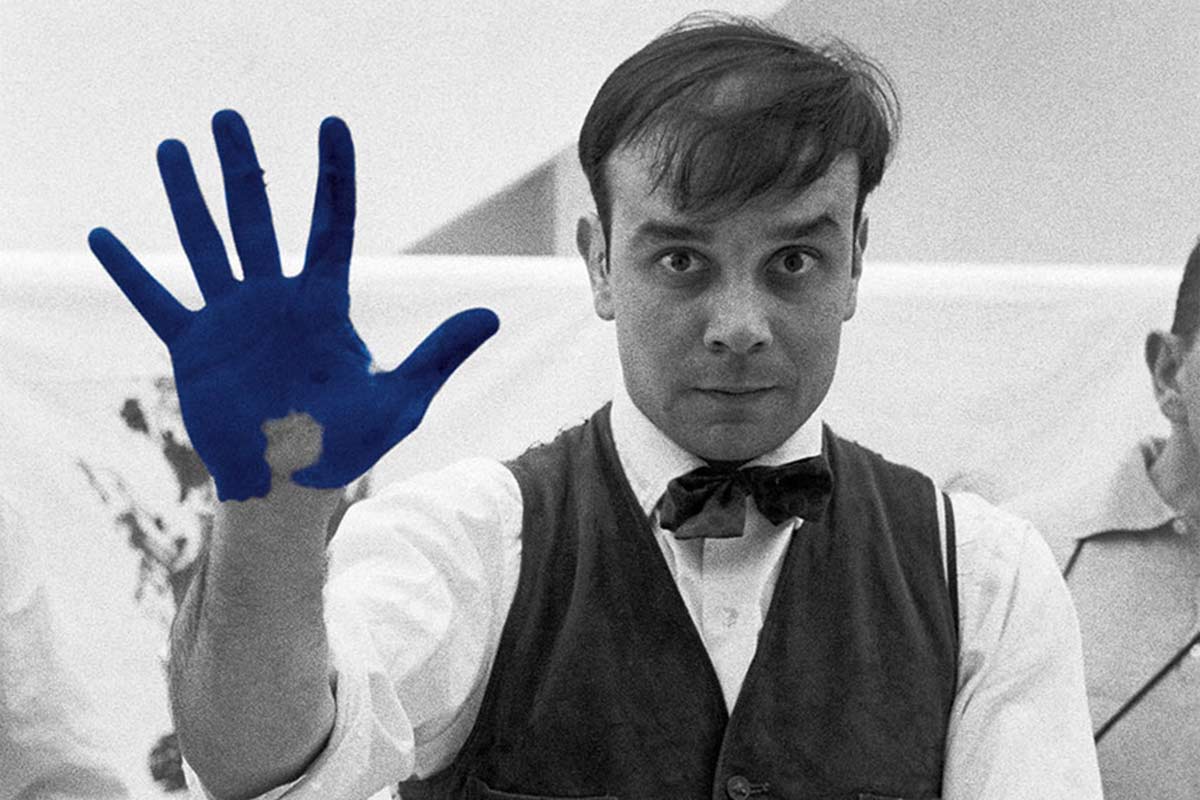
- Schiaparelli Haute Couture FW23, Courtesy Schiaparelli – Joan Miró, Blue II, 1961, Courtesy of http://www.Joan-Miro.net – Yves Klein – Portrait of the Artist. Hand colored with International Blue, Courtesy departures.com
The show opened with a black and white shape-bending ensemble, with an exaggerated collar and skirt, setting the tone for the exploration of the unexpected and the uncanny. The apple bag can be interpreted as Eve’s attribute in the genesis, a theme that has been endlessly interpreted by artists. It can also be one of the reference to artist Claude Lalanne. The second look features a trompe-l’oeil coat with a roman Venus, an icon of Antique art.
Later in the show, a full look in Yves Klein blue questions the practicality of clothes: the top has been hand-painted on the model’s body and she holds her skirt, a reference to the absurd component of some of Klein’s realizations? Or maybe an ode to the imperfection of human creation that is not always use-oriented. It is also a reference to Miró’s illustrations for children, showing the multiplicity of interpretations offered to the viewer. References to Dalí, an artist with whom Elsa Schiaparelli collaborated, are more diffuse, through sunrise colors on a beaded dress for example.


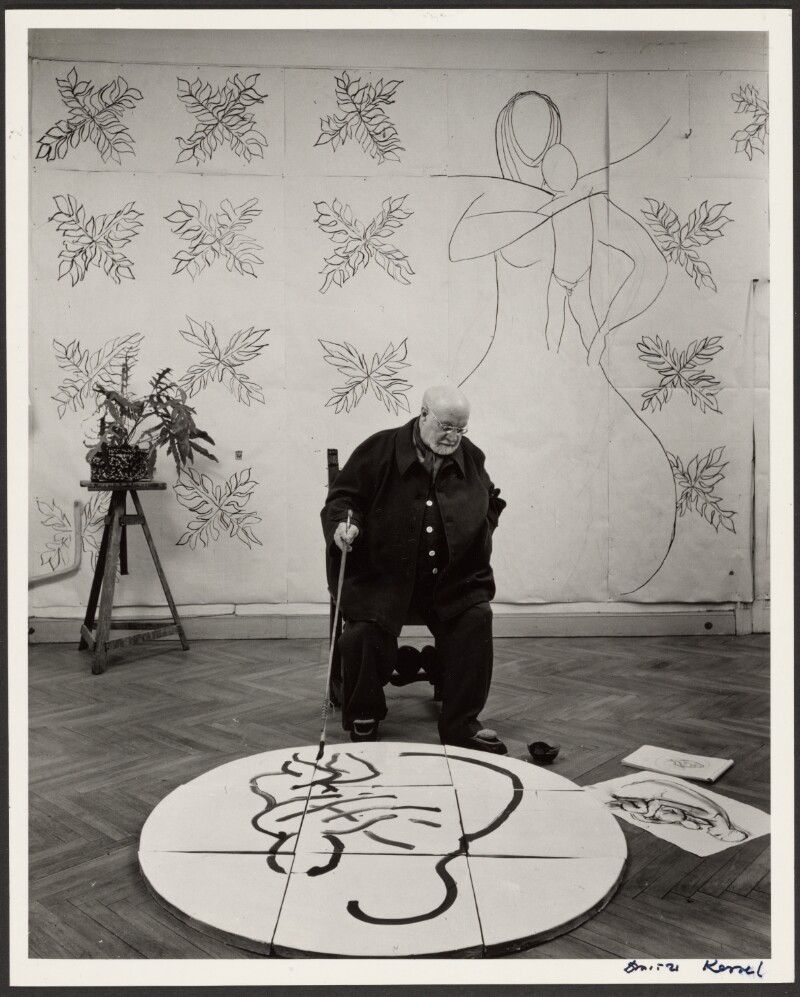
In a literal fashion, Lucian’s Freud brushworks were hand-painted on a woman’s body before being printed on a dress, elsewhere, his studio environment blossom on an oversized puffer coat. Matisse’s work is referenced in a black feather coat in the shape of a palm tree, recalling the Hotel Regina in Nice, while dove necklaces can be mistaken for plants and leaves necklaces blossoming through the show.
“The sculptor Jack Whitten’s mirrored mosaic pieces gave birth to a broken-mirror stretch cardigan and skirt.” and a mosaic ensemble, blending past and contemporary references, said Roseberry in the show notes. Giacometti’s sculptures were also a source of inspiration for the jewelry, where “as skinny drops of stone- capped gold” become a new addition to the Schiaparelli accessory-box.



In short, this collection is a cacophony of references interacting together to make a claim: in a world where the machine seems to be able to do everything better, Roseberry pays hommage to what makes us human: feeling, and expressing those feelings through creativity and the unique imperfections of the human-made. “We live and create fashion in a time when creativity, internet-breaks, and celebrity gags come at us weekly, daily, and now by the hour.”, and this collection is “rooted in artistic references that feel timeless. To dress, decorate, but most importantly, to create, is as primitive as any instinct we have.”
References do not necessarily make sense together, and this collection feels more like an exploration than a consistently tied message-bearing presentation. Pieces are linked through similar references visible across different looks, but those references do not always obviously make sense together. Roseberry pays hommage to the ability of the human mind to create beauty out of seemingly unexpected cross-overs, but most of all, to refer to the already existing beauty to enrich our collective consciousness.


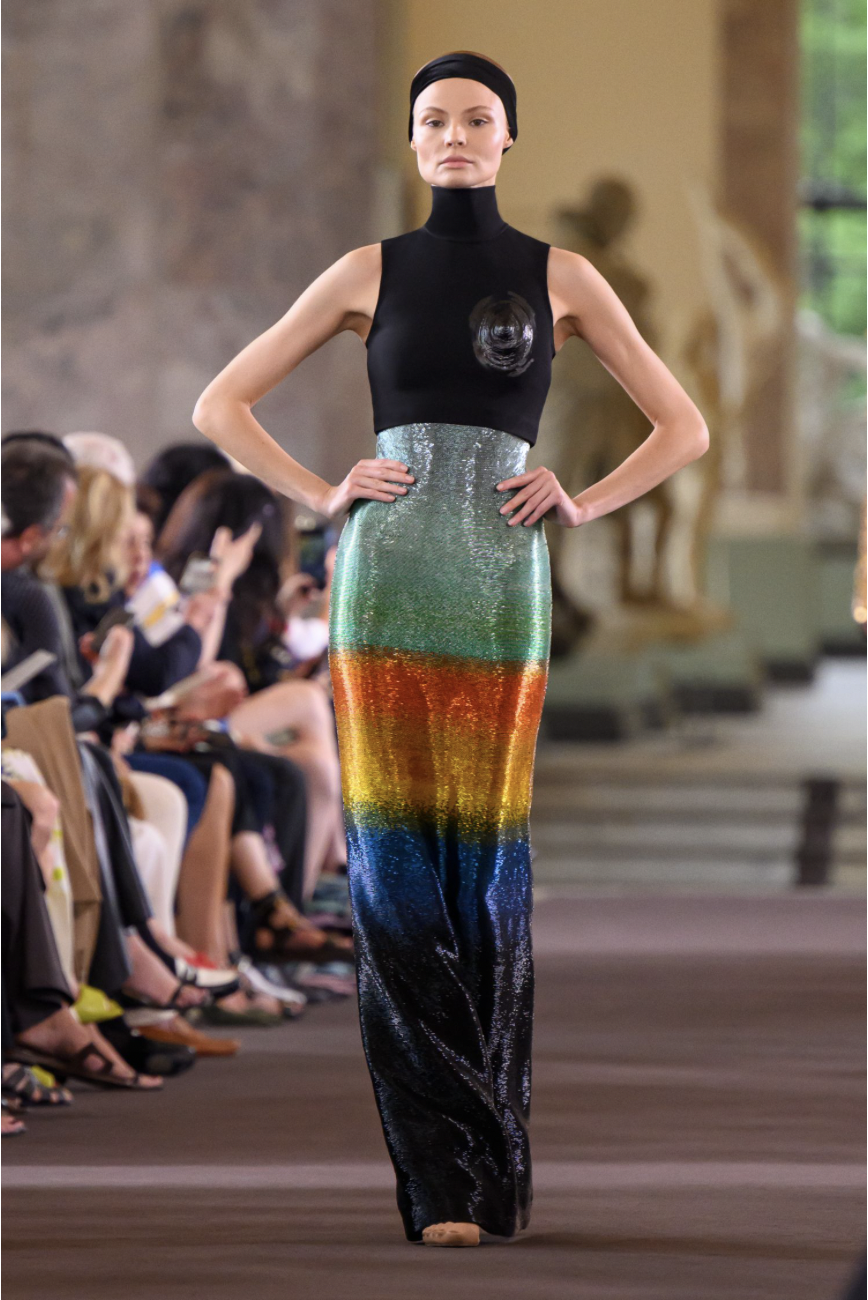

- Schiaparelli Haute Couture FW23, Courtesy Schiaparelli – Jack Whittens, Atopolis: for Édouard Glissant, 2014, Courtesy MoMA – Schiaparelli Haute Couture FW23, Courtesy Schiaparelli – Salvador Dalí, The Persistance of Memory, 1931, Courtesy MoMA
 mabou
mabou 
Leave a comment