Simon Porte Jacquemus is quite unequivocally one of the most, if not the most talented designer of his generation. Standing at the intersection of absolute distinction and popular references, he showcases show after show, campaign after campaign, and collaboration after collaboration, his perfect mastery of the balance between tradition and edginess.
The FW23 June 26th show – at the tail of the Men’s Fashion Week – in the Château de Versailles was another one of his masterclass. Jacquemus has established a distinctive style for his fashion, inspired by the South of France, endless sunny days, plays on proportions and skin reveals. Has it created a form of fatigue? Maybe, after all, in a society where our senses are overstimulated and used to crave new things, fashion gets boring before it gets interesting. But, somehow, Jacquemus always finds a way to stay, or rather to be relevant.
Indeed, his shows are always so masterfully engineered, for the attendants, but most of all, for the online community, that his clothes could be the least interesting thing in it all. It definitely was not the case in Versailles. This collection was an hommage to France’s royalty, but not to its rustic, royalist and unquestionably problematic undertones. It was an hommage to the French culture and its people.
The extremely popular Jacquemus King is a King of the People, like Lady Di who was a central inspiration for the show. Princess Diana is remembered for her modern take on the role of royalty, and while the French people took a more extreme approach to the question than their neighbors across the Channel, the French patrimony now belongs to its people.


Versailles is not only a remnant of the mighty power of the Sun King Louis XIV, it is a crown jewel of the French History and Heritage. It belongs to the most refined elements of pop culture. This, madame, is Versailles. It can be easy to be swallowed, impressed and humbled by so much grandeur. Yet, the fact that the show happened along the Grand Canal, with guests – themselves old and new icons of pop culture – watching along a deep intense red runway from intimate boats, allowed for other, more contemporary references to stand out.
Red, for that matter, is one of the most widely used regal color, from Charlemagne to Louis XIV, but it is also the color of love. Jacquemus is not trying to inscribe his Maison in the continuity of the designers of the Cour, where luxury was born and which was a source of inspiration for Karl Lagerfeld at Chanel before him. He is interested in the popular imaginary, common people’s reinterpretation of the historical references. Modernity, and not historicity was front and center.


Royalty, yes, but the one from Jacques Demy in Peau D’Âne, surrealist, absurd, and poetic. Kings and Queens, absolutely, but in the eyes of Sofia Coppola in the 2006 Marie Antoinette, enchanting for the least, but utterly historically inaccurate. Unreachable superiority, certainly, but the one of the heart, embodied by Lady Diana. Jacquemus’ take on royalty is idyllic, scandalous, and edgy. It is a fantasy in which everyone is welcomed if willing to dream.
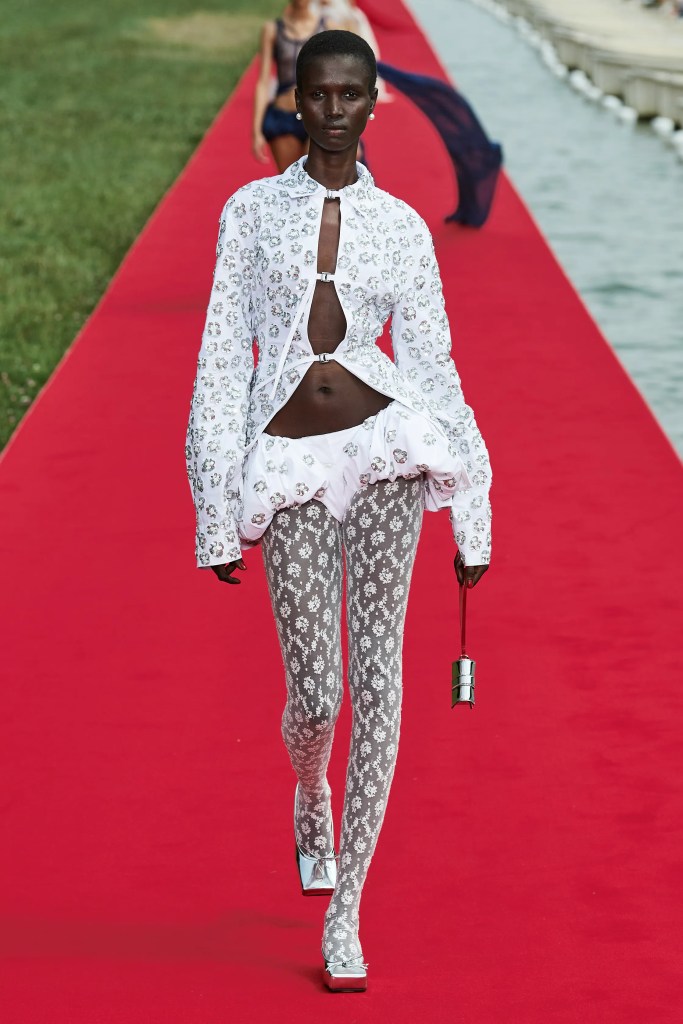
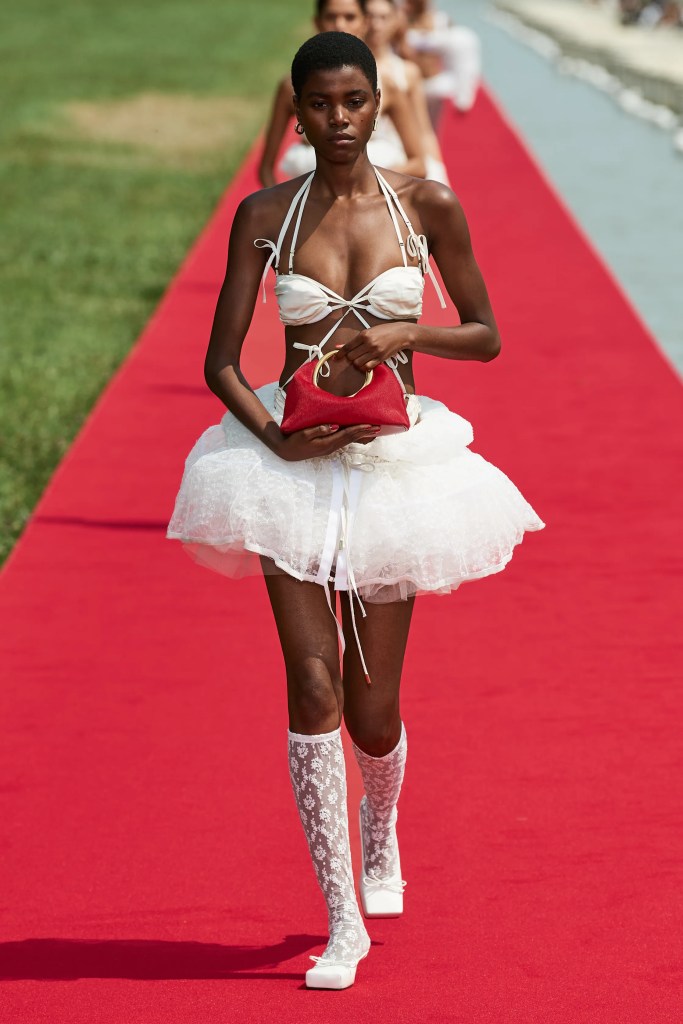
The strength of Jacquemus’ creativity is his ability to play on several levels of references. You do not need to know anything about fashion, the French culture or Versailles to find the show entertaining: puffy sleeves have been in for a few seasons, so have bras as tops, micro shorts or micro bags. Ballerines have been seen everywhere from Miu Miu to Alaïa. The bleu-blanc-rouge dresses at the end of the show could be the easiest, not to say laziest reference to France.


en costume de sacre, 1701
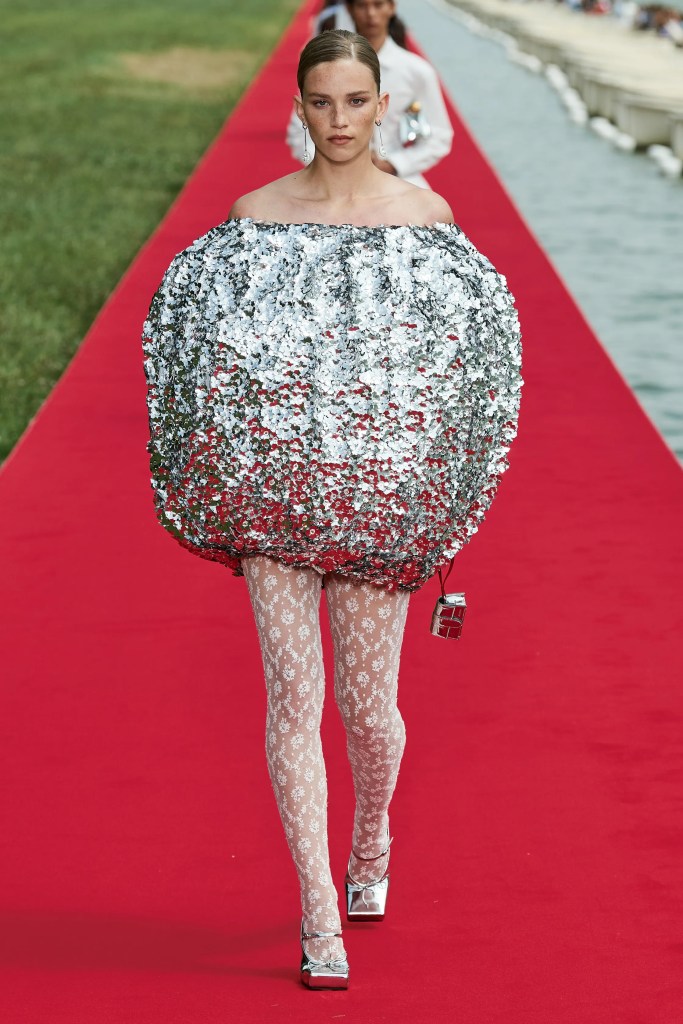
But, if you are willing to go one step further, you see something utterly different. Laces and drapes are not about what the Cour showed, but hid, it is a comment on the role of underwear that are now socially acceptably shown and displayed rather than concealed. It is clothes not only in relationship to others, but to the intimacy of the body which has nothing to hide. Powerful take on the social and societal evolutions, but also on global warming?
The show was initially titled “La culotte”, in modern French, it means panty, in old French, it is the pants men used to wear, puffy and bulbous. It was certainly an inspiration for those micro-shorts and even bubble dresses. But the puffiness was also a reference to Lady Di’s wedding dress and skirt she wore in Cannes. His micro-bags now worn as reticles could have been fit for Versailles. “Le Chouchou”, the actual name of the show, means “the favorite”, like the King’s favorite courtisane… It also means scrunchy. Royally popular.


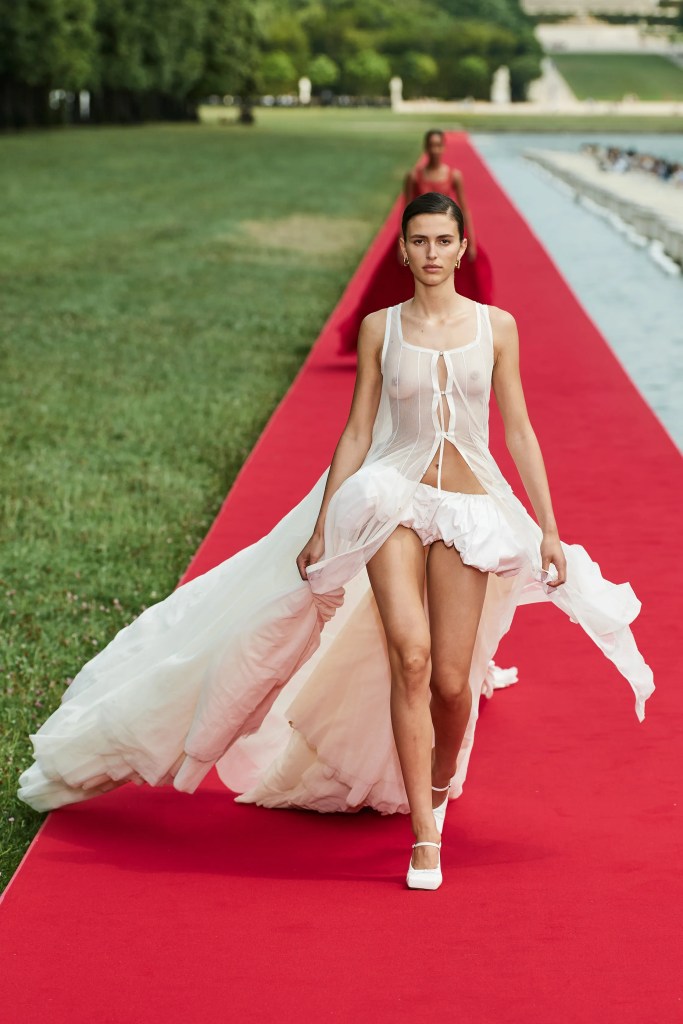

Finally, the three dresses at the end of the show are absolutely a reference to the French flag, but also the British one, or even the American one. But if you are French or curious about old French movies, you know Michel Legrand’s song “Les trois robes” for Peau D’Âne. In a complicated turn of events, the princess has to ask for three dresses to be made, “in the color of the Sun, of the Moon, and of Time”… Full circle references. Fashion, clothes, marketing and communication not only done right, but done perfectly.
Is Jacquemus a luxury house? Factually, no. Is it the house the most apt in creating, feeding and sustaining a dream? Absolutely, and better than any other luxury house. Jacquemus masters the most valuable asset in our modern society: his brand’s, growth’s, and imaginary’s relationship to time.
 mabou
mabou 
Leave a comment