Jonathan Anderson, the designer of Loewe for now 10 years needs no introduction, especially on this blog. People who know me know his work for the Spanish Maison is high-up on my list of favorites and it has been the subject of now several articles (SS23, SS22). Anderson is one of those rare designers able to catch the zeitgeist while proposing a fresh new take on the codes of the house and his own creative output.
At the same time, his collections include a philosophical component ensuring viewers and wearers are given food for thought beyond the materiality of the pieces. The designer not only understands that fashion is more than fabrics, cuts, and styles, he contributes to fashion as a cultural moment by reflecting on its relationship to societies. For the FW23 show, he collaborated with Italian artist Lara Favaretto and initiated a process of reduction.
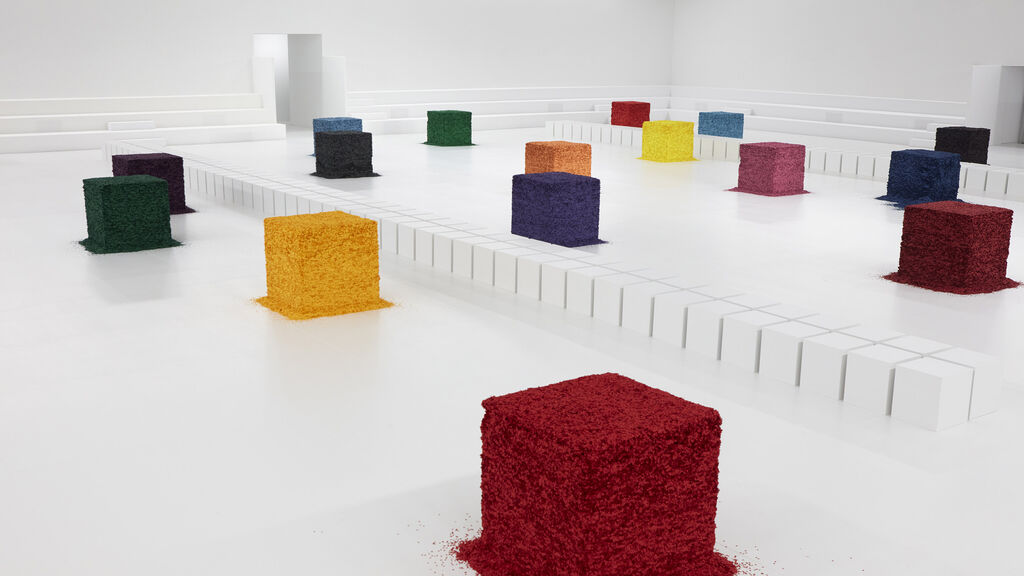
Gone are the post-covid splendors and over-the-top takes, the time is for restraint, understated luxury and elemental minimalism. Set in a white cube in the 15th century Château de Vincennes, the show was a commentary on our collective relationship to classics and time. Underlying the tension between classical art and the modernity of the white cube, which has become the favorite way of presenting art in museums, the reflexion was taken one step further by Lara Favaretto’s multicolor cubes.
The installation was made of 21 cubes made of confetti, that were compressed and set in place right before the show. As guests, and then models moved through the space, the cubes slowly disaggregated, underlying the fleeting nature of man-made works. Lara Favaretto is known for exploring the idea of “momentary monuments”, her intrinsically ephemeral sculptures means they have a shorter life-span than the Château, but they are both bound to become ruins. At the same time, because they are new, they have had a shorter time-span in our collective psyche meaning they cannot be classics: they are defined in opposition to what is known.

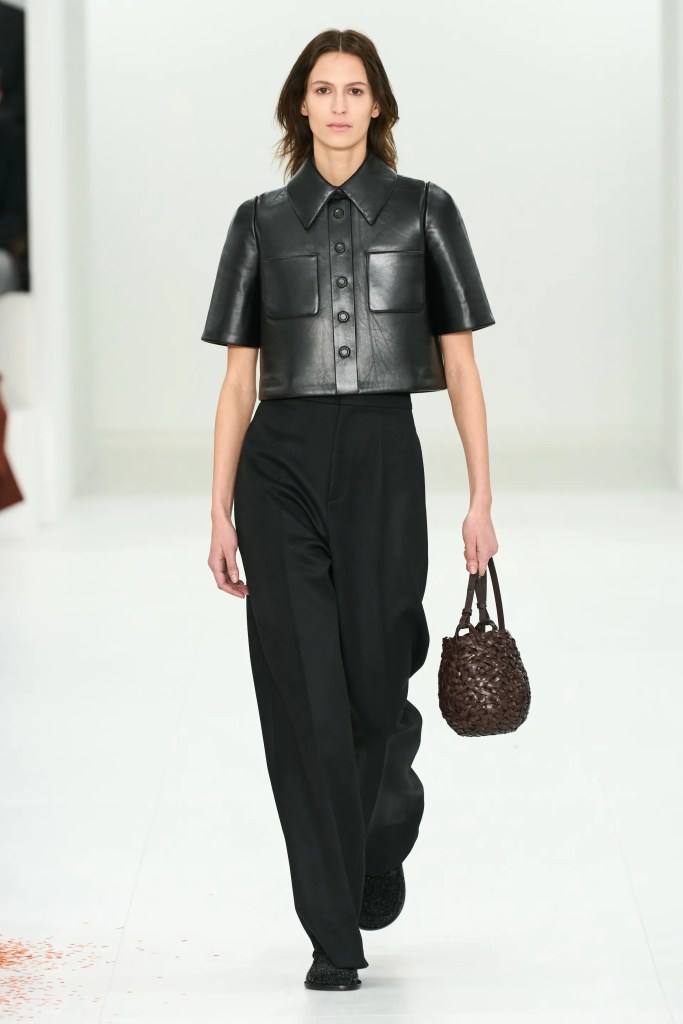
Similarly, clothes serve a purpose and speak to an audience for a time, before the inexorable passing of time makes them irrelevant. The challenge of the contemporary designer is to create shapes that reinterpret the classics, that are defined in contrast to what fashion has already done. “It’s a bit like the ghost of fashion,” said Jonathan Anderson. “This idea of the past and where we are now. Couture classicism meeting something which is new.” And indeed, after spending 10 years adding to the vocabulary of the house, Anderson is coming back to the house’s reference and focuses on leather and simpler, better done shapes.
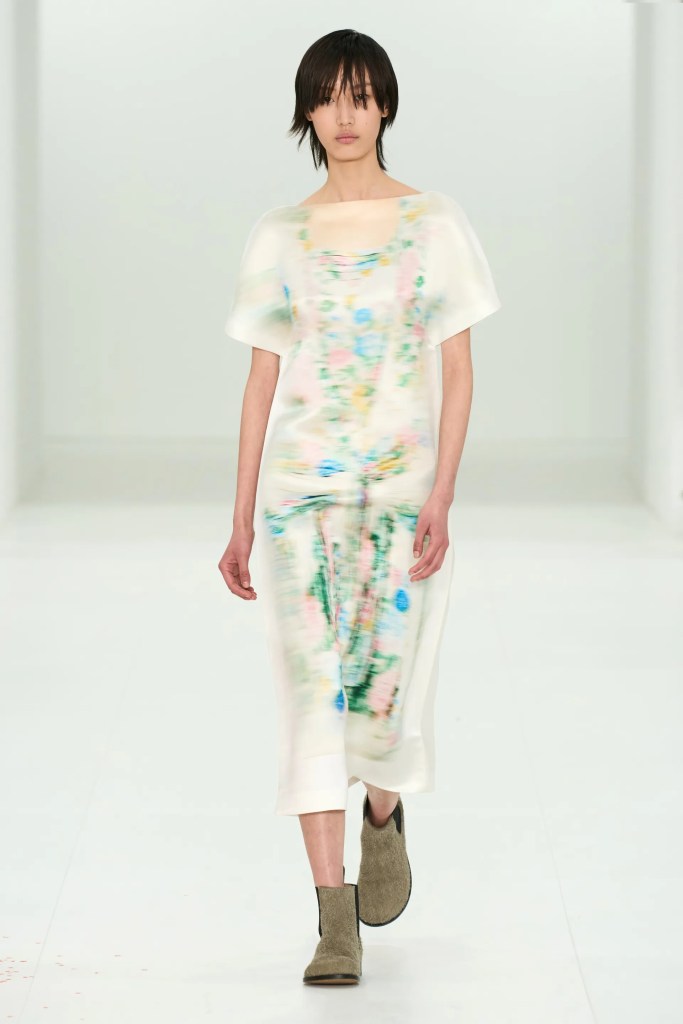
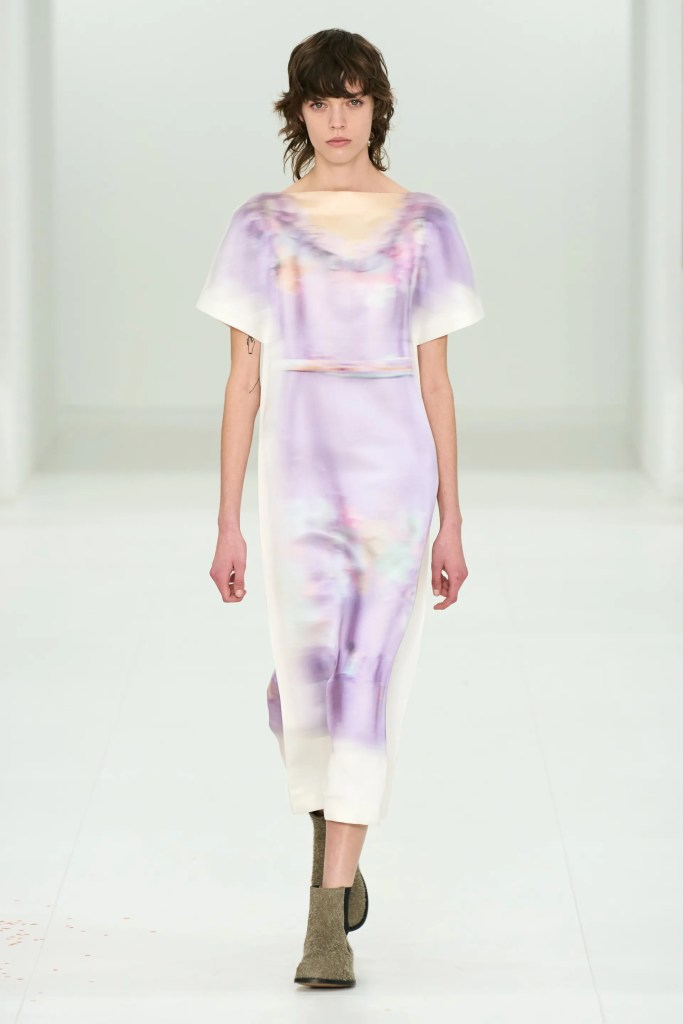
The point is, it is a question of perception. This perception trope is also illustrated by the blurred clothes on the runway. They seem pixelated, like the confettis that progressively spread on the floor, questioning our sense of reality. Last season, Loewe’s pixelated sweater was already an exploration of the influence of technology in shaping new realities and new words, glitches in the matrix.

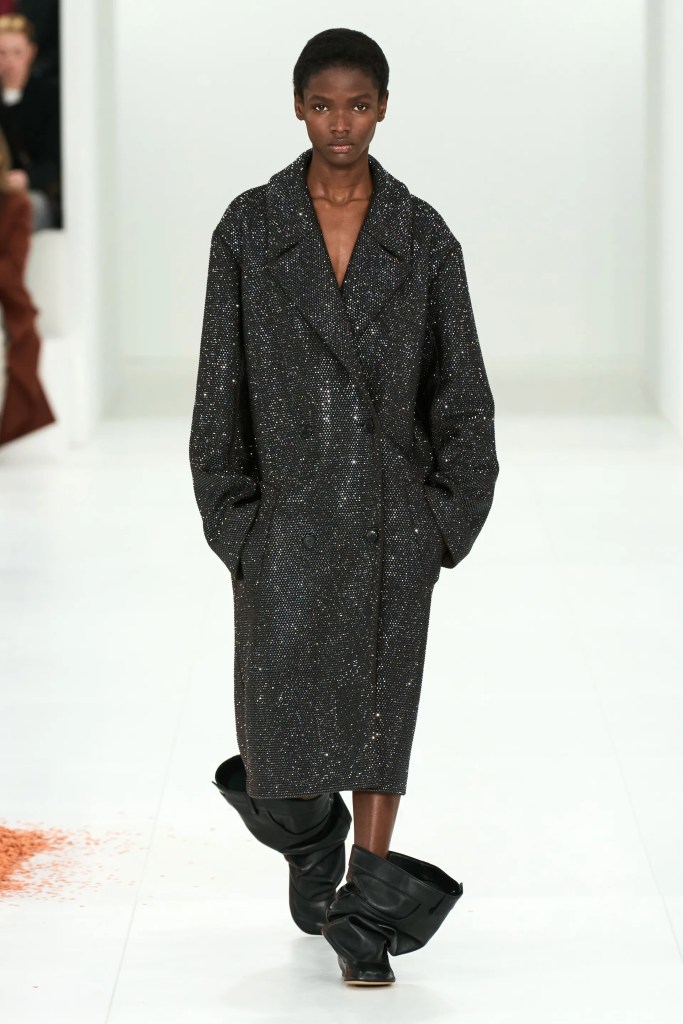
While the web3 conversation has become more quiet in fashion, the influence of digital references has become increasingly common in an industry that caters to a small audience in real life, but a globalized one online, as consumers spend more time on social media or playing video games than ever. Early this year, the creative collective MSCHF released “big red boots” inspired by the Japanese manga hero Astroboy. An UFO (Unidentified Fashion Object) for the traditional fashion audience, it was a perfect example of how imaginary worlds have started to permeate our global sense of reality, up to the very material clothes we wear.
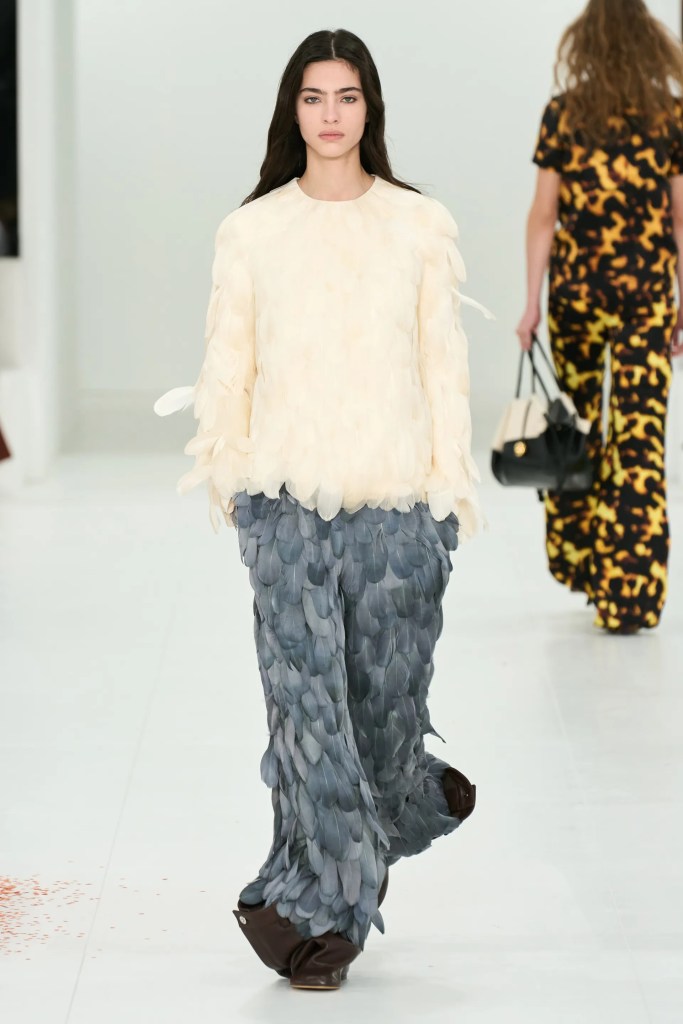
Moving from the idea of surrealism, Anderson focused here on the sense of illusion, working on unique leather clothes, whether unshapely large or stiffly fitted like “play-mobiles”. Uncanny birds of feather wore floor length outfits adorned with giant “paillettes”: things are not what they seem. “Printing a garment on a garment is not a new thing. But I was fascinated about the psychology of how we ultimately see things online. The blurry aspect in motion looks like a glitch,” Anderson said. “It’s out of focus. Is it staged, or not staged? Is it the right color, is it photoshopped?” he asked as he referred to the blurry printed dresses that dominated 10 of the 51 looks.
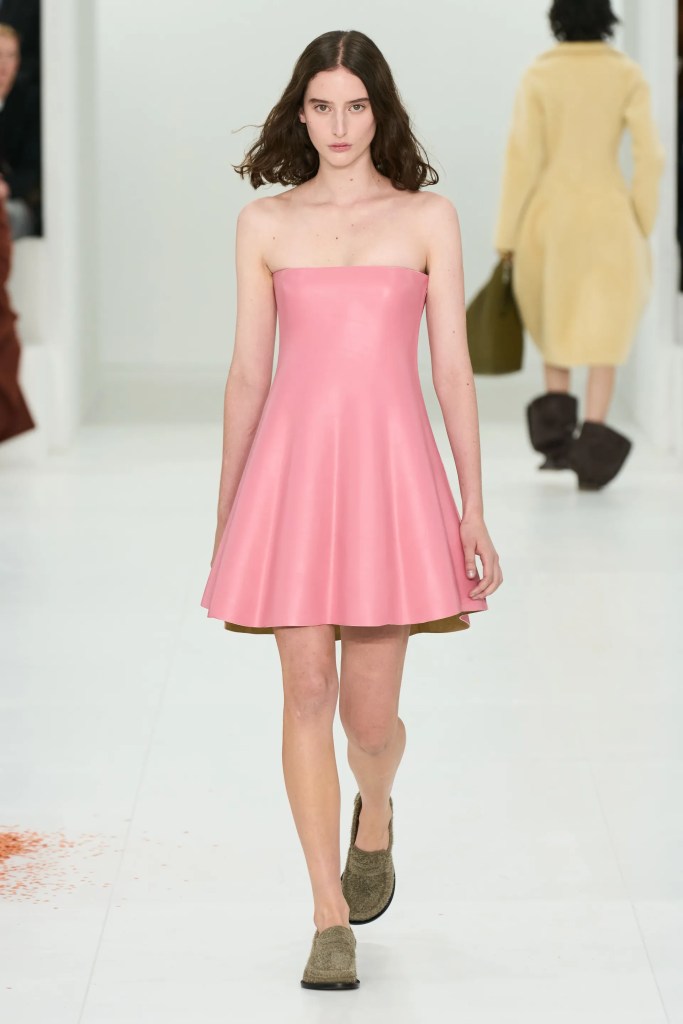
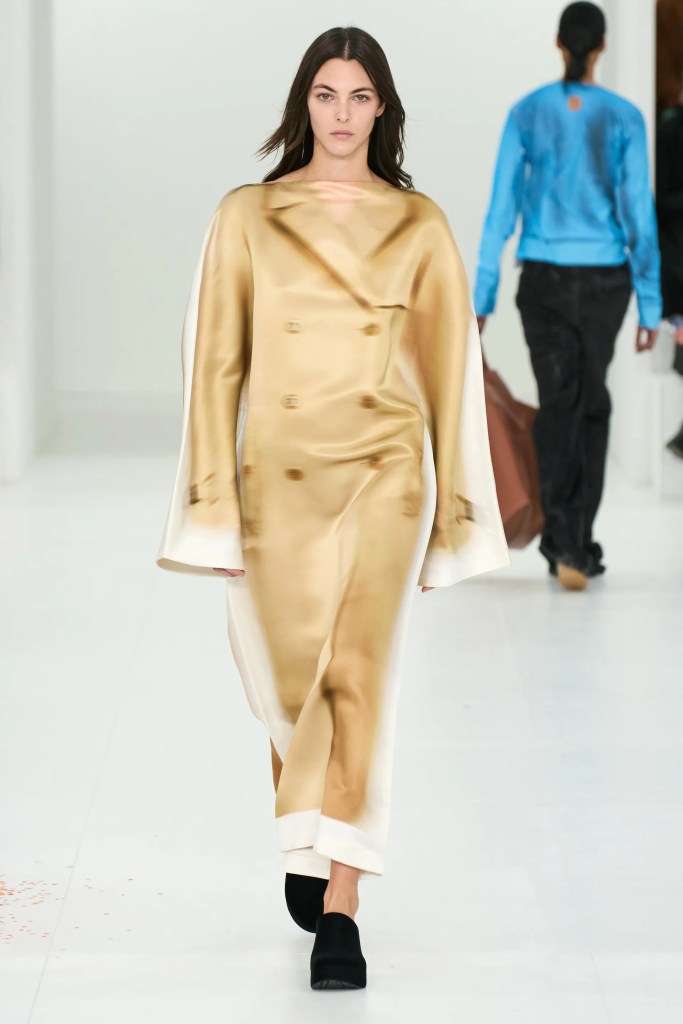
Like the amount of information thrown at us that means we do not have time to process and reflect, our relationship to fashion and trends seems so quick that we do not have time to think about the garments that walk down the runway. We do not appreciate details, fabrics and shape, and all the complexity of what we see for a few seconds, navigating our day-to-day reality and imagined online world. Quite paradoxically, real life seems slower, offering an opportunity for deeper engagement and reflexion, but it also seems more limited. Online, which is not real, on the other hand, gives access to a plethora of subjects, audiences, and media, but there is so much that the opportunity for depth gets lost in a sea of content.
As we navigate those two realities, vertical depth and horizontal accumulation, our attention is scattered and stretched to unsustainable limits. Grappling with our limited humanity, it becomes harder to make sense of what is real and what is fiction, genuine and fake, important and superficial. With the rise of AI, making sense of what is true or false is bound to become increasingly harder, and the challenges we face as societies might become harder to untangle. Tale of time? Time will tell.
 mabou
mabou 
Leave a comment