On February 25th, in Milan, Bottega Veneta unveiled its third collection under the creative direction of Matthieu Blazy, who took over after Daniel Lee – now at Burberry – left the Italian luxury house. It was the final installment of his “Italy” trilogy, paying homage to the Italian heritage and exceptional craftsmanship of the brand. Already last season, the designer had underscored his exploration of the intersection of creative fields by working with architect and industrial designer Gaetano Pesce, who designed the set and chairs of the runway show.
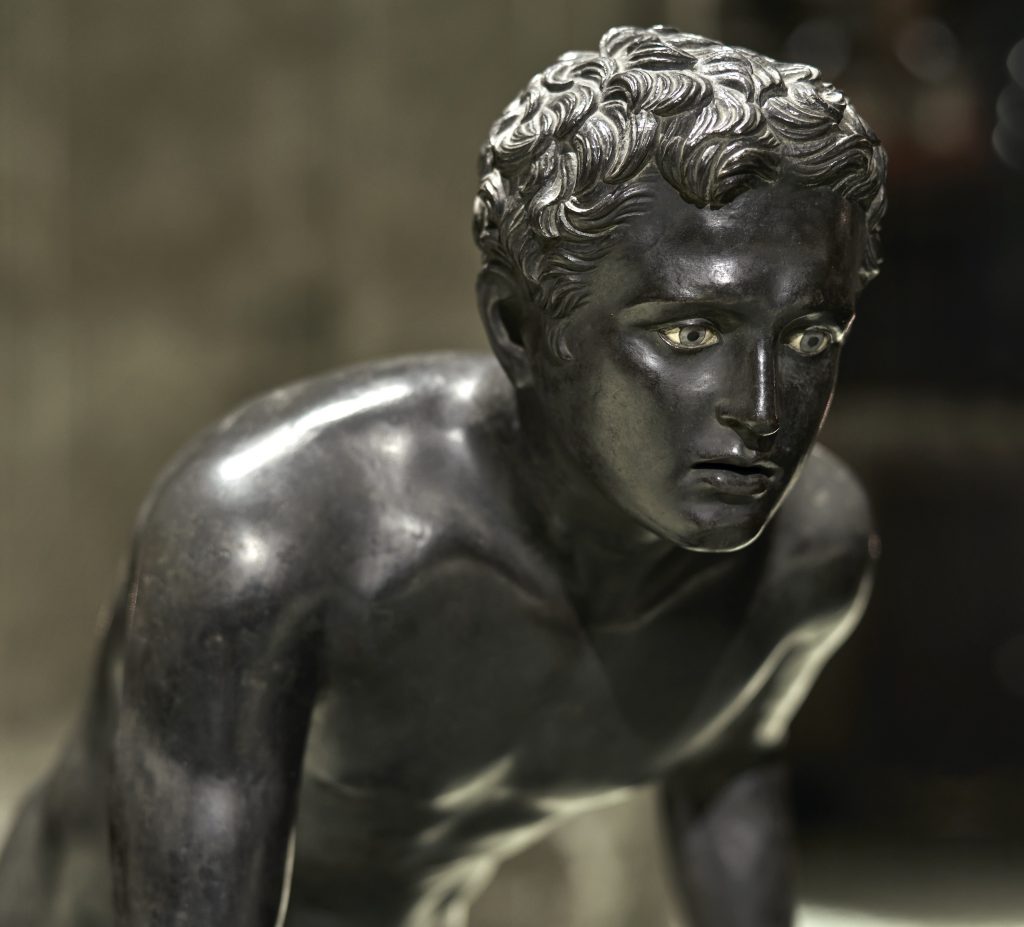
This season, the designer decided to offer a conversation between Antique and modern Italian Art, making a statement about the identity of Bottega Veneta. The grandeur of Italy’s past was claimed by two Roman runners borrowed from Naples’ Archeological Museum and excavated in the Villa dei Papiri in Herculaneum in 1754 and dating from the first century AD. They are probably copies of Hellenic versions made to celebrate victory in Pan-Hellenic games. In fact, Roman culture borrowed much of its traditions from Antique Greece and copying sculptures was customary.
Linking past and present and anchoring Bottega Veneta in tradition and in modernity, Umberto Boccioni’s Unique Forms of Continuity in Space, dating from 1913, is inscribed in the Italian Futurismo movement. It was officially launched in 1909 as Filippo Tommaso Marinetti, an Italian intellectual, published his Founding Manifesto of Futurism in the French newspaper Le Figaro. The movement was inspired by the markers of modernity: the machine, speed, and the industrial city powered by technology. It represented youth, energy, newness, disruption and excitement.
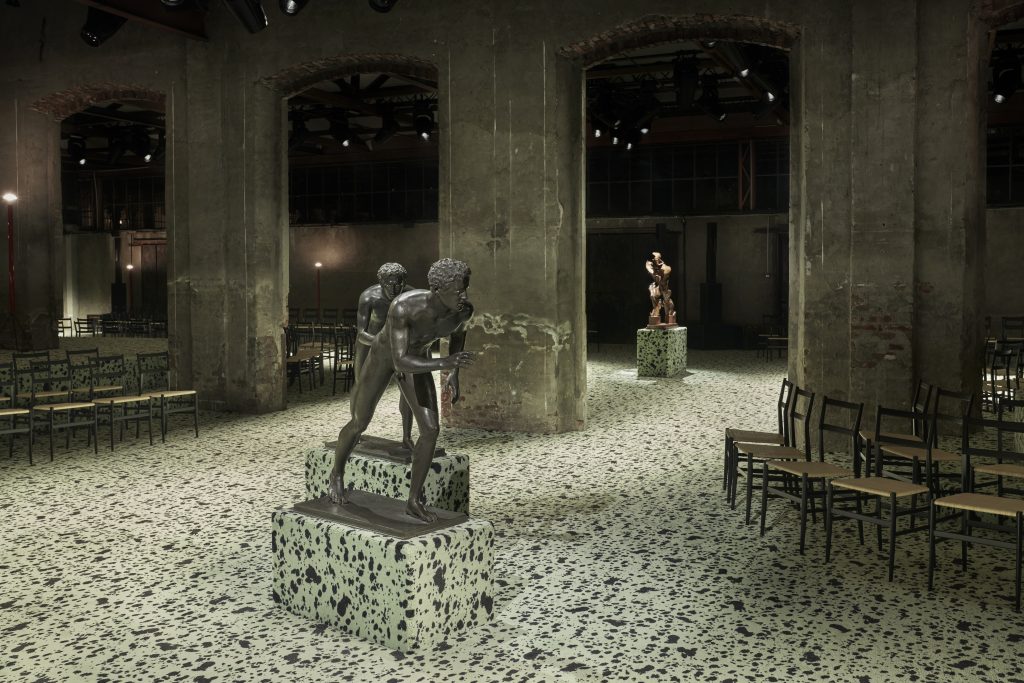
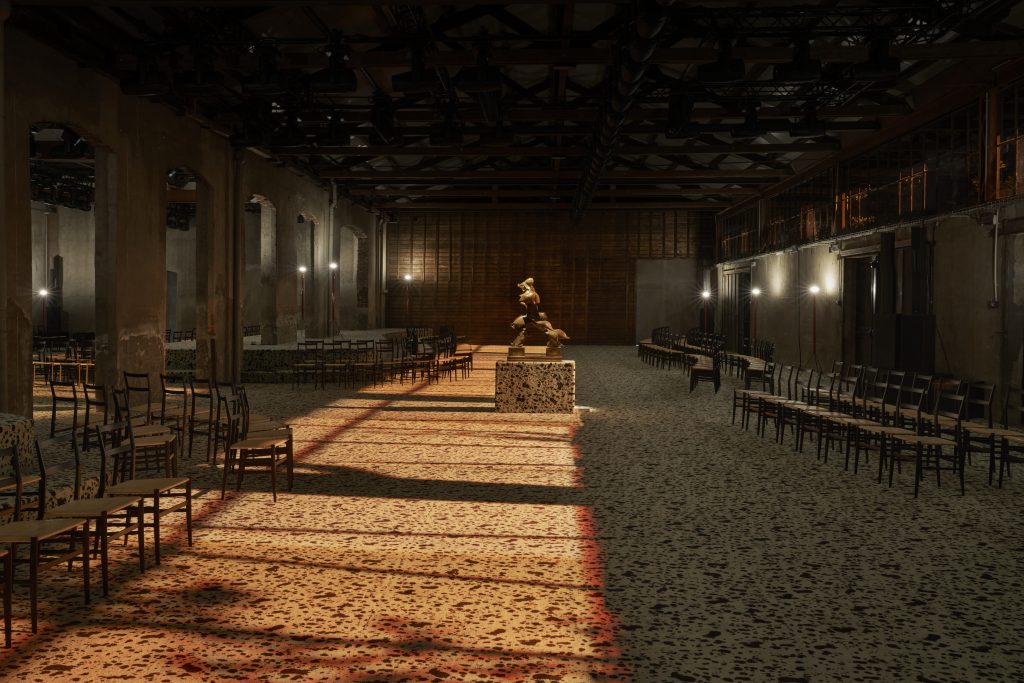
Quite interestingly, futurists sought to revitalize the Italian culture they considered as stuck in its past, in the context of an unstable political environment clouded by World War I. Futurism experimented with “fragmentation of form, the collapsing of time and space, the depiction of dynamic motion, and dizzying perspectives”. For Bottega Veneta, the juxtaposition of such art pieces is a reflection around the identity of the house – its relation to movement and time.
“Bottega Veneta is in essence pragmatic because it is a leather goods company. Because it specializes in bags, it is about movement, of going somewhere; there is fundamentally an idea of craft in motion. It is style over fashion in its timelessness”, according to Blazy. The representation of movement was already important last season, as the poured floor was made to resemble to globe on which model were walking.
The juxtaposition of the art pieces questions the classical way of representing movement in art. Limited by the stillness of the media, artists were bound to the exercise of representing the different stages of movement in single frames or iterations to inspire the totality of the action. Friezes, like the one on the Parthenon, permitted the successive representation of the different stages to create the illusion of movement. This technique is the ancestor of moviemaking, that is a succession of images recorded at increasingly close time lapses and giving us what we now know as videos.

Technology enabled artists to expand their medium and storytelling capabilities, to create more complex – or denser – messages, or at least it created the opportunity for a more thorough engagement. At the same time, faced with technological advancements and new media, artists reconsidered traditional art methods. This very ability to represent movement in different sequences was what inspired the Italian Futurist movement.
Umberto Boccioni’s sculpture is an attempt to collapse the different stages of the movement of the body of a man walking, all in one sculpture. Akin to cubism at the same time, collapsing plans and perspective, futurism collapsed time too. With the same medium, representing the same subject, the same society facing two different social and technological contexts, at different points in time presented a different interpretation.
Matthieu Blazy’s Bottega is about showcasing the tradition of the atelier, of the work of leather, of the signature intrecciato, giving it a practical modern edge. The deceptively simple tank top and jeans pants are powerful because they are made of leather and are more complicated and durable than they seem, design-wise and material-wise. “It’s about pushing a kind of technology of savoir-faire. That is true of the whole show. It doesn’t scream ‘image’, it broadcasts ‘luxury’, and a form of luxury only known to the person that wears it.” said the designer.


In the context of a fashion show, the naked sculptures scream clothes by their very absence. Reflectively, the clothes on the runway pay homage to the moving body with sensual and revealing translucent slip dresses and oversized garments where the folds become alive. Coats seem to have a life of their own, sometimes finishing in fringes and frills. Classical 17th c. pannier dresses (also at Loewe last season) are given a modern update and caterpillar dresses are in bloom. For a male model, art even becomes an accessory.
Therefore, the presentation is also a reflection on time and our relationship with it: to comprehend the totality of a piece of art, more time is necessary in a setting where different plans tell a story, when there is actual movement. This is true for the creative process and the output, in the art world, and within the Bottega Veneta Maison. It is also a statement on the durability of classics: it claims a slower pace of consumption prioritizing elevated high-quality basics.
With the same heritage, there is a variety of possibilities that are constantly evolving to resonate with different audiences. Linking past and future, the clothes and accessories on the runway are practical and made for moving – but they are just a presentation offering a range of possibilities: their stories is told beyond their materiality, by the wearer, like art is interpreted differently by each viewer at different points in time, and like a still runner is just a piece of the whole action.

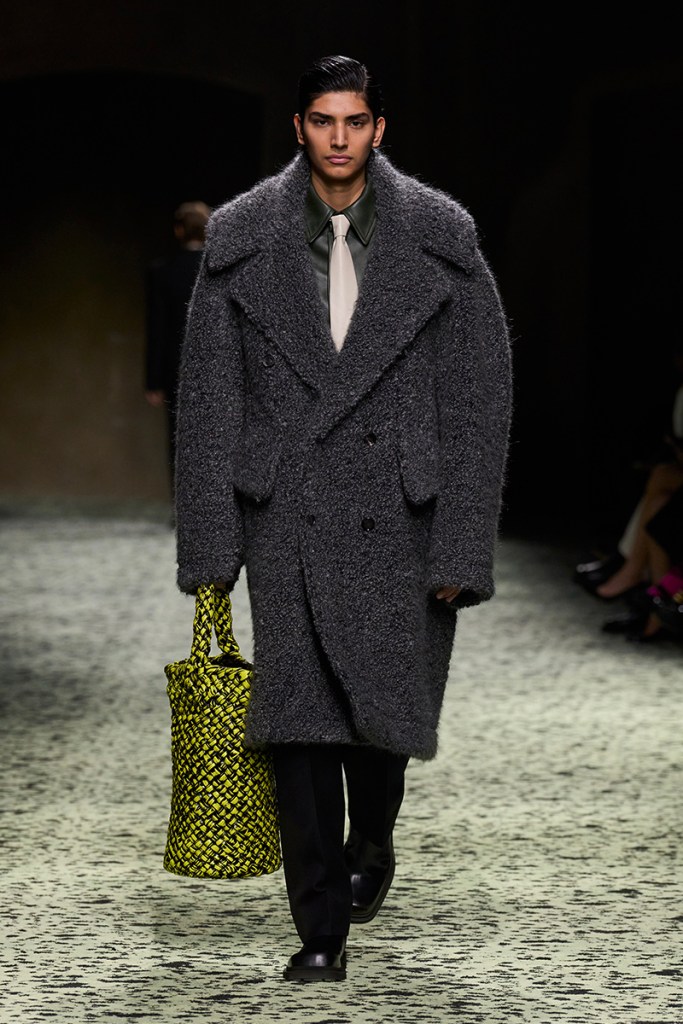

Trends are circular, they come, go and come back, but classics stay. Yes, they come in and out of fashion, but once they enter the pantheon of cultural significance, they retain their value and their appeal: they go beyond one season. In a world where identity is conflated with consumption, few designers are able to strike the right balance between current zeitgest and elevated tasteful tradition.
By reminding us of the relationship between the hands of the maker and the objects, Bottega is inscribing the creative process in artistic movements, craft and outstanding materials, while offering a critical commentary. At the same time, the house is able to retain its uniquely strong identity by creating its own definition of luxury, a consistency paving the way for projection into the future.
To be fully relevant, fashion and creation in general need to grapple with contemporary issues. Thinking about our relationship with movement and image making as empowered by technology leads any observer to think about social media and video-making that has overtaken content creation. It is fitting that Bottega Veneta does not have an Instagram account anymore. While film-making gives creator an opportunity for in-depth commentary and research, our attention spans seem to be shorter than ever.
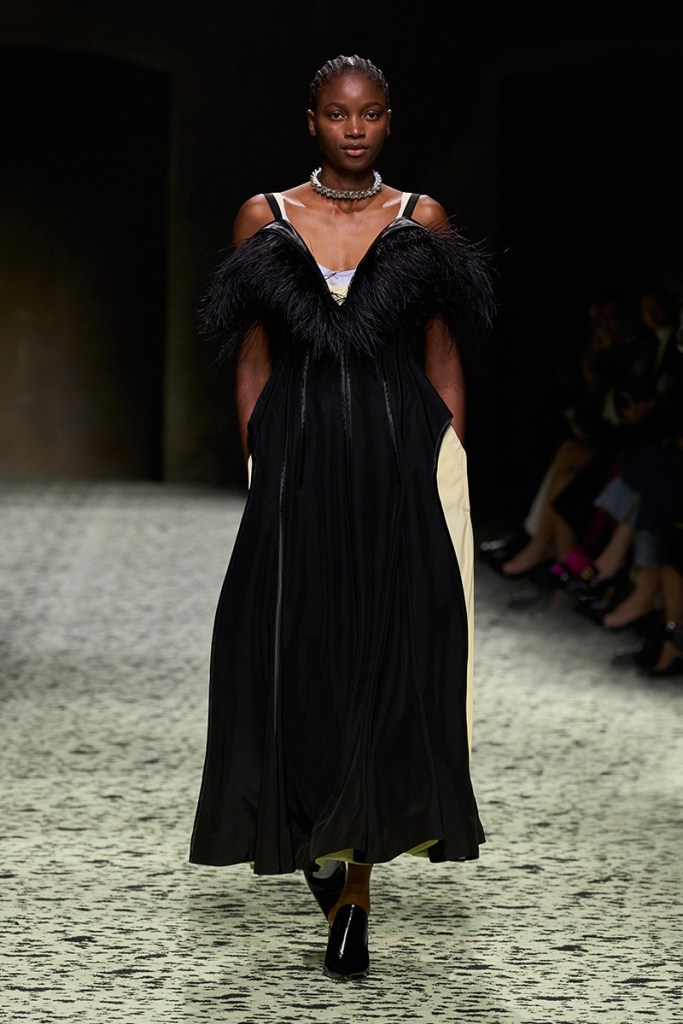
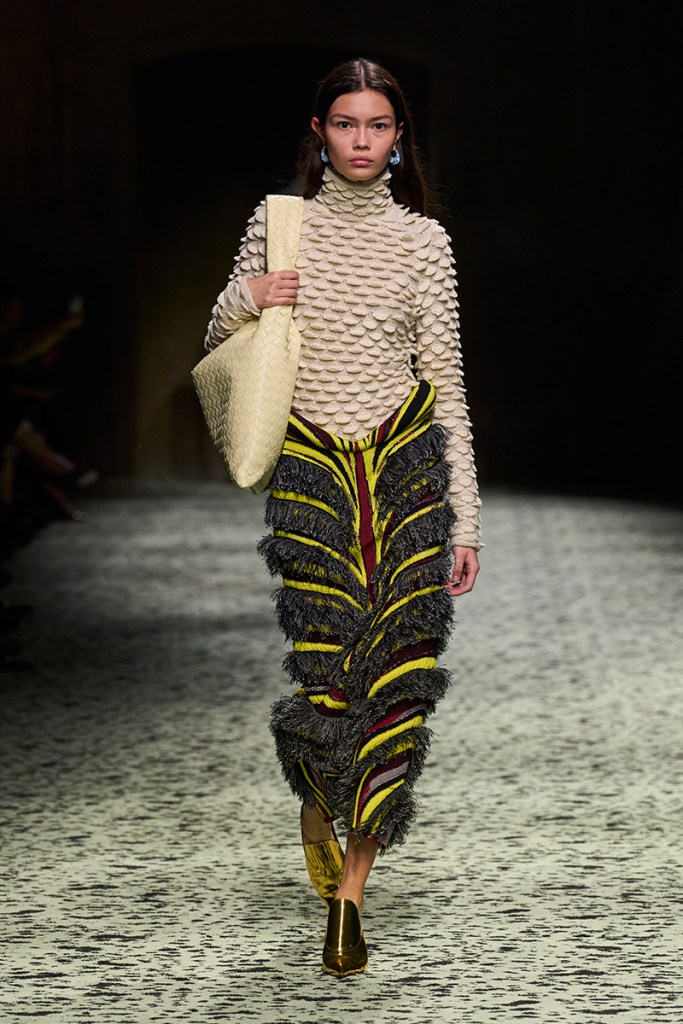

This reality underlies the tension between the quick capture that a still piece of work or an image allows: the viewer decides the amount of time and level of engagement dedicated to an art work; and the lengthier engagement that a video requires. But instead of having a deeper engagement, we are engulfed in a sea of short videos, offering surface-level content at an unpalatable pace. Quite paradoxically, we, as a society, have bended the potential of the video-medium to the requirements of our fast-paced life instead of embracing its alternative possibilities for meaningful conversations. And Bottega surely is not about this unsustainable pace.
 mabou
mabou 
Leave a comment