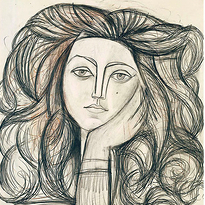

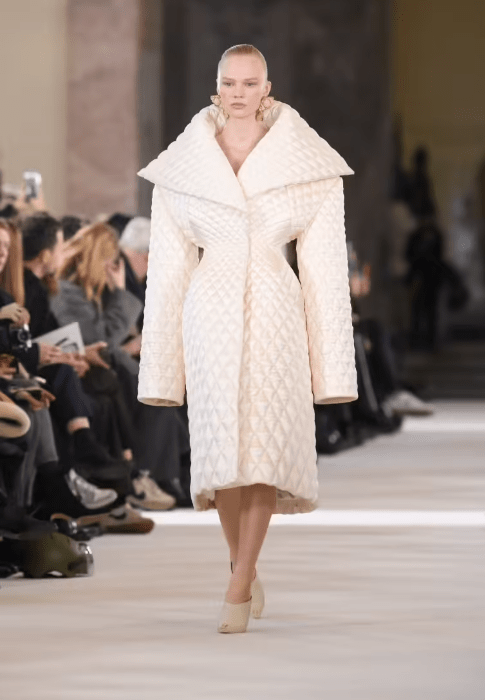
On Monday, January 23rd, 2023, SS23 Couture Week debuted in Paris. Now traditionally, the fashion marathon opened with Schiaparelli by Daniel Roseberry. The Texan designer has been at the helm of the Parisian Maison since 2019. In the span of three years, Roseberry masterfully revived the dormant house by reinterpreting and reinventing the Surrealist inspirations of the house’s founder, Elsa Schiaparelli. Season after season, Roseberry is playing with the codes of the house from the lock to Shocking Pink and proves that fashion and art have everything to do together.
The Maison was the subject of the exhibit “Shocking! The Surreal World of Elsa Schiaparelli” at the Musée des Arts Décoratifs in Paris which opened on July 6, 2022 and just ended on January 22nd. It was built around the founder’s fascination for the extreme, best expressed in her numerous collaborations with Surrealist artists, one of the most famous being the lobster dress designed with Salvador Dalí. “The idea was to pay homage to Elsa’s relationship with artists, but also with visual culture” explained curator Olivier Gabet, the museum’s former director. She was close with the intellectuals of her time, including artists Man Ray and Meret Oppenheim or writer Jean Cocteau, and took inspiration from the body and the animal kingdom.
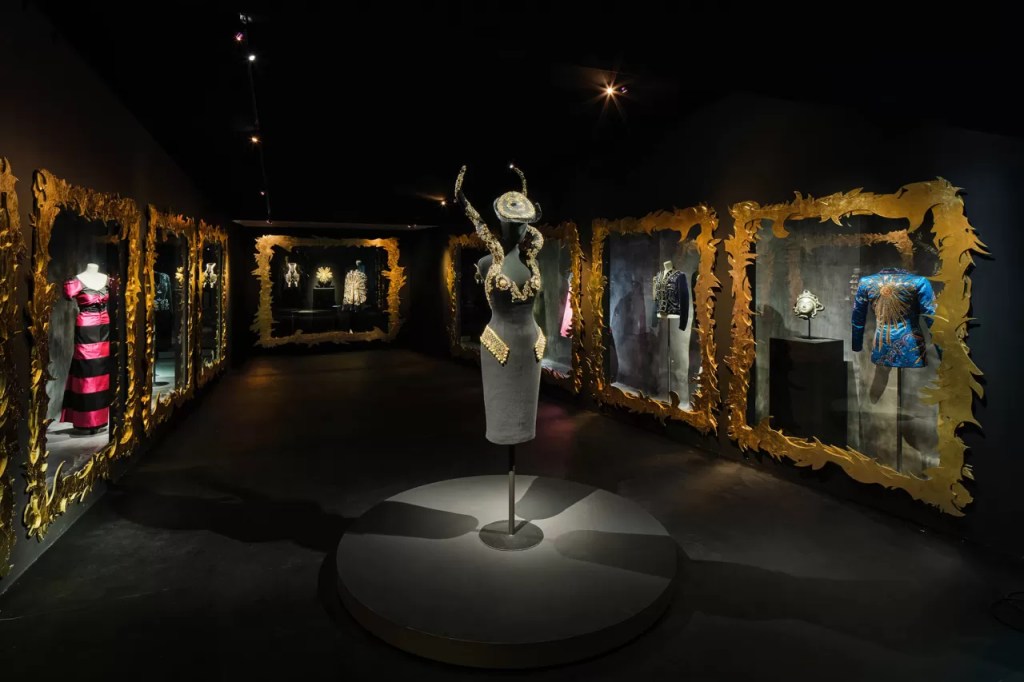

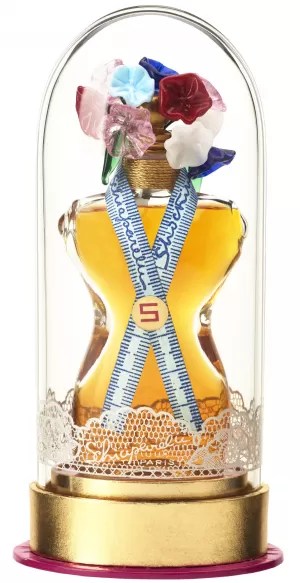
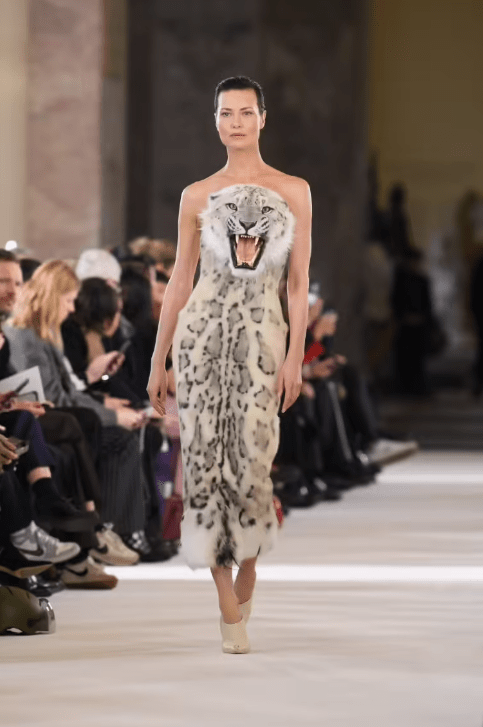
It is therefore no surprise that Roseberry, who also feels that fashion and art belong together, draws heavily on the same inspirations. The Couture collection that was presented last Monday was inspired by Dante Alighieri’s 14th century Divine Comedy, which also inspired Elsa Schiaparelli in her time. It featured less of the usual bodily exaggerations the Maison has come to be known for – except for the hourglass figures referencing Schiaparelli’s first perfume bottle, designed again with Dalí, and the footwear. Instead, the stars of the show were animals, and especially the taxidermist heads of a lion, a snow leopard and a wolf that adorned three of the looks that came down the runway.
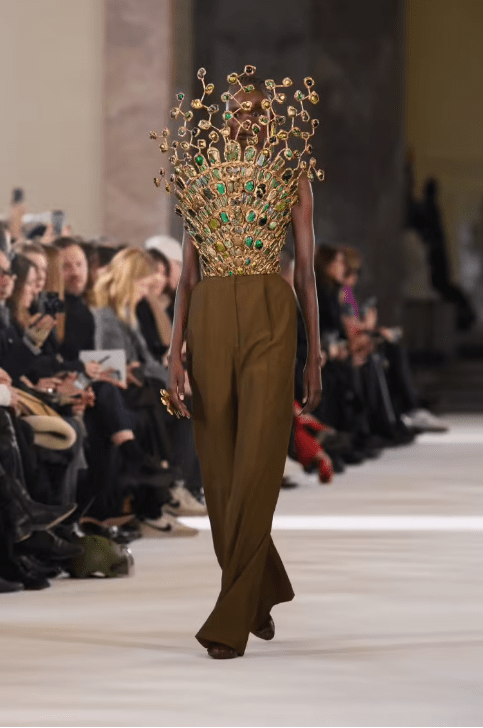
Roseberry was inspired by the literary work as an allegory of doubt, and created looks referencing the nine circles of hell. Limbo was expressed with black and white looks recalling some of the staple references of the house. It was followed by Lust, Gluttony, and Greed where these references were exaggerated with masterful tailoring and experimental materials. According to Roseberry, he was driven by the redefinition of the “lines between the real and the unreal” so dear to Elsa Schiaparelli. Every piece was an outstanding example of creativity and craftsmanship as well as an exploration of materials ranging from wood to nacre to brass.
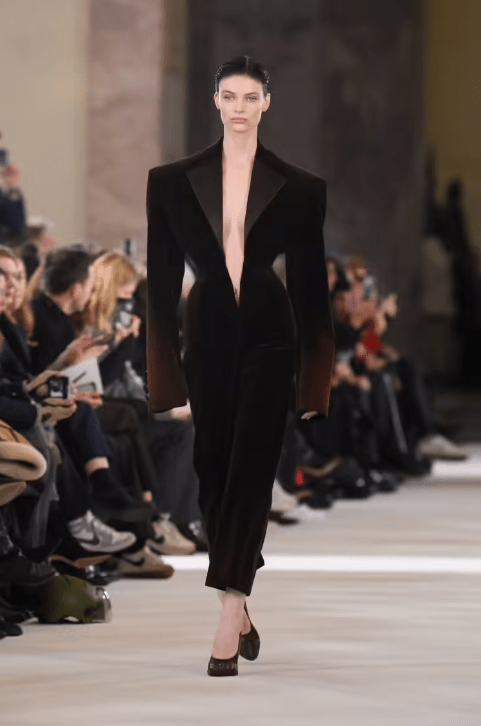

Yet, three looks mentioned earlier sparked a frankly unsettling controversy. Worn by Shalom Harlow, Irina Shayk, and Naomi Campbell, “The leopard, the lion, and the she-wolf — representing lust, pride, and avarice, respectively—(found) form here… constructed entirely by hand, from foam, resin, and other manmade materials.” said the designer. No animal was harmed in the making of these two dresses and coat, says the Instagram account of the brand, yet, the show sparked mounting criticism on social media and among fashion professionals.
While the use of real fur and exotic animal skin has grown to be sidelined within the fashion industry where it used to be a favorite – especially for haute couture catering to wealthy patrons – references to animal features had not yet come to be so violently questioned. Detractors argue that the use of the endangered species’ heads on the runway glamorizes their killing because they come to be presented as beautiful and worthy of being killed to be worn. Additionally, tropes of colonialism, trophy hunting and climate changes have been invoked to criticize the show. “This can send the wrong message that it’s beautiful to walk around with an animal’s head attached to your clothes”, someone commented.


It is no debate that fashion houses abandoning the use of real fur and exotic leather for more sustainable and life-preserving materials is the right move. Yet, this controversy just seems too extreme. Humans first began wearing fur to protect themselves from the cold 170,000 years ago. While we now have other options to fight the cold, and while moral values have evolved towards protecting life, we are left with the potential impossibility of enjoying the aesthetic aspect of wearing animal skin. And what does humanity do when it cannot keep doing the wrong thing to get what it wants? It looks for the next best alternative.
At the end of the day, vegan leather and fake fur have been developed in order to offer an option to those liking the aesthetic of animals. As long as no one or no animal is harmed in the process, I personally do not see what is wrong with it. Would the controversy have been the same if Roseberry had decided to present a dress inspired by bees and made of manmade resin replicas of the latter? Or is the debate reserved for fur-bearing animals? What about leopard or animal prints? And about Schiaparelli’s lobster dress? Do they encourage the killing of the real deal? Additionally, as underlined by @thekimbino, hunters and fashionistas are just not the same audience. I would assume very few hunters are encouraged by haute couture dresses made, I repeat, of wool, satin and resin.


Some of the fashion press has acknowledged the legitimacy of the debate, and has decided to define this incident as Daniel Roseberry stepping out of his comfort zone and giving an opportunity for debate around his up until now flawlessly consensual work. Yet, the debate seems so extreme to me, who is usually relatively in touch with societal and social debates, that I am not sure Roseberry expected that kind of backlash. I would argue that he probably would have expected being praised for staying away from real fur. And what if it was a commentary about the absurdity of using real fur since we now have access to such realistic alternatives? I can even see a meta-opinion about human extinction and the destruction of the planet.
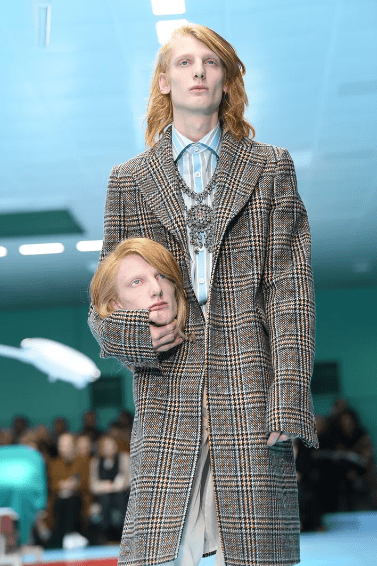
But attributing that kind of far-reaching thesis may be too far-fetched for a creative who offers an escape from reality, and for a brand that has built its identity on lightness and quirkiness – not to say deliberate disconnection from reality. It begs the question of the status of fashion within our society, and in fact, its relation to art as a mirror of the society it is created in. In any other craft, the emulation of reality is praised as masterful, but in fashion, it is labeled as a moral deviation. And before anyone asks about the potential public reception if it had been human heads, I would point to Alessandro Michele doing just that at Gucci.

Would the reaction of the public have been the same if it was done by an artist who enjoys the aura of creative freedom? After all, Damien Hirst is known for encapsulating cows, sharks, and sheep in formaldehyde. Going one step further, what should we do about paintings of slaughtered animals, and above all of people in the most important museums of the planet? Should Goya’s The Third of May 1808, Caravaggio’s Judith and Holophernes or Delacroix’s Massacre at Scio be taken down because of their shocking subject?
Has politically correct gone too far? I think so. But rather than brushing those questions aside, it is worth investigating why these issues create such heated debates and dissensions. Most of the time, the flawed arguments stem from not knowing the origins of a claim or a movement and what they entail. In an era where everyone has a voice, part of the message gets lost and the original claim ends up being misunderstood and misinterpreted. Within and outside of the fashion industry.
 mabou
mabou 
Leave a comment