
After focusing on the Dior Lady Art project and how it establishes Dior (LVMH-owned) as an art curator, I want to focus on the strategy of Louis Vuitton in not only creating art x luxury products – which the Maison has been intensively doing for almost two decades – but also on the experiential effort the brand has shown.
Beyond its stores, in the form of exhibitions and participation in traditional art fairs, Louis Vuitton is creating traveling (and static) museums. The case studies of Dior and Louis Vuitton show the medium and long-term strategy of LVMH: to focus on the cultural patrimony and archival identity to be remembered beyond the materialistic aspect of their Maisons. It is quintessential experiential marketing.

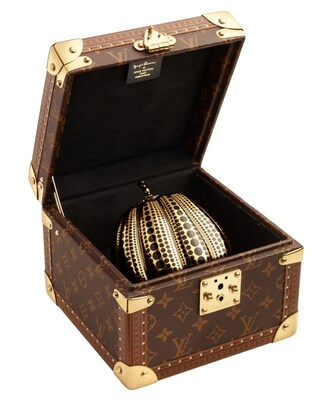
in collaboration with Yayoi Kusama,
Fall-Winter 2012-2013
If it is worth mentioning that the Fondation Louis Vuitton that opened in 2014 is not linked to the LVMH business, it in and of itself shows the enormous influence that the group has on contemporary creation and on cultural taste-shaping. That being said, I want to focus on more recent, seemingly separate but intimately intertwined activation strategies that contribute to reinforce the curatorial role of fashion houses. Especially so for Louis Vuitton, which is the largest revenue driver of LVMH.
To start with, Louis Vuitton had a booth at Paris+Art Basel in October 2022, during which it presented 43 artist linkups. This participation is important because this was the first iteration of the iconic art fair in the French capital, and sets LVMH as a foundational participant. Interestingly, it not only shows the most recent collaborations most of us have seen or heard about (Kusama, Sprouse, Koons, Murakami…), but also trunks designed by Matisse and Francis Picabia in 1909, anchoring artistic collaborations in the DNA of the house. What is new is the exhibition strategy and the resulting monetization of cultural display.
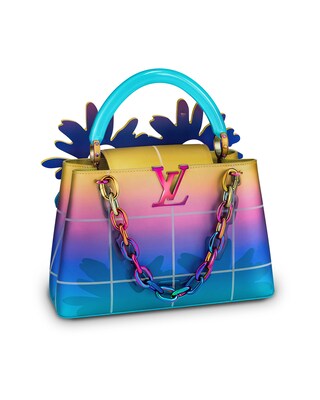
in collaboration with Amélie Bertrand, 2022
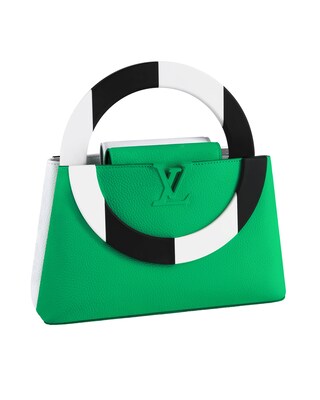
in collaboration with Daniel Buren, 2022

in collaboration with Kennedy Yanko, 2022
The fair was also the occasion to display its Artycapucines collaborations (in its fourth year in 2022) with artists Alex Israel, Beatriz Milhazes, Vik Muniz, Henry Taylor, Donna Huanca, Zeng Fanzhi, Urs Fischer, Zhao and Tschabalala Self. “Since 1988, Louis Vuitton has continued this legacy by collaborating with some of the biggest names in modern art and design, including Sol LeWitt, James Rosenquist, Cesar, and Olafur Eliasson and curating exhibitions by artists such as Sophie Calle, Dan Flavin and Francesca Woodman in its in-store galleries,” mentioned the house in a release.
And in fact, the house has collaborated with artists for marketing purposes since almost its inception, seemingly justifying taking the lead in selecting and presenting them nowadays, taking the role of an art gallery and even a museum. It continued its initiative by participating in Art Basel Miami, the most important art fair, presenting its second collaboration with Japanese artist Yayoi Kusama along with some of the pieces already exhibit in Paris.
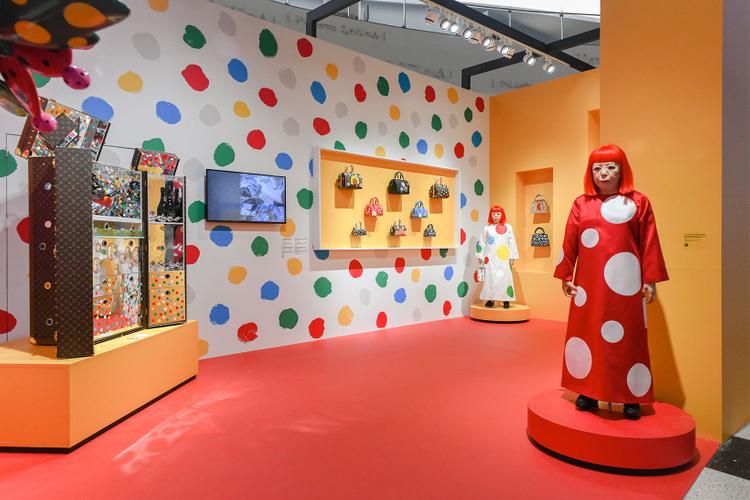

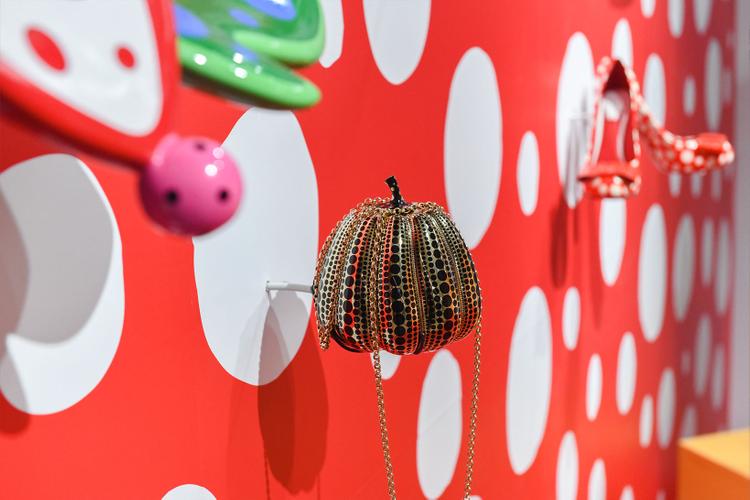
Indeed, at the end of 2022, Louis Vuitton presented the exhibition “200 trunks, 200 visionaries” in the former Bergdorf Goodman building in NYC’s Upper East Side. The choice of location was iconic and nurtured the curiosity people already had for the project. This exhibition was a traveling project following the “Volez, Voguez, Voyagez” exhibit, which started at the Grand Palais in Paris in 2015.
According to the website, the 2022 exhibit was “Initially conceived to celebrate Louis Vuitton’s bicentennial birthday, this ambitious homage heads onward from Singapore, welcoming a new wave of visitors to experience an ephemeral presentation space and discover the creations up close.” It not only shows that Asia has become a primary focus market for the house, but also that “travel” is part of their global branding from products to marketing to brand identity.


Late in 2022, it also opened LV DREAM, a gallery space in its Paris headquarters, following the initiative of Dior who opened its gallery in the Spring of 2022. “LV DREAM is a rich and exhilarating exploration of Louis Vuitton’s ongoing dialogue between the past and the future, heritage and modernity, Paris and abroad, savoir-faire and innovation.” says the website, astutely underlying the selling points highlighted on the runway and in fashion magazines – I mean social media.
Both for Dior and Louis Vuitton, this is experiential marketing pushed to the extreme. By presenting items that are not for sale, and that therefore seem invaluable, the intangible value of their brand is raised, and by extension, the tangible value of their products. It also exacerbates art commodification and desacralizes museums, which have been losing their lust for some time now.


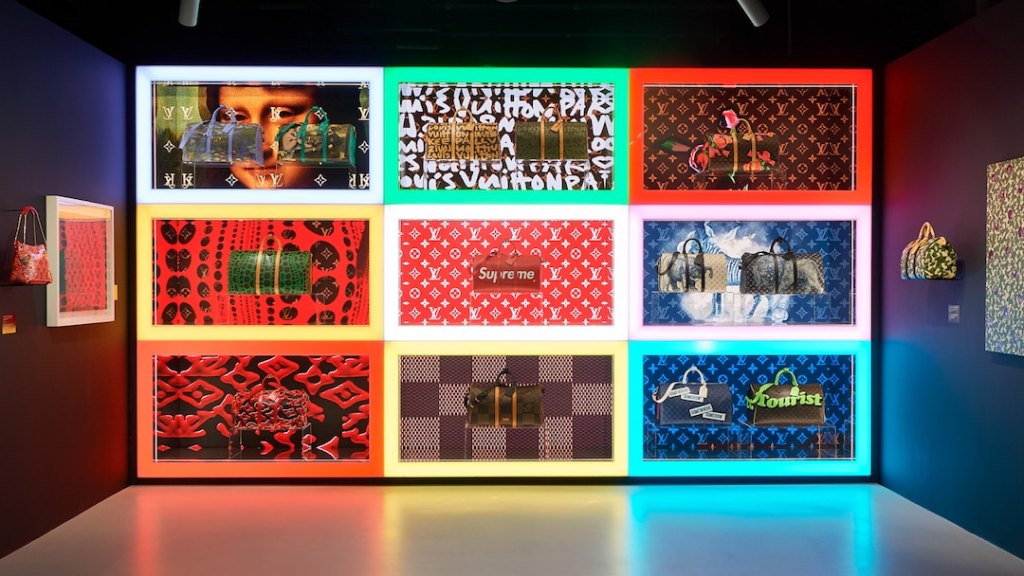
Are luxury houses contributing to museums losing their relevance by encouraging the gear shifting? Or are they simply filling a gap created by increased digitalization and our contemporary tendency to do things in the most efficient way possible? Shopping & museum hop 2 in 1, why not?
 mabou
mabou 
Leave a comment