
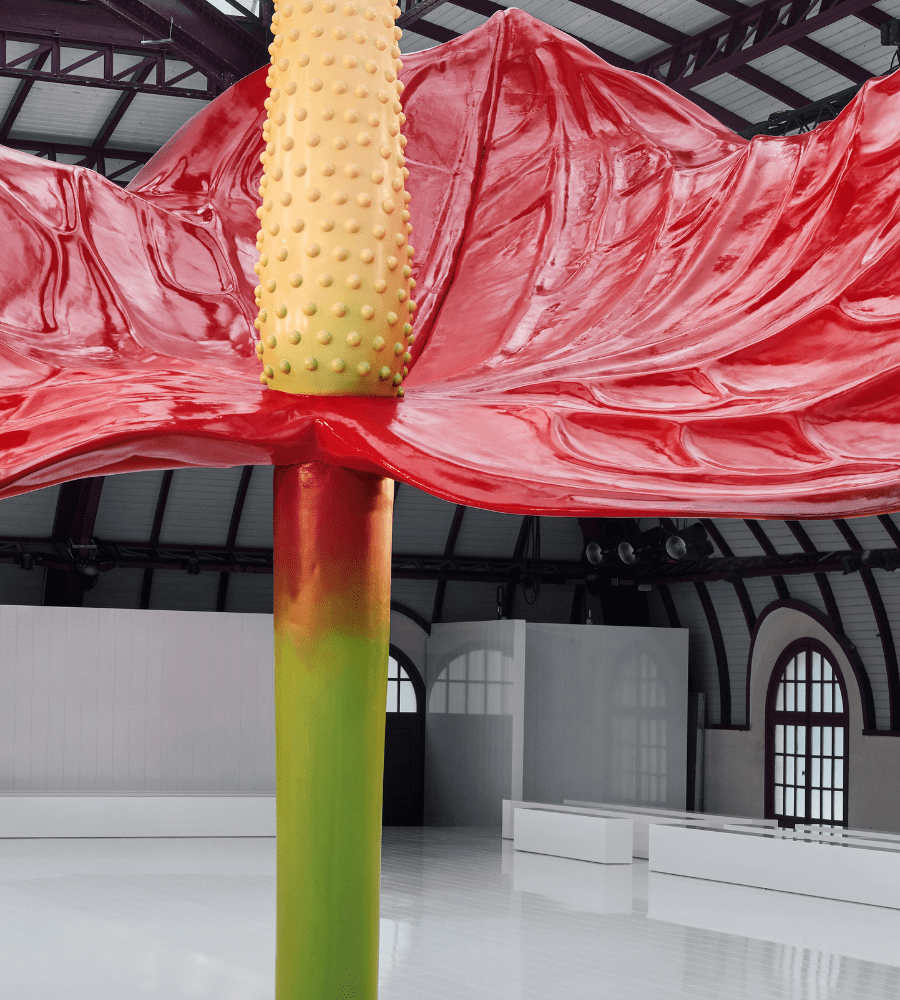
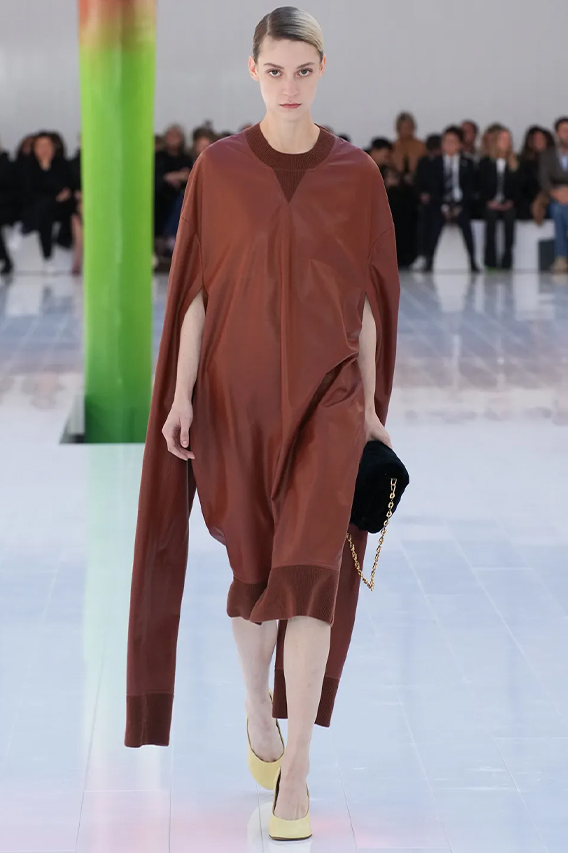
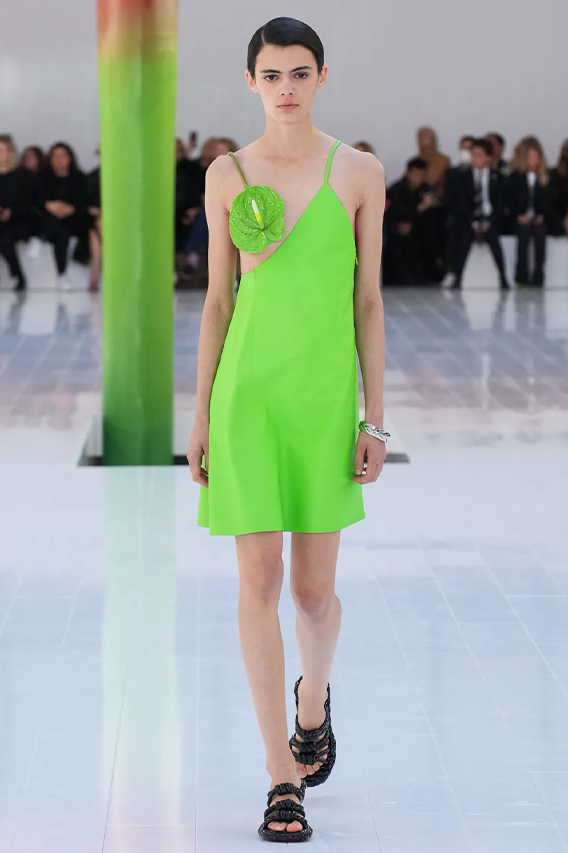
On September 30th, 2022, Jonathan Anderson unveiled its new collection at the helm of LOEWE. After offering a playful and punk experimentation with ready-mades and proportions under his own label, JWA refined his commentary with more sensual and feminine undertones for the Spanish brand. Here too, he experimented with shapes offering shrunken micro-dresses and oversized shirt-dresses. In the middle of the runway in the Gendarmerie Nationale-Garde Républicaine was erected a giant reproduction of a suggestive, aggressively colorful flower that, even when real, looks like a ceramic or plastic object.
The Anthurium was the seed of the designer’s creative reflection around the relationship between fashion and plastic arts. In fact, Anderson conceived his clothes in “The same erotic tension and precision of an anthurium flower: a product of nature that looks like an object of design and is treated as such.” The whole collection investigates our collective relationship with the fake and the real, and how even what seems natural can be deceptive. The other side of the coin is that what is fake can also feel more real than it actually is. After all, the luxury industry is about materializing dreams and elevating the mundane.
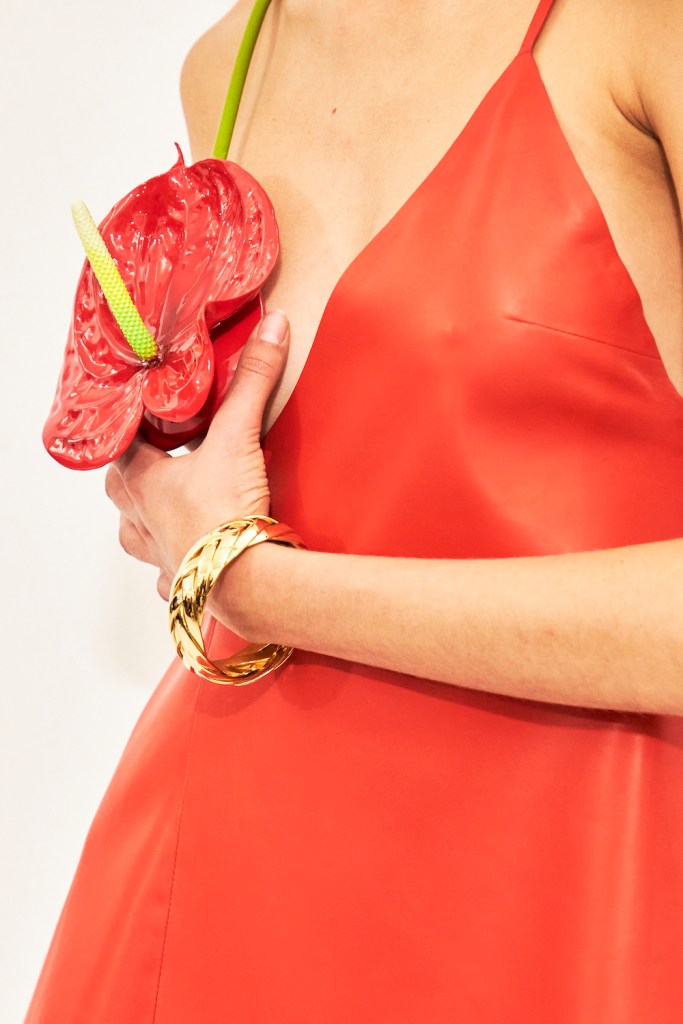
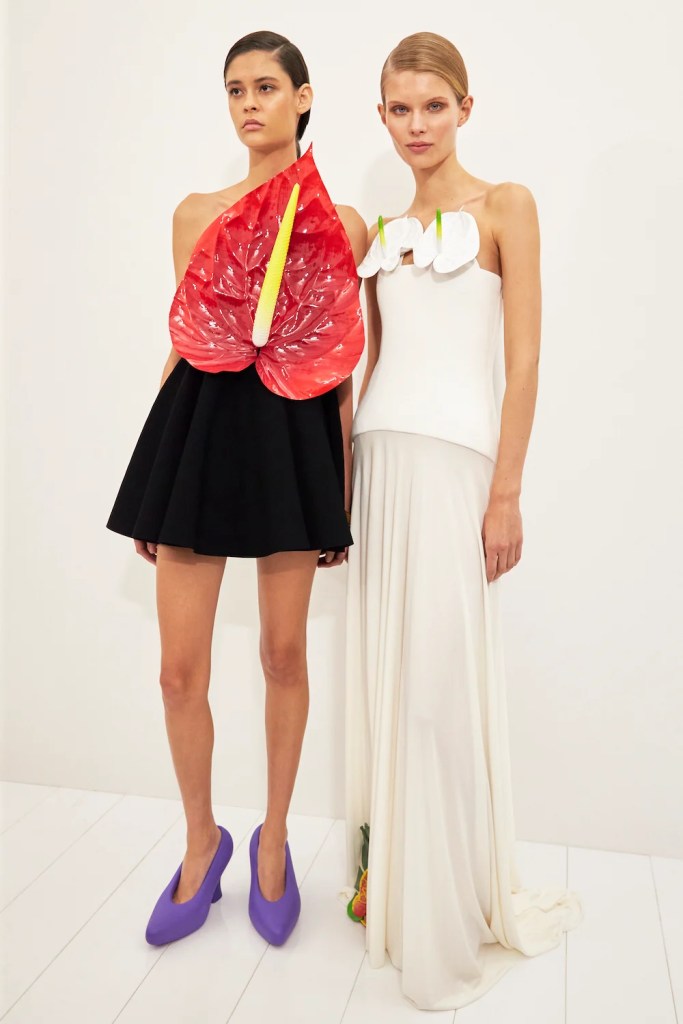
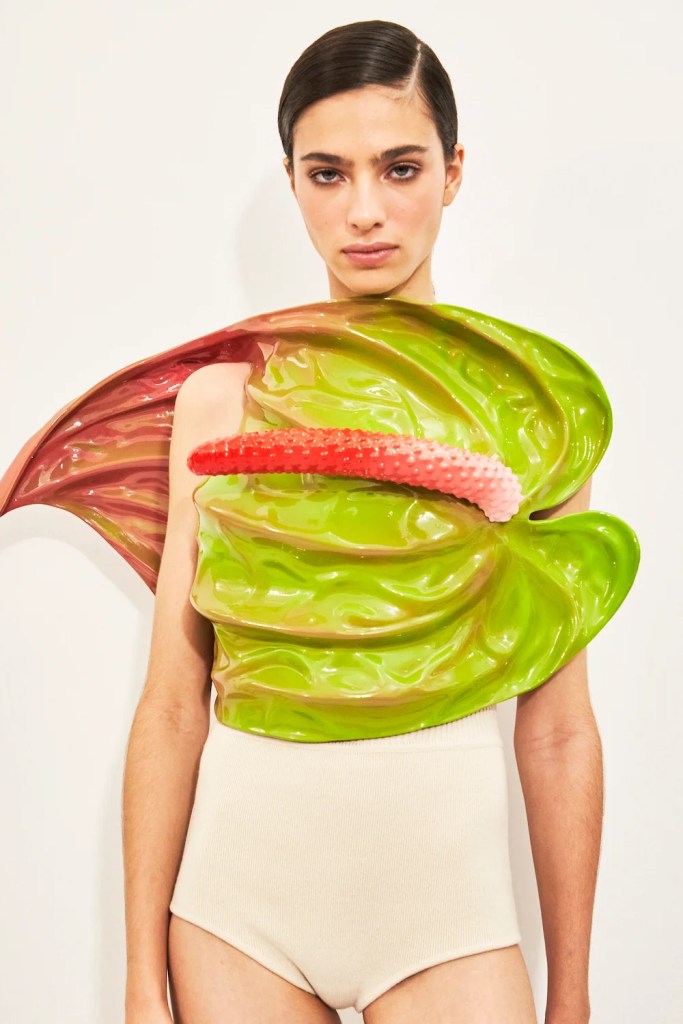
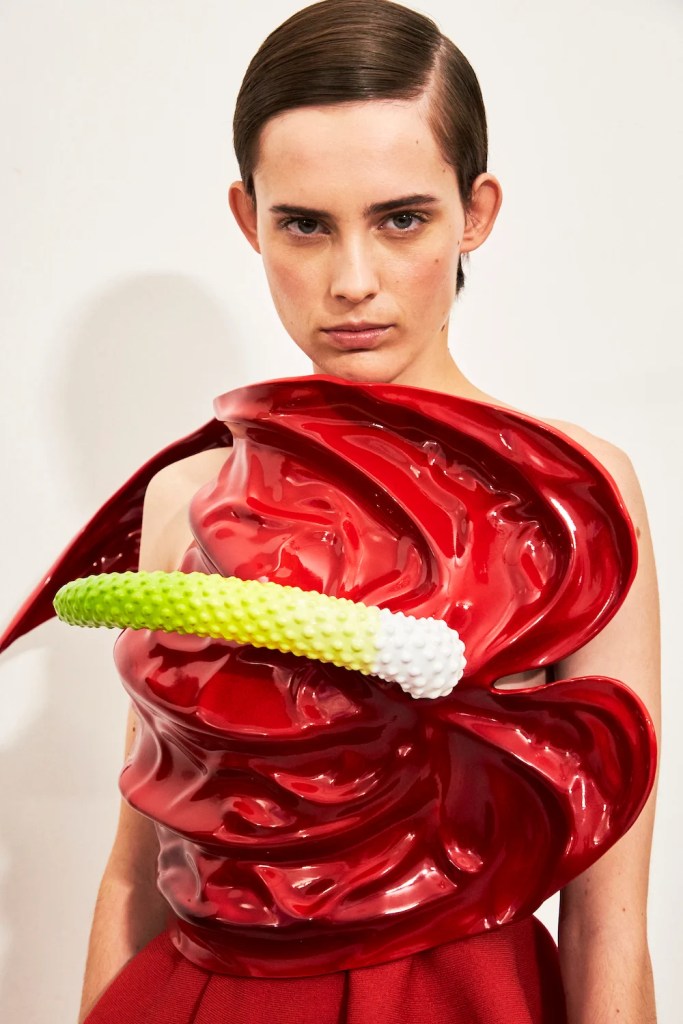
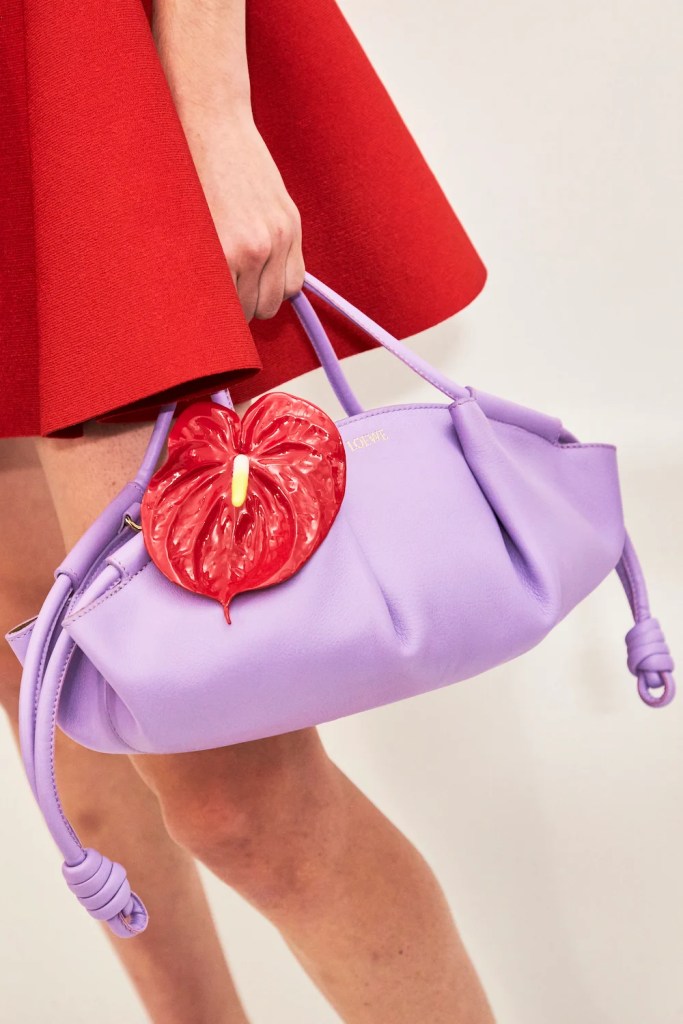
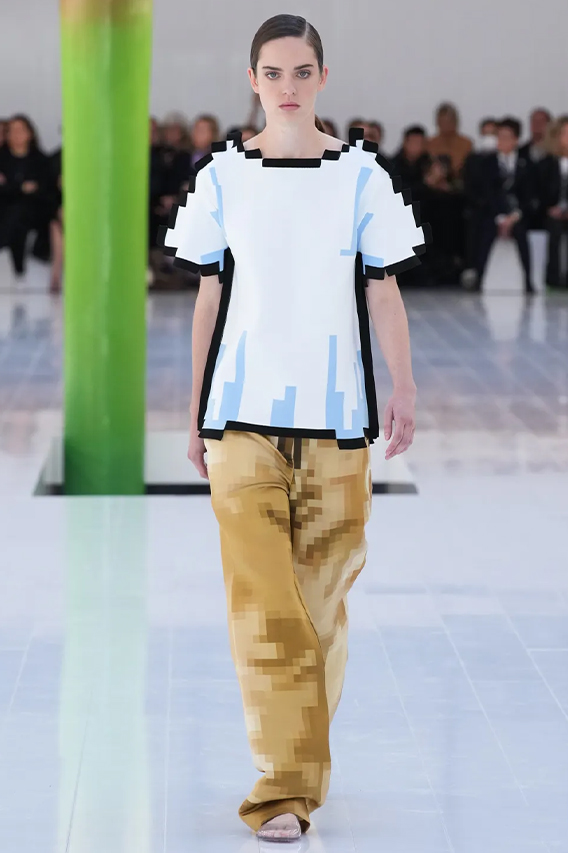
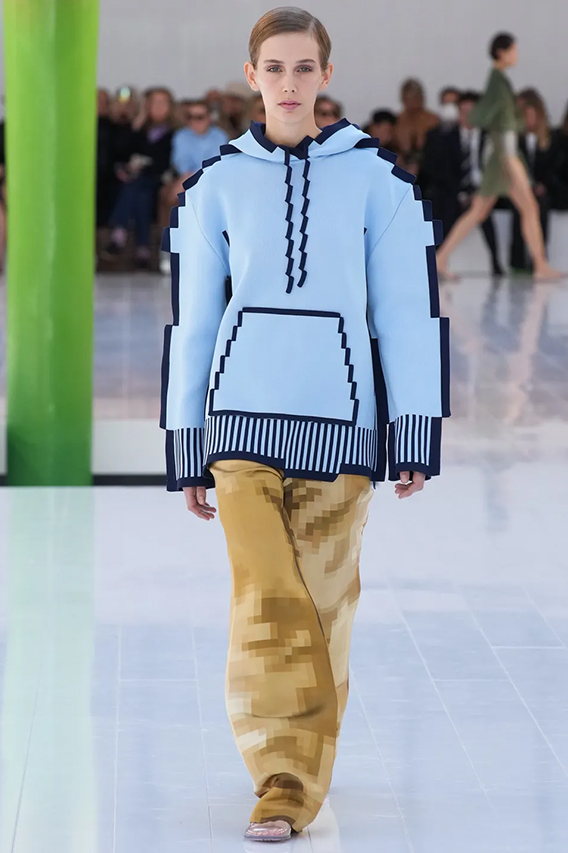
In between the alternance of mini and maxi, fake flowers of various sizes adorned baby-doll and slip dresses and were transformed into corsets. In the middle of it all, what the show notes called “pixelated glitches”, or 2D silhouettes apparently just out of a Minecraft session introduced the role of technology in blurring our perception of reality. This fine line was amplified by the musical arrangement and kept the audience on its toes as heels clapped on the floor in a show where nothing seemed to be quite what it was supposed to be.
The accessories, the Crown Jewels of JWA’s latest collections for Loewe in my opinion, featured anthurium shoes, deflated balloons echoing his previous collections, and bulbous Barbie-doll pumps. Some of the bags also adorned hand-painted ceramic flowers transforming bags into bouquets and stressing their nature as design pieces women live with and, most of the time, out of.

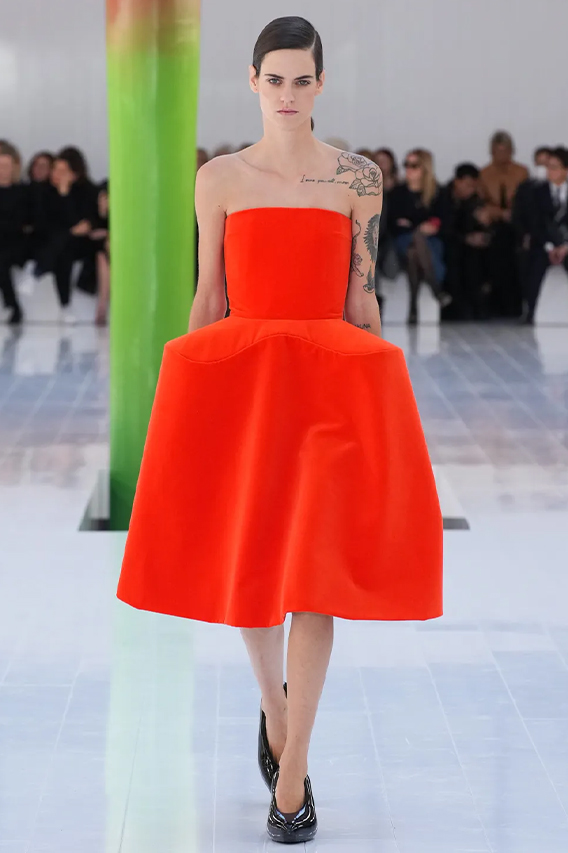
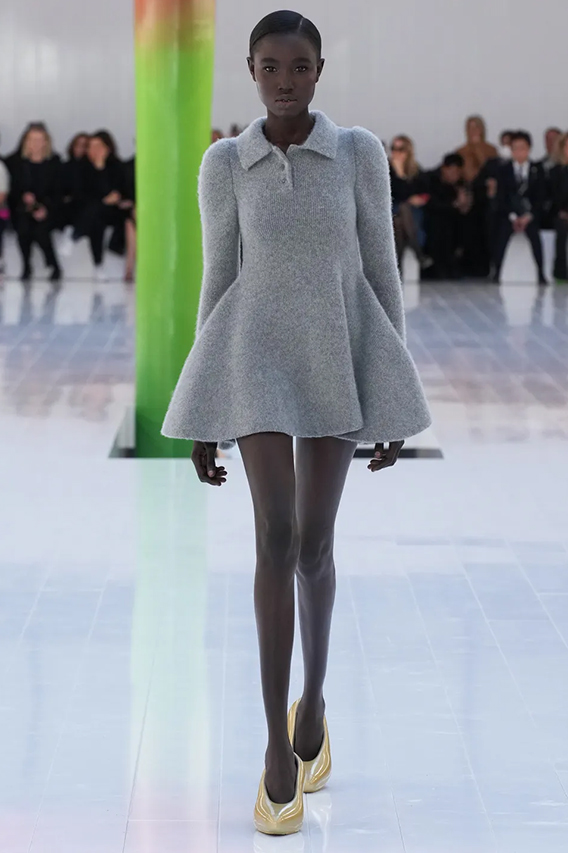
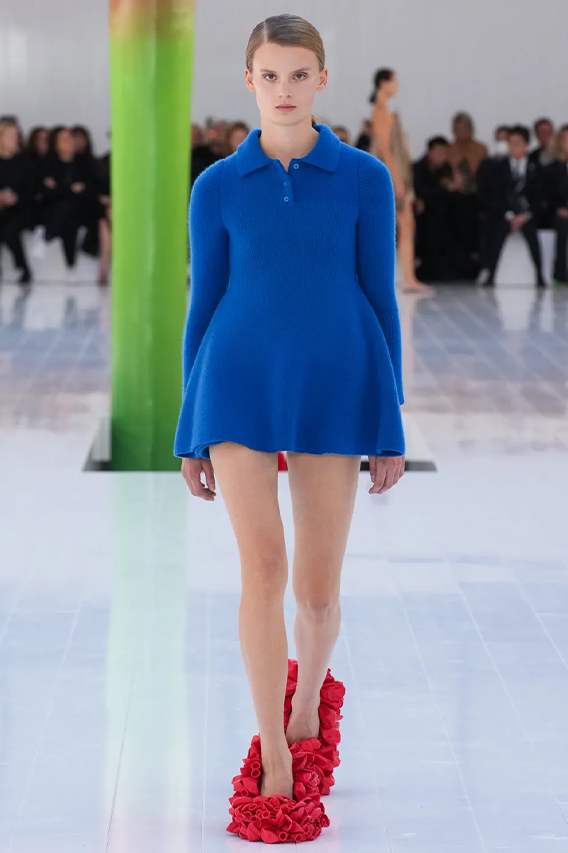
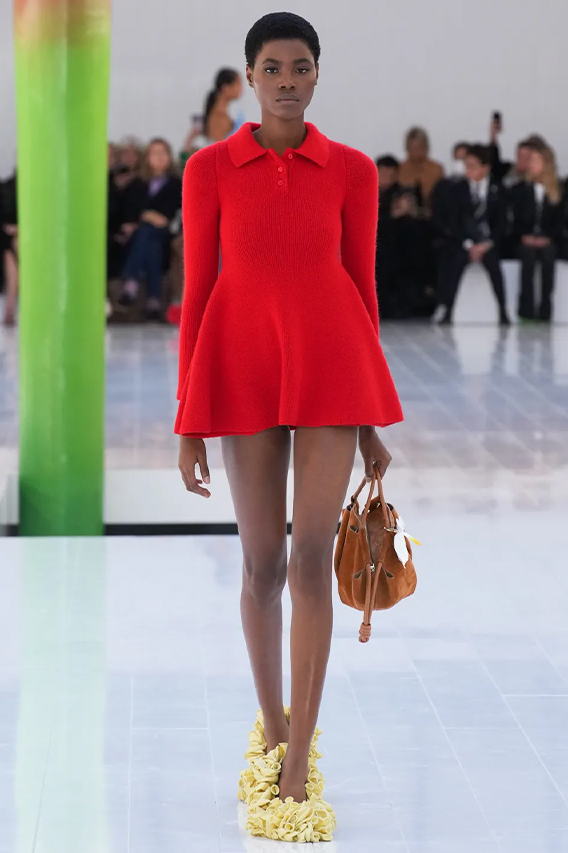
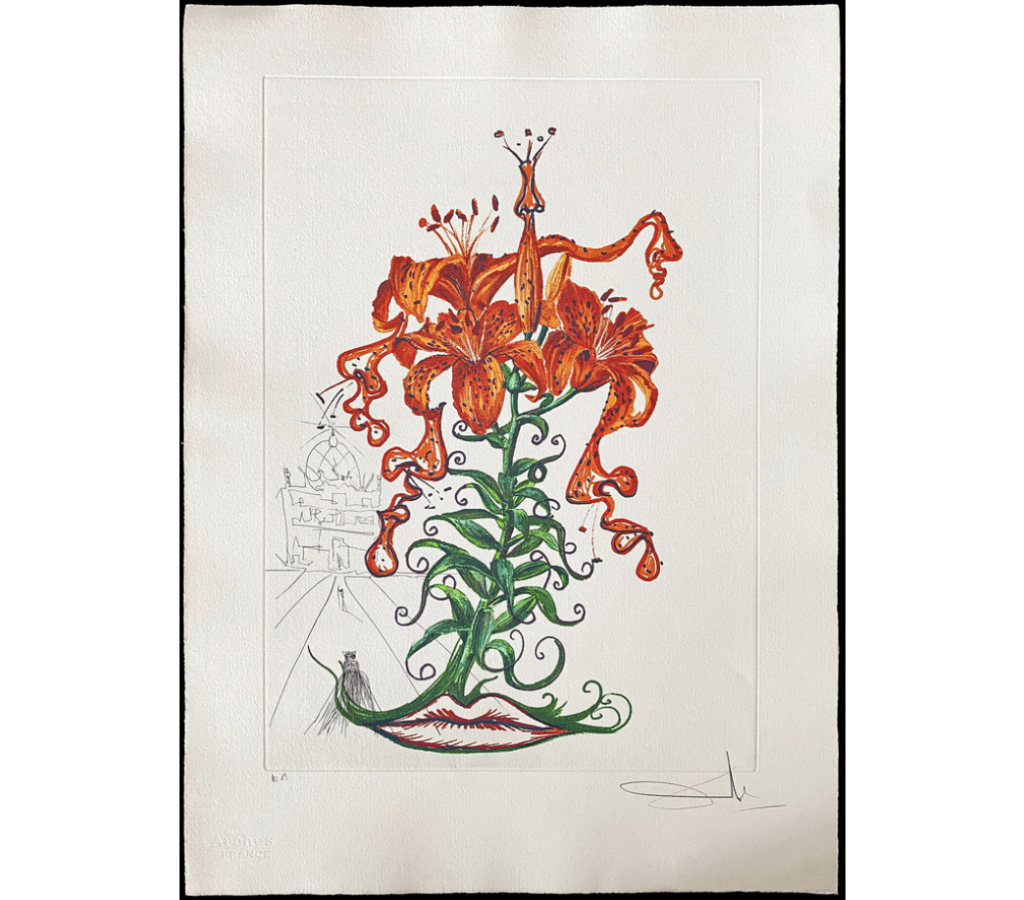
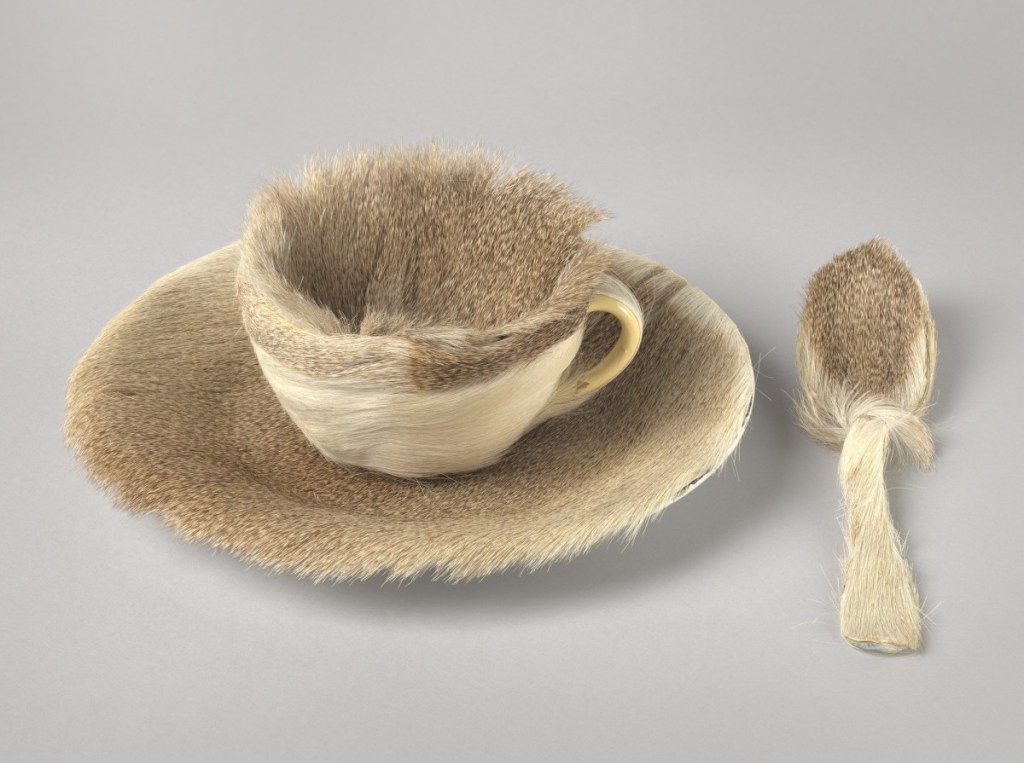
The literal translation of the Anthurium from a flower to a wearable creates “A collection that is a blunt design statement, amplified through the act of reduction.” according to the show notes. This subversion coupled with the game of proportions is a subject that has been dear to artists since at least the beginning of the 20th century with Surrealists diverting objects’ primary use to offer something completely different like Dali’s Lobster Telephone or Meret Oppenheim’s Fur Cup. Additionally, these artists are famous for their obsession with sexuality and symbolism, for JWA, the anthurium and its suggestive spadix, wrapped around women’s bodies strikes as an interrogation on gender’s blurring lines.
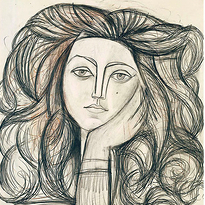
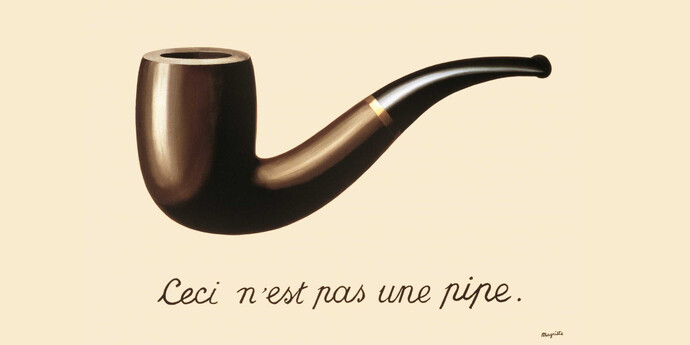
The repetition of some motifs was also an opportunity to reinterpret and further the questioning around symbols for Surrealists, an opportunity which JWA seized along this collection as pieces were repeated with an oh so discreet tweak every time. According to the Tate “Surrealism aims to revolutionize human experience. It balances a rational vision of life with one that asserts the power of the unconscious and dreams. The movement’s artists find magic and strange beauty in the unexpected and the uncanny, the disregarded and the unconventional.” which bears some resemblance to JWA’s process and creations, as he offers a commentary about the fine line between reality and dreams. Réné Magritte’s Ceci n’est pas une pipe underlines that what seems to be is not always it, and that his painting of a pipe is in fact, not the real thing.

Courtesy West Dean College
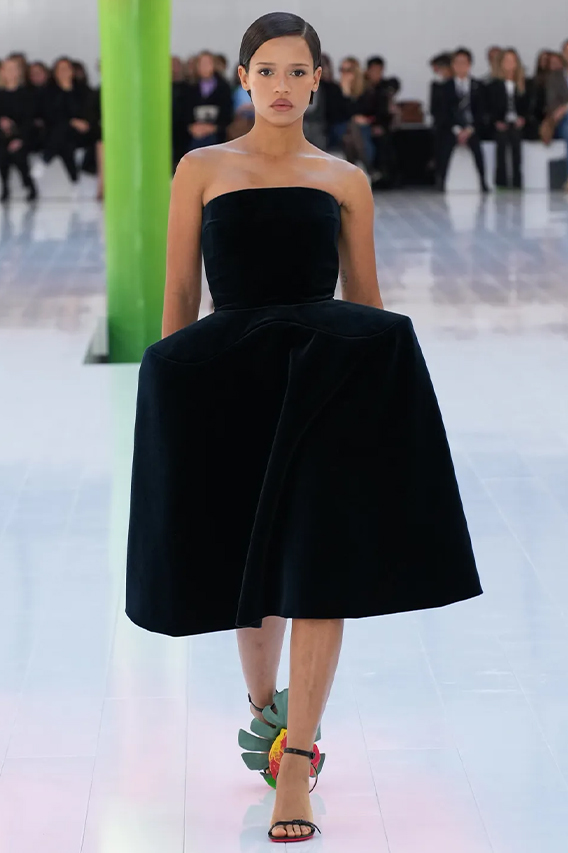
Yet, the genius of Anderson resides in his ability to update those references to our current era while sustaining a conversation with the history of the house he designs for. The show opened with Taylor Russell, the new star of Luca Guadagnino’s film Bones and All, wearing a velvet dress with side panniers straight out of a Baroque painting, like Las Meninas by Velazquez, stressing that the house of LOEWE has been around for some time, as LVMH’s oldest fashion house.
At the same time, his reference to technology through 2D silhouettes and repetition, in a world where images and clothes are ever copied and distributed, reminds one of the dominations of social media as a modern vector of images and anchors his collection in the now. Plus, these extra short dresses are not only extremely desirable – pushing the boundaries of appropriateness – but also seriously positioning those designs as a reality in a world that is literally burning as we keep destroying our natural environment.
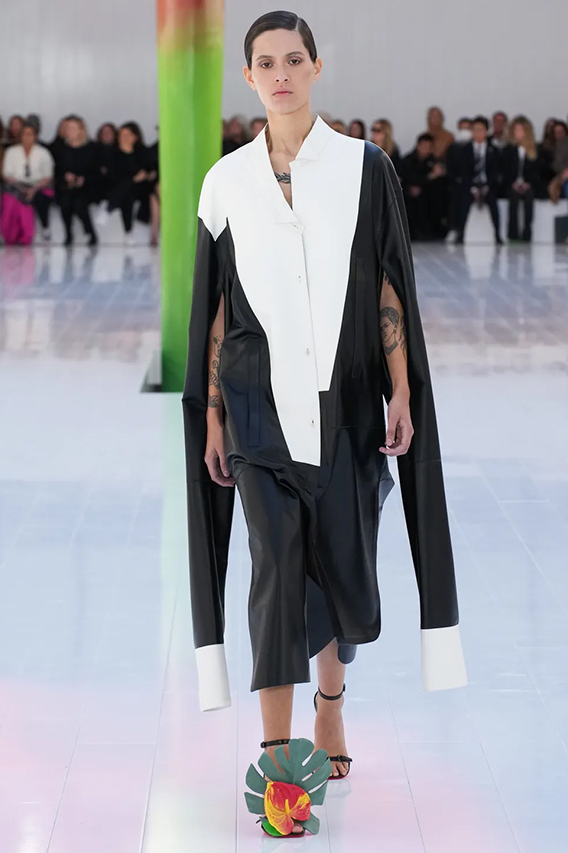

Surrealist references in fashion are not exclusive to JWA’s work, and in fact, Schiaparelli is a striking reference in this domain, and Daniel Roseberry thrives in reviving the creativity of the house. But while Schiaparelli goes the maximalist route, Anderson’s more subdued discourse shines in its balance of opposites: the delicately sensual and the overtly sexy, the quintessentially chic and the uncomfortably cringe. The force of his creativity lies in the fragile harmony between the complexity of the questions he explores and the unsatisfying answers he provides, acknowledging that, in fact, nothing in life is ever quite simple.

 mabou
mabou 
Leave a comment