
On September 24th, 2022, during Milan Fashion Week, Matthieu Blazy showed his sophomore collection at the helm of Bottega Veneta (owned by Kering) for Spring Summer 2023, with a full set realized by designer and multidisciplinary Italian artist Gaetano Pesce. Both creatives met in their love for craftsmanship and unique realizations serving a global community of uniquely individual people. In short, Blazy’s collection is imbued with a humanist discourse thanks to Pesce’s contextualization, elevating the message of the fashion designer to the cultural significance of an artistic movement.
Gaetano Pesce, the 82-years old Italian designer, dubbed by the NYT a “polymath (that) continues to rage with the force of a Technicolor tornado” designed 400 unique chairs made of cotton dipped in resin and a shiny, droopy runway made of poured resin. Titled “Come Stai?”, the chairs were displayed in waves along the multicolor swirling floor in vivid tones of pink, blue, orange and lilac reminiscent of Italian postmodernism reacting to minimalism: it is bold, over-the-top shiny and exciting. It is a signature approach of the artist and very much in the zeitgeist (as exemplified by Tramonto a New York, one of his most recent works, also in resin).
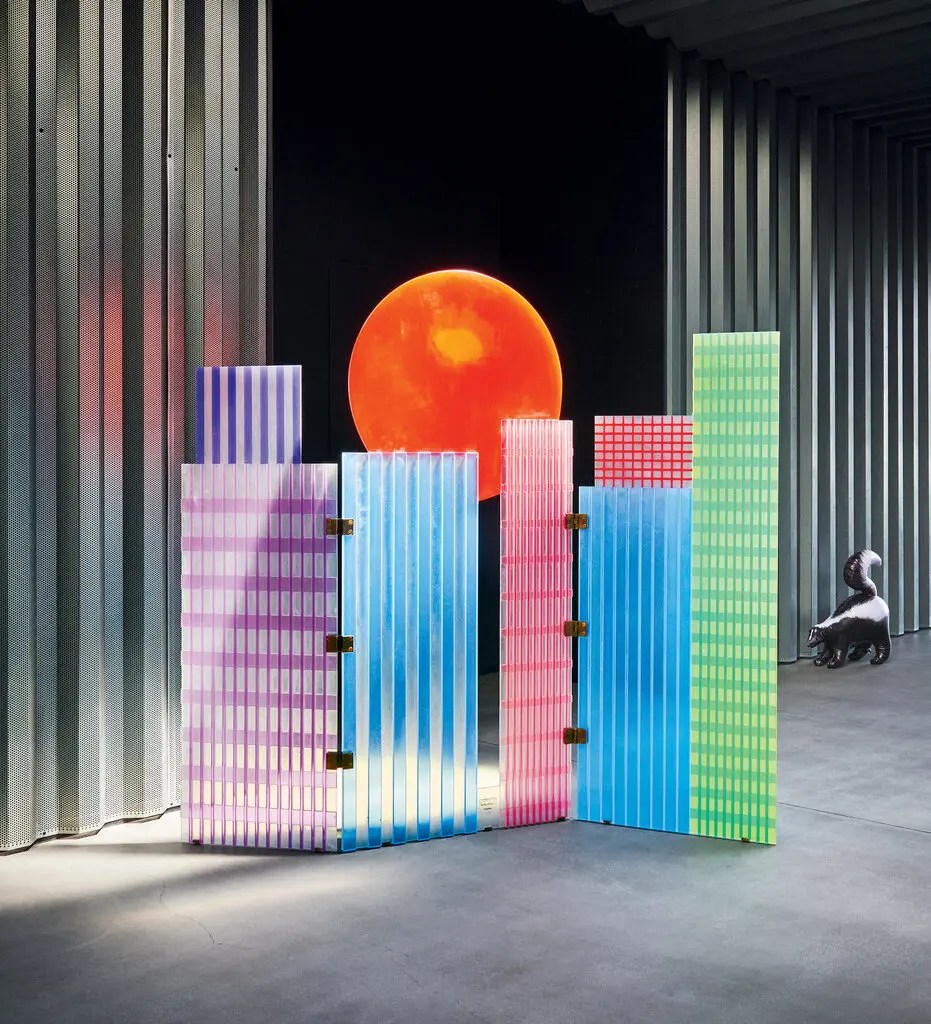
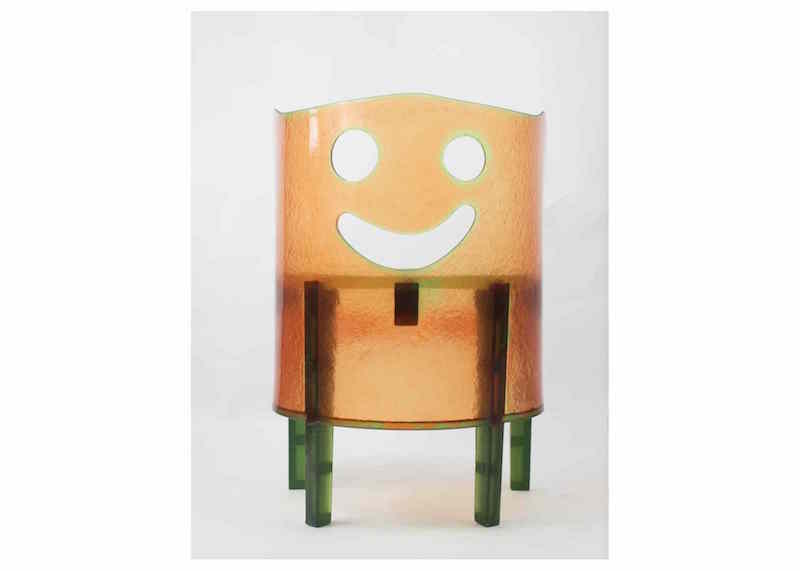
Each chair is unique and some of them are adorned with hand-painted details, from smiley faces to simplistic bags or letters signing “Bottega Veneta”. Some chairs have contrasting combinations of colors blending together while remaining distinctive, attracting and pushing each other away and illustrating the dependance of opposite forces. The playful and naive set contrasted with the concrete heaviness of the industrial warehouse-style of the Fabrico Orobia, a former factory space, and the large columns dividing the runway.
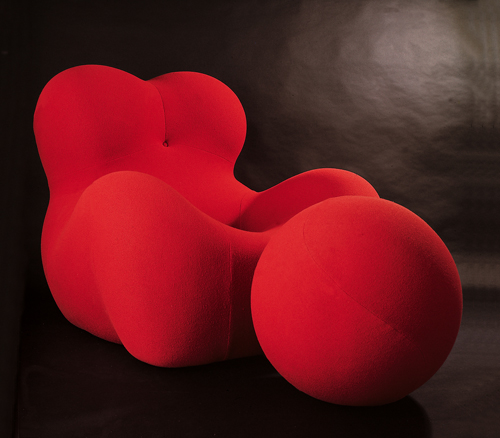
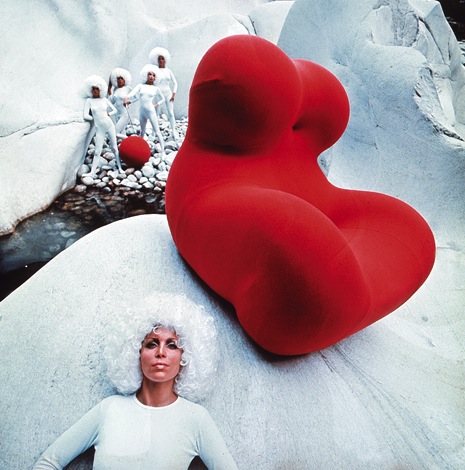
According to Matthieu Blazy, his collection is an ode to diversity inspired by Gaetano Pesce’s universe, motivated by stark contrasts and daring juxtapositions. “The world in a small room: the premise is simple – the collection is about a contrast of characters on the go, invited to travel through Gaetano Pesce’s landscape,” said Blazy. The Italian architect and designer thrives on diversity of inspirations, objects, fields and cultures. He is known for his humanist approach to art merging social commentary and design. He experiments with materials, uses of bold colors and organic shapes, all identifiable in Blazy’s collection. One of Pesce’s most iconic pieces of furniture, UP 5 & 6 sofa and ottoman from 1969, is a curvaceous chair based on the female form with a ball and chain for an ottoman as an embedded commentary on the oppression of women globally.
“Here, two distinct worlds are juxtaposed, while our journey of craft in motion and quiet power continues.” Blazy continued. Speaking with Hans Ulrich Obrist, Pesce said “It is about the human being; we are all different. People who say we are all the same – fuck them!”. “We are all different and this is our defining quality – otherwise, we are just a copy,” he added. “We are all originals and this is one of the themes of my design.”, and certainly, fashion helps us feel this way.
“As a designer I make originals, not standardized series’, that’s the old way – this is the new way,” said Pesce. Indeed, like many high luxury pieces, Pesce’s pieces are unique, he is against the mechanical reproduction taking away from the unique craftsmanship and the hand of the artist as many modern processes do. Technology replaces humans in an increasing number of areas. For the artist, manual labor is a sacred experience in which body and mind are in tune and where the creative process evolves along the production process to create a truly original outcome.

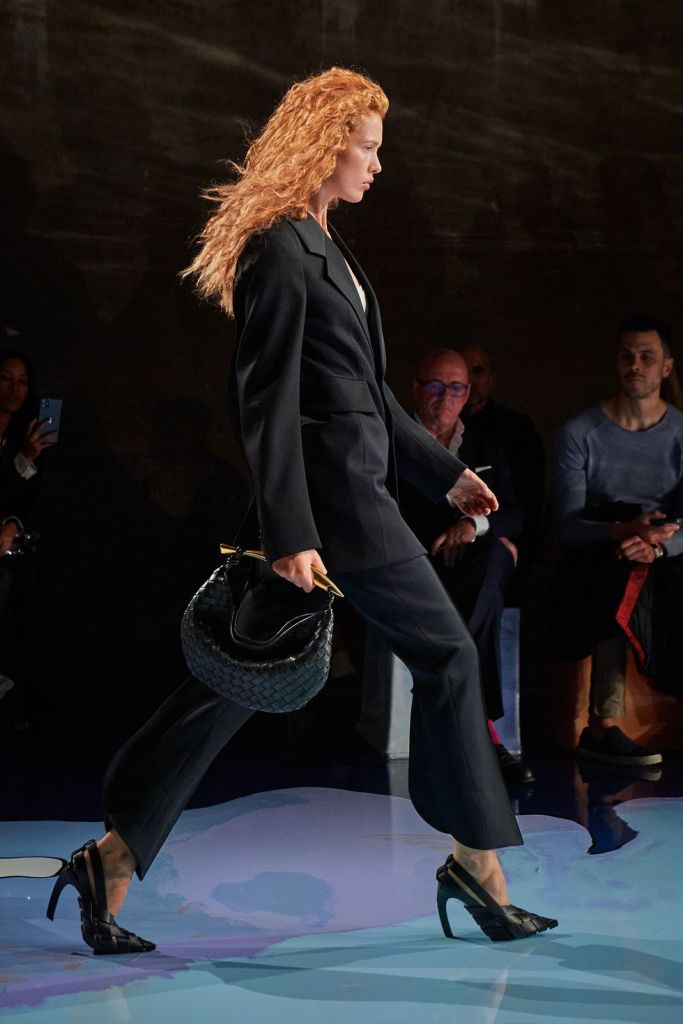
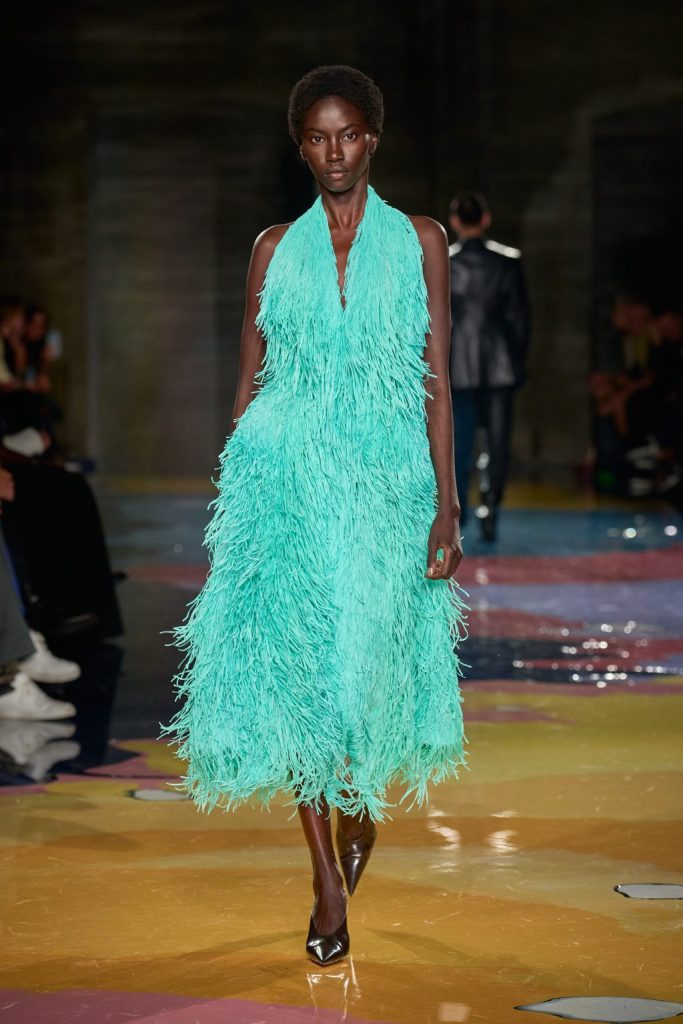
Bottega Veneta SS23 runway by Gaetano Pesce 
Bottega Veneta SS23 runway by Gaetano Pesce 
Bottega Veneta SS23 runway by Gaetano Pesce 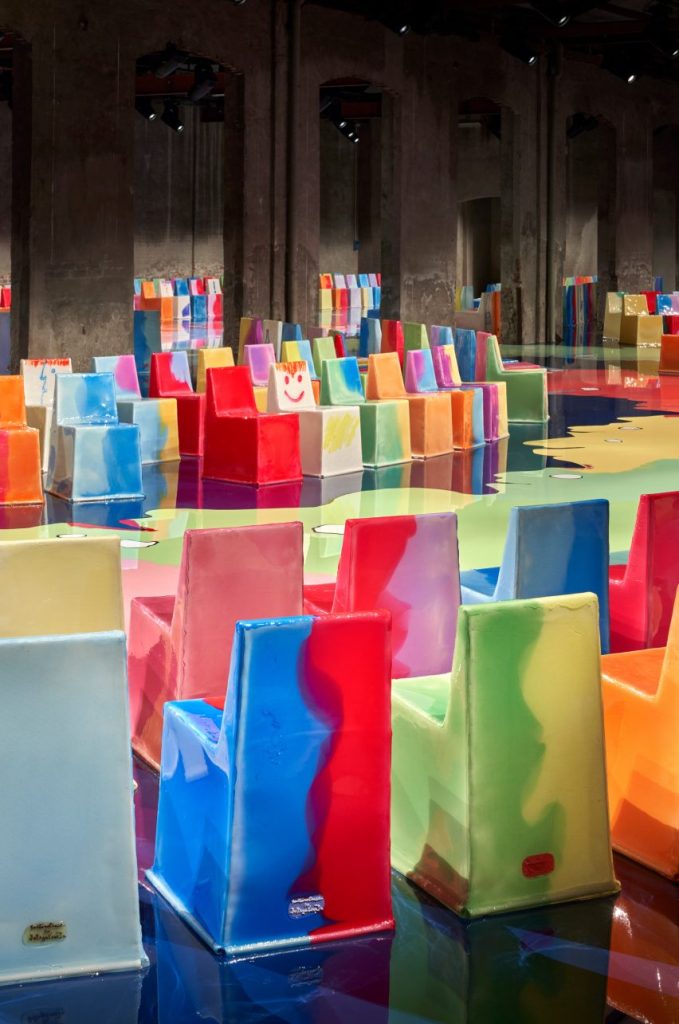
Bottega Veneta SS23 runway by Gaetano Pesce 
Bottega Veneta SS23 runway by Gaetano Pesce 
Bottega Veneta SS23 runway by Gaetano Pesce 
Bottega Veneta SS23 runway by Gaetano Pesce
In his work, Blazy focuses on process in the same manner, aiming at reconciling “the archetypal and the individual” defining the fashion industry. He is designing “not just for one woman or one man, but for women and men.”’ And in fact, even though they are not individually unique, his clothes are quintessentially and uniquely chic. He elevates daily essentials with perfect cuts and precisely magnified materials showing an exceptionally sophisticated collection paying tribute to the craft of the Bottega house. “It’s very technical. The project is not easy,” he said. “Craft — the things we can do at Bottega that no other brand can — this is our identity.” he said backstage. Technical precision is the definition of Bottega’s luxury and the experience of the clothes, more than the style, is addressed to everyone, and not only the stellar Kate Moss who opened the show.
Experimentations with materials are also an area in which both creatives are in literal conversation. The chairs, albeit more simplistic and contained than what Pesce usually designs, made of a simple block square and tapering backrest, are each one of a kind. They are the first originals in years and will be sold at upcoming Design Miami this year. They were made using cotton, in conversation with fashion’s traditional use of toile fabrics, showing how much material is central in Pesce’s creative process. “When I finished school, I was totally ignorant about material, so I sent letters to chemical companies, asking to visit. I saw incredible things. I understood that if I wanted to express myself with sincerity, I have to use materials from our time.” The artist told Artsy.

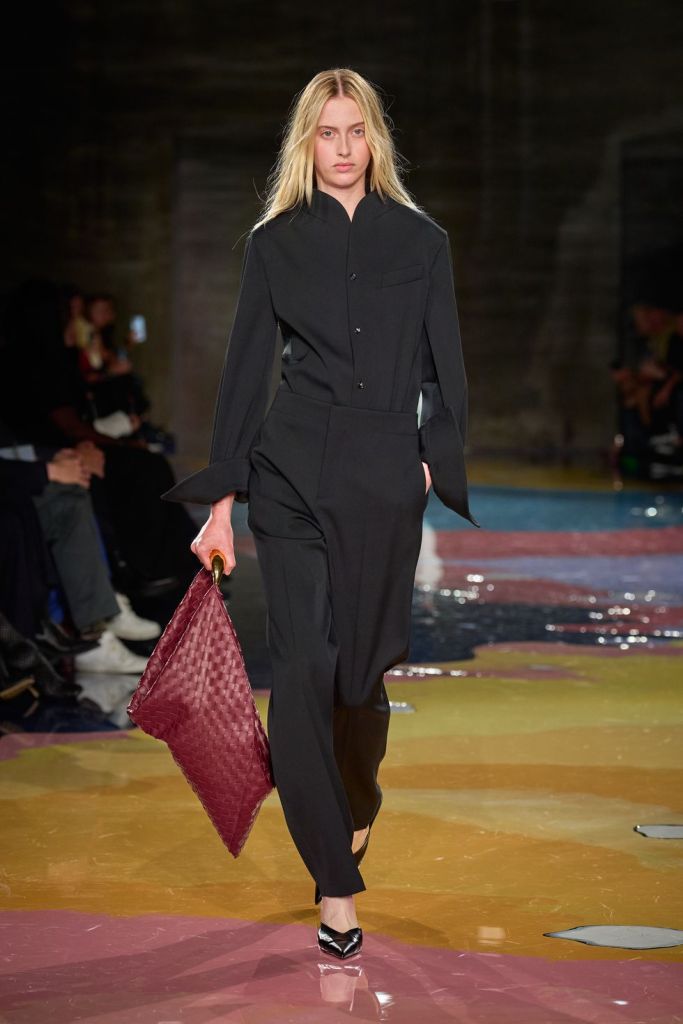

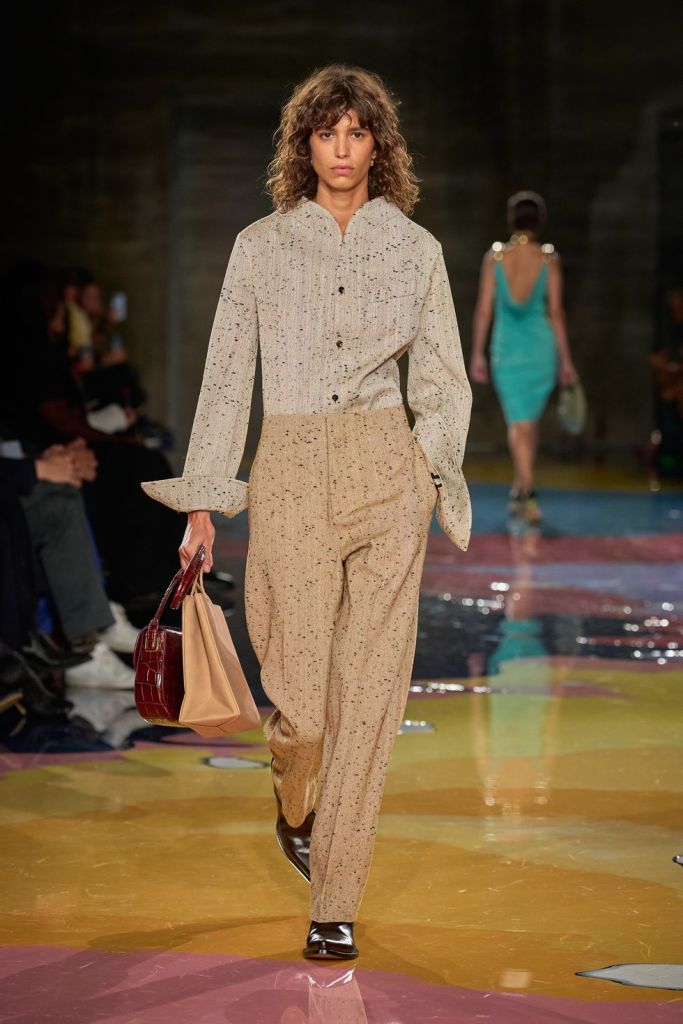
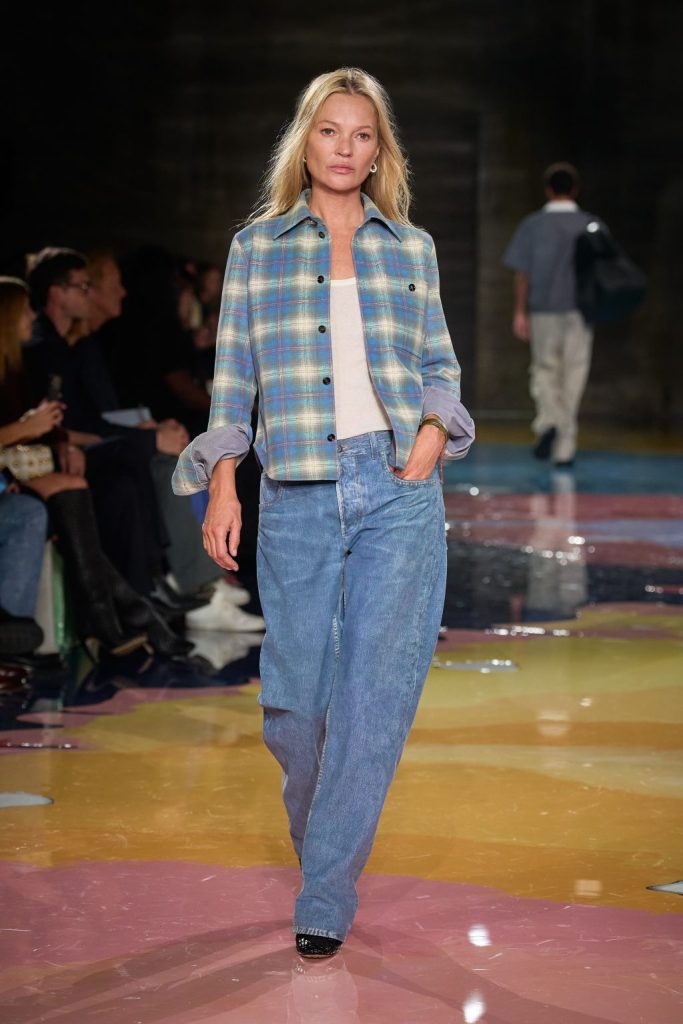
More than that, Pesce was one of the first artists to encourage experimentation with materials and creative fields. He often mixes several senses to create a holistic experience for the public. Including sound, smell, touch makes his message more powerful as he goes beyond the traditional siloing of artistic practices and mediums. In order to best express the plurality of messages and simply have fun and explore, Pesce has established multidisciplinarity as a principle, illustrated here by Blazy. Jeans and plaid shirts were made of nubuck in a creative trompe-l’eoil in which only the wearer knows how comfortable and exclusive the materials he or she is wearing are.
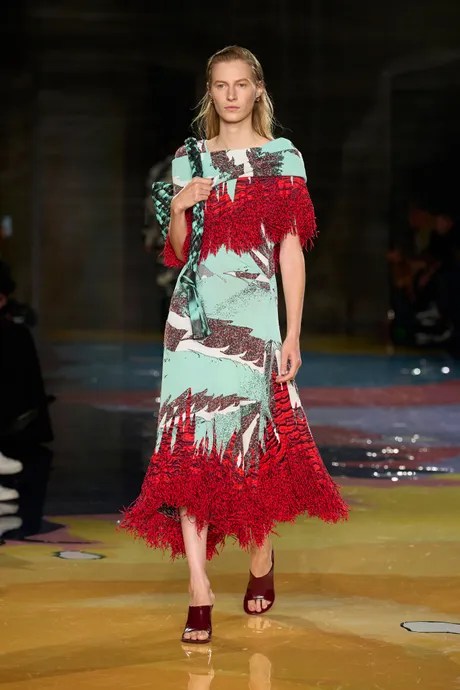
The vibrant hues of the moving dresses pay direct homage to Pesce and his experimentation with the body and curvaceous shapes. In Bottega’s world, quintessential luxury is a personal affair where deceptively simple pieces are elevated through and thanks to people’s personal relationship with their clothes, a philosophy taken through classic trench coats and extravagant dresses made of tassels that closed the show. “With daring flashy colors used on precious fabrics, futuristic patterns, all-over fringes, complex three-dimensional embroideries, and suggestive see-throughs”, as Numero puts it, the individual is given powerful tools of self-expression. “Perverse banality,” permeates the collection in Blazy’s words, as his studio focused not only on nailing the basics but over-doing them.
By choosing to work with Pesce, Matthieu Blazy and Bottega Veneta claim a new layer of identity, one that is concerned with individuality and uniqueness while clothes become by extension the subject of the political message dear to Pesce. According to his website, “In all his work, he expresses his guiding principle: that modernism is less a style than a method for interpreting the present and hinting at the future in which individuality is preserved and celebrated” becoming Bottega’s message.
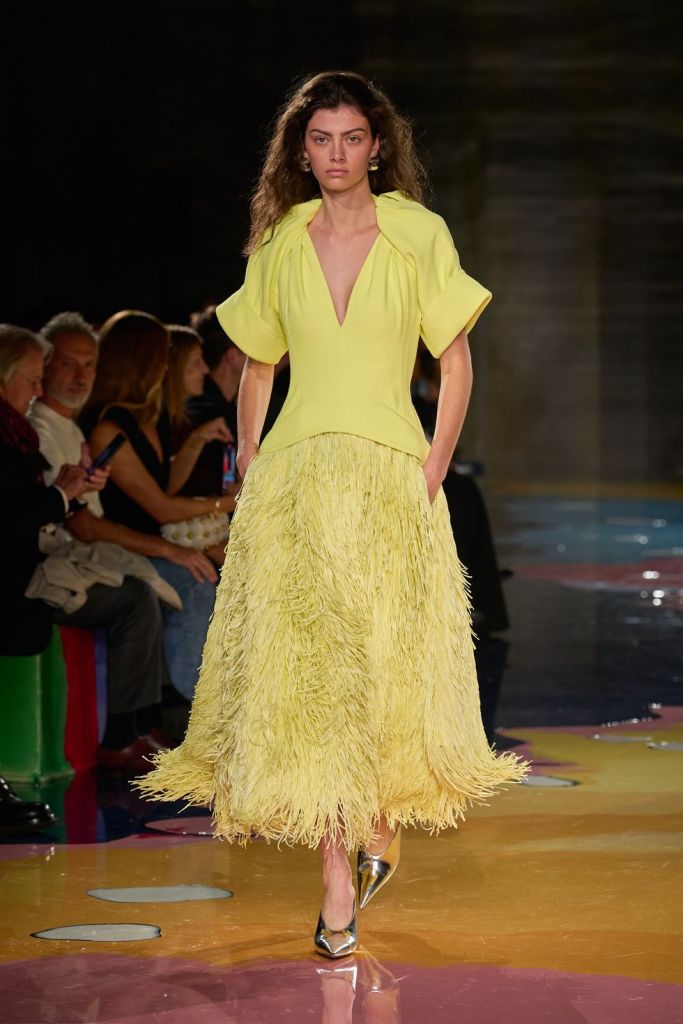




“And this is a fashion company that did a fantastic job in helping me realize such a project.” reminds Pesce. “It is a message that is super political – and it is not a museum or a gallery that is helping me convey it,” he added. “Who makes culture today? The museum or the fashion company? It is food for the brain – not for pay. If we see the same thing each day, then we die.” For Pesce, this trend of fashion houses working wirth artists is more than a trend, it is the future of creation in an age where patrons are not individuals but multinational corporations.
Fashion, because of its ability to reach the masses (after all, we all do wear clothes) has become a privileged medium of cultural conversation and tastemaking beyond clothing. Earlier this year, Bottega Veneta was a cultural curator in the context of the 59th Venice Art Biennale. In the same fashion, the SS23 Milan Fashion Week runway show is part of an ambitious strategy to become an art-and-design dealer beyond fashion.

In the manner of Gaetano Pesce, Bottega Veneta understands that immersive experiences that call all the senses have the power to create an extraordinary moments of which the impact and message is felt beyond each individual element creating the whole. It inscribes their message in a time while simultaneously offering several alleys to take it home, and into the future.
This increases its cultural relevance and creates more opportunities for interpretations and identifications by consumers and society at large, even when one cannot afford the real deal. By being invited into the creative world of a fashion house and a designer, those who understand the message or who are challenged into interpreting it, create a special bond that they are taking outside and beyond the fashion industry, in museums and homes. One infuses new meaning into familiar and new pieces, from chairs to vases to massive public installations now commissioned by… fashion houses.
 mabou
mabou 
Leave a comment