
On September 6th, 2022, the long-awaited Merge will start on the Ethereum blockchain. The process is expected to be completed around September 15-16th not without a few question marks for crypto-natives and novices alike. While it is a risky transition, and disruptions are to be expected, the Ethereum founders believe it is worth taking the risk for the ecosystem to be more sustainable and continue to thrive. Indeed, as brands start to nail what makes an NFT project successful, aligning their different strategies is becoming critical. What does that even mean and why does luxury fashion care?
The Ethereum blockchain is the backbone of the Ethereum currency and ecosystem. Since its creation in 2015, it is based on a proof-of-work mechanism to authenticate transactions. Put simply, several extremely energy-consuming computers compete in order to solve complex equations with a reward as the incentive. With “The Merge”, Ethereum will transition to a proof-of-stake mechanism recognized to be around 99% more energy efficient. In this new system, investors will be staking ETH, the currency of the Ethereum blockchain, in a pool consisting of a lottery. One investor will be selected to validate the transaction and claim the reward.
In an environment where ecological concerns are front and center, the luxury fashion industry has been pushed to take action in order to ensure a more responsible production, a challenge that remains difficult to reckon with for an industry based on creating new trends every season to drive sales, therefore encouraging a form of overconsumption. A scientific report estimates that on a global level 35% of the microplastics found in oceans can be traced back to textiles. This makes the fashion industry the largest source of microplastic pollution for our oceans.

For brands which launched NFTs, therefore, the ecological impact is a factor they need to tackle as part of their sustainability goals, especially at a time when they are accused of greenwashing. In fact, researchers have estimated that the amount of electricity needed for proof-of-work networks like the Ethereum blockchain, as of July 2021, was comparable to the one of Romania. The Ethereum Energy Consumption Index found that every proof-of-work transaction taking place uses more than 260 kilowatt-hours of electricity. This is equivalent to the average U.S household over 9 days.
Adidas’ “Into The Metaverse” project was accused of being the most energy-consuming NFT project launched by the fashion industry these past few years, because the large amount of NFT released, 30,000 was notoriously huge compared to other brands’ launches, and that despite the fact that decarbonization is at the center of their long-term strategy. Clearly, the Merge will help them tackle such goals. Thanks to the reduction of the carbon footprint of the Ethereum ecosystem, brands can align their different ecological stakes with their digital strategies.
Ethereum is the most popular network for NFTs and other forms of blockchain-based projects because of the versatility of industry and products it can be applied to. Gucci, Nike, and Adidas, all use Ethereum-based technologies, especially since these NFTs can be listed on most third-party NFTs marketplaces.
What is more, NFTs, which are not as new and intriguing anymore, are getting more refined as they gain utility value. Namely, and especially with the crash of the cryptocurrency market, they are evolving from collectibles to be traded – where owners were buying them in the hope of reselling them at higher prices – to useful assets that can be exchanged for practical, tangible products or experiences. Yet, not all blockchain allow for coding additional elements and capabilities into the NFT, which makes Ethereum unique.

This means that the Ethereum blockchain is likely to remain the reference for fashion NFTs, especially considering these projects are not going away any time soon now that brands have a better understanding of the Web3 space. Indeed, critically, the successful NFT projects launched by the luxury industry and fashion industry at large are those able to create a sense of community, a sense of added value beyond ownership of the asset, and a real involvement in the Web3 ecosystem in the medium to long-term as part of their business models, all relying on the features other than trading.
Creating a community revolves around proposing exceptional creative projects, like RTFKT Studios is doing for Nike. Their collaborations with several artists, from FEWOCiOUS to Takashi Murakami has gathered a reliable and engaged community of fans, making RTFKT the most valuable NFT project in the world. According to NFT GOD, it is poised to become the largest Web3 ecosystem in the world.
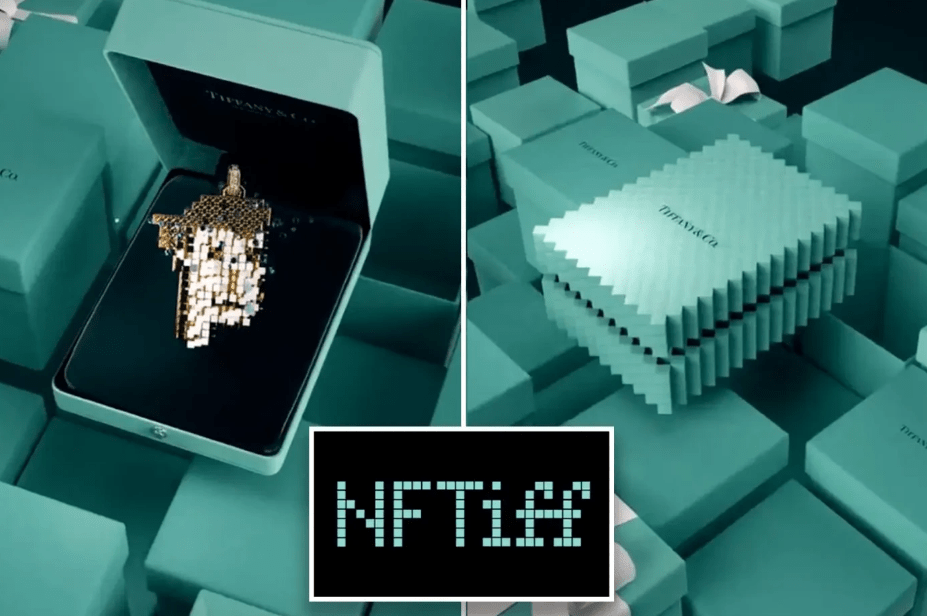
What is more, their NFTs, like those launched by Gucci, come with extra perks, like access to exclusive drops or the possibility to redeem physical items. Combining the community and exclusive access aspect and appealing to an already established digital community has proven successful for Tiffany & Co, which launched the 250 NFTiffs in August. Selling for 30 ETH, they were exclusively available to CrypoPunks NFT owners and allowed buyers to redeem customized pendants of their punks. For NYFW, Vogue will launch NFTs giving access to special events and products.
The last critical factor is about targeting the right audience. For the moment, most NFT projects have been addressed to digital native communities: they were endeavors meant to bring new consumers into the brands’ ecosystems by working with and around their references and methods. Indeed, the crypto market is still niche and there are considerable barriers to entry, which means the core audience of luxury fashion has not necessarily leaped into Web3.
Yet, if most of the NFTs sold by fashion brands remain closeted to a small audience, inscribing them in their long-term strategy is critical as new users will be shown more utility as the tools to make Web3 mainstream keep expanding. Communication and marketing are critical in helping those brands drive new consumers into Web3 and increasing online sales, but they should not be a one-time performative event. In fact, the most successful projects are the ones able to build a bridge between a brands’ references and its new characteristics like Gucci’s Vault is doing.
To conclude, NFTs for the luxury fashion industry are here to stay. Web3 and NFTs are probably among the technologies that have evolved and expanded the quickest in recent years. Already, brands have engaged in countless trial and error projects and have been able to define what makes a successful project and areas where more digging is needed. Solving the sustainability issue is only likely to make NFTs more important for the luxury fashion industry as all the pieces of the puzzle start to come together…
 mabou
mabou 
Leave a comment