
As luxury fashion brands dip into Web3, the metaverse and NFTs, one critical question driving their long-term strategy is when and how will mass adoption be reached. As only a fraction of the population owns digital assets and invests time into the digital space for the moment, brands have to choose which population to address and where they will get the highest engagement. One aspect of the challenge is getting the fashion industry and traditional audience into the metaverse, that is, enticing them to dedicate at least a part of the attention they dedicate to fashion, to digital fashion ventures whatever their forms. KNXT, piloted by Kering, seems to be addressing this exact challenge.
Most of the discourse and enterprises around Web3 that have been put in place by luxury brand have been about addressing the communities and consumers that are already online, and who have been spending time and money in the metaverse like Balenciaga creating skins for Fortnite or Gucci creating products for the Gucci Vault and opening a store on Roblox.
Even ventures that are linking the physical and the digital, like RTFKT Studios, are still mainly addressed to the online communities of the brand, with white lists for NFT holders. The three founders of the studio acquired by Nike less than a year ago claim that this is the best way to nurture NFT projects and sustain long term interest, and hence long-term value.
But this leaves aside a big part of the fashion community that might not feel comfortable using Discord and have a limited attention span for the gamified aspect of many NFT projects. At the end of the day, fashion is still very much worn, and the question of how to create interest in the digital for people interested primarily in the physical will not go away. In fact, brands know they cannot ignore their traditional audience and have a duty in helping bridge the gap between their new primarily digital consumers and traditional primarily physical customers – albeit these overlap, especially among younger consumers who have the tools and knowledge needed to navigate the transition to digital universes.
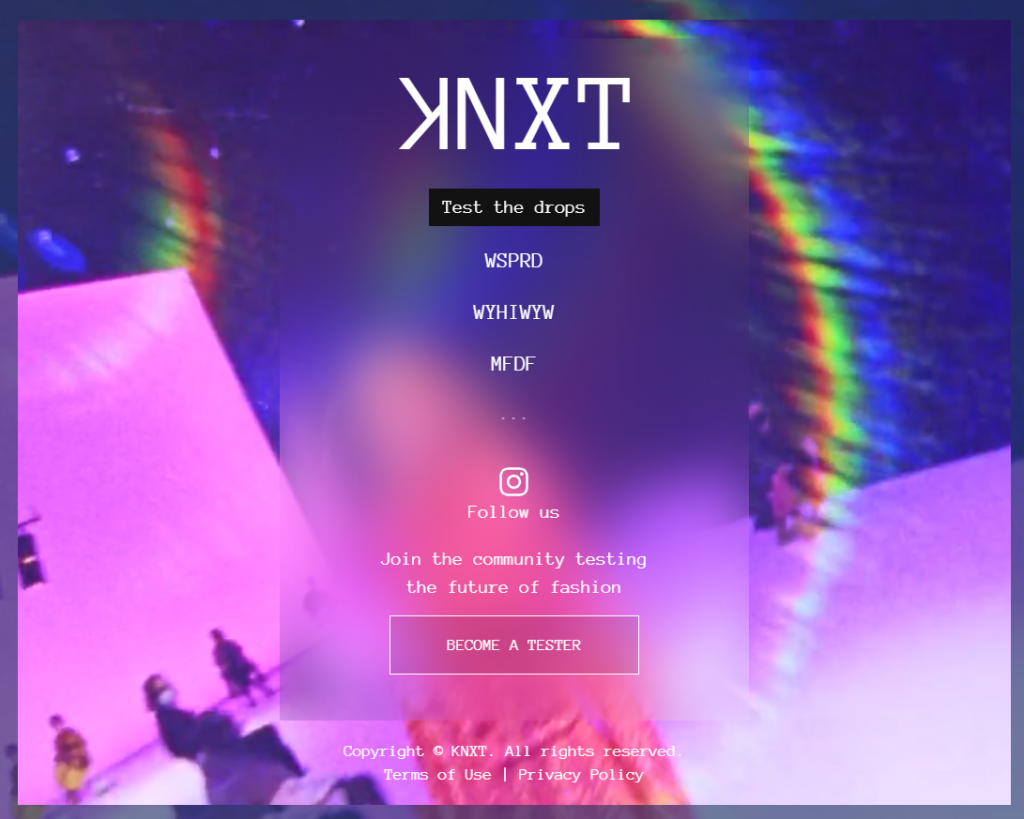
It is therefore interesting to see that Kering, owner of some of the most disruptive and forward luxury brands in the space, like Balenciaga and Gucci mentioned before, has quietly launched KNXT, first reported by Julie Zerbo from The Fashion Law. The website features drops and invites users to “Join the community testing the future of fashion”, where anyone can file a type form to have access and test some of the strategies launched by the project. As of now, three projects have been released.
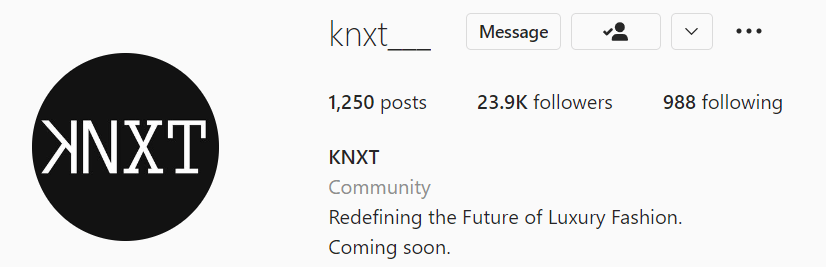
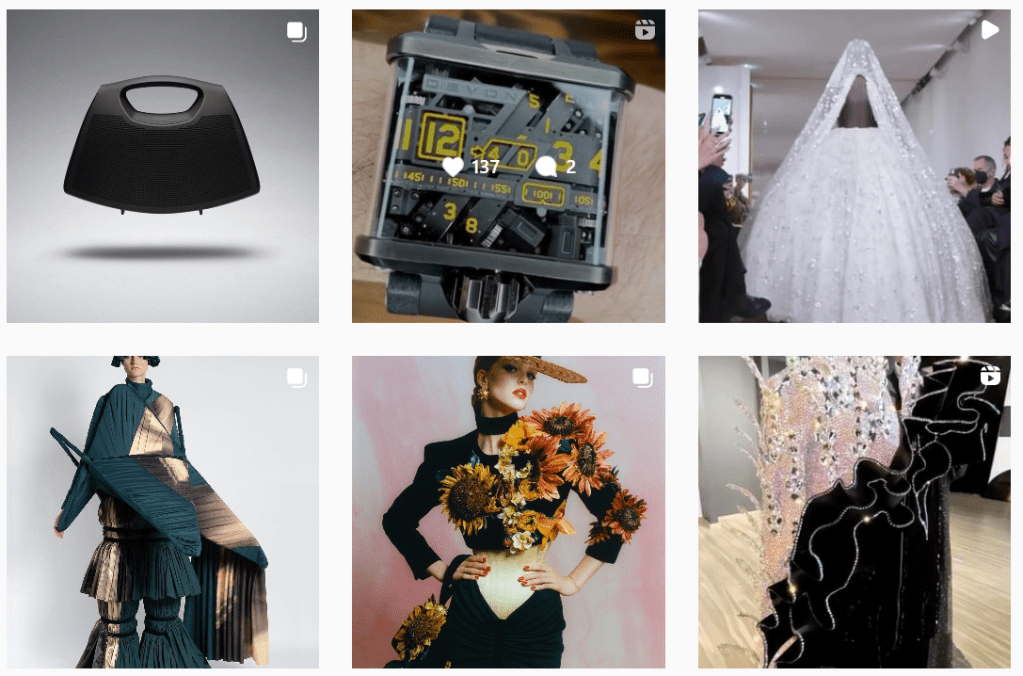
WSPRD features audios associated to outfits and items from the Kering-owned labels, WYHIWYW matches one’s Spotify playlist to a computer-generated outfit and the last, MFDF has not yet been unveiled. The Instagram account also gives an idea of the direction the platform seems to be taking, defining itself as a community that is coming soon and “Redefining the Future of Luxury Fashion”. Featuring images of fashion shows and exhibits as well as items from up and coming designers, with a strong focus on alternative and edgy fashion, KNXT – while blurring even more the lines between fashion and art – seems to be paving the way for the luxury fashion industry to rip the benefits of a Web3 digital community.
While the website does not bolster any Web3 element for the moment, the patent filed by Kering in the US on July 5th mentions several clearly Web3 features among which downloadable digital media, namely, digital assets, digital collectibles, digital tokens, and NFTs; Online retail store services featuring virtual goods; Electronic transfer of virtual currencies; Entertainment services, namely, providing online, non-downloadable virtual clothing, and accessories among others.
Critically, Kering has correctly identified the shift taking place with the luxury fashion consumers: the need to feel exceptional and uniquely connected to a brands’ universe and cultural relevance. This requires unique tools to give access to exclusive experiences and engagement with brands. Ultimately, NFTs, the blockchain and the metaverse are the most potent tools to do so.
One of the critical aspects of blockchain technology for the fashion industry is the ability to create a sense of community around the exclusivity and authenticity of brands’ identities and products. Brands can have a more direct, tailored and engaging relationship with customers through activation strategies and dedicated perks. Ultimately what is at stake is making the customer feel exceptional, a character that feeds into the trend of hyper personalization that has been gaining popularity within the luxury fashion industry (albeit not on every product, classics are impermeable to the emotional value-adding aspect of a personal twist).
Customers want to feel special when shopping, but also in the way they interact with a brand’s ecosystem and universe. They want tailored marketing and communication, a more demanding all-encompassing experience than tailored Customer Relationship Management as it is currently done. Personalization and engagement require participation and make the experience truly unique for the customer which Web2 was not allowing for.
By having consumers participate in the creative process and connect with the brand and with each other, luxury brands create an emotional attachment of which the monetary value becomes secondary, almost invaluable – and consumers start to feel less concerned about the hefty price tags.
While Kering has not yet advertised about this project, it seems to be laying the foundation for the backbone of their overall Web3 strategy, across a wide array of digital assets applicable to every brand’s universe individually but more critically potentially across the group, ensuring cross-utility, rivaling with projects like the Aura Blockchain Consortium led by LVMH, Prada and Cartier from Richemont. Yet, KNXT seems to have the user and community experience as the central driver, as opposed to the Aura Blockchain Consortium that is more of an authentication tool than a product in itself.
Ultimately, the challenge lies in seamlessly integrating these new technologies to appeal to an audience that does not yet see the utility in transitioning a part of their engagement with brands into Web3. Part of the issue is a barrier to entry since the jargon and interfaces can be intimidating, and another part is the seemingly lack of practical usefulness. Fostering the organic creation of an online community by the fashion actors can help in solving the issue by bringing new audiences into the Web3 fold, creating organic interest by helping them curate a dedicated online space collaboratively.
 mabou
mabou 
Leave a comment