As this blog testifies, there is nothing I like more than fashion teaming up with art, and how technology can empower both industries to reach out to an increasingly targeted but at the same time diverse global audience. Indeed, global brands need to employ increasingly refined strategies to stay relevant offline and online. This is poised to become even more true with the rise of the metaverse as brands expand into the space, serving both communities that are already well versed in the digital landscape, and bringing new communities in the fold as younger generations are likely to be digital first.
Truth be told, the customers of the future will probably engage with a brand’s digital identity first before engaging with the physical objects that define these brands. Many luxury companies are starting to harness Web3, like Gucci accepting cryptocurrencies or Balenciaga creating an in-house Web3 unit. But none is doing it like RTFKT Studios, bought by Nike in December 2021.

Founded in early 2020, the team led and co-founded by Benoit Pagotto, Chris Le, and Steven Vasilev has collaborated with the NFTs artist FEWOCiOUS and pop culture iconic artist Takashi Murakami among others, proposing a truly unique and revolutionary concept. Funnily, their logo was inspired by the legendary Nike swoosh.
Indeed, the NFTs sneakers they dropped in collaboration with FEWOCiOUS, besides raising $3.1 million in 5 minutes, were redeemable for physical counterparts through a process they call forging. Coming from a gaming background – which by the way, was the first community to see the value of Web3 already being extremely engaged with the digital world, both in terms of time but above all intellectual and emotional engagement – the RTFKT team aims at merging the universes gaming can create and the hype created by streetwear culture, led by sneakers.

Hence, the vocabulary borrowed from the gaming world where players go to worksmiths to forge rare artifacts (which inspired the name) as explained in an interview given to Highsnobiety. In the same fashion (literally), the founders realized that gamers paid great attention to the outfits they were displaying on the platforms, called skins. The obvious similarity between the digital scarcity created around these items and the physical one created by some labels as a marketing strategy to maintain a sense of exclusivity led them to explore the intersection of both powered by NFTs.
In fact, their argument is that, as value systems are shifting for younger generations, most of the value is going to be online as communities will pay greater attention to their digital identity rather than their physical ones. For them, the key cultural players nowadays are gamers, saying people pay more attention to memes than artists. Reading about the RTFKT’s story brought me back to my father’s living room, where he played Oblivion and my brother and I were kids watching in awe.

At the time, I was unaware of the engagement capacities of gaming, but I was certainly engaged. It could be easy to limit gamers to geeks that refuse to grow up, but this is ignoring the core structural shifts in societal behaviors empowered by technology and the flourishing numbers of projects aimed at making the metaverse appealing to the masses.
For brands, shifting customers’ demand goes hand in hand with the requirement for more transparency, authenticity and connection with the story of the luxury brands and items, all essential to create and initiate brand loyalty and a sense of belonging. And clearly, fashion giants understand Web3 is an essential tool to meet these demands, even though they are still in the exploring phase, as testified by Louis Vuitton launching Louis: The Game a year ago, which topped 2 million downloads in May.
The game, just fun to play by itself, is led by an avatar called Vivienne dressed with icons of the Maison and the goal is to find candles and NFT accessories scattered around different cities equating to levels. More than being extremely playful it is also pedagogical as each candle is a postcard featuring a piece of history about the maison. I do not own any Louis Vuitton piece, but I feel a connection because I know more about what the brand stands for than I would without playing the game, and that might entice me to buy an item as I feel like buying a piece of their story I identify with.
Ultimately, the sense of personal involvement, of actual “skin in the game”, is what matters for younger audiences who are hooked by the cultural relevance and clout of brands. For the moment, online hype is what drives the RTFKT team as they focus on serving the digital community and bringing the sense of excitement that physical fashion is able to create online.
Clearly, this is possible only thanks to the development of blockchain technology, which explains why now is a critical time for this enterprise. It creates a much less frictionless experience as design, release and transactions are by design quicker thanks to blockchain technology. Yet, RTFKT underlines the difficulty in entering the space for luxury houses that are not native to it and who are driven by short-term revenues, and therefore not always ready to invest the necessary resources to build a digital identity before focusing solely on topline.

The other aspect that is limiting is the tendency of the fashion industry to worship a few creative designers that have a settled vision, while their whole project is about collaboration and participative creation in the form of DAOs (Decentralized Autonomous Organizations), underlying a tension between the corporate versus community aspects. Their Instagram account hinted towards some Nike hoodies featuring QR codes that might become physical. In fact, this remains a question mark because the image shared was that of a Clone X dressed with the hoodie.
Clone X is their other hit project, created in collaboration with Japanese artist Takashi Murakami, it brought more than $500 million value in the secondary market for the collectors, gamers, artists, investors and communities of fans involved in the Clone X world that has expanded beyond NFT avatars. Most of their work was done through DMs and Zoom calls with teams scattered around the world, in line with the new ways of working that are emerging post-pandemic.
By working with artists like FEWOCiOUS and Murakami, RTFKT is able to create an even greater sense of exclusivity and show that their cultural relevance can go beyond the digital as a blue chip artist like Murakami collaborates with them. Luxury fashion is probably the industry that is best able to leverage the cultural capital created by working with artists, making them cultural actors in the rank of institutions as exemplified several times on this blog. This is clearly a strategy that RTFKT is adopting to create the sense of excitement they want to give to their community.
At the same time, they make the metaverse a truly legitimate platform for art, beyond the highly volatile NFTs market and relatively limited case use it is currently associated with. Indeed, the sheer quantity of NFTs presented on platforms show that this is a highly attractive medium for artists, giving them ownership of their work beyond the primary market. Yet, only about 300M people are involved with cryptocurrencies or NFTs simply because the rest of society does not see the appeal in owning digital assets.
In fact, it is hard to imagine the future RTFKT is building because most of the ecosystem does not exist yet, but the tools are here. Critically, what is needed and what RTFKT is creating, calling itself a creator-led organization, is use case value for every actor in the space. Yes, there is a collecting aspect and a potential for making money that is going to be reinvested in other projects, online or offline, but these projects and potential uses need to be interesting and engaging for users.
That is why RTFKT is focused on creating a world and universe first and foremost before products. They have banned the word consumer and focus on the social aspect and interactions their projects create. They listen to their communities and take their comments into consideration from Discord to Twitter to DMs.
That is how they are establishing their edge. Working with Nike, they have two goals, making the footwear giant learn from them, and empowering others to do the same by building ecosystems and providing the tools to thrive within Web3. In May, they launched the Nike Dunk Genesis Cryptokicks project with Nike, 20,000 digital NFT sneakers that were gifted for free to Clone X holders.
As the technology develops and gets adopted, naturally, the online community is going to expand and more actors are going to transition to the digital, making the physical lose the hegemony it currently has in terms of attributing value, brushing aside environmental concerns often associated with the metaverse. Hence, the audience RTFKT is going to be relevant to will grow naturally, that is why they are not as focused on bridging the gap between physical and digital, albeit this is one aspect they are also covering.
And clearly, their work also has appeal for people not well versed into the digital world yet as they worked with Gagosian gallery on their showing of Murakami’s work in New York, An Arrow Through History, which displays paintings of some Murakami Flowers NFTs, a true inception. This contributes in elevating the digital products to the rank of collectibles and exclusive “artifacts” that are rare and desirable, like masterpieces.
Like art, what they do is unique and bespoke. The future of artistic creation powered by blockchain technology is discussed by RTFKT, Murakami and Wyatt Algeier in the latest Gagosian Quarterly. Ultimately, the value of digital art depends on the value shift to online that is already taking place, and the power of technology to create living ecosystems.

Takashi Murakami x RTFKT Studios x Gagosian, “An Arrow Through History”, Exhibition View 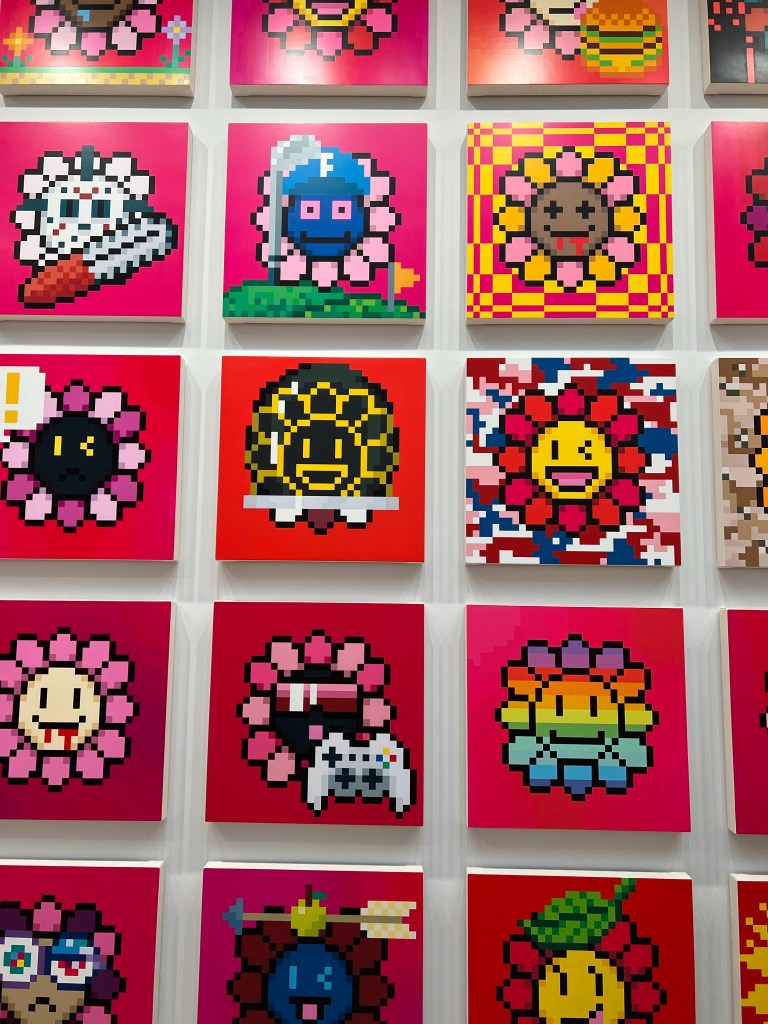
Takashi Murakami x RTFKT Studios x Gagosian, “An Arrow Through History”, Exhibition View 
Takashi Murakami x RTFKT Studios x Gagosian, “An Arrow Through History”, Exhibition View 
Takashi Murakami x RTFKT Studios x Gagosian, “An Arrow Through History”, Exhibition View 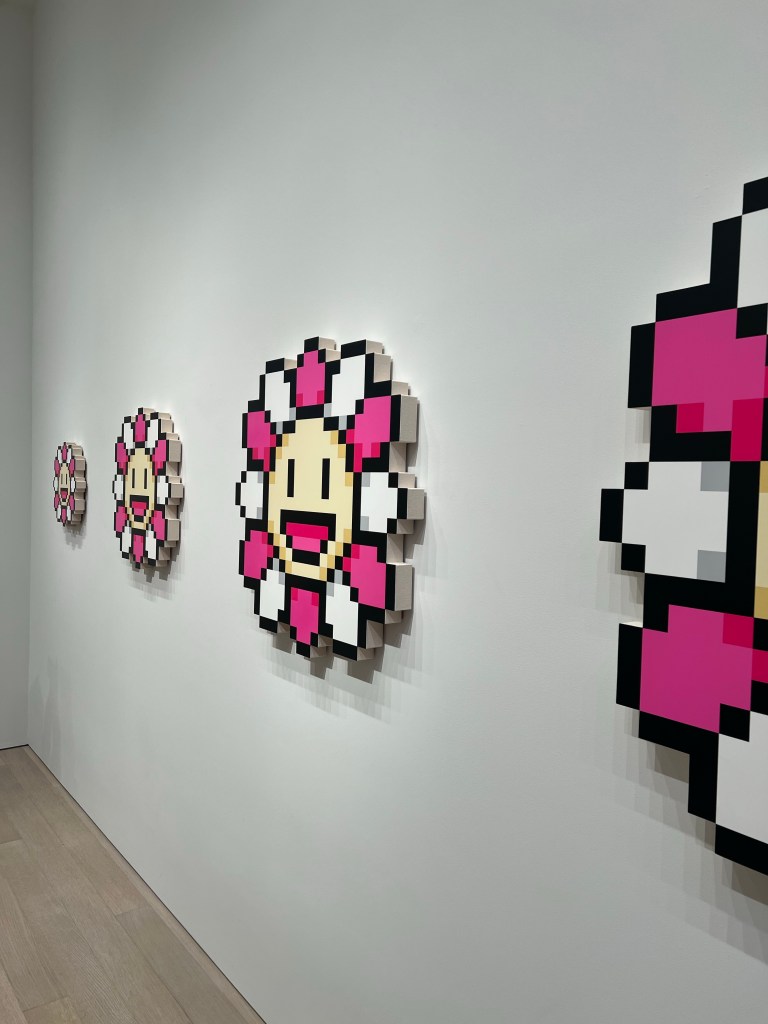
Takashi Murakami x RTFKT Studios x Gagosian, “An Arrow Through History”, Exhibition View
The team leads something akin to a Renaissance, and indeed, the true uniqueness of Web3 is its ability to have a similar earthquake impact on culture that, in hindsight, Renaissance is associated with, especially for the arts. Murakami calls it a cognitive revolution reshaping our senses, or rather, their hierarchy.
Are gamers the Medici of the 21st century?
 mabou
mabou 
Leave a comment