
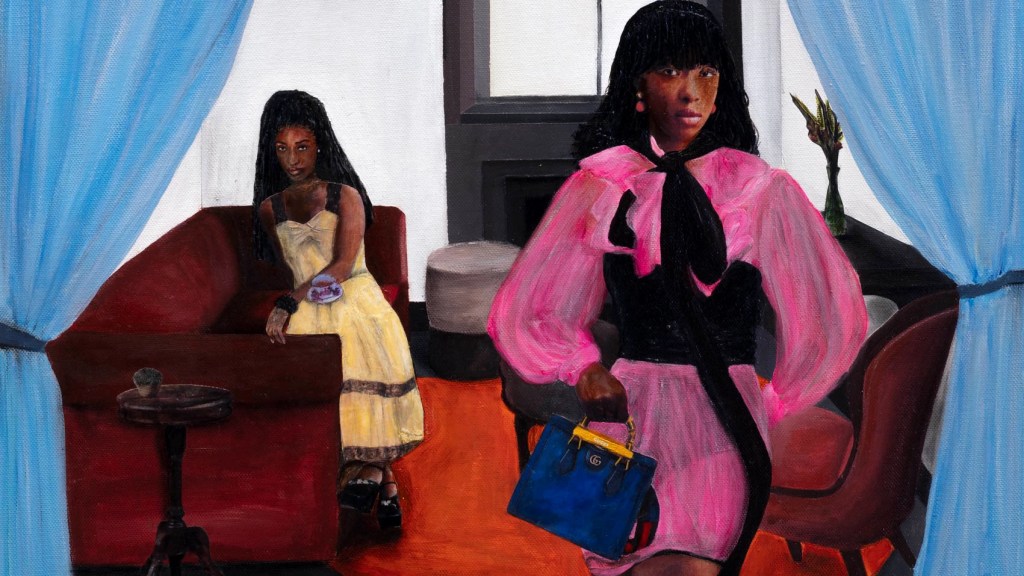
Following her collaboration with Gucci for the reedition of the Gucci Diana (created in 1991 and popularized by the eponymous Princess of Wales, hence subsequently named after her), I caught up with Cinthia Sifa Mulanga to ask her about the importance of fashion in her art, her relationship to fashion and the role of the fashion industry in conveying unattainable standards of beauty she is trying to debunk.
Cinthia is a 25-year-old Congolese artist born in Lubumbashi, who grew up in Johannesburg, South Africa and rose to prominence during the lockdowns following the spread of Covid-19. She is currently represented by Latitudes Online. She works across different mediums including painting, drawing, collage and printmaking and focuses on the promiscuity of domestic spaces as a reflection into standards of beauty in an African and cosmopolitan environment. In fact, she treats these personal spaces as windows into the lives of her subjects and into their womanhood.
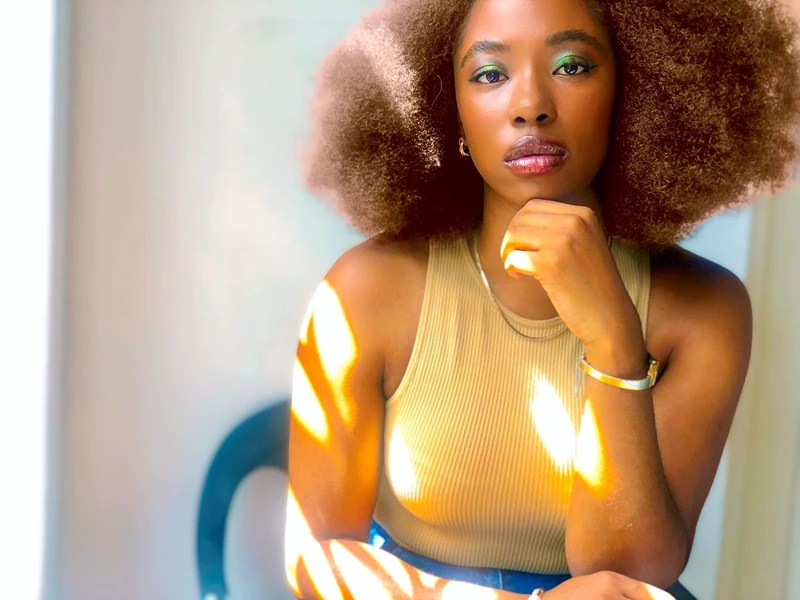
“The moments I create in these domestic spaces are dialogues between the perceived beauty standards, stereotypes which in their compositions function to both challenge and embrace African women.” she says. In many ways, her work is a form of self-introspection and reflection on her own womanhood and place as an artist contributing to the global zeitgeist.
Marion Abou: Your work is an invitation to reflect on standards of beauty within popular culture, and within the Western and African society. What do you identify as the main standards you are looking to undermine through your work and which tools do you employ in your works to do so?
Cinthia Sifa Mulanga: While my work seeks to undermine many standards, the principal one would be expectations around physical appearance. I represent all different kinds of women in my work, from their skin tone to body type and how they express themselves through style and beauty, and I hope that this empowers women who engage with my work.

MA: Several of your works give an important place to fashion and fashion references (The Moodboard, 2021, Vous Les Femmes, 2021, Drops on your Garments, 2021), how do you think the fashion industry is responsible for conveying these standards? How do you think they can do better to show more diversity and inclusivity? How do you try to do so in your work?
CSM: The fashion industry, often through the models they choose to display have constructed this so-called “perfect body” – a false, often unrealistic, prejudiced type of standard that only caters to one body type. This false representation makes viewers believe that only one body type is ‘suitable’ enough to wear certain styles, fabrics and colors, marginalizing a large majority of body types. Factors such as weight and height still problematically filter our daily lives and skew the world’s perception of what is an ‘acceptable’ body type. All bodies are different. Yet the fashion industry favors one kind of woman, which I struggle to make sense of. I believe inclusivity and diversity has a lot to do with options; being inclusive is not just about including a different shaped woman just for the show but actually taking the time to learn who she is, what inspires her. I may not know as much as I need to or still getting to know about the fashion industry but this is what I have learnt from painting the women in my work.

MA: What is your personal relationship with fashion? Is it a tool to express yourself as much as painting is? Why or why not?
CSM: It is a tool of expression, I believe fashion allows us to express our personalities and I am currently exploring that through my painting too.
MA: How has Western-white-centric standards shaped your relationship with artistic production, fashion, standards of beauty, and yourself?
CSM: Representation is always something that I emphasize in my work. I was drawn to the Gucci project as they felt strongly about representation, too. I loved the process of playing around with different kinds of room settings and clothing while we worked towards the final image. It was almost like my current young self was crafting an older me wearing luxurious brands, which was aspirational.
MA: Why do you think it is important for Gucci to take part in this movement, for African societies but also for Western ones?
CSM: A movement inspires passion and action as it strives to empower and influence. Gucci is a very well known and sought after fashion house, and has great influence in societies globally, so the impact is great.
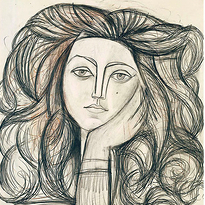
MA: 1. What Classical art movements and artists inspire you and how do you integrate it in your work? (Beyond Renaissance, I spotted a Picasso in Éléments in Her Finest, 2022.)
2. Which contemporary artists inspire you and inform your practice, and how?
CSM:
- I am inspired by Pop art, expressionism art, Renaissance and surrealism and I love to play around and incorporate their specific styles in my work.
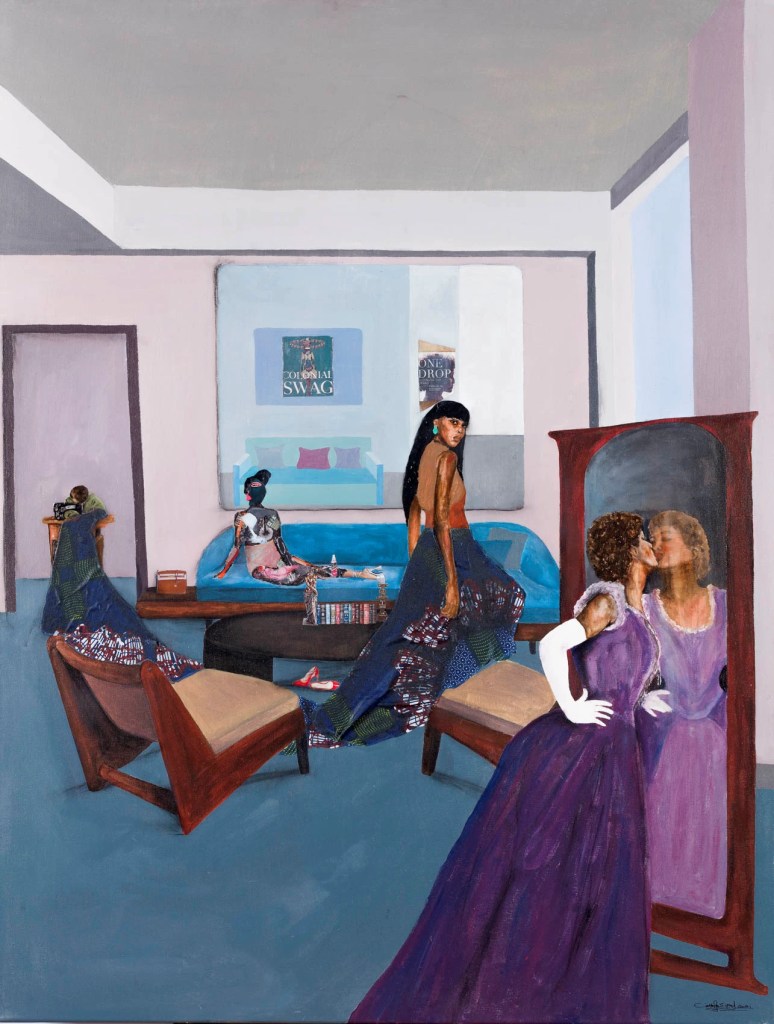
- Contemporary artists that I draw inspiration from and who inform my practice are Sam Nhlengethwa, Teresa Kutala Firmino, Lunga Ntila, Elizabeth Colomba, Katlego Thlabela Ajana V.Jackson and others. The inclusion of some of their works, whether on the wall, floor or corner creates a visual conversation between the ideas the works represent, in relation to the women within the painting.
MA: Why don’t you consider yourself as a feminist? I would argue your art is extremely feminist because it is addressed to women first and foremost, is it because the definition of feminism varies between African and Western societies? If so, how?
CSM: I currently see myself rather as a feminist ally as I learn and unlearn what it means to be a feminist, it definitely varies between societies which is something I also see myself exploring in the future.
MA: What do you think about the multiplication of Black women on covers of Western magazines? Is it empty promises from the establishment or do you think it is really shifting standards? Is visibility enough?
CSM: I think we are now at a point where visibility could just be that – visibility, especially if done just for exposure, how are black women represented in magazines? Are they shown as their full essence or just the so-called “suitable parts”? With Photoshop, make-up and all? More is needed.
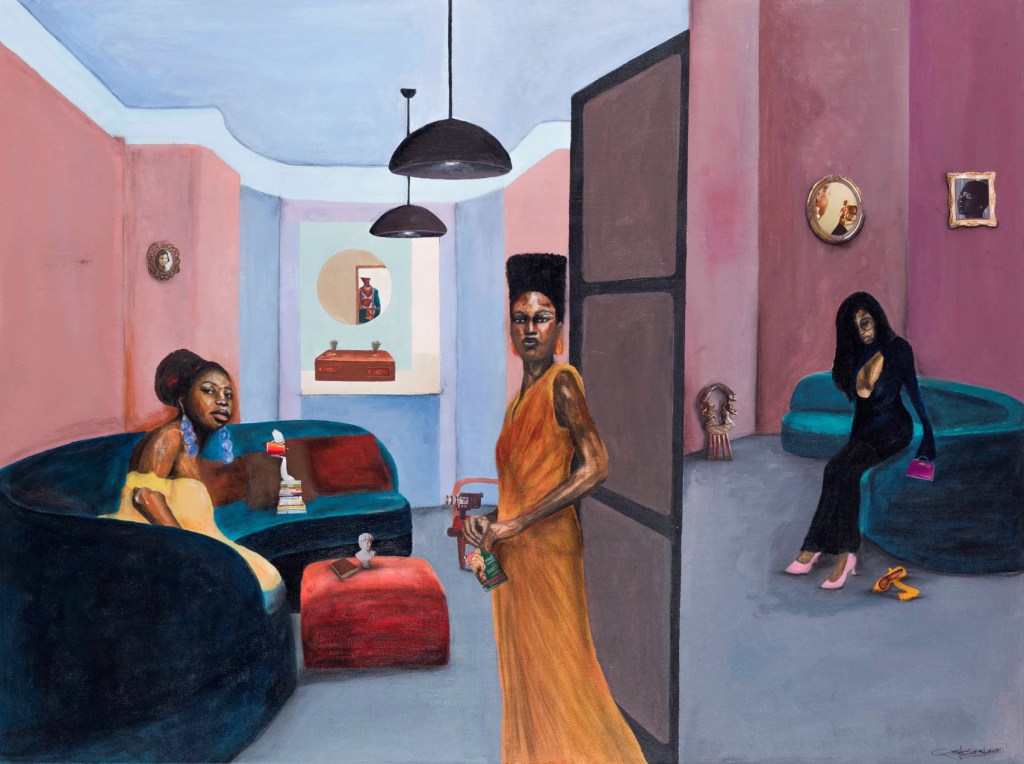
MA: Your work focuses on the intimate settings you curate for your subjects, this contributes in expressing their identity. Their collection of objects are activated by them owning them and adding layers to their identities, what do you collect and how does it relate to building your individuality?
CSM: Beauty products, sentimental objects that remind me of my childhood. I am nostalgic… books to read, I collect my favorite artist’s works… When collecting all these, it is about how they make me feel about myself, make me aware of myself and my environment, they make me reflect and appreciate solitude. They all inform my values and principles which are things I believe contributes to the making of a woman.
MA: Instagram has become a powerful tool for brands to communicate with their customers globally. Do you think social media contributes to spreading standards of beauty or helps undermining it by showing more diversity?
CSM: I see Instagram doing both – spreading and undermining standards of beauty which all really comes down to who and what you follow.
MA: At the same time, it is an opportunity for artists to display and curate their works. What is your relationship with social media and how do you or do not leverage it? Why?
CSM: I use social media as a magazine that informs my work and at times helps improve my personal life, but I try not to let it consume me.
Answers edited for clarity and conciseness.
 mabou
mabou 
Leave a comment