
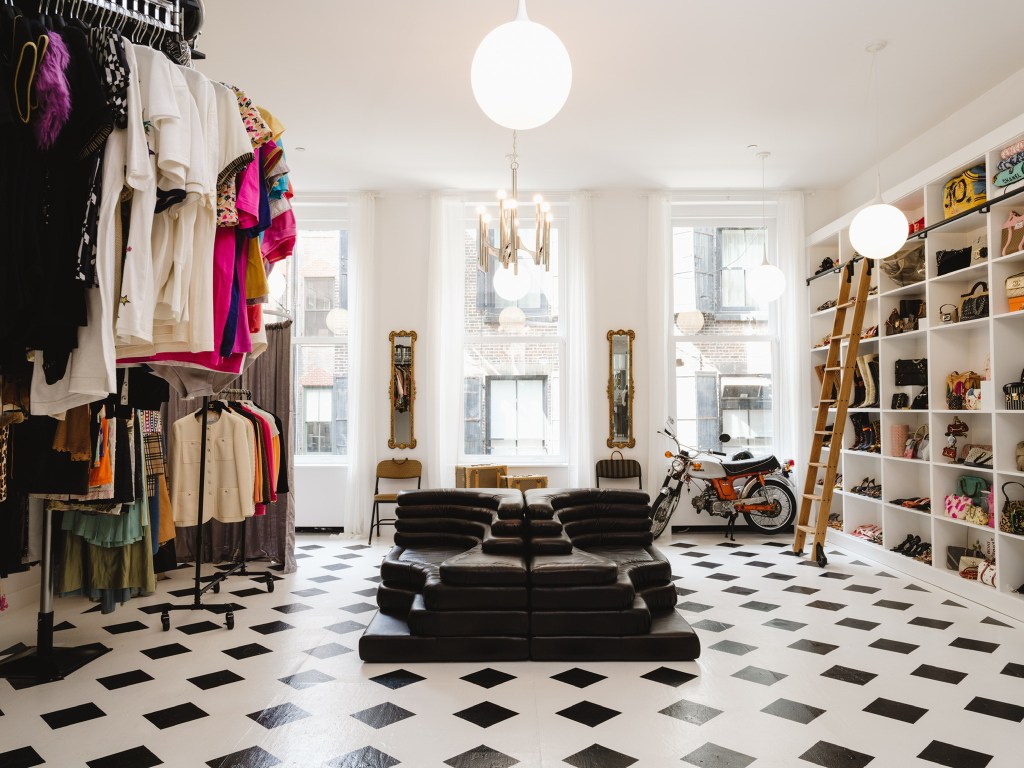
A few weeks back the successful Treasures of NYC luxury resale platform opened their space, by appointment only, in the heart of the burgeoning and fashionable SoHo neighborhood in their namesake city. The brand, which used to be exclusively online (they have almost 300K followers on Instagram including the most fashionable Camille Charriere) has chosen to work with Salon 21, led by Alex Bass, for the design of their first offline space.
Their decision to take their business into the real life at a time where everything seems to be happening online, beyond expanding their sales channel, gives a glimpse into the retail strategy they are adopting over the medium term and point towards the evolving trends within the luxury fashion industry at large, and resale industry specifically.
Indeed, buyers still do care about the real-life experience of buying, and arguably, now more than ever, they crave a truly unique, personalized experience. This implies that the space is expected to be representative of the brand they are engaging with and is a critical element of the retail experience. More and more, shops have become activated by unique features. They are curated but, above all, they are an immersive experience into the history and ethos of a brand. More than mere display spaces, they are an integral part of the engagement with a brand, where artists and creatives are often invited to magnify the spaces.
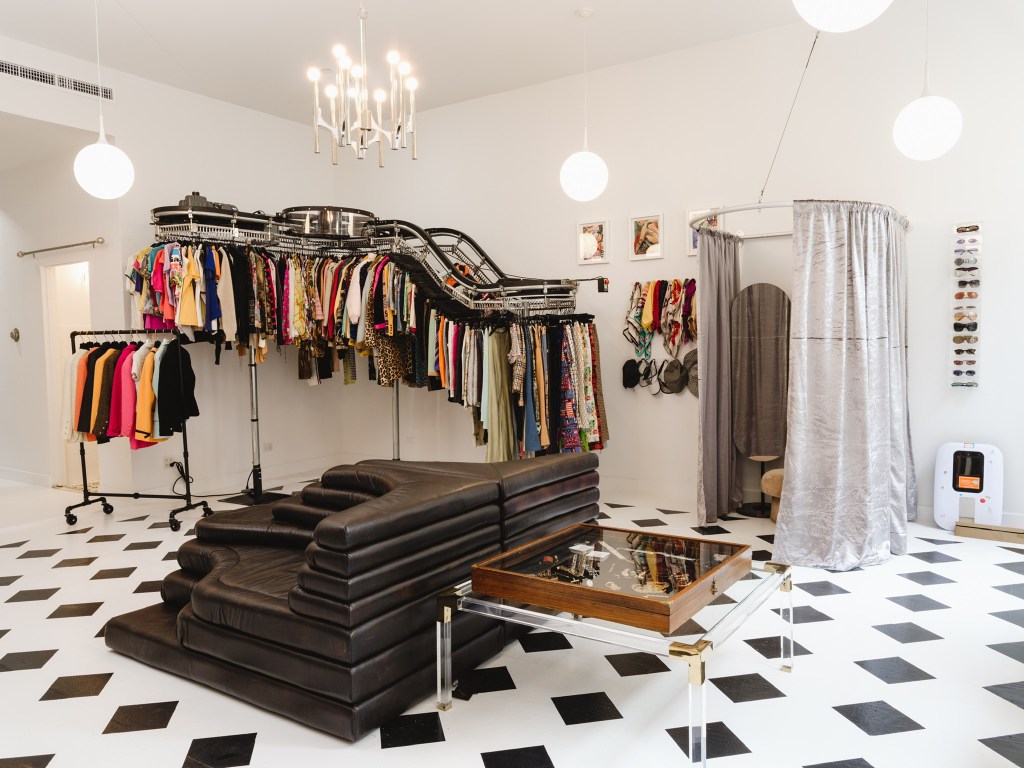
For Treasures of NYC, this implies having to book your appointment to their showroom, and the very showroom being an absolute design masterpiece, filled with their articles, art, furniture and design objects responding to each other and creating a welcoming space in which you want to linger and stay, not only to buy. Alex worked with artists and designers and sourced her design furniture to deliver a modern Salon we all want to visit.
At the same time, by mirroring the retail strategies practiced by traditional, primary market luxury brands, they are validating the prime appeal of the resale industry that has been exploding in the past five years. In a reciprocal fashion, their willingness to implement this strategy validates its legitimacy for the luxury industry at large. Yes, the digital is critical to the way they do business, but the physical enhances the digital experience as they activate each other through a multi-channel strategy, as explored last week with Jacquemus’ hyperphysical retail pop-ups.
I caught up with Alex Bass to discuss her inspirations for the design of the space, what she was aiming at achieving and what this implies for the strategy of Treasures of NYC and the resale industry at large. Ultimately, her work shows that art and design elevate the second-hand luxury retail experience to put them at par with primary market luxury, as they are showcasing their ability to create a coherent identity as a brand beyond the products from other brands they sell.
Marion Abou: What were you trying to achieve working on the space?
Alex Bass: Any designer’s job is about achieving balance between what your clients want and your personal vision, it is a collaborative discourse between both parties. It was my first big commercial design project, and because we were on the same page, I felt comfortable translating their vision physically since they have been online for the past seven years. For a commercial space, there are some aspects you need to include, like an office space, a fulfillment room, a showroom, which are all special priorities. Working on this I was keeping in mind the larger aesthetic. The goal was to convey their brand identity, but I had nothing to go off of since they had not done anything offline yet. I made a point in keeping the same energy as online, translating it to the space so that there is no disconnect between online and offline. I have been a fan of the brand for some time, and I knew how I was feeling about them, so I had a leg up as I am interested in fashion and vintage.

MA: How did Treasures reach out and what direction did they give you?
AB: They found me on TikTok, which I am trying to develop my presence on. I am comfortable with Instagram but need to develop my TikTok which includes getting comfortable with a different format. The video that caught their eye was of my apartment which gave a glimpse into my design sensibility which made Treasures confident I was going to be able to deliver. I am extremely grateful they trusted me to execute this project, in a massive studio space in SoHo. It was a confidence boost but scary at the same time to work on a blank canvas with so many possibilities. In fact, I had no concrete direction but to keep the personality of the brand and showcase the story of the company. My priority was to make the space theirs. Brit, one of the co-founders, is a free-lance doodler and designed some of the signage as she is big on personal touches.
MA: How did you source pieces?
AB: So, we started in the middle of January, and they wanted it done by April. It was a short time, and we were still in the middle of Covid back orders. I knew I needed partners from the tri-state area and from the city to do anything. For furniture, I sourced from vintage stores in line with them being a vintage fashion retailer. The approach was to get the big things done first. The shelves were done by people in the city. I tried to contact other stores and every other company known for that were on back orders until December. We started with the big pieces, making sure these were done, that the space could function even without smaller pieces even though it’s central to my design process. I always have an overall vision but piecemeal is better, it is a process, even with a two and half months’ time frame which is uncommon for a project of this nature. I had to lead construction, cleaning, painting, finding furniture and design pieces from scratch.
MA: Which artists and creators did you work with and why did you choose to work with them?
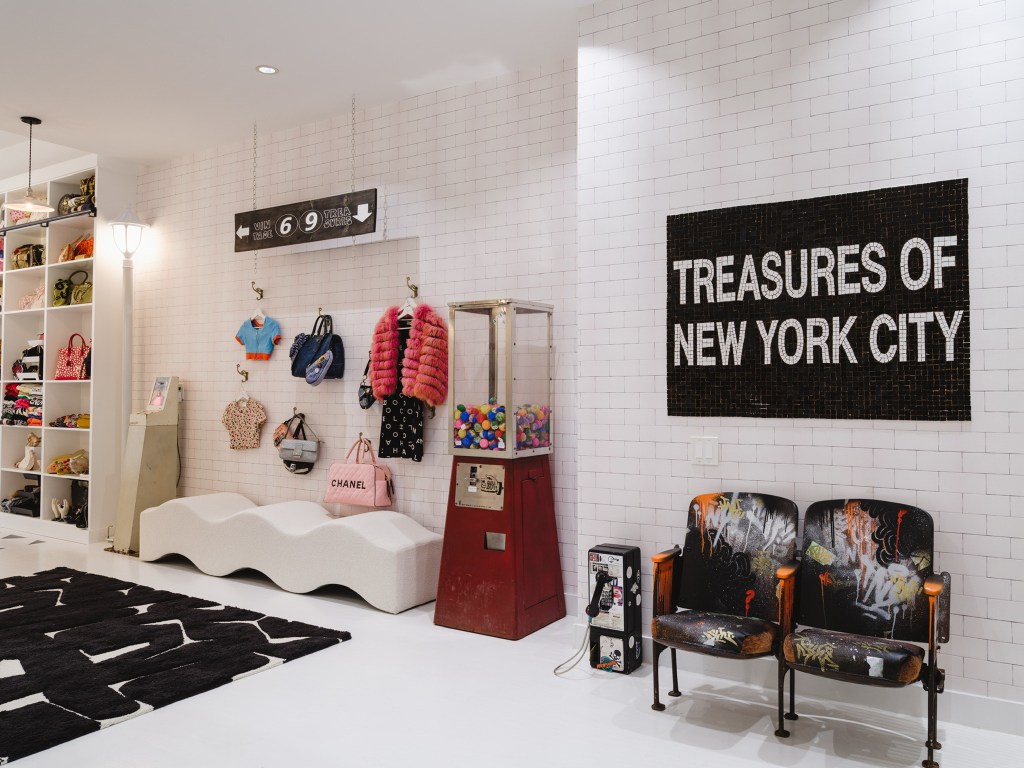
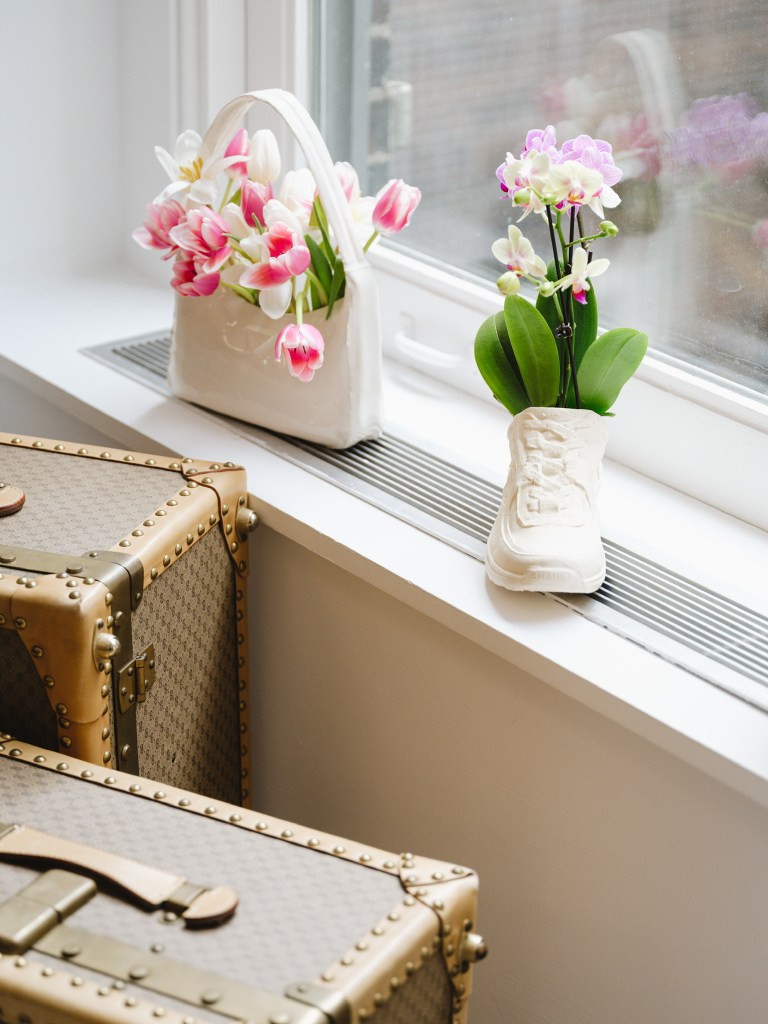
AB: For the big cabinet, Rift Cabinetry, they were really straightforward, made a digital mock-up of it and were among the most competitive in terms of price and quality. We had some key artists sourced by Salon 21 from vintage companies on Instagram and Etsy. I worked with a Chicago vintage furniture store for the bench. I had some custom inlay mirrors made. For the bathroom designed by a graffiti artist, I put an announcement on Instagram stories that I was looking for a good freelance graffiti artist in the city. I shortlisted five people, had samples within a week and got it done. It was super straightforward in terms of art direction, since the goal was striking the right balance between not impeding their creativity but guiding him, needing to make sure Treasures would be happy with the final result. Original rose made custom planters and floral arrangement, using a Prada bag and Nike sneakers.
MA: What were your main inspirations?
AB: Uptown vs downtown vibe, I wanted to pay justice to the beautiful windows, the foyer is a reference to a subway train. The downtown vibe is embedded in the graffiti. NYC was the inspiration behind Treasures of NYC’s fashion and I wanted to showcase that visually while keeping the integrity of the space.
MA: What do you think it implies for the direction Treasures are taking, strategically speaking?
AB: They still do the majority of their business online as they have done for almost a decade. They have a huge following and people who love the brand, covid played a factor and they wanted to meet people. They live in the Upper East Side; they rented the apartment next door for VIP clients, but it was not a showroom even though they had demand for that kind of space. They needed a big space to lay all their products, and also a photo studio. As businesses are upscaling, brick and mortar is always the goal, it is important to make it an intimate experience where clients can build a relationship with the store owners. It is still the preferred way to shop and having a physical space to browse and be inspired by fashion is important.
MA: What do you think it means for the future of physical vs digital retail?
AB: It is going to be about bridging the gap between both and making the physical shopping a multi sensorial experience. We included a coffee and cocktail bar, call it a clubhouse not a showroom. The goal is to socialize enjoying the space, by making it experiential, as opposed to the vestige of cold and old department stores. It is about breaking a new frontier since there is so much competition online and physical is a critical way to stand out. We need to keep reinventing and activating spaces.
MA: What do you think it means for the luxury industry at large to create a more engaging physical experience?
AB: There is almost no rational reason to go to a store because everything is available online, unless they are offering something that you cannot get anywhere else. Brands increasingly have differentiated product offerings and uniquely designed stores that make them different as a physical retail outlet justifying offline visits. In fact, luxury has to cater with increasing granularity to local audiences while being global powerhouses.
MA: And for the resale industry?
AB: Most major fashion houses are now going back into archives, for trends but for sustainability reasons too, trying to work on their older items, bringing them back. People like the nostalgia of it, and the way they make it relevant to the zeitgeist. Collaborating with major institutions, with artists, between themselves, they reinvent items and make them new, appealing to their existing clientele while expanding it. People want to shop sustainably but also want to buy a piece of the house’s history. Buying vintage is not necessarily about lower price tags but about history and experience. I personally prefer resale; it creates a deeper connection with the items and brands they represent because they had a previous life.
Conversation edited for length and clarity.
 mabou
mabou 
Leave a comment