
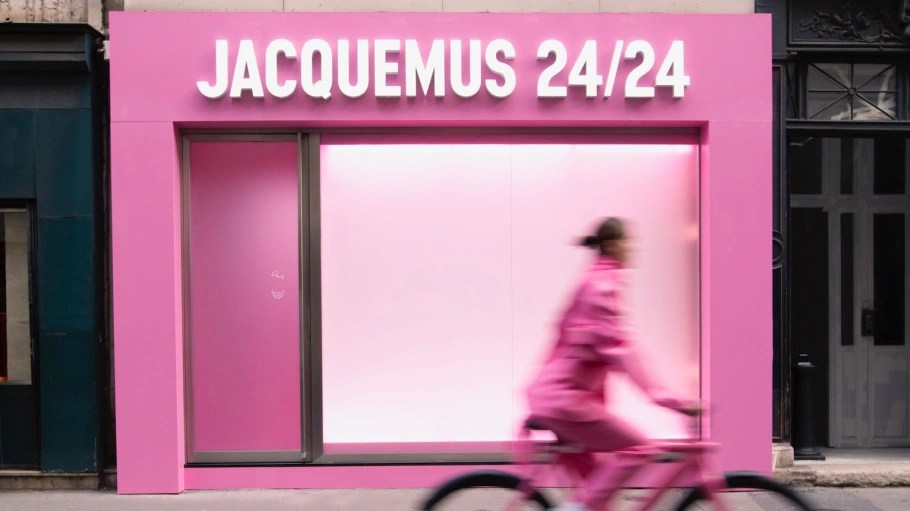
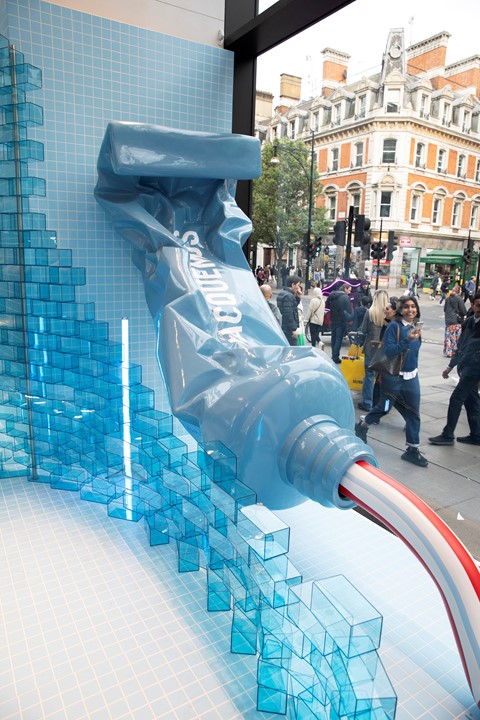
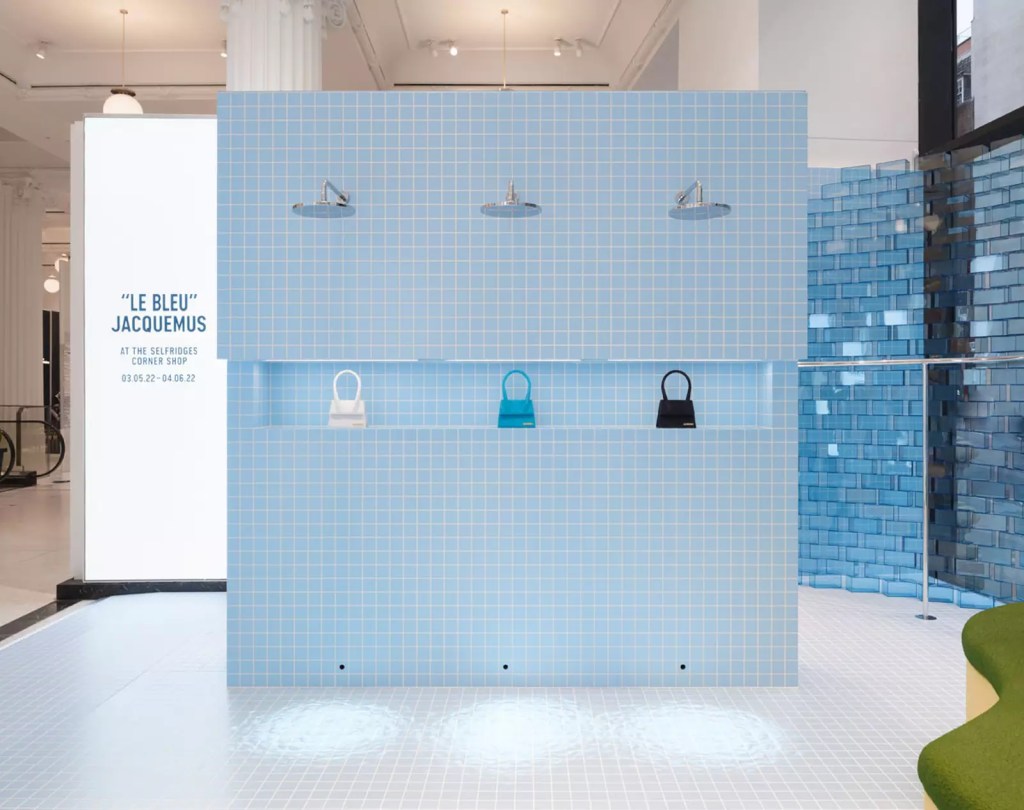
On May 3rd, 2022, Simon Porte Jacquemus, the designer of the eponymous label opened his now third iteration of his 24/7 pop-up, in collaboration with Selfridges in London. The two previous pop-ups, in Paris and Milan, around pink and white respectively, drove crowds and were his first experiments into a new form of immersive, highly Instagrammable retail experience.
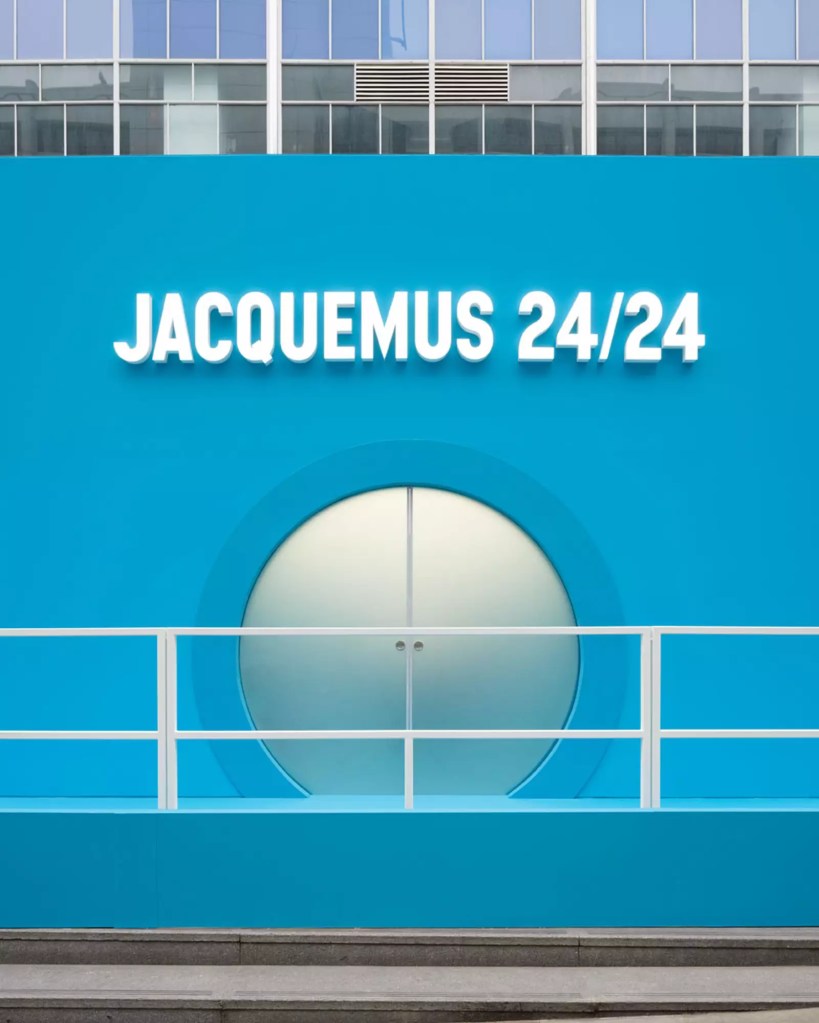
This time, and I guessed it speaking about his Le Splash show in Hawaii, Jacquemus focused on “Le Bleu”. Like the previous editions, the pop-up featured vending machines with exclusive color schemes for his Bambino and Chiquito signature bags, some exclusive tees and hoodies and a curated selection of pieces from Le Splash.
These physical outlets give a glimpse into the strategy of the brand in a predominantly digital retail identity. In fact, Jacquemus is famous for his curated Instagram expressing both the brand’s and designer’s ethos. Jacquemus Web2 strategy is a case study in building a brand from scratch and being able to drive a LVMH or Kering-owned type level of engagement albeit being a much more modestly scaled Maison.
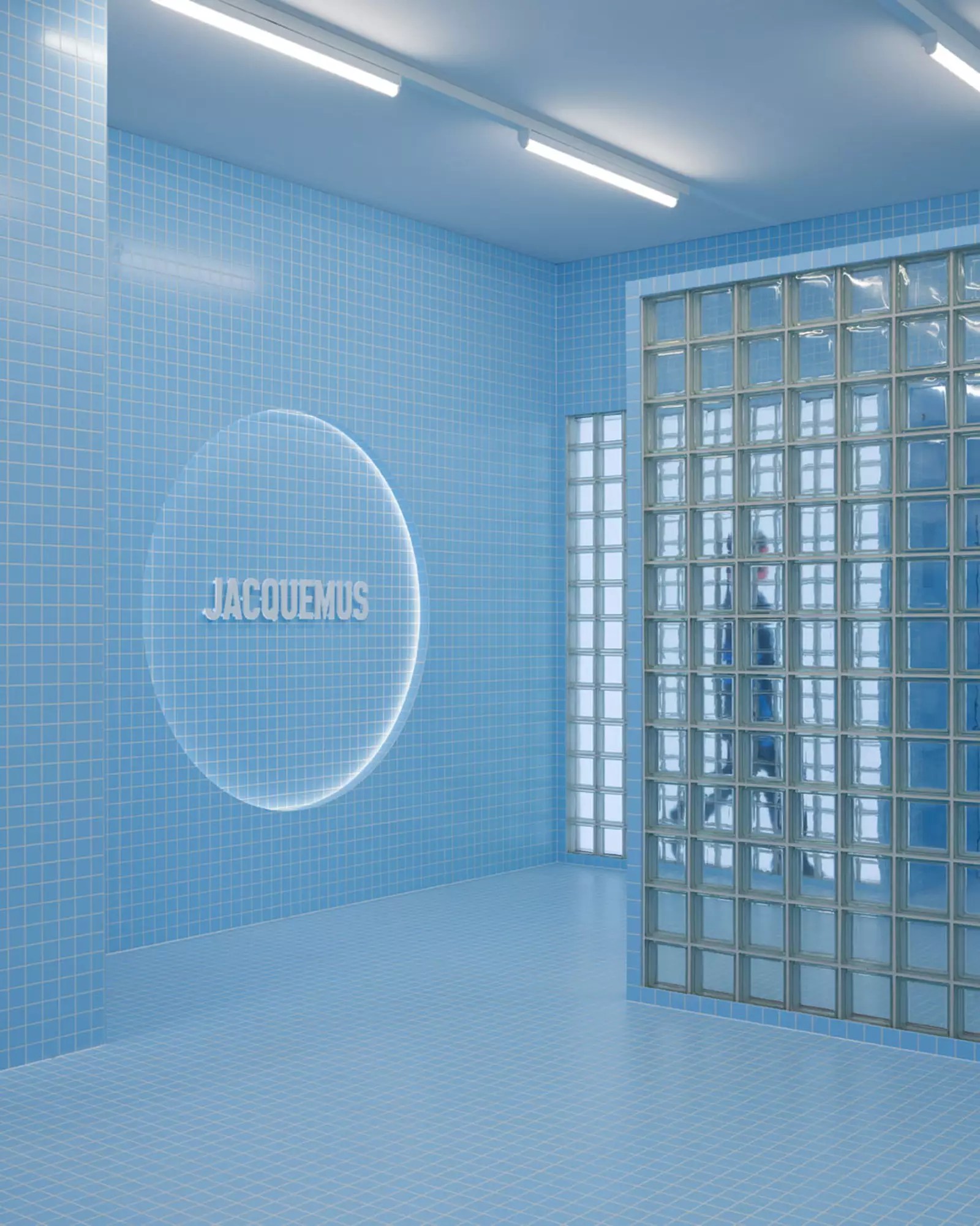
According to HighSnobiety, the display was a surrealistic interpretation inspired by Simon’s own bathroom. It was also the most ambitious iteration of the three experiences, as it took place in three Selfridges spaces, the Corner Shop, the Mews behind the main store where the vending machine was located, and the Old Selfridges Hotel. This last space, called “Le Vestiaire”, triggered visitors’ “sense of discovery and excitement.” according to the designer and was filled with elements one would find in a traditional municipal pool.
Vogue Business investigates the trend of what is called hyperphysical stores, a term coined by The Future Laboratory referring to the multifaceted activation strategies of physical retail spaces brands have been investing in to drive consumers back in stores, but above all to enhance consumers’ engagement with the brand identity. Millennials and GenZ are driven by a more conscious sense of consumption and care about what a brand stands for in terms of social and environmental impact but also in terms of cultural relevance within the larger popular culture.
Physical experiences allow brands to create a connection with consumers even if it does not lead to sales right away. In fact, it is arguably not the primary end point of the strategy in 2022 as brands understand that leveraging every channel is critical to get consumers into a brands’ world before converting this emotional relationship to sales, which are not the only success metrics anymore. “They create a really sensorial and holistically memorable store experience that goes beyond the original idea of retail,” says Abi Buller, foresight analyst at The Future Laboratory” cited in Vogue.

According to Jacqueline Windsor of PwC cited in the same article, hyperphysical experiences are multisensory first and foremost, something that the digital cannot deliver quite yet. And if the metaverse has to be harnessed by the luxury fashion industry, probably mainly as a marketing tool to start with, discussing and socializing online can only be part of the equation, even for digitally natives consumers. One aspect that potentially bridges the gap between the two is the gamification and interactive experience that Jacquemus offers.
In fact, according to a 2018 IBM survey, 56% of GenZ go into shops for a fun experience, and if stores are still the main sales channel, digital adoption has been growing at an even faster pace than predicted since the pandemic. Therefore, hyperphysical is poised to be at the cornerstone of brands’ holistic retail strategies as stores visit still remain central to the shopping experience. “It’s also an experience, a concept. The idea is to break the frontiers in the world of luxury. We want you to come in feeling welcome and have a great experience no matter what you do inside. You can also just walk in and take a picture. This is Jacquemus.”, says Simon, fostering the sense of community and human connection dear to his brand.
Yet, if sales are not the main driver, the offer of exclusive products creates a sense of scarcity and of “seize the moment” feeling in consumers who end up buying on the spot. They are not driven by a sense of practical consumption, but truly by a feeling of elevated emotional connection with the brand. This relationship is likely to flourish over the long-term and begs for further experimentation and exploration. High profile brands embracing hyperphysical retail like Balenciaga cited in same Vogue article, are also experimenting with luxury’s involvement with the metaverse.

The brand filled one of its London and Seoul store with pink fur to advertise and market its new Cagole bag, showing their multichannel strategy. Indeed, hyperphysical stores are only one aspect of the holistic strategies brands are developing to expand their ways to cater to the demands of younger generations looking for cultural relevance. This implies having and showing a unique patrimony that buyers become part of when they engage with the brand. Digital, and especially social media, because of their reach and their ability to tell a story through different mediums, should also evolve in this direction and not merely be used as a sales platform as it mainly is currently.
Marketing traditionally has a very direct goal of increasing sales through brand building and advertisement. But it now implies driving attention to the cultural status and power of a brand, first and foremost, in order to drive sales. Now, the link is not as straightforward as it used to be and marketing requires several steps to impact sales. Steps which can be hard to track as it stands and as consumers engaged with different channels, leaving some practical questions to be answered and that are explored in The State of Fashion: Technology, the BoF report in collaboration with McKinsey.
The Metaverse and Web3 are an extremely promising tool in integrating experiential marketing of which hyperphysical stores are part of. Creating a digital store, NFTs, games, AR, RV, and full digital worlds tied to a brand are all strategies that should be investigated hand in hand with the extremely Instagrammable physical stores. McKinsey mentions five stages of engagement from digital assets to experiences to gaming, platforms and virtual worlds all addressing larger swath of audiences.
One concrete application could be earning loyalty points for in-store interactions to gain virtual of physical rewards, which would benefit a brand like Jacquemus. Potentially, when they are not already (eg. the renovated Dior flagship Avenue Montaigne), these spaces could become akin to museums for brands, showcasing their histories, inspirations behind pieces they sell, as well as collaborations with artists both on and off the runway, again, all elements that can be intensified through Web3 strategies.

We are on the tip of going from Web2 to Web3 in luxury marketing, and those who drive the change and start looking for practical answers to deliver on these strategies, will be able to rip the biggest benefits of leveraging the emotional engagement the interaction of both physical and digital is able to exponentiate. McKinsey identifies four stages, marketing and experimentation, sustainable business-building that is now starting, immersive virtual world with a five years horizon, and living in the metaverse in a more distant future. Now is the time.
Simon, where is your Web3 venture? I want it.
 mabou
mabou 
Leave a comment