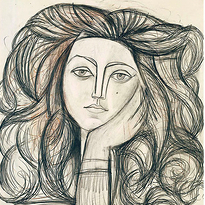

In 2022, it is fair to say that brands have established themselves as art patrons, inviting artists to collaborate on collections increasing their reach and deepening the brands cultural relevance beyond consumerism. Gucci, like no other brand, has been leveraging the immense opportunity given by collaborations with other brands and creatives, playing around the boundaries between cultural and commercial and constantly redefining its brand identity.
These include Ignasi Monreal in 2018 or Trevor Andrew alias GucciGhost in 2021, The North Face, Balenciaga and more recently Adidas for FW2022, in fact, it seems like Gucci is adding collaboration to its DNA. Alessandro Michele at the creative direction and Marco Bizzarri as CEO have harnessed the power of collaboration to make Gucci the powerhouse of parent Kering that it has become – albeit slumping in recent years – broadening the cultural power of the Florentine house.

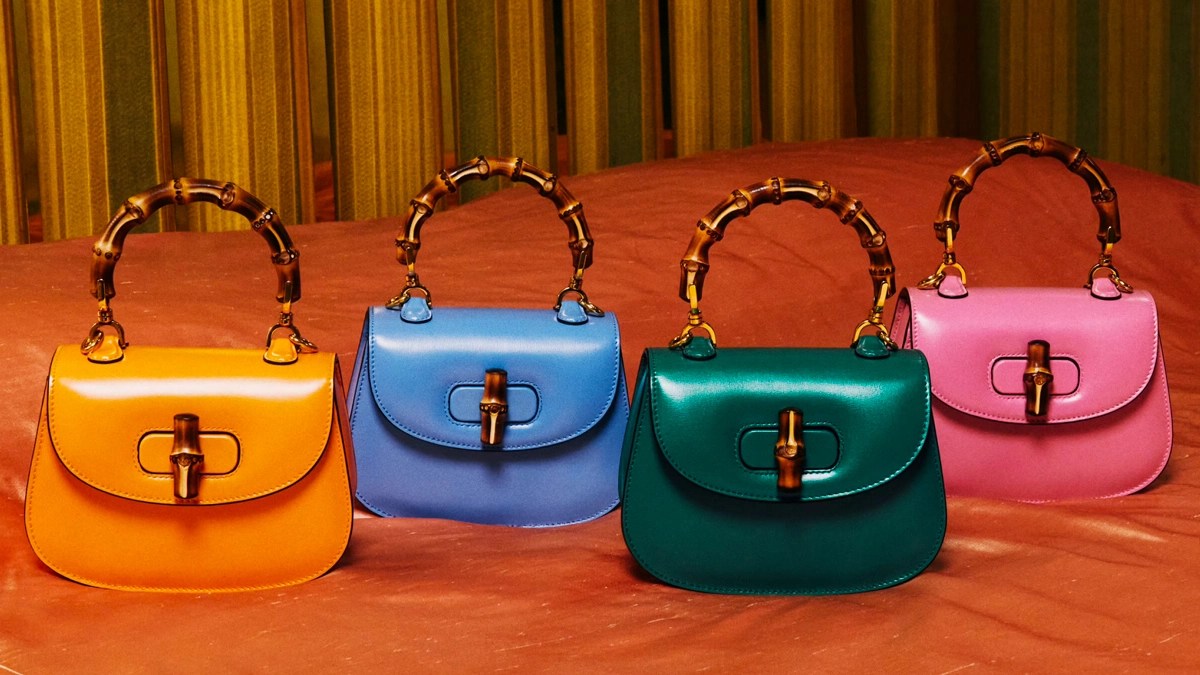
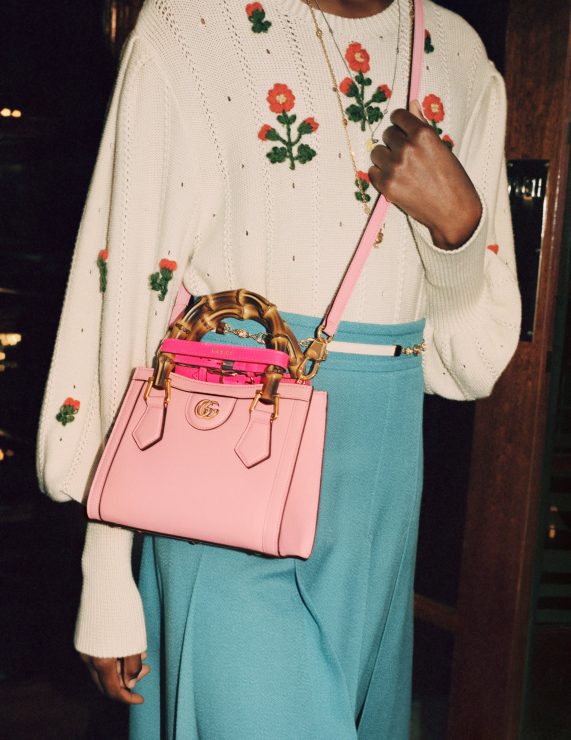
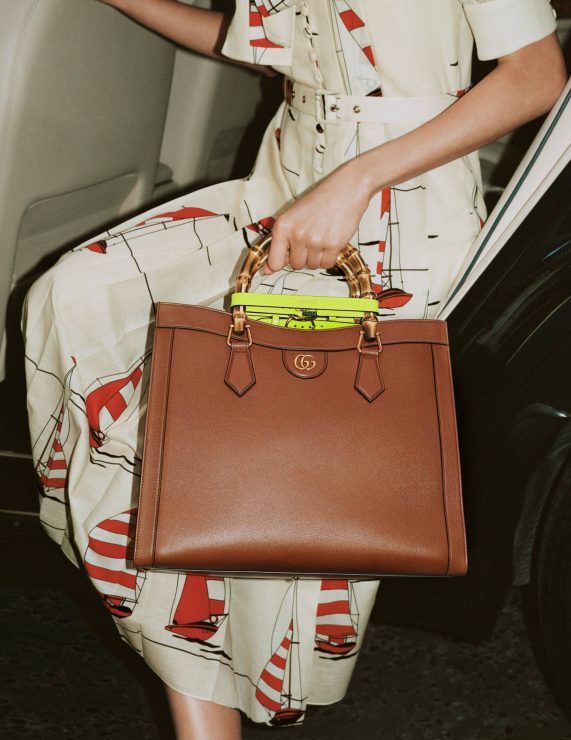
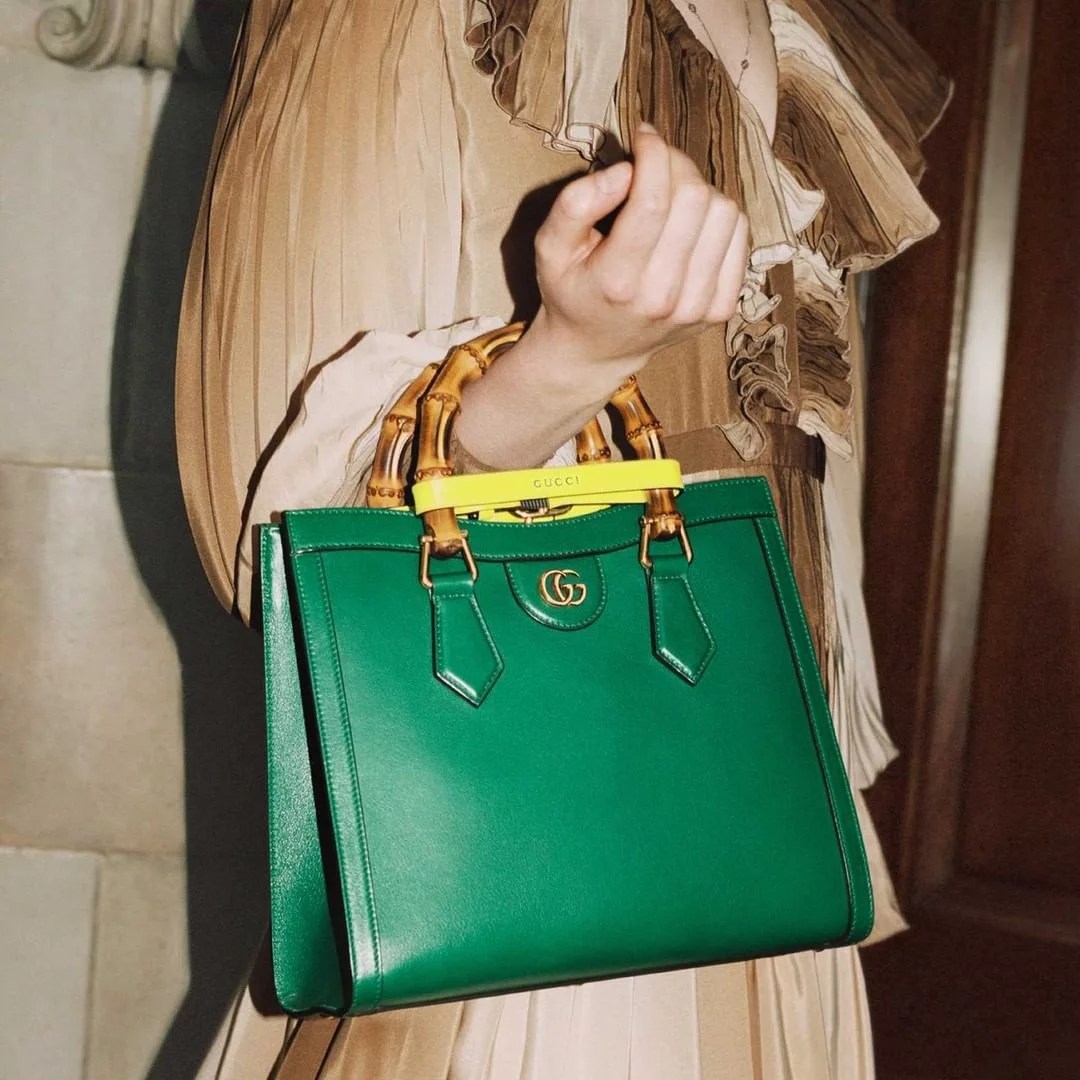
In fact, Gucci’s rich and maximalist vocabulary makes it the perfect candidate for reinterpretation. As opposed to some more classical labels, Gucci has fully embraced the commercial appeal of bold logos and bolder patterns powered by loud color schemes. Its versatility makes it a perfect candidate for reinterpretation and a fertile ground for inviting collaborators to produce communications assets as for the 2022 Love Campaign including reintroductions of some of the classic bags of the houses.
The newly redesigned silhouettes of the 1947 Bamboo and Diana have become the subject of contemporary art pieces ranging from painting and drawing to photography. The artists selected are global and up and coming, and this campaign gives them some visibility among an audience they would not necessarily reach out to otherwise. At the same time, it firmly establishes Gucci and Kering as art patrons, showcasing new talents season after season.
Among my favorites are Masayoshi Matsumoto, a Japanese artist creating balloon sculptures. Wearing gloves coated in water-based wax to handle the extremely fragile material, every part of his sculptures, that he documents on his Instagram account, is made out of balloons, up to the tiny details. This modern form of sculpture challenges our engagement with time and duration and serves as a critique of our consumerist society as plastic is among the most durable materials but also the most discarded one, becoming the main culprit of pollution.
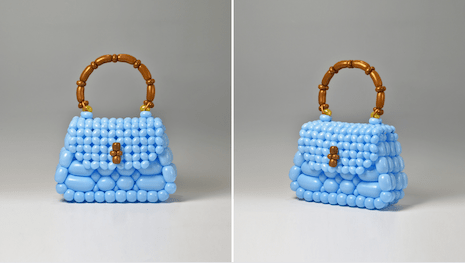
At the same time, because these sculptures deflate, their materiality can be recorded but cannot stand the passing of time as other durable materials used for classical sculpture. Therefore, they lose their physical integrity before their cultural relevance, as opposed to what luxury and its durable materials stand for.
Second is the Congolese Cinthia Sifa Mulanga, whose painting and collages include fashion-related elements as she explores the social expectations of what a woman should look like and be, focusing on criticizing unattainable standards of beauty within the African society she lives in. In many ways, the luxury industry participates in conveying these standards and is the very subject of her critic. Her work offers another trope into the role fashion and the luxury industry has in shaping our standards of beauty and social expectations. Rather than ignoring the harm it contributes to, Gucci, by working with Mulanga, acknowledges the negative externalities it contributes to.

The Nigerian Samson Bakare’s works focus on the representation of the traditional Black identity and values navigating modernization and globalization as his work are replete with Western cultural references. His characters are often expression-less to convey the difficulty in building a new pluralistic identity fitting vastly different cultural standards and hoping for cultural emancipation. Samson states that his “work is a time machine through which you can see the past and behold the future from the same standpoint.” offering an opportunity to think about the difficulty in coming to terms with the dominance of Western standards within a society that has historically been exploited by the West and that is now trying to bridge the gap between traditional and contemporary references.

The Korean photographer Cho Gi-Seok is not new to fashion photography as he has collaborated with the likes of Vogue and Prada and has launched his own fashion label KUSIKOHC. He landed an exhibition at Fotografiska New York in the beginning of 2022 showcasing his fashion editorials among others. His works are surreal harmonious compositions combining natural elements, humans, and technology. His works are dystopian and utopian at the same time and offer an alternative reality and a form of escapism luxury strives on.

Gucci, by expanding its audience and collaborators beyond the Western standards, reaches out to an audience not traditionally targeted by luxury brands but that is becoming a critical consumer of luxury. This effort in expanding its audience and collaborators does not divert them from working with Western artists like the photographer Lou Escobar. She is a French photographer and filmmaker based in Paris, with a strong cinematic signature style. If she focuses on conveying the individuality of the characters she photographs, the surroundings and outfits allow her to convey a sense of surrealism within the reality of her compositions.
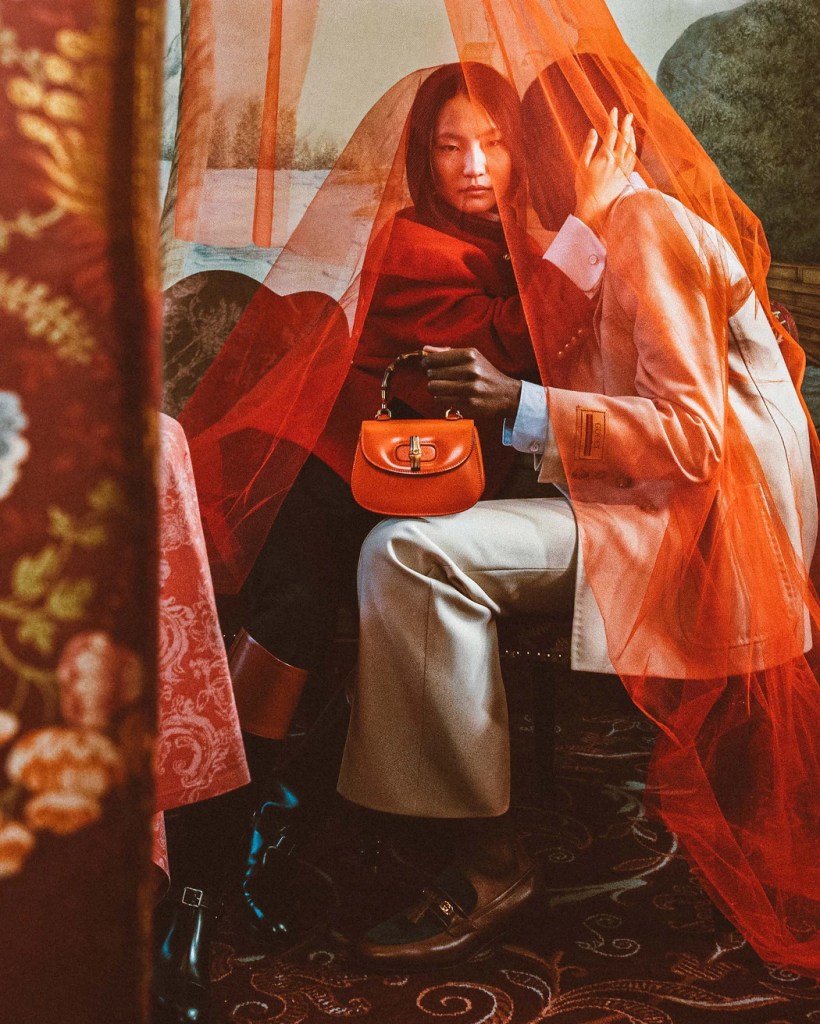
What is common to all these works is the creative freedom that their author was obviously given. Translating Gucci’s world into their own creative language instead of the opposite, they participate in expanding both the subjects of the cultural conversation in which Gucci takes part and the voices it legitimates.
 mabou
mabou 
Leave a comment