
Maria Grazia Chiuri, who took the helm of the creative direction of Christian Dior in 2016, has strongly established her profile as a feminist designer, both through the feminine yet comfortable and practical design of her clothes (sometimes featuring feminist mottos), and the artistic collaborations she has engaged the Maison in. One of my favorites remains with Judy Chicago for SS20, but the one shown on March 1st is certainly a close contender.
This time, Grazia Chiuri decided to work with Italian artist Mariella Bettineschi for the set of the runway show, some aspects of which made it to the collection, namely the name of the exhibit which shared futuristic inspirations. Indeed, the show, titled The Next Era (Era Successiva in Italian) after the artistic installation, featured black and white paintings of women taken from European classical art ranging from the 16th to the 19th century (including Leonardo, Botticelli, Manet, Velasquez, Goya, Titian, Cranach, Vermeer, Ingres, Caravaggio…), edited with two sets of eyes. According to the show notes, “The closer one gets to the works, the more one is disconcerted by this “double vision” that seems to disappear when one moves away from them.”
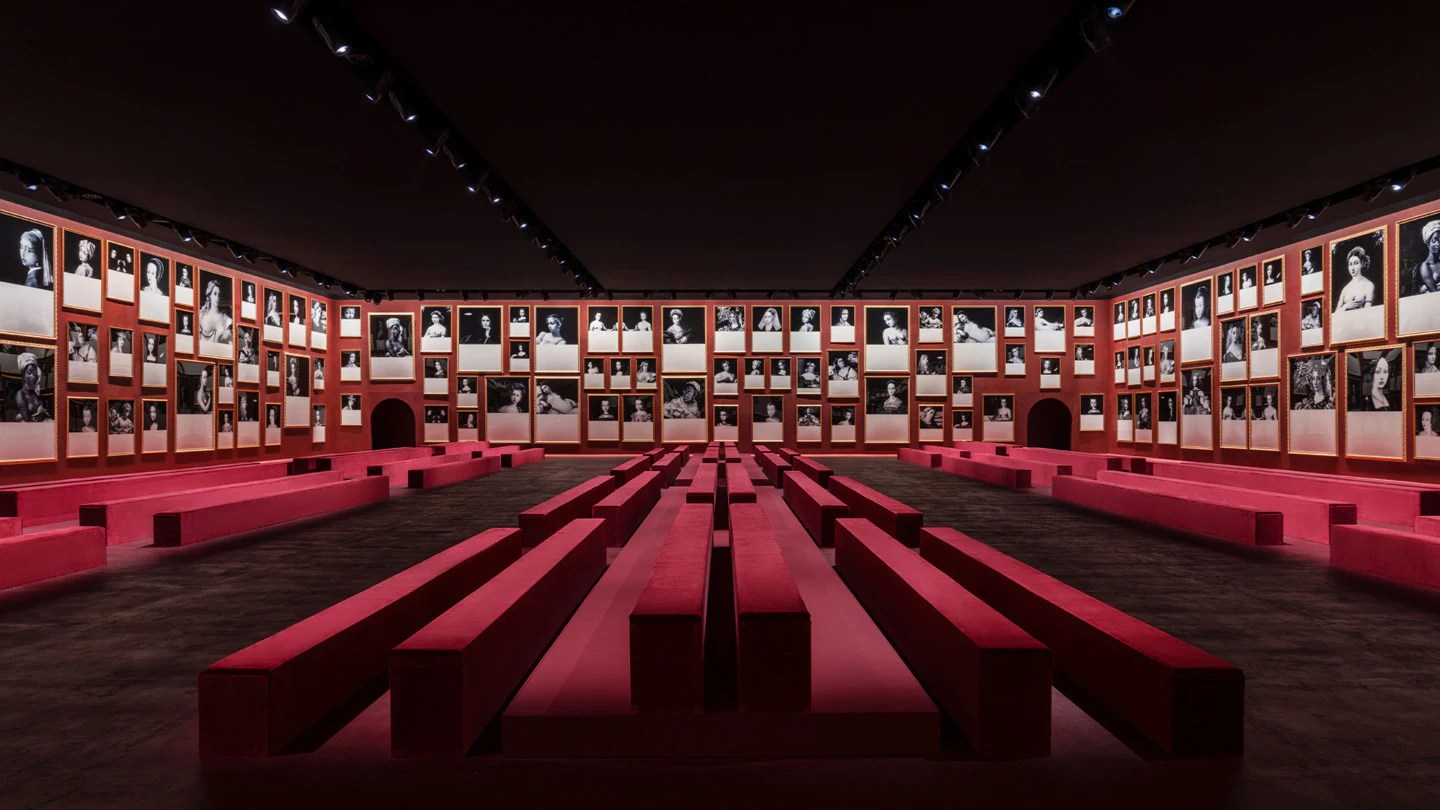

Bettineschi aims at challenging the power of the gaze and what it implies by focusing on artworks historically and traditionally made for the male gaze, by proposing a contemporary and feminist engagement with these same art works. While the women presented were all painted by men, for men and most of the time sexualized if not reflecting the social norms put on women (it is hard to argue Velasquez’ Infanta was sexualized in any way although her femininity is underlined even if she was a child at the time of Las Meninas), this is an opportunity to frame a feminist understanding of these same paintings.
If previous waves of feminism focused on deconstructing the importance of women’s physical appearance in defining their identity to focus on their persons and their intellectual abilities, a parallel movement of feminism encourages women to take back ownership over their appearance and sexualized representation. Bettineschi’s installation is inviting women to look at their peers with a different perspective, underlying their power, whether they are historical or mythological figures, or simply courtesans and muses purely valued for satisfying the male audience (Manet’s Olympia for example).
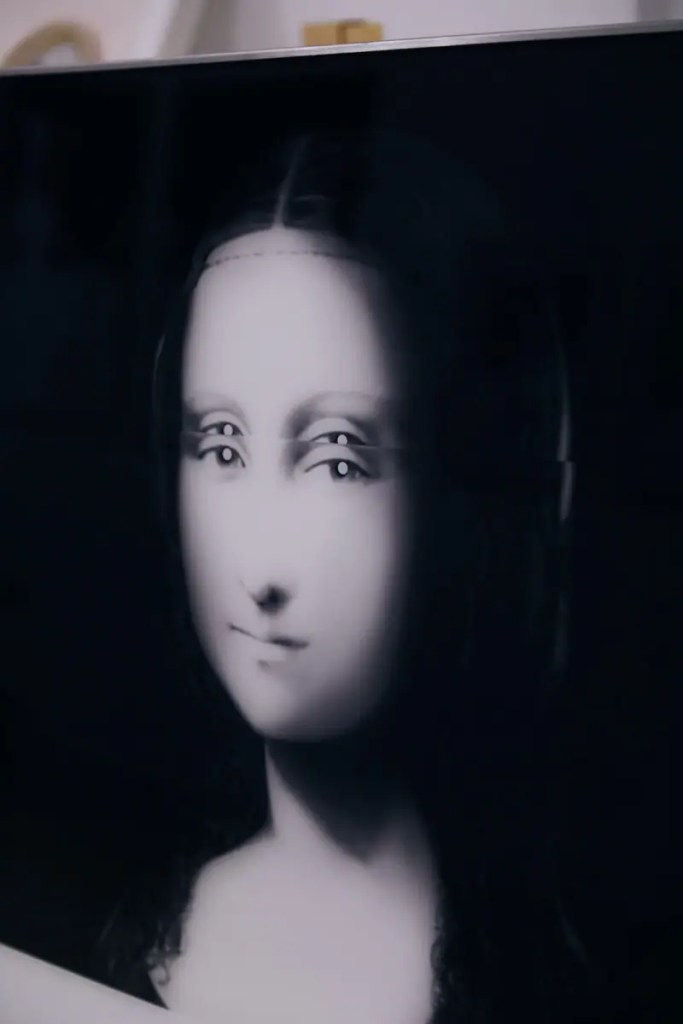
“The Next Era” by Mariella Bettineschi for Dior, 2022 
“The Next Era” by Mariella Bettineschi for Dior, 2022 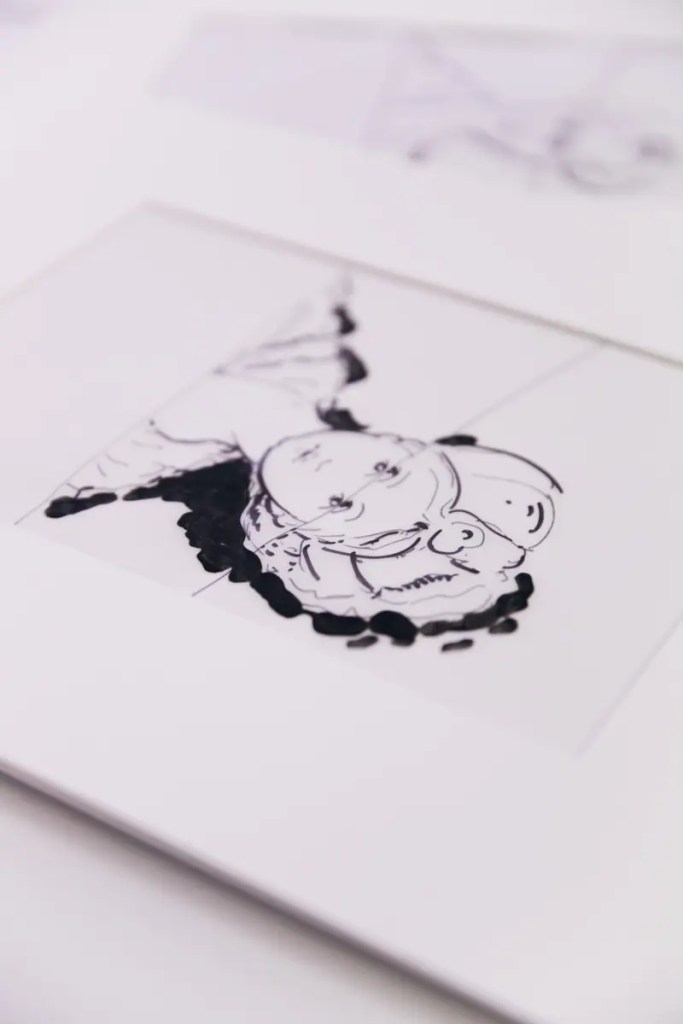
Making of “The Next Era” by Mariella Bettineschi for Dior, 2022 
Making of “The Next Era” by Mariella Bettineschi for Dior, 2022 
Making of “The Next Era” by Mariella Bettineschi for Dior, 2022 
Making of “The Next Era” by Mariella Bettineschi for Dior, 2022 
Making of “The Next Era” by Mariella Bettineschi for Dior, 2022 
Making of “The Next Era” by Mariella Bettineschi for Dior, 2022
By taking this “second look”, viewers can carve an alternative understanding of history, where women had an important role that was overlooked by those who recorded history (yes, men). These women, indeed, should set an example to inspire the next generations and era. Historical recording has proven to be the perspective of those in power, and it is our role as a society to give women an equal role in our presentation of past history so that it reflects on present and future societies. It does not mean rewriting history; it means giving equal space in history books to women who deserve it. And there are many if one takes a second look.
In fact, the empty white space at the bottom of each painting can be interpreted as a truncated representation of the artwork, of the woman that was effectively deprived from agency, and of the missing story that came with her lived experience. A third element (besides the double set of eyes and the white empty space) inviting us to expand our understanding of feminism is the spatial display of the artworks inherited from the Renaissance and culminating during the time of the Salon des Beaux Arts in Paris in the Salon Carre. Occupying the whole space of the walls from floor to ceiling, the presentation was not focusing on one artwork and one artist in isolation but on what the trend was during a specific year.

It allowed one to engage with all the artworks at the same time to make one holistic point, creating a dynamic akin to the one resulting from a fashion show or even a fashion week, a technique which has here been leveraged by Dior showing in the Tuileries Garden, a few hundred meters away from the said Salon Carre… As said by NYT’s Vanessa Friedman “multiples of Ms. Bettineschi’s portraits were hung around the show space to frame, literally, the point as Ms. Chiuri offered up her own re-engineering of history: Dior classics, infused or overlaid with wearable tech.” The presentation is a point about the state of feminism, its envisioned future, and the role fashion should play in it.
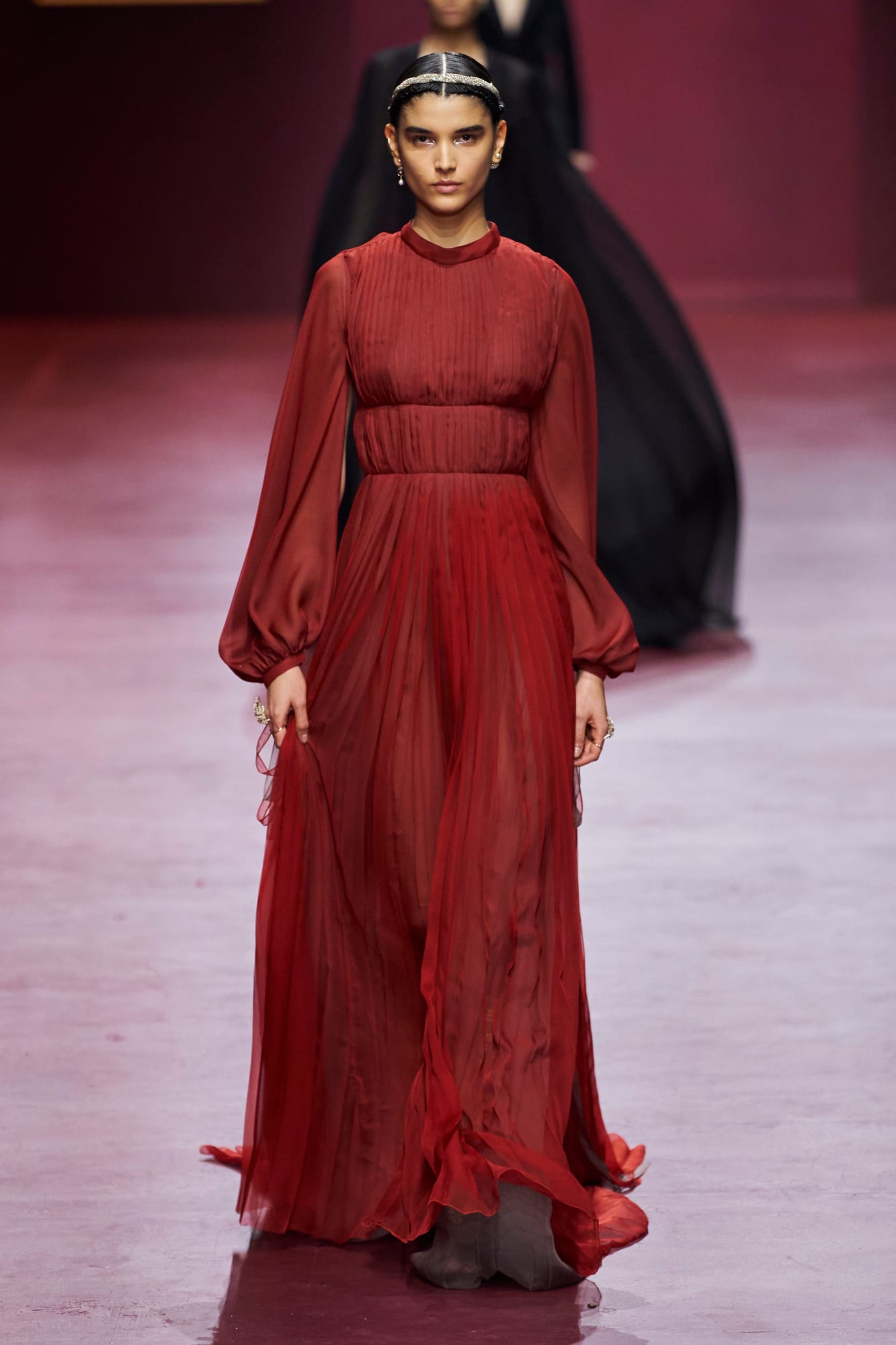
Indeed, when it comes to fashion, Grazia Chiuri unequivocally proposed the most daring collection of her tenure as Dior’s artistic director, and probably of her whole career. If some pieces seemed more appropriate for a Pierre Cardin 1970s runway, one should remember that he was in fact Dior’s assistant before the space age (he reportedly acquired the original hip stuffing for the classic bar jacket), yet another interesting wink to the history of the Maison as Grazia Chiuri knows how to do them. In fact, she also brought back the Roger Vivier for Dior pumps giving them a sporty “anti-twist” twist by tying the ankle, featuring beaded signature Lilies of the Valley, effectively collapsing past and future era.

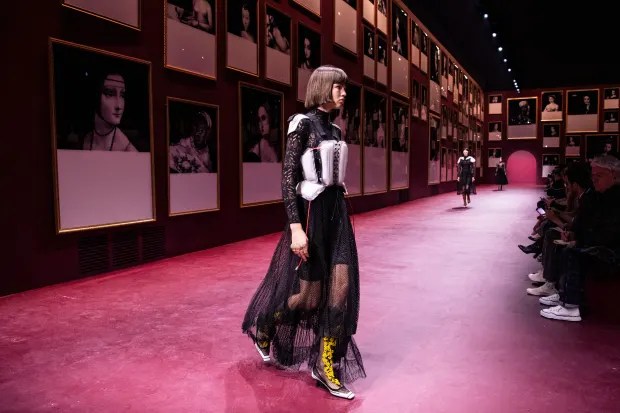
Practicality was one of the leitmotifs of the whole collection featuring weather adaptable clothing and looking at understanding the power of the clothes in helping us live better. This was made through the lens of technology, in which Maria Grazia Chiuri engaged for the first time at such a grand scale. Her collaboration with the Italian D-Air Lab was a way to look at the potential versatility of materials and clothes in helping humans live through current and future challenges of climate change and sustainability to cite only a few of the looming threats we have been reminded of during these fashion week days. “We use technology more for communication, and think less about how it can help us to live better.” said the designer.
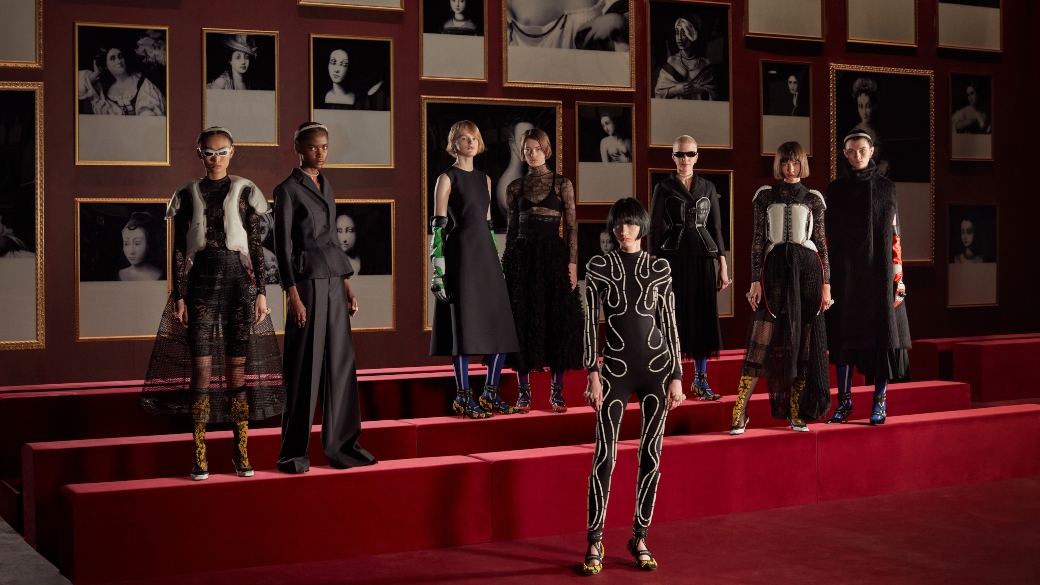
The show opened with a fluorescent-green-glowing-in-the-dark wired bodysuit, setting the tone of the presentation. The bar jacket, now regulating the body temperature for the convenience of the wearer, was reimagined inside out showing the craftsmanship that gets into this seamlessly technical piece, or with protective leather padding. In fact, D-Air Lab is a division of a motorbike jacket manufacturer meaning lots of bikers inspired looks walked down the runway, including with full-length gloves. Overall, her silhouettes felt like Matrix-inspired armors made from technical materials, high-waists and corsets, with some signature ethereal looks towards the end, of course.
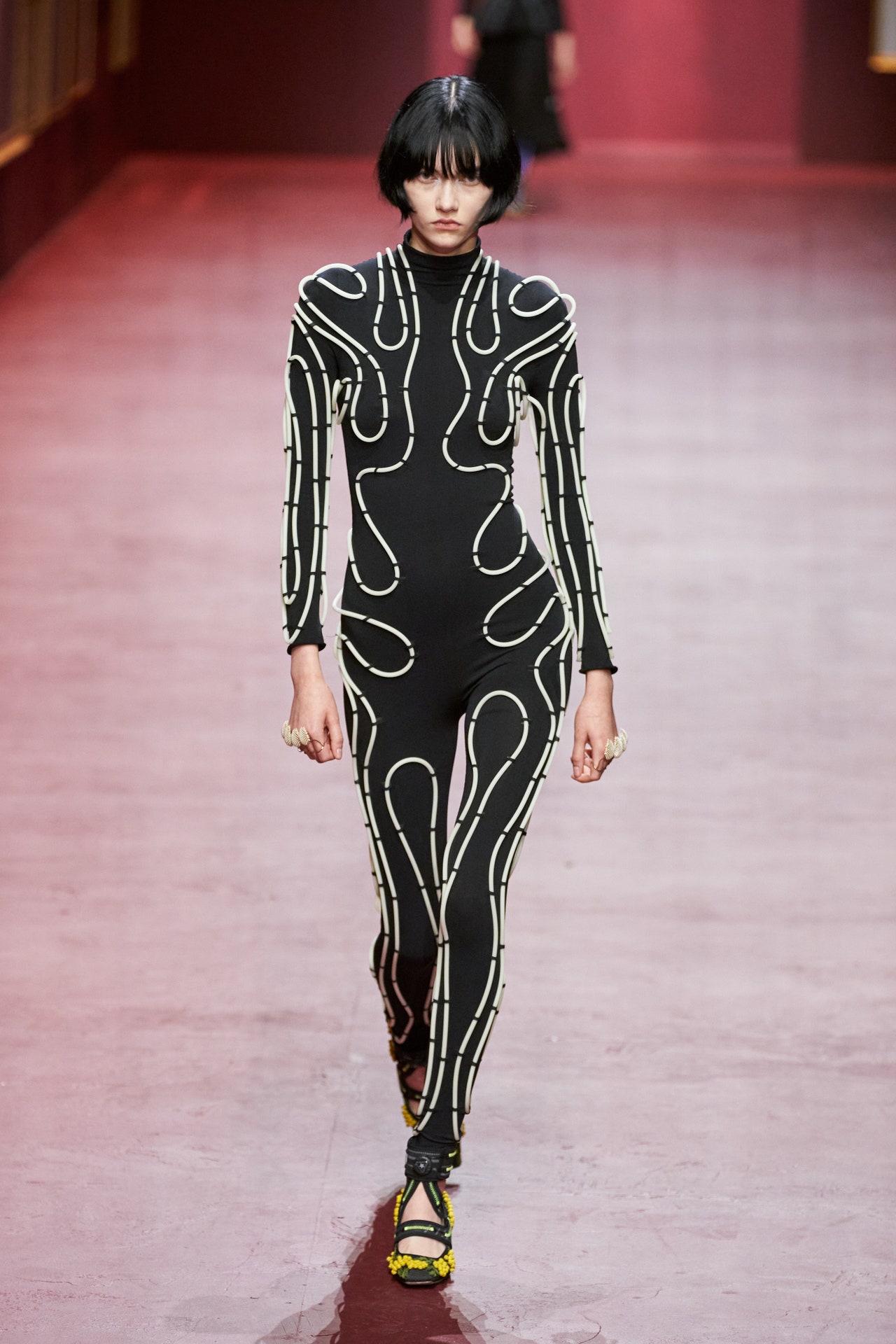
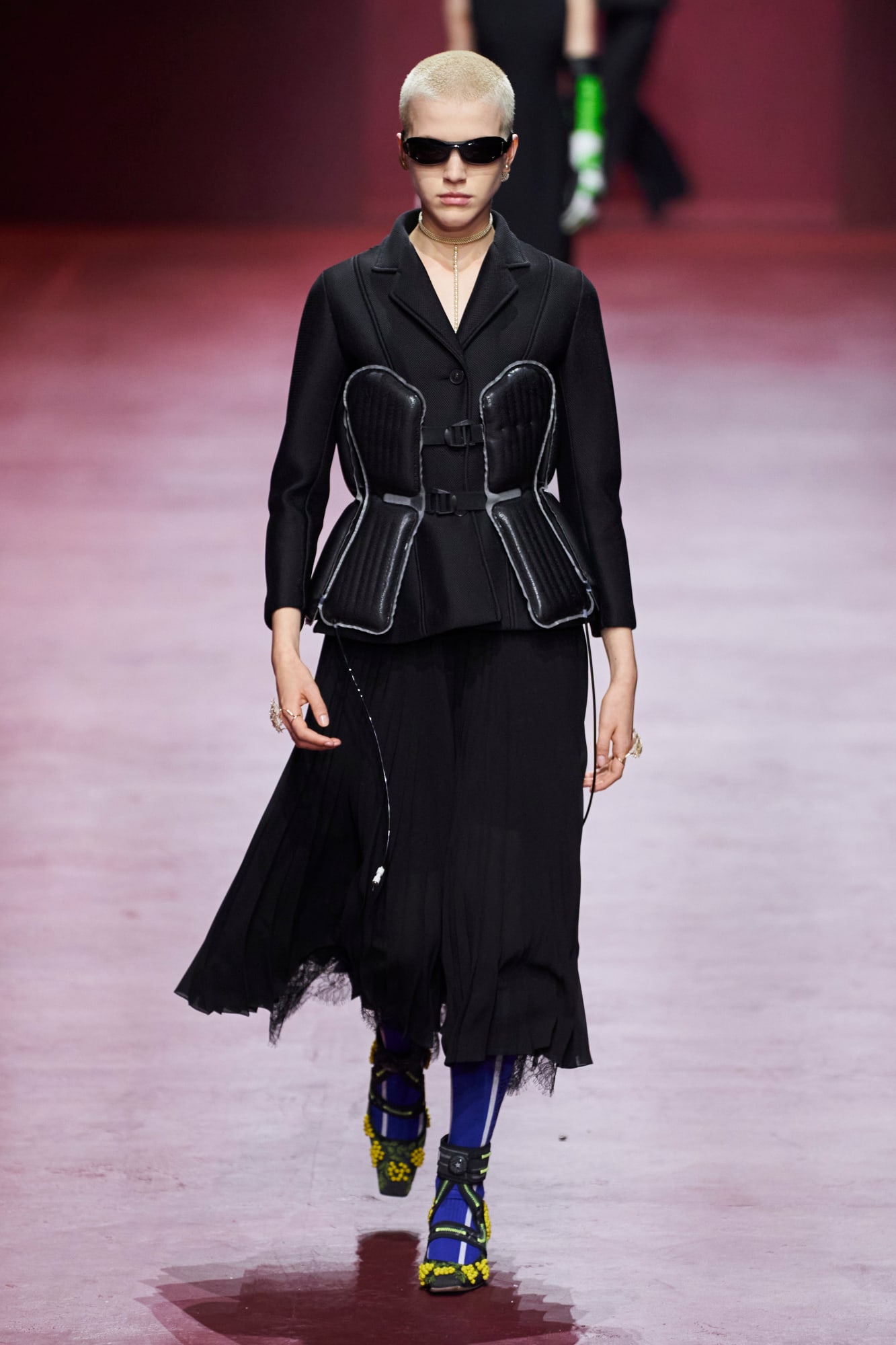

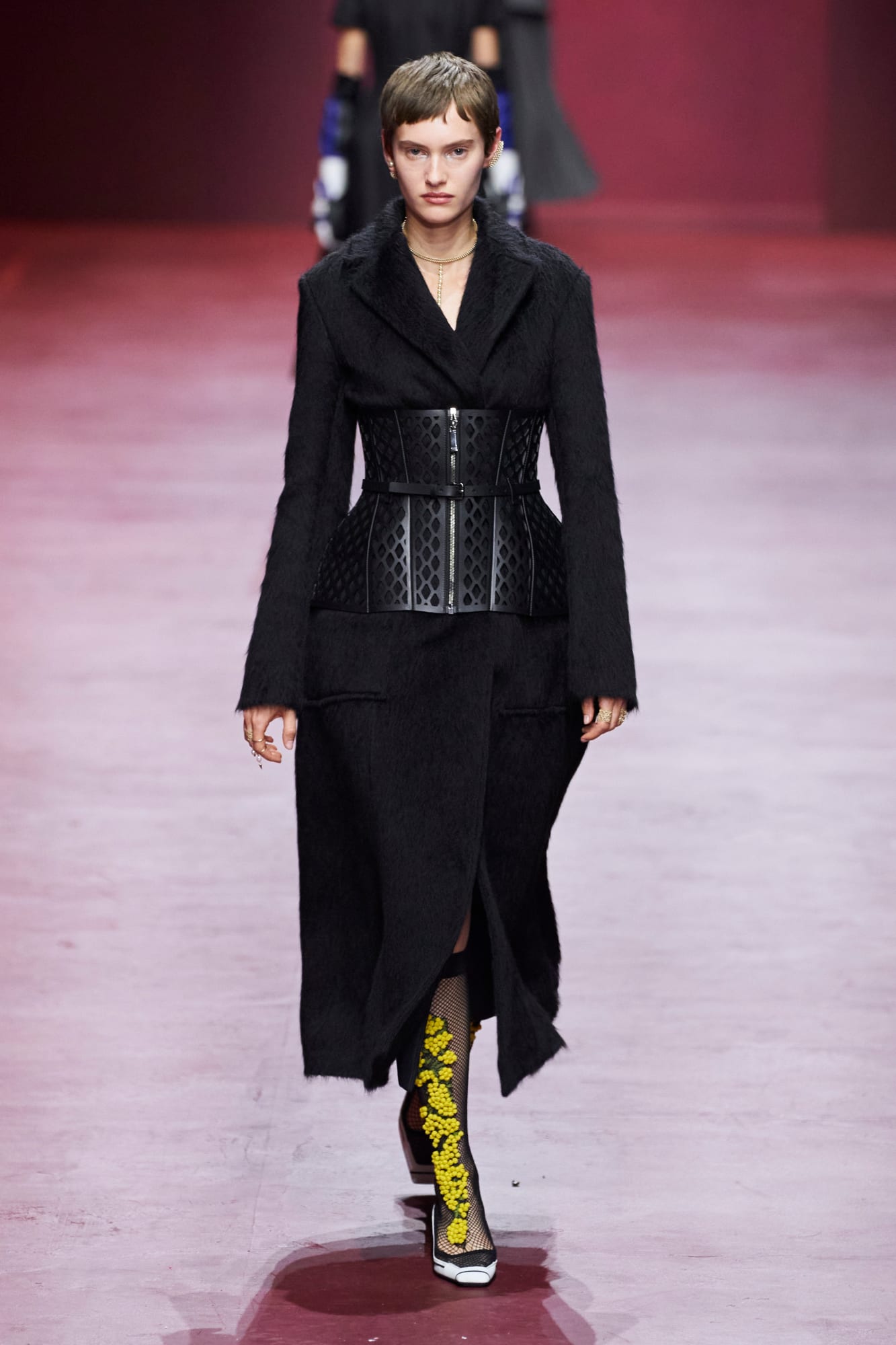
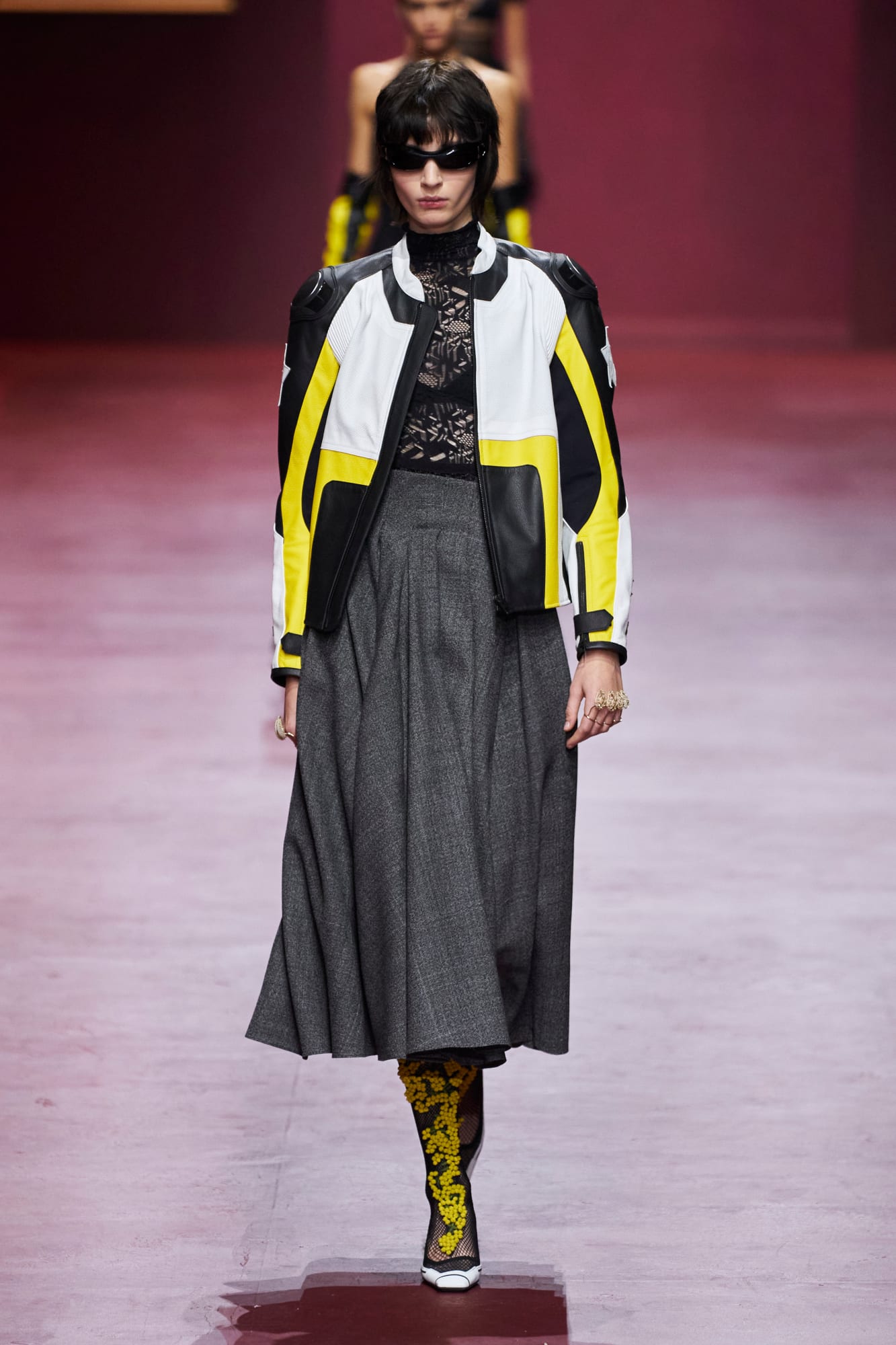
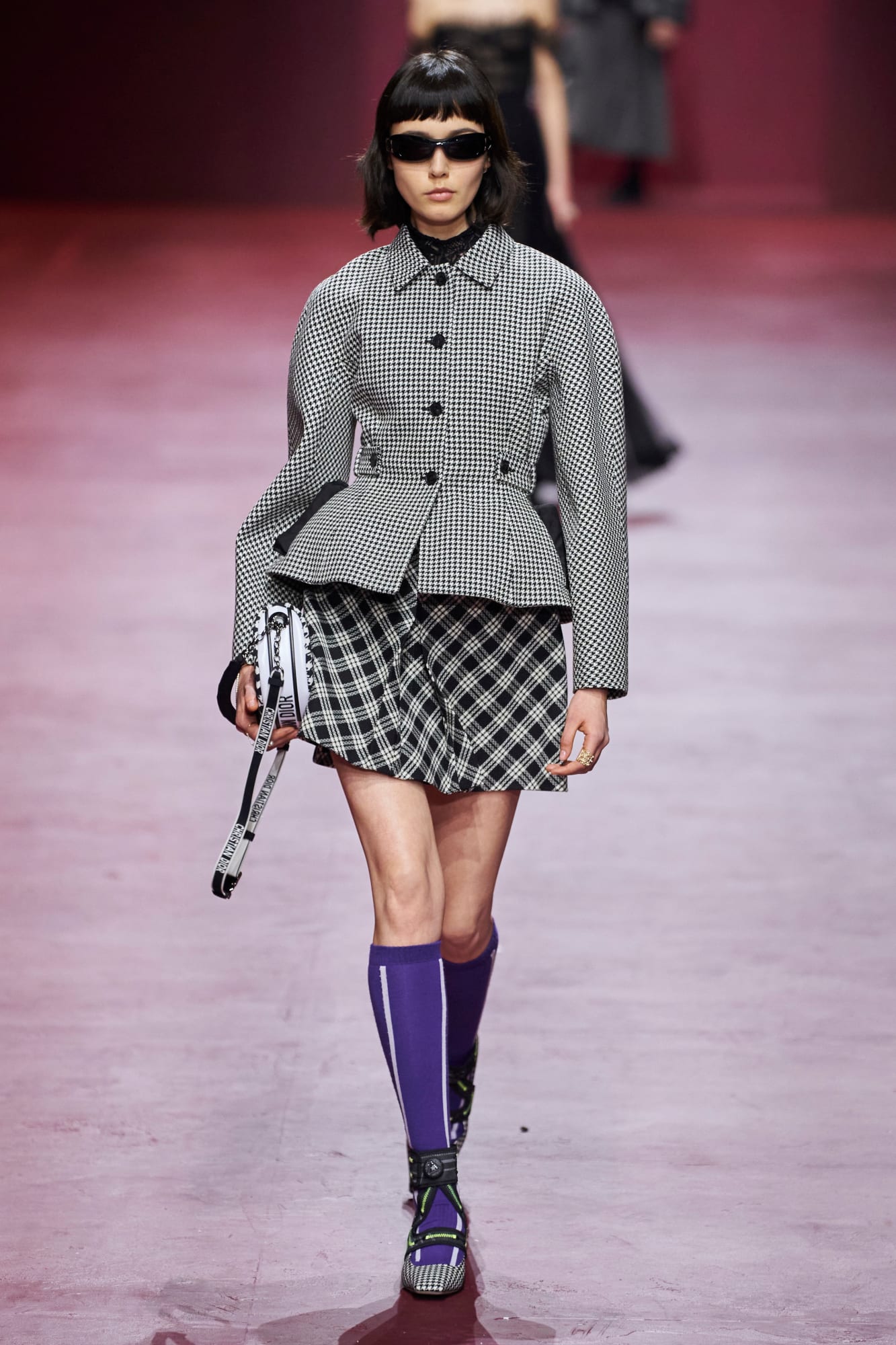

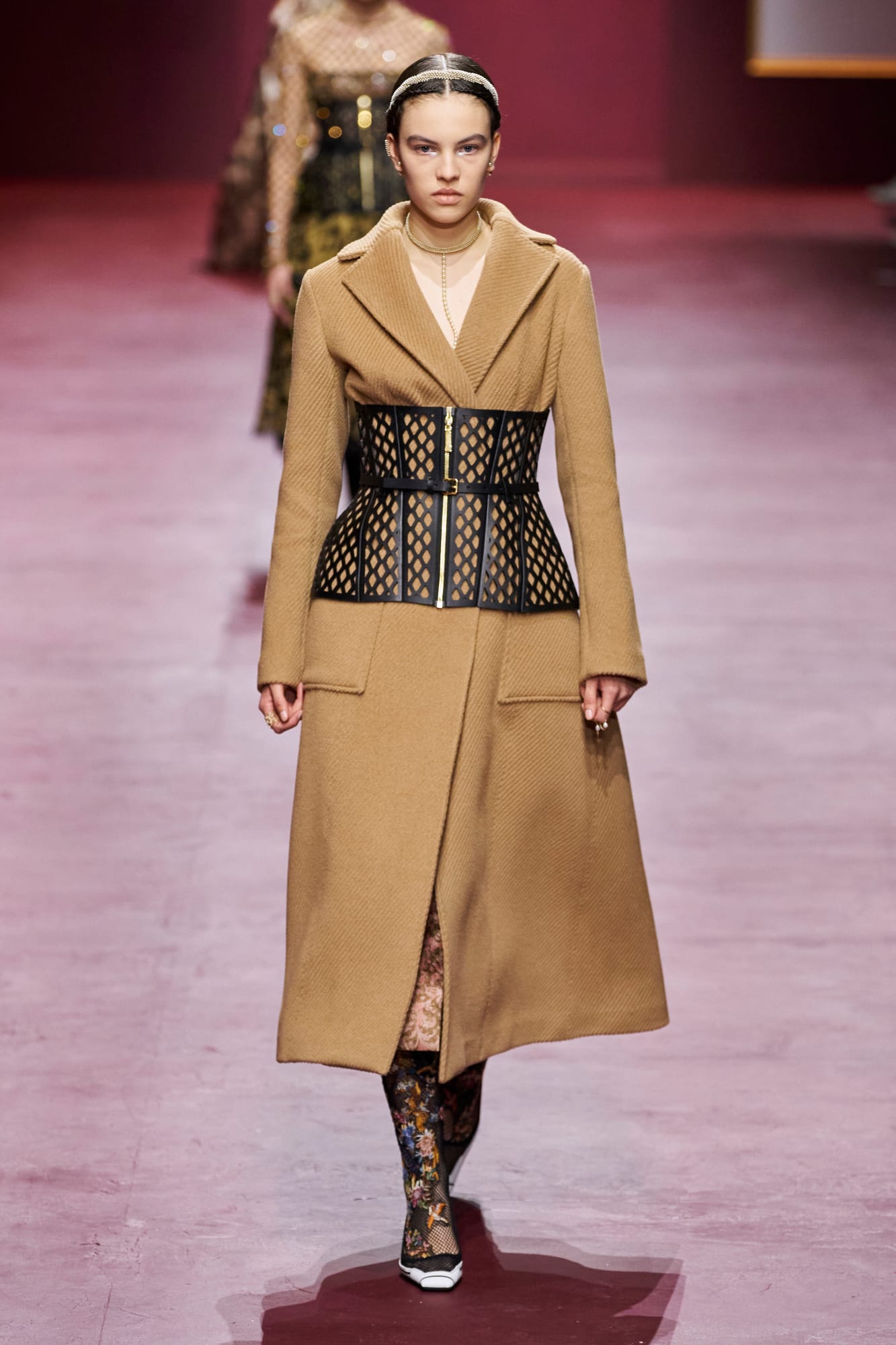
As a direct reference to the show set, as said before, “The Next Era” was flanked on several pieces of the collection, underlining the futuristic focus of the collection and, by presenting it in the middle of Bettineschi’s work, her vision of future feminist Dior women. This allows her to make a full circle with her vision, starting from her clothes as a way of life, targeting a specific audience and cultural subset sensitive to social challenges. “You know, I think the time has come to remember that people need to start reading a lot more; and think and reflect. It really is not just enough to stick an emoji on social media anymore,” said Grazia Chiuri, underlying the ideological dimension of her work. (Clearly, we know where I stand concerning this point given the nature of this blog…)
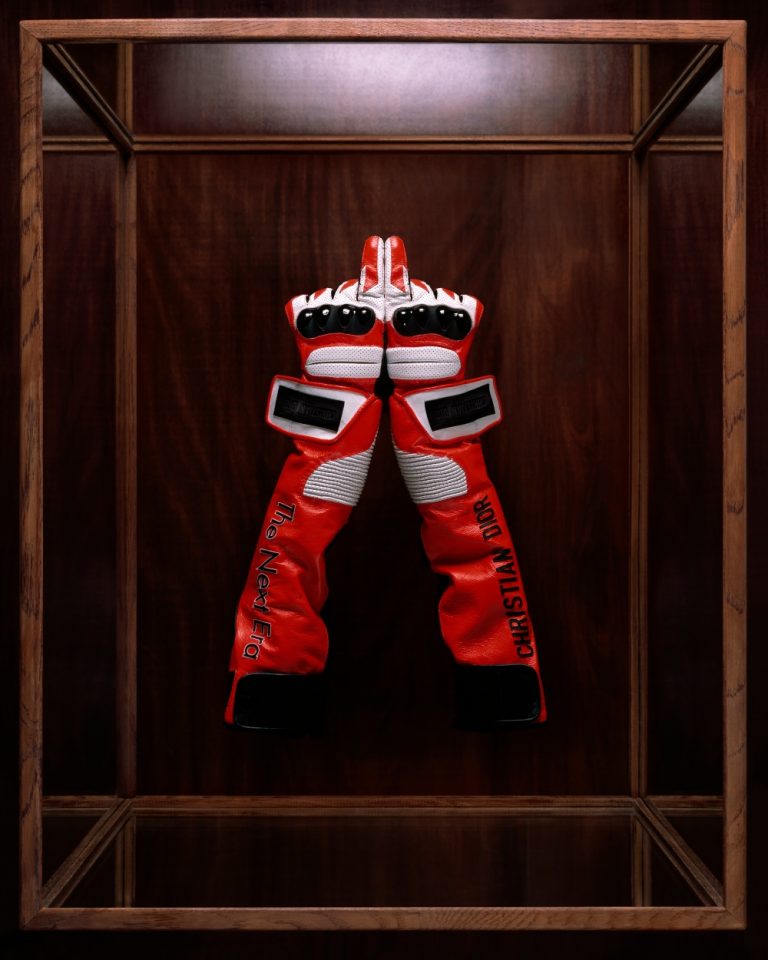
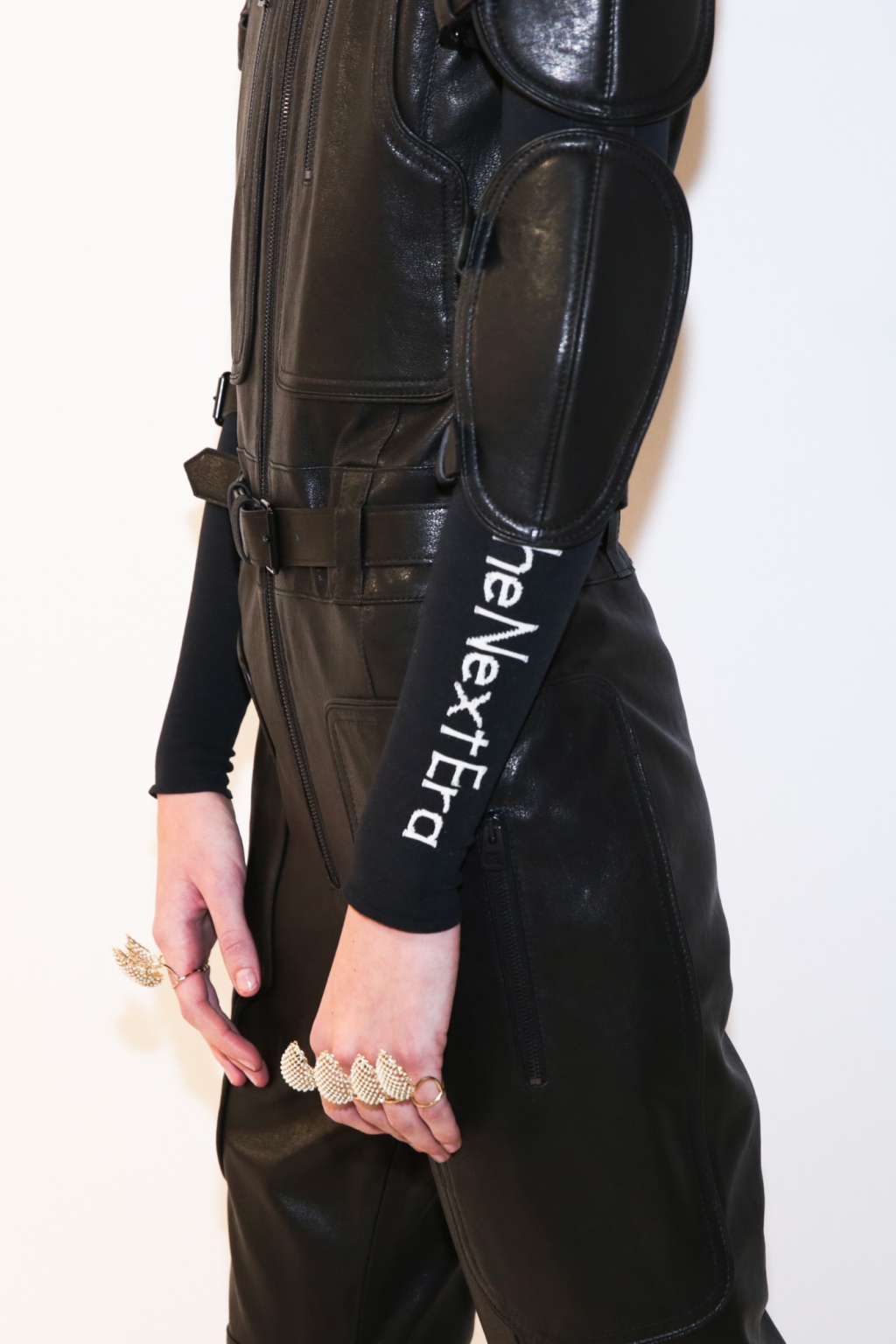
To conclude, by working with engaged artists, Maria Grazia Chiuri exponentially increases the cultural relevance of fashion and its power in changing social norms. She has strongly established Dior as an artistic patron and is now taking more creative risks with the codes of the Maison. I personally always loved her fashion, but recent critics I have seen mentioned her inability to propose something really new. Clearly, she has proven them wrong and once again demonstrated her ability to work with the heavy set of codes of the Maison Dior giving them a contemporary, even futuristic, twist. Time will tell if such a bold exploration was a one of or if it sets a new direction for her artistic direction.
 mabou
mabou 
Leave a comment