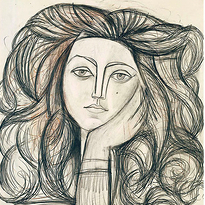

On February 1st, 2022, the talented fashion photographer Hugo Comte released $NIKITA, his proprietary creator coin distributed on the P00ls’ platform. Nikita is an ever-evolving project, muse, and creation encompassing the several arrays of Comte’s creative process, from inspiration to production to interpretation. These social tokens – think creative currency giving access to exclusive perks, more on this later – sold out in less than 24h.
Although the privileges the initial holders will have access to are not yet entirely revealed, they do include access to the collection Comte co-designed with Central Saint Martins graduate Lois Saunders, “Dear Nikita”, 24h before the general public. It will also give exclusive access to Comte’s archives and exclusive NFTs as mentioned during the Instagram live he had with P00ls’ co-founder, Hugo Renaudin on the day of the release (Yes many Hugos, he also mentioned in an article his first assistant was named Hugo).

It seems like the Metaverse is taking over… everything. Well, at least, it is the feeling one has looking at the number of fields that have started to venture into Web3, the blockchain powered space. Tech companies like Facebook or Google seem like natural contenders in the race to acquire market shares. Or at least for the moment, the race to grapple with the full potential of the technology – like, in all honesty, most of us are. But the creative industry too has taken increasing interest in the space. Last year was all about NFTs, which appeared as the best suited option for the creative economy, including the fashion sphere (Balmain, Gucci, Nike to cite a few).
At the end of the day, the creative industry is the reflection of the capitalist society we all live in, so it should be no surprise that the drivers of the increasing adoption of cryptocurrency should resonate in this space. Indeed, if one thinks about the spirit of the blockchain and considers its core goal of decentralization and democratization, the alternatives it offers to the economic system have some appeal within the creative system too. Cryptocurrencies create transparency and give their owners a better control over their assets without centralized control; to make it simple, they self-regulate by design. Similarly, NFTs have been gaining popularity because they enable artists both to retain ownership of their designs and better control the afterlife of their creative output. At the same time, blockchain technology is a way to reach a wider audience and create a market they have direct control over, without intermediaries.


When it comes to fashion, the most materialistic dimension of the creative industry, brands have been struggling to elegantly enter the metaverse. During the 2021 Earnings Call of the behemoth LVMH, Bernard Arnault said that his brands were real-life first and that he was not in a hurry to get into the metaverse. Truth is, fashion items, at their core, are made to be worn and experienced physically. Brands struggle to find the right approach to get into the metaverse without losing sight of their identity and purpose. If Arnault’s stance sounds extreme to an audience that has started to take the new technology for granted, it pinpoints a key challenge: how to bridge the gap between the digital and physical world. But what if this material perspective is the wrong way to frame the challenge?
Indeed, thinking only about the products limits the way one engages with the fashion industry at large. Enormous teams of talents are behind a sale, from design, creation, to photography and advertising. Traditionally, one is keen to admit all these pieces are interdependent and essential to the functioning of the fashion ecosystem, but they are still highly dependent on the final output: sales. Yet, this commodification of creation undermines its cultural importance as well as the role of creatives in framing taste by connecting with their communities beyond objects. In fact, few manage to have control over the channels and ways their audience engage with their work.
The late Virgil Abloh is considered as a revolutionary creative because he was able to wear many hats, but, above all, make sense of all of them in a coherent, unified manner. He had absolute control over his carefully curated work but even more than his work, his creative process is his biggest legacy. Critically, Abloh had such a big impact and was such a pioneer because he was able to build a community. Community gives creatives the ability to gain control over their work and the way it is interpreted, as well as to create a unique voice beyond an isolated piece of work.
One traditionally tends to experience art, fashion and photography, one piece at a time. What if the blockchain could be the opportunity to engage with a creator’s universe rather than just a piece of it? More than giving us a better understanding of each piece individually, it is an opportunity to make sense of the creative ecosystem as a whole and better understand the intricacies of the links between every piece of the puzzle, in a digital personal museum. It is an opportunity to create better transparency within the space while expanding our definition of value. Creation, after all, is based on one’s sensibility and taste, and while our society wants to give it a price tag, money does not have to be the only currency.
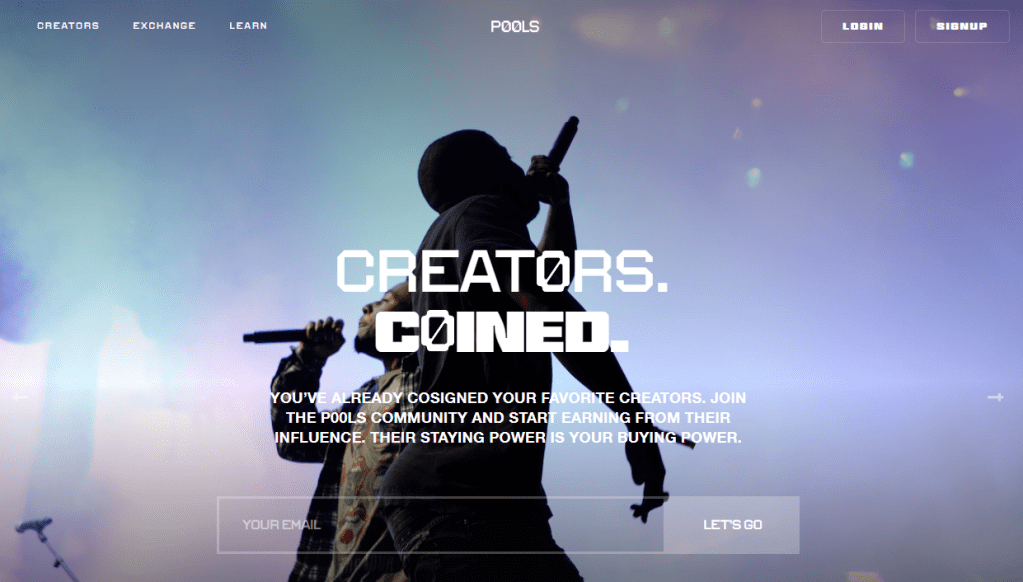
It is in fact the value proposition of the platform P00ls, with which Hugo Comte has decided to partner to create what they call a social token. According to their website “It is the leading community-first, decentralized protocol for creator cryptocurrencies. (…) Partnering with P00LS means incentivizing audiences and fanbases to consume creator and brand content, while empowering them to promote, share, and scale it.” What gives these tokens value is the fact that attention is directly rewarded by the creator through exclusive access to perks as explained in more details in the whitepaper of the $NIKITA token.
It is like creating creative equity, the value of the token, and hence the revenues that derive from it, are directly linked to the supply and demand, demand being driven by the utility that the creator injects in the token (perks, access to content and experiences). The more utility, the more value the token has. Hence, the creator has way more power over his revenues and his influence and works hand in hand with the community to create utility. This is a win-win, community-generated wealth.
As stressed by the photographer during the Instagram live, and underscored again in his interview with Vogue, what attracted him was the ability to engage with his fans and community, as well as to share more about his creative process. His work is instantly recognizable, as he creates a dream-like intimate world from over-saturated hyper curated settings. At 26, he has already worked with some of the biggest names in the creative industry, from pop singer Dua Lipa to cultural icons like Bella Hadid, Hailey Bieber or Naomi Campbell, to some of the fashion industries most important names like Vogue, Saint Laurent, Bvlgari and Nodaleto (a personal favorite).
Mila Ganame, who worked with Hugo Comte stressed the exceptionality of her experience. She mentioned her agency asked for a picture of her profile before the shoot, hinting to the work process of the photographer. What stood out was his attention to every detail from hair to make up to styling (and even music during the shoot), as well as a genuine connection with the people he photographs to get intention through the lens and to the viewer. He appears as very approachable and willing to photograph the uniqueness of the diverse people he works with, before the fashion they present. Mila mentioned how he makes models feel special and how it was the “best shoot she ever did”, she felt effectively invited into his world and inhabited by his vision.
Particularly important for Comte, the belief generating power of images is critical to the message each and every picture conveys. Anyone familiar with his work is struck by the astounding efficiency of his images in referencing a multitude of cultural icons, while astutely conveying a sense of modernity, and even futurism. Arguably, this is why Comte’s work is so powerful; he has this ability to create images that collapse past, present and future. Concerning his first solo show TESTAMENT that opened on February 3rd in Paris at Galerie Hussenot, he stated that it aims at “transcending time and culture.”
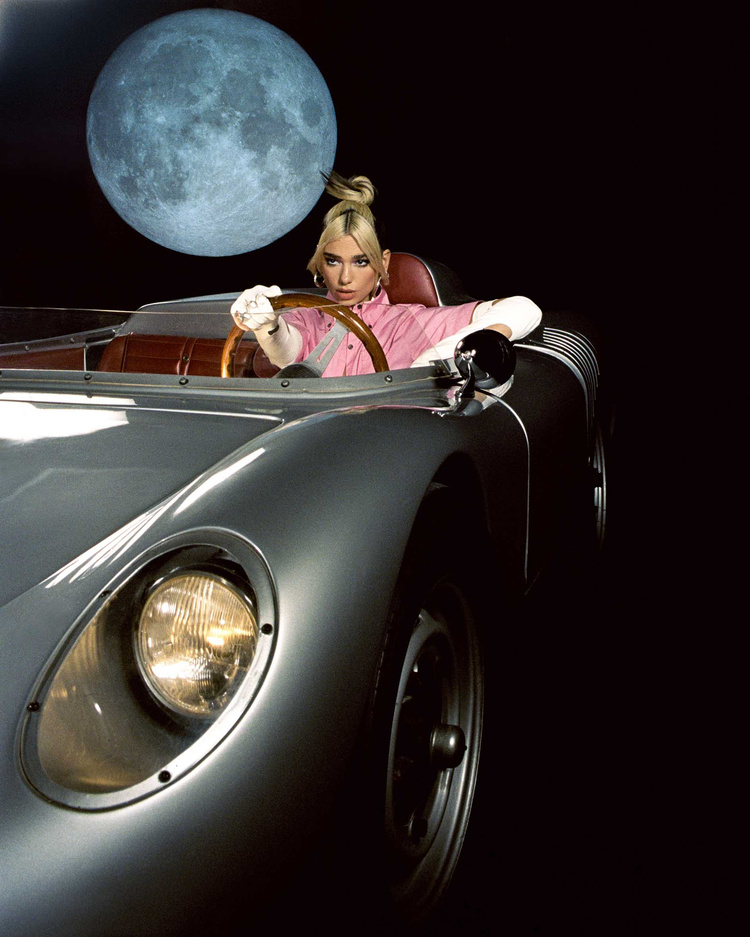
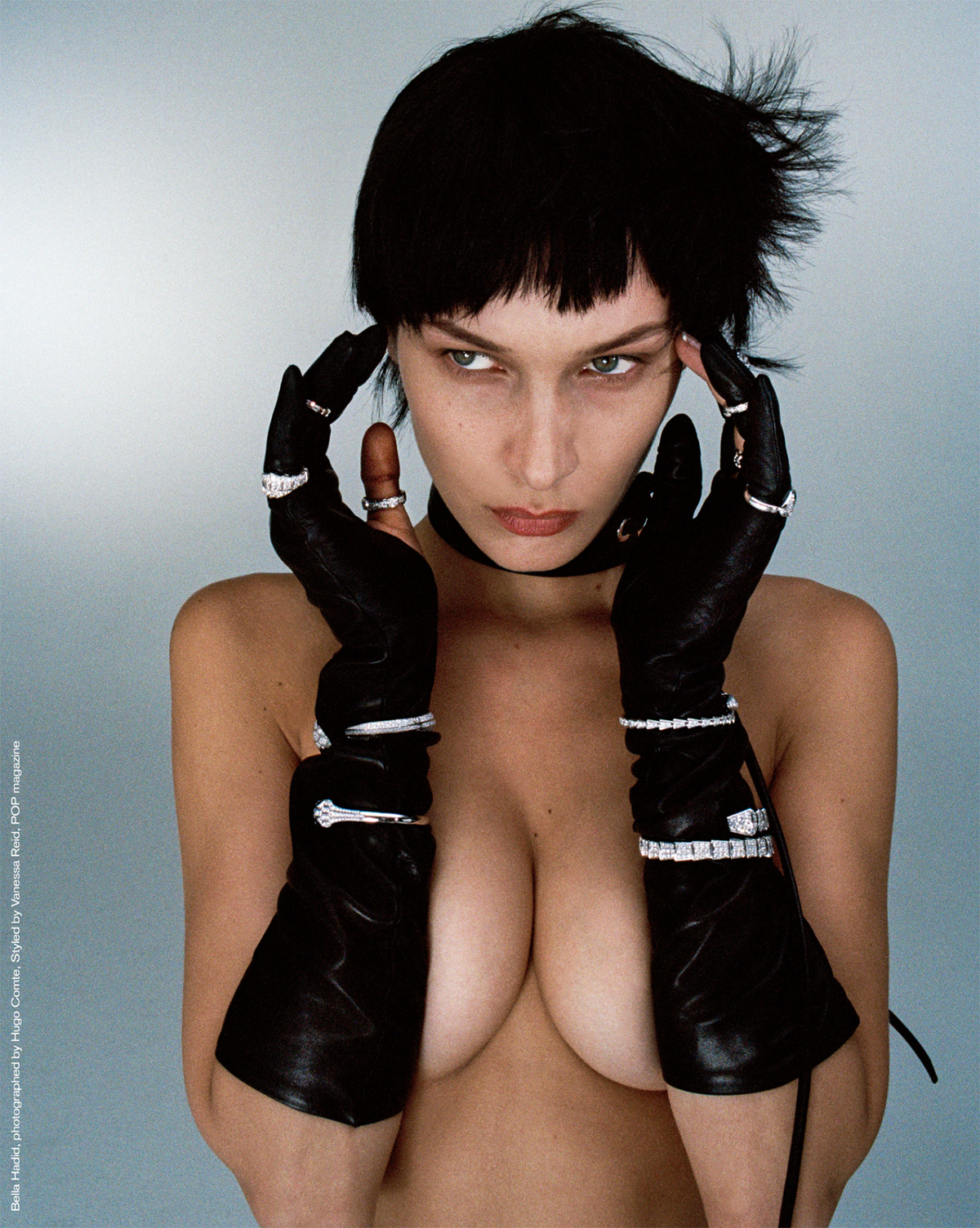


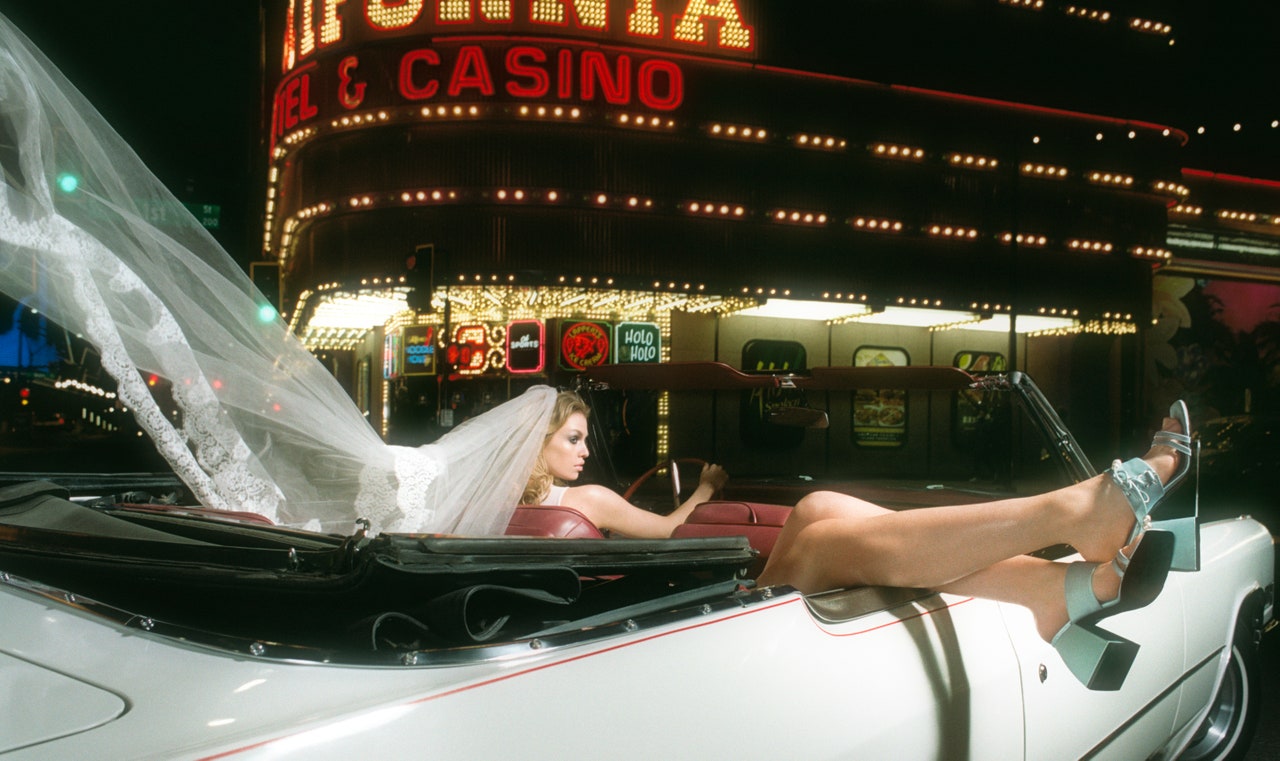

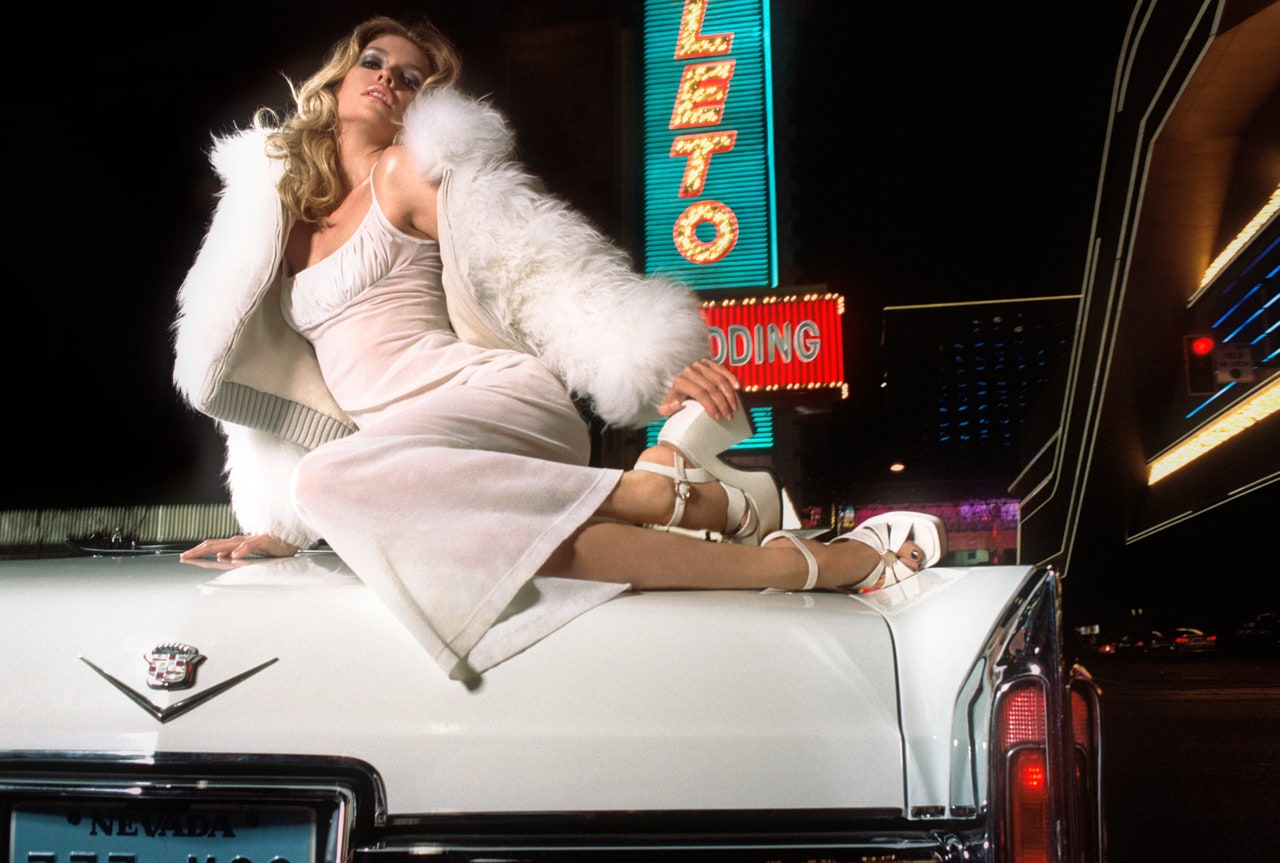

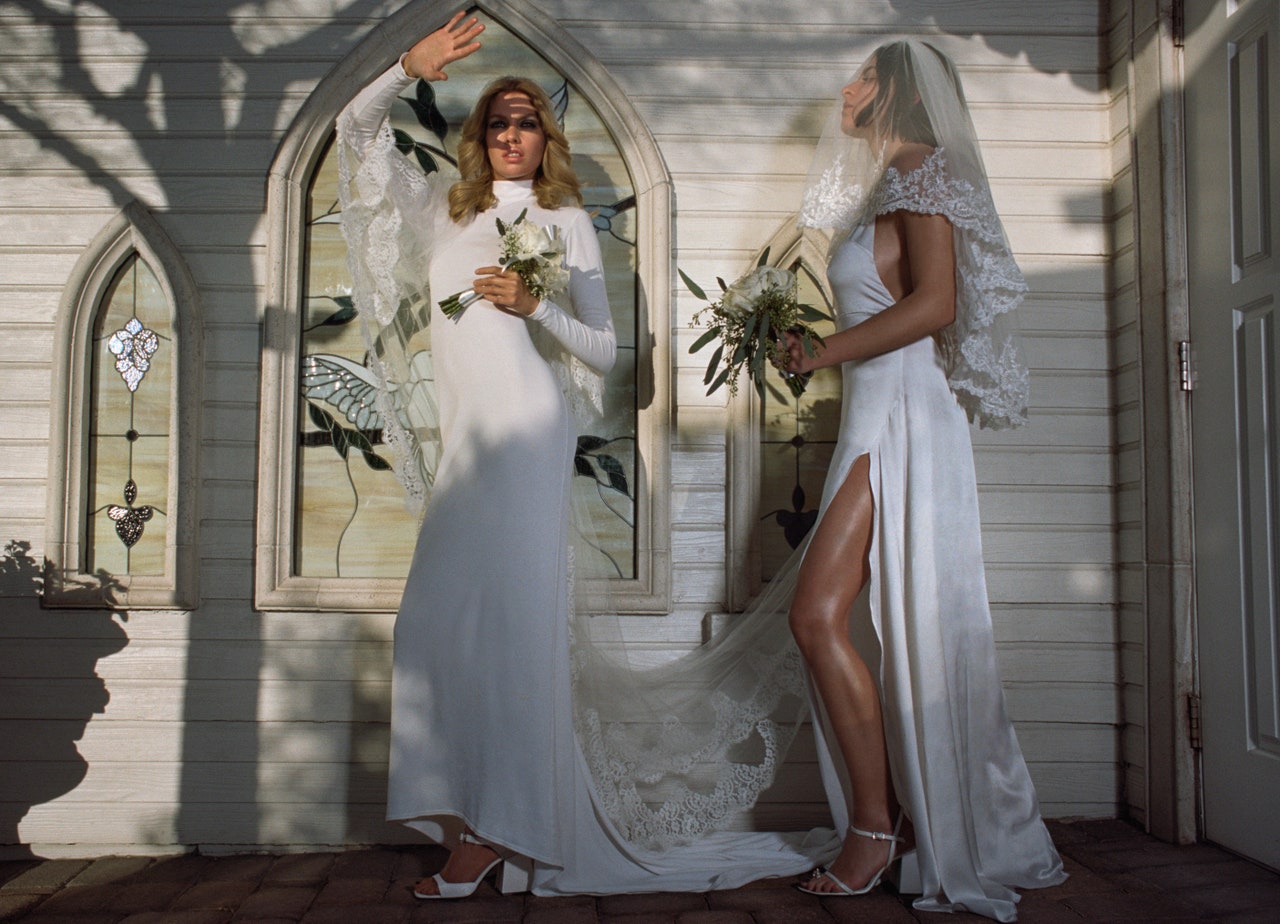
In fact, he speaks to so many interdisciplinary references that grasping them all can be challenging, even for the trained eye. Comte mentioned references to Stanley Kubrick, Quentin Tarantino, or Tadao Ando (his work is highly influenced by architecture, the Nikita World itself was “born from transferring architectural structure to web cultural utility”), or even American portraiture of the 20th century. Particularly important in his creative process are 90s fashion images, which “really express an energy more than anything”. Critically, he identifies the three main pillars of his inspirations as “cinematic energy, simple portraiture, and surreality”.
Trying to encompass and make sense of every piece of inspiration that goes into his work seems impossible without a detailed dive into each and every picture. For example, classical art is only indirectly mentioned as a source of inspiration although it is directly recognizable in pictures referencing religious iconography, Renaissance claire-obscure, and, in his most recent exhibit, Greco-Roman art and neoclassical art. And that is without mentioning the highly political message his work conveys. For TESTAMENT, he aims at challenging the system of references and beliefs that have been established by image-making through history, especially the representation of the white body as the ultimate beauty in Classical art.


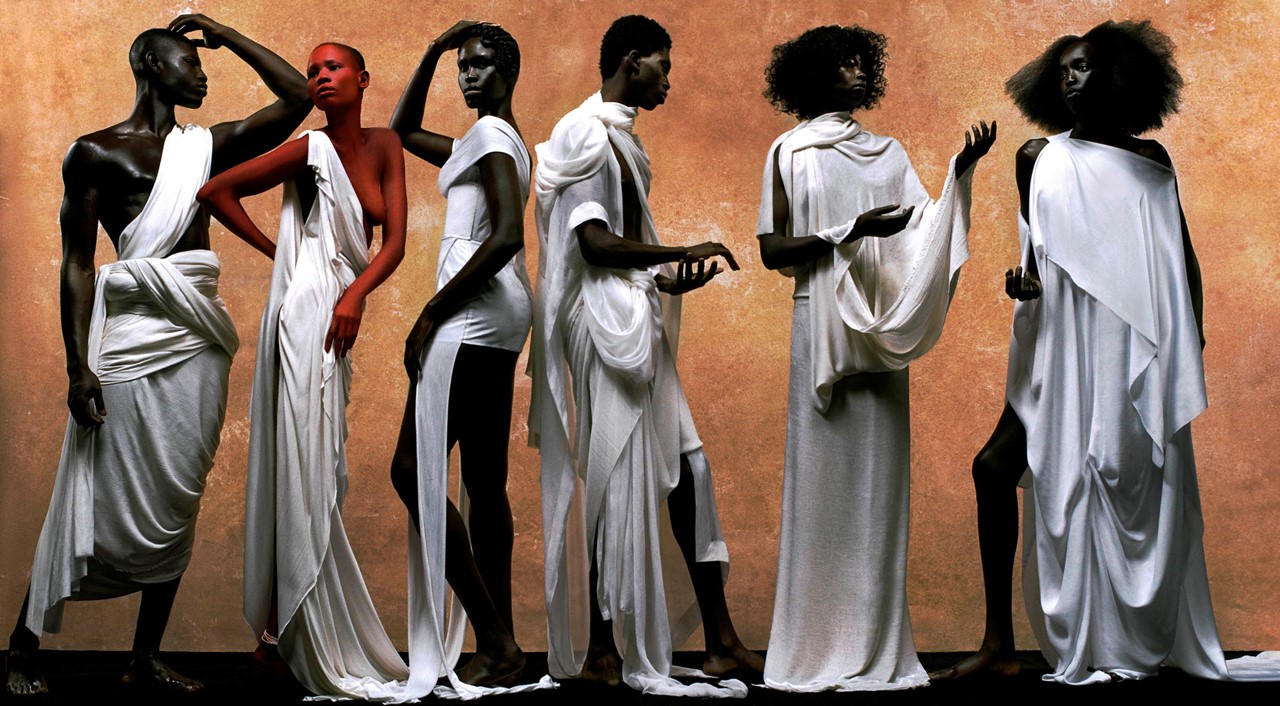

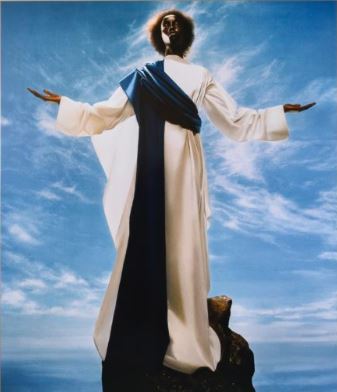

To stay in the Art Historical register, the revolution of abstraction during the 20th century was based on the artists’ willingness to collapse the plans of the paintings, and effectively question the viewer’s sense of space. Comte’s talent is his ability to collapse time in one image. But the $NIKITA project is the opportunity for Comte to collapse other dimensions. Technology, both as a subject and as a tool plays a critical role in his creative process. “I want to use CGI (computer-generated imagery) as a post-humanism tool; which means I want to erase the boundary between human analogue and digital,” he says.
At the intersection of the real and digital collapse stands the value of the metaverse, aiming to challenge our sense of reality at what seems to be an ever-increasingly rapid pace. More than simply creating a platform to create and sell digital art, the blockchain has the power to add another dimension to the way one engages with creators. More direct access, a more acute understanding of the creative process, and an entirely new relationship between members of a community are the reasons why Comte was interested in P00ls’ platform.
It gives him the opportunity to move away from traditional audience-oriented platforms, whether they are print magazines or social media. “I want to completely change and break the way I interact with my community,” he said to Vogue. As the fashion sphere struggles to bridge the gap between their products and the metaverse, maybe a way of making the digital world more attractive is making it more human before making it more material. At their core, humans crave interactions, and, after two years in a pandemic, experiences. One of the most important points when creating an image for Comte is the engagement of the model with the camera, and ultimately, the viewer, in an effort to create a human connection.
His $NIKITA token is “a way to build a bridge between the pop-culture audience that I have, the high-fashion audience that I have, and the more crypto audience,” he says. “All those audiences need each other, so for me, it’s really about building a bridge.” And clearly, his audience is responsive. Speaking tokenomics with the P00ls team, I learned that the token ended up having less holders holding more tokens than they expected (limited supply and theoretically unlimited demand), meaning engagement and interest was higher than anticipated.
Up until now, the only way to measure the value of creativity was through sales. For the fashion industry, that meant direct impact on topline results. P00ls offers an alternative to a system resting on money exclusively, and an opportunity to reframe our value system around raw creativity, taste and audience in and of themselves and not only because they have the ability to drive sales. Most likely, few fully understand the implications of what P00ls calls a “paradigm shift”, but this technology is at the cornerstone of a thorough redefinition of what our societies at large consider valuable. Or at least, it creates an alternative to a system that seems too big to fail, because everyone has just too much skin in the game… for now.
 mabou
mabou 
Leave a comment