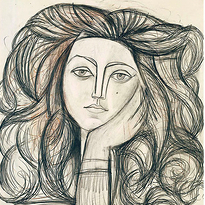

The Chinese artist Liu Bolin, nicknamed “The Invisible Man”, is notably famous for his “Hiding in the city” series. His performances and photographs entail him getting painted and camouflaged into the background of his environment. It started as a protest against the Chinese government in the years following the cultural revolution. “Disappearing is not the main point of my work,” Liu has said. “It’s just the method I use to pass on a message. It’s my way to convey all the anxiety I feel for human beings.”
Indeed, the cultural revolution led to the destruction of his village and studio. By deciding to hide himself in the background of the distinctive cities featured in his work, Bolin focuses on a culture, and aims at representing the community defined by it. The Chinese government, by destroying buildings, erased communities of people and parts of culture. His own individual erasure gives prominence to the communities he represents and stresses that people define themselves by the culture they are part of.
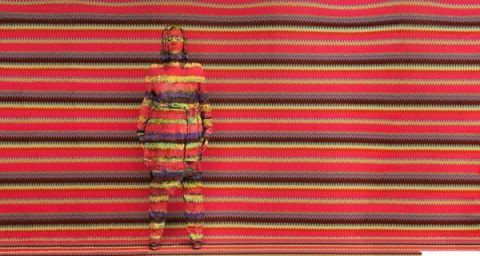

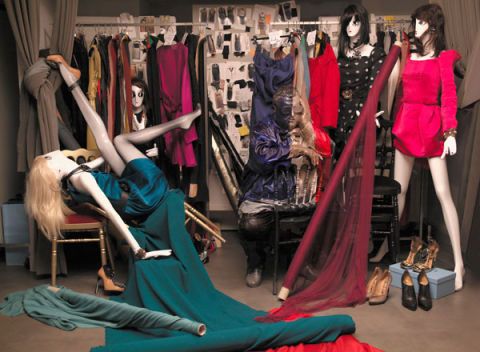
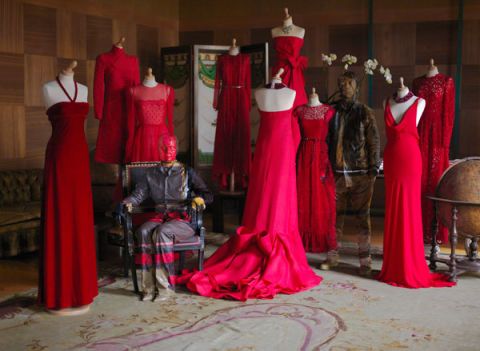
His approach has attracted the luxury fashion world, notably in 2012 for his collaboration with Harper’s Bazaar. If buildings and cities are representative of a society and time, so is fashion, and it is particularly relevant to Bolin’s point as an artistic subject. For this campaign, instead of painting himself, Bolin collaborated with five internationally renowned fashion designers and set them in their creative universe, which is not typical in the artist’s work. He focuses on the relationship between the work one creates and one’s identity, at a time where the Chinese were, and still are, obsessed with Western luxury brands.
The “Lost in Fashion” series featured Angela Missoni, set against a stripped backdrop, a signature print of the brand. The second designer under the spotlight was Alber Elbaz, still at Lanvin at the time, disappearing into his bejeweled gowns. “As a designer, I’m not an exhibitionist; I’m more of a voyeur. All I try to do is be invisible.”, he said, stressing the connection with Bolin’s work. Jean-Paul Gaultier disappeared in his striped marine shirts and underlined the importance of being a chameleon as a designer, able to listen to the zeitgeist and adapt his design to an ever-evolving audience and society. The last picture features Maria Grazia Chiuri and Pierpaolo Piccioli, at the time co-creative directors of Valentino before Maria Grazia Chiuri moved to Dior. The signature red of Valentino is the focus of the photography and is deemed “never to fade into the background”, as opposed to the directors themselves. They stress that the focus is not their individuality but the clothes they design, that is, their cultural contribution to society.
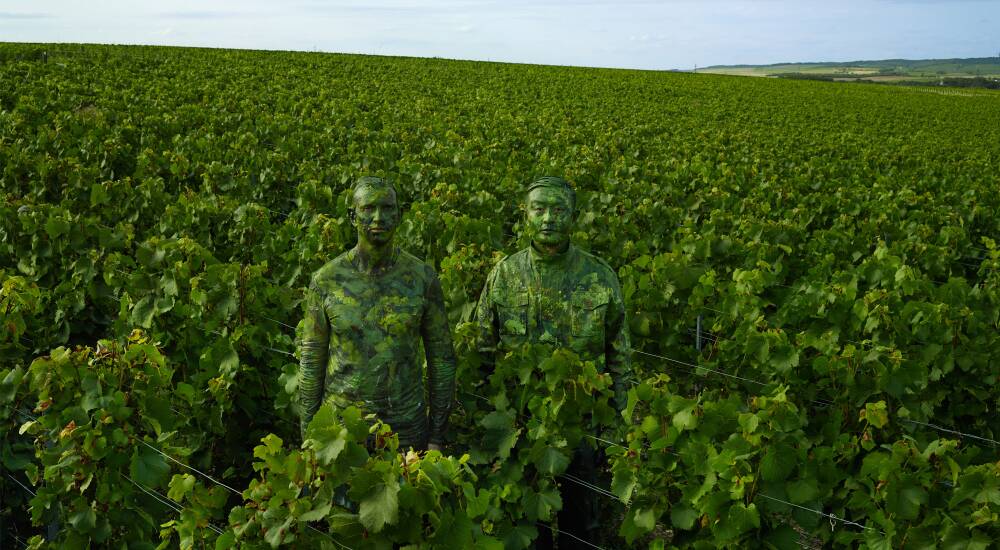

Liu Bolin took part in other collaborations within the luxury industry, stressing the similarities in their approach to the dichotomy between the individual and the multitude, and his effort to reconcile both through culture. In 2018, he collaborated with Ruinart, part of the LVMH group, and in 2017 with Moncler, for which he was photographed by Annie Leibowitz in the middle of nature, as opposed to the cities he usually focuses on. About his collaboration with Moncler, Bolin explained that “the collaboration with Moncler shows [his] intention of inviting individuals to experience, and to contemplate art in everyday life. As we stand at the intersection of the postindustrial and virtual age, the interrelationship among modern technology, man-made landscapes, and human beings themselves has become the point of departure in my works.”
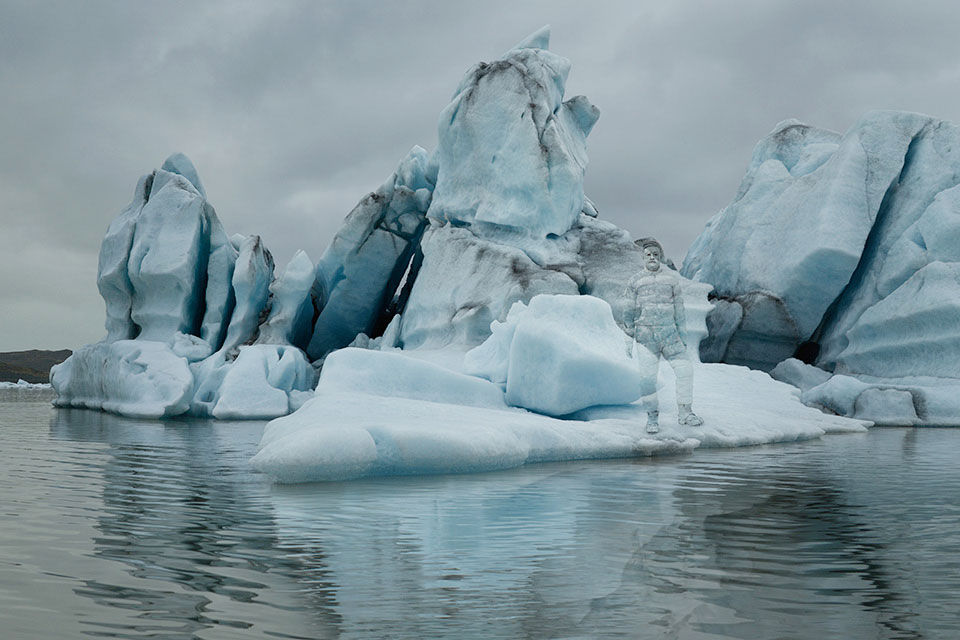
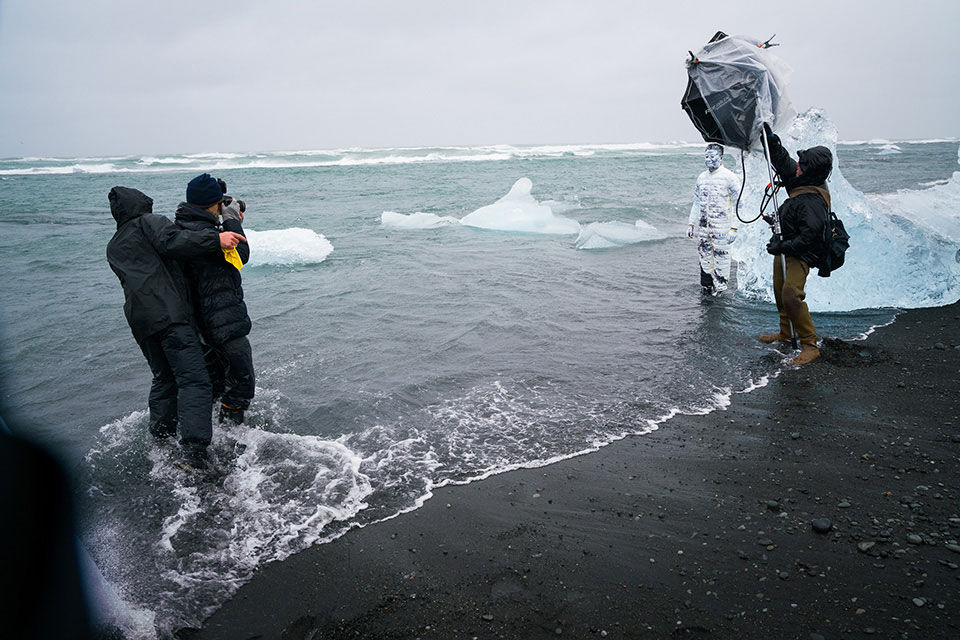

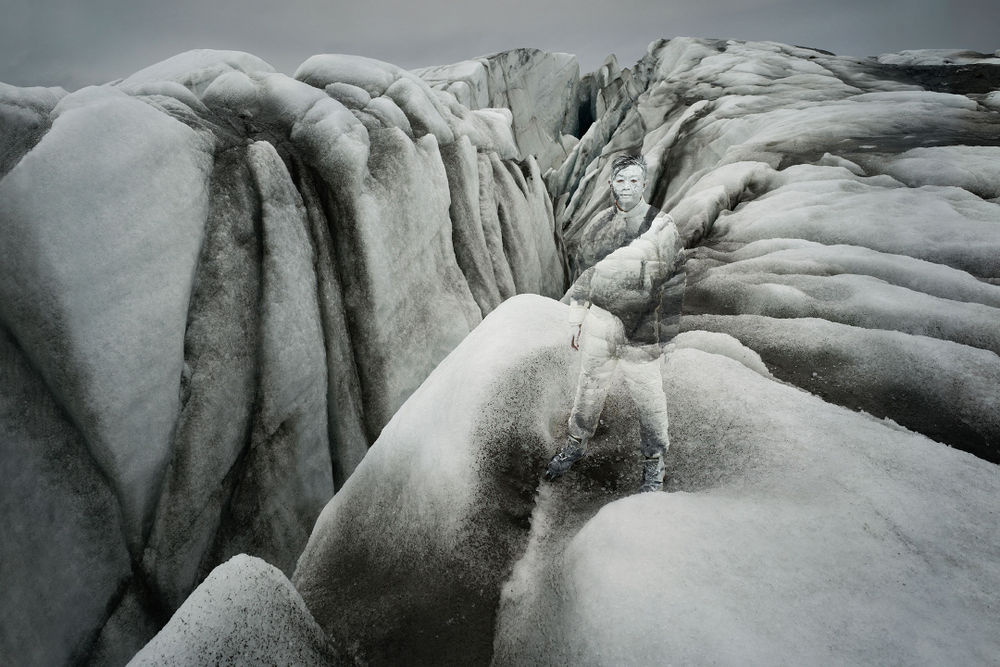
This shoot allowed him, and the brands he works with to go one step further in the reflection about the relationship between communities and their environments. It is a way to make a political point and make viewers think about living in harmony with nature and not destroying it as our societies currently do. With global warming and the climate emergency, Moncler has given artists a platform to express themselves while tastefully elevating their image.
Instead of the flashy and tacky brand identity that their products can exude, the Moncler Genius products and campaign wants to be more challenging by offering a global reflection. Therefore, their marketing is not targeted to a defined audience, reducing the commercial nature of this campaign, while discreetly asserting their credibility as a high luxury player able to take part in cultural debates. This collaboration shows how artists can participate in rebranding or branding luxury products to be part of the cultural and social conversation.
 mabou
mabou 
Leave a comment