
2021 gave the fashion world a fair amount of unconventional collaborations, Gucci x Balenciaga and Fendi x Versace to cite the most commercial, logo-obsessed ones. These collaborations mixed the references and design identities of the respective brands, extremely literally. Yet, they managed to create some hype because of the exclusivity of these collaborations in and of themselves and their potential high resale power for this very reason. In an age of logo-mania, it is no surprise these brands decided to go in this direction, they know what sells and what their audience is sensitive to, yet, one can argue it is at the expense of inspirational creativity. At the end of the day, nothing new is added to the table but surprising hybrid pieces speaking to what one expects from each brand, without reinventing the wheel.
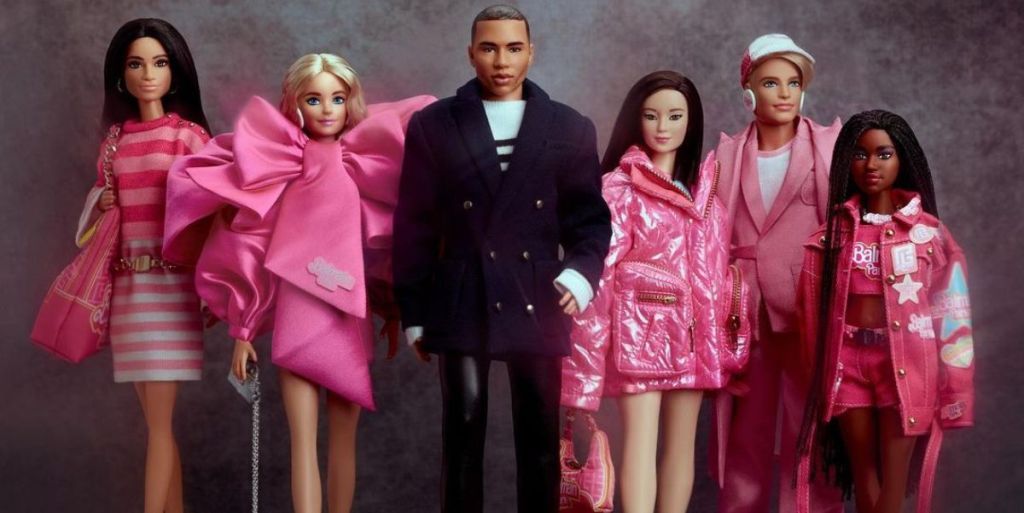
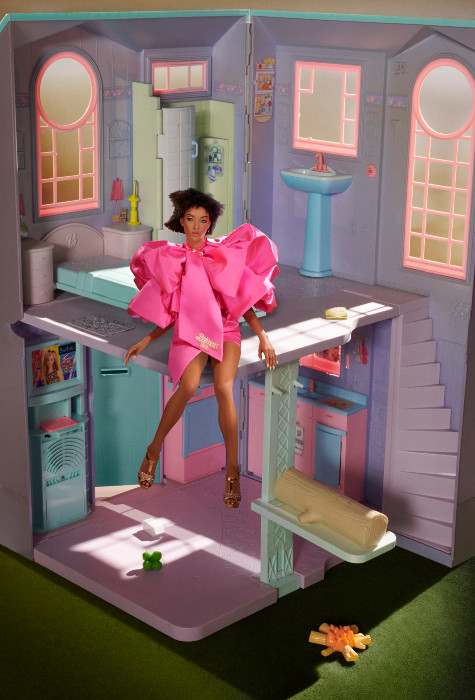
Yet, the first high profile fashion collaboration of 2022 not only did watch and learn, it tried to add something to the cultural and societal conversation. On January 13th, Balmain and Barbie revealed their collaboration featuring a genderless clothing line and 3 NFTs that were auctionned on MintNFT. Truth be told, design-wise, nothing really interesting was added to the Balmain closet. Olivier Rousteing only Barbie-fied his most iconic pieces and reused the Barbie logo and pink overload all over the pieces of the collection. Still, pieces are overall more timeless than the 2015 Moschino collaboration that was a literal interpretation of the Barbie closet where the focus was the doll more than the wearability of the pieces. Here, the approach is the reverse, and the silhouettes that make Balmain’s success are front and center.

Therefore, inventive design is certainly not the point of this collaboration. Two elements, yet, make this collaboration exponentially more interesting than a conspicuous display of logos. The NFTs auction, of course, but also the genderlessness of most pieces. Indeed, Olivier Rousteing wanted to take revenge for the little boy he was, shamed for playing with Barbie dolls deemed a “girl toy”. It is a bold take considering Barbie might be among the most potent incarnations of the gender norms imposed on women and children. They used to perpetuate a uniform standard of beauty and perform activities that were traditionally attributed to women. Barbie has always been a mirror of its time and as expectations about women’s roles, duties and looks evolved, so did the doll. Now, Barbies perform any type of works and activities and Black, Asian, as well as body-inclusive dolls are sold since the middle of the past decade. She has been an astronaut, president and CEO,


This, yet, still confines the doll within the feminine sphere, to the same extent that fashion is still considered a women’s field more than a men’s one. Women have more choice, spend more time and money on beauty and clothes, according to patriarchal standards. And boys do not traditionally play with dolls. Recently, there has been a shift in education practices among millennial parents who try to educate their kids with less gender expectations, encouraging sensitivity and feelings in boys and strength and drive in girls, where and when they exhibit these traits. A shift has also started to take place on the runway concerning the gender divide. Openly-gay, or feminine men have always found refuge in fashion and its obsession for frivolity, testifying of the gender discrimination that fashion, as a mirror of society, reflects and entertains.
Items of clothing are among the most powerful gender identifiers. One has expectations of the way men and women should dress in order to contribute to be part of society. It is part of our engrained set of references and that is why it is so challenging and off putting to let it go. Yet, there have always been women dressing as men and men dressing as women, and indeed, they have always been stigmatized and confined to the private sphere. Olivier Rousteing, therefore, not only plays on Barbie being a powerful fashion reference and the epitome of women, he also aims at breaking gender boundaries by establishing it as a reference for men too. He targets a powerful icon addressed to kids, making its point heard by older generations used to gender standards. Toys are powerful references to children and that is why creating more diverse and inclusive dolls is critical to shifting expectations at the root. Pieces are not “androgynous”, they strongly reference traditonnally feminine colors, cut and accessories, Balmain’s point is that one needs to forget about the division of gender references that weights on men too.



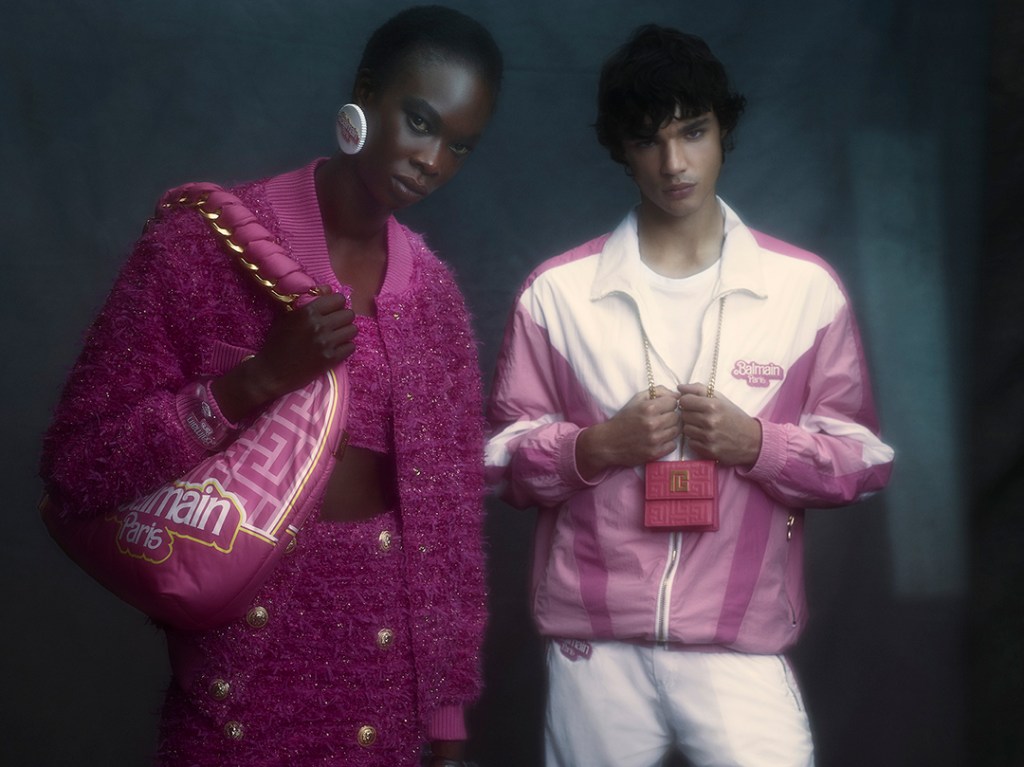
Indeed, the establishment of the “man” as the gold standard within the framework of patriarchy, implies that women have been dressing publicly as men as a political argument much before dressing as women also became centerstage political for genderfluid people. In a society where women are overlooked and considered secondary, there is no point in trying to look like one and be proud of displaying it. This collection, therefore, not only tells young boys and men that they should dress as women if they please to and should not be afraid of it, it is telling women that their clothes are as much of a display of stature and power as any other men’s clothes, and that, indeed women and men are equal.
It aims at shifting the expectations assigned to clothing. It is a slow and tedious process both structurally and socially, and if some brands like Jacquemus have moved to presenting their men’s and women’s wear collection at the same time, most brands still have a men’s and women’s dichotomy. Men are not expected to be seen in the women’s department (except shopping for their significant other), nor are women expected in the men’s department, even if that is increasingly less stigmatized. This collection therefore, is a breakthrough step in the right direction that is significant both for fashion – probably spurring more creativity – and society at large. In Rousteing’s words “ This collection also rejects any arbitrary gender limitations— this is an almost 100% unisex collection. For, just as today’s Barbie makes clear, there’s nothing holding us back anymore!”

 mabou
mabou 
Leave a comment