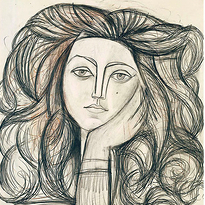

The exhibition celebrating the 100 years of the Vogue Paris magazine, arguably the most famous fashion magazine in the world, is an opportunity to look at some of the ties between museal institutions and the fashion industry. Vogue Paris – rebranded Vogue France since the global restructuring of the fashion magazine putting Anna Wintour at the helm of the global editorial content of Conde Nast, with Eugenie Trochu under her supervision for Vogue’s French publication – is the oldest French fashion magazine still published.

As defined in the exhibition notes the magazine has thrived to be “a mirror of its time and a champion of creativity, Vogue Paris has always been a major player in fashion, reflecting or challenging notions of taste, beauty and elegance” over the past century. Vogue Paris, both the product of being located in the capital of fashion and the maker of this central location of Paris on the fashion scene, has been able to establish the exceptionality and distinct style of the title by consistently distancing itself from its American parent over the twentieth century. As a testimony of the consistency of its identity, the exhibition focuses on the editors-in-chief of the magazines. Over its 100 years history, the magazine only had 7 editors-in-chief. It shows their relationships with designers – prominently Yves Saint Laurent and Karl Lagarfeld -, photographers – from Helmut Newton to Mario Testino -, models, actresses and illustrators in a chronological fashion. It testifies of the publication’s ability to renew its editorial content to remain relevant to an evolving audience as the content got better in quality both in terms of the subjects treated, the way they were treated, and the visual assets that made the magazine what it is today.
This, however, should not erase the fact that Vogue is known for dictating a conservative vision of beauty, a trend that is only recently changing. Indeed, the two women that were featured the largest number of times on Vogue Paris’ cover epitomise the standard of French beauty, but also the fact that these standards have barely changed in a society where diversity has increasingly been given visibility in other media. Catherine Deneuve and Kate Moss are, and were, both tall, blonde, white and skinny. It is interesting to note, nevertheless, that the cover of the first edition of the rebranded Vogue France featured Aya Nakamura, the most successful black woman artist in France, expanding the traditional beauty canons of the magazine.

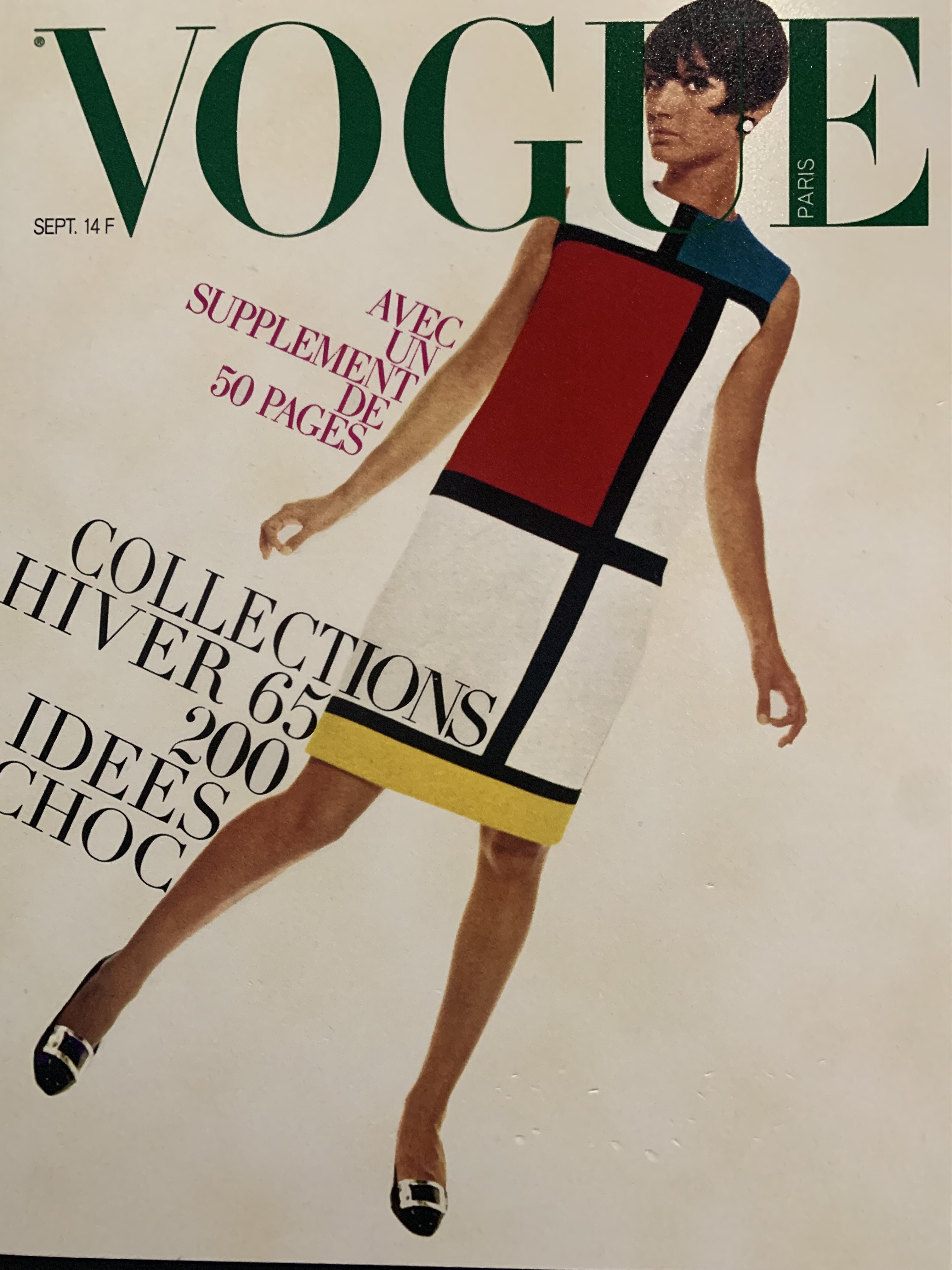

Now, why is it happening at the Palais Galliera? First and foremost because it is the fashion museum of the city of Paris. But one also needs to look at the institutional ties between the magazine and the museum to understand the status of the magazine in the Parisian cultural landscape. Traditionally, because of the nature of the French museums as public institutions funded by the state and considering art as a public good belonging to all the citizens, private patronage is not as widespread in France as in the United States where aisles and galleries in the largest museums are named after generous donors and patrons. Yet, a large swath of these public collections are based on gifts and bequests from private patrons and to corporations, in France too. This corporate involvement is all the more special for a museum of fashion exhibiting items that are first and foremost commercial. Indeed, the primary function of fashion is not to be exhibited in museums but to be worned and lived in, setting them apart from fine arts and other forms of arts.
Yet, because of its highly decorative and aesthetic nature, fashion acquired a special status within the arts and crafts and has been, in many instances, established at the rank of a legitimate art form. It is an additional opportunity for fashion houses to be art patrons and participate directly in establishing the cultural standards of the fashion industry. In this process, Vogue has a special position as a tastemaker in the street, but also in institutions through its partnership with the museum. Indeed, since 2014, the museum has hosted the Vogue Paris Foundation Gala, directly copied from the Met Costume Institute Gala, or Met Bal, also sponsored by Conde Nast’s star publication. It is therefore no surprise that the magazine has been instrumental in creating ties between the Palais Galliera and the most important fashion houses. Since 2014, Vogue Paris has raised over $590,000 and donated more than 120 pieces of clothing and accessories to the museum’s collection, which includes garments from the18th century onward, as well as photographs and other fashion-related items.

Guy Bourdin, “Shoes: mat or shiny”, Karl Lagerfeld for Charles Jourdan, Vogue Paris, February 1967 
Guy Bourdin, “Viewpoint on a new beauty”, Christian Dior make-up. Vogue Paris, March 1972 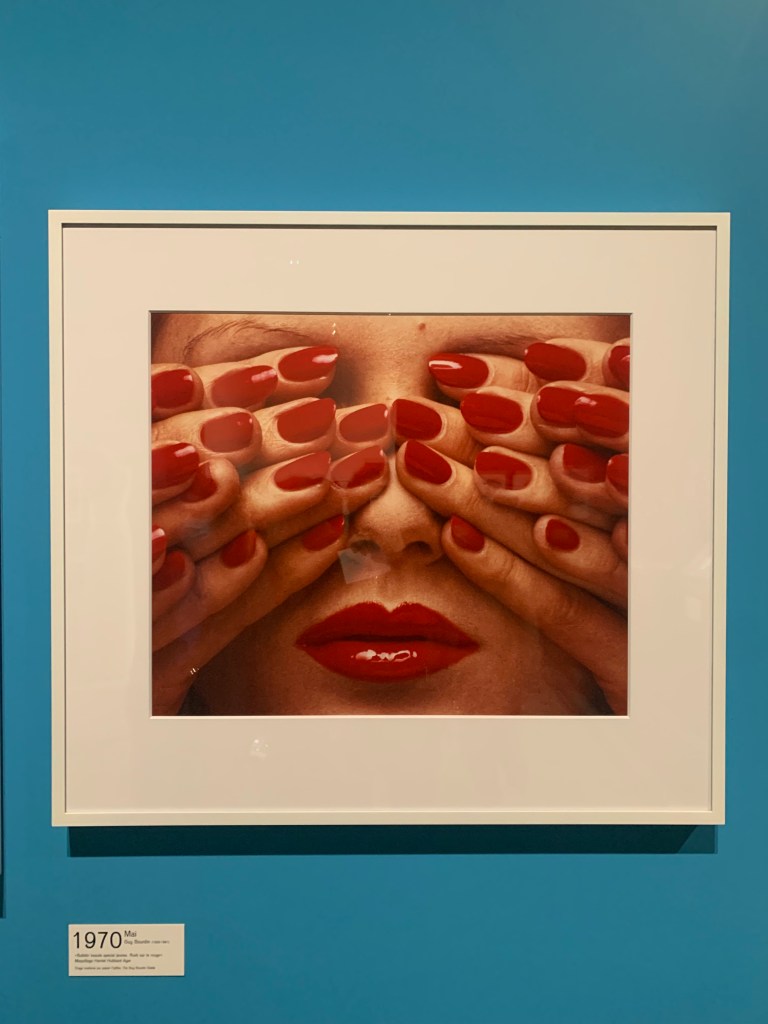
Guy Bourdin, “Beauty bulletin teen special. Red rush.”, make-up by Harriet Hubbard Ayer. Vogue Paris, May 1970 
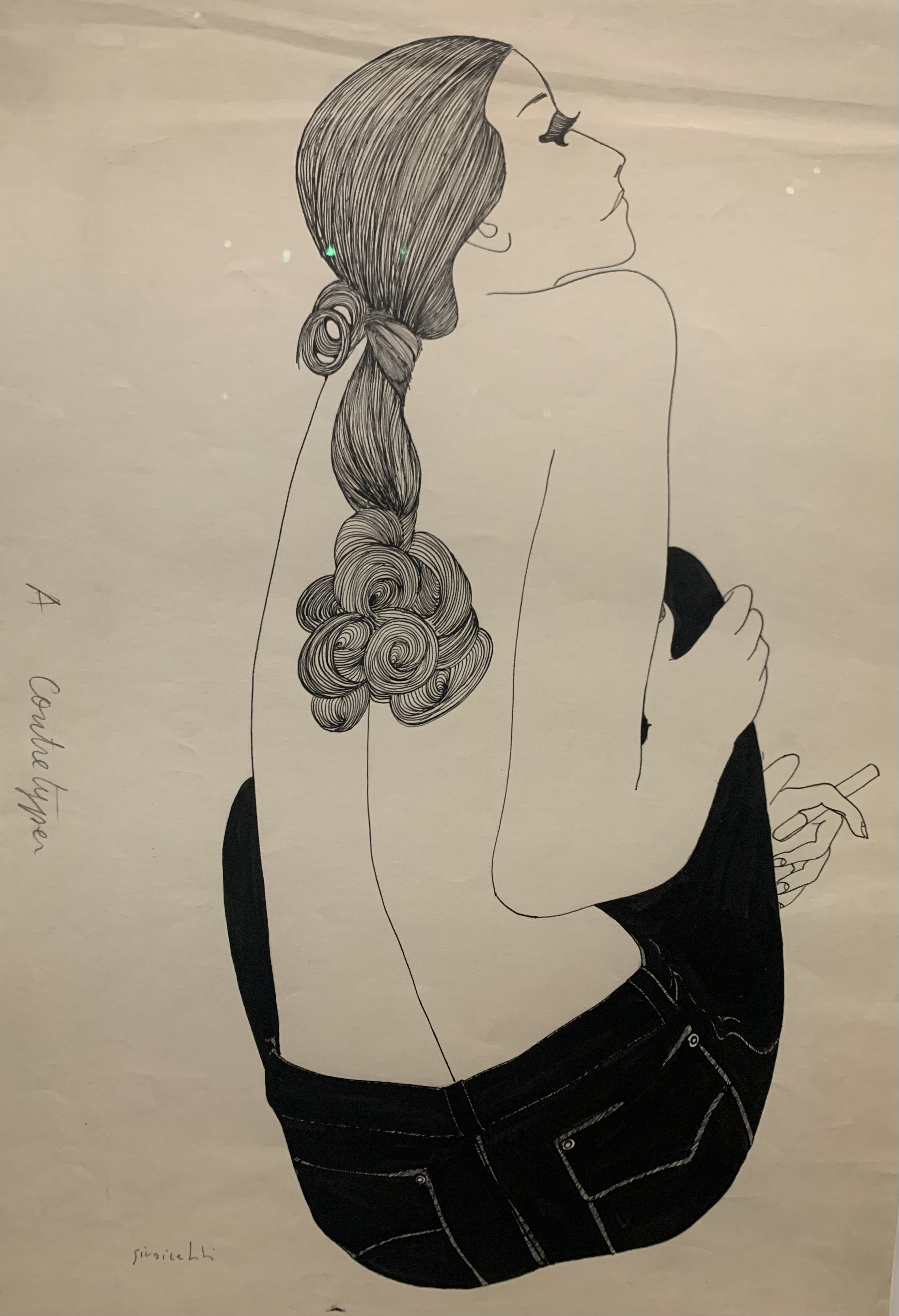
Jean-Philippe Delhomme, Vogue Paris, 1997
Therefore, the magazine directly participates in shaping the collections. It is, in many aspects, a co-curator. Because indeed, that is what fashion magazines are. Vogue, by selecting which pieces and brands make it into their editorials, validate the designers work, in very much the same way cultural institutions and museums validate artists. The length and breadth of the relationship between the magazine and the museum legitimates the retrospective taking place within the Palais’ galleries, but, quite interestingly because of their similar nature, it is hard to make sense of what this exhibition adds to the fashion table. Indeed, a museum is traditionally understood as a place of display, with curators working with primary sources and references, they perform a display and tell a story to get a message across about an artist, a movement, a time period. And, in very much the same fashion, Vogue curates and selects from the primary sources that designers’ collections are, they perform a display working with photographers, models, stylists… The point is, this exhibition feels like an inception, where curators curated curators’ work, maybe too literally, putting into question the efficiency of the exhibition to make its point seen. It is an interesting retrospective, well documented and well put together, but maybe the object and subject matter are too similar for any interesting additional layer to come through.
 mabou
mabou 
Leave a comment