
When Minimalist fashion meets Conceptual Art.
As the fashion community impatiently awaits the upcoming January 2022 updates about the new luxury brand to be launched by the acclaimed former Céline designer Phoebe Philo, this post delves into the SS17 Celine collection featuring artist Yves Klein’s work. The British designer, known for her minimalist inspiration and evasion from the logomania of the past ten year decided to reference the artist’s work in a literal fashion, making art fashionable and fashion artistic. The dress in question featured a detail of the 1960 work Anthropometrie de l’epoque bleue (ant 82), part of the Anthropometries series and belonging to the Centre Pompidou’s collection.
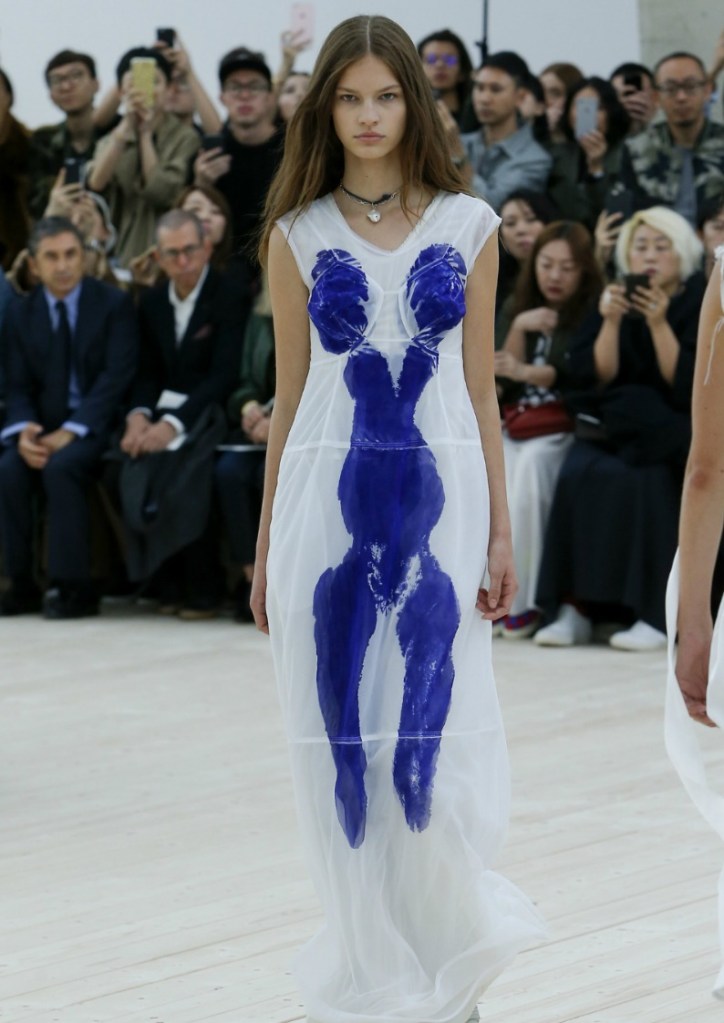
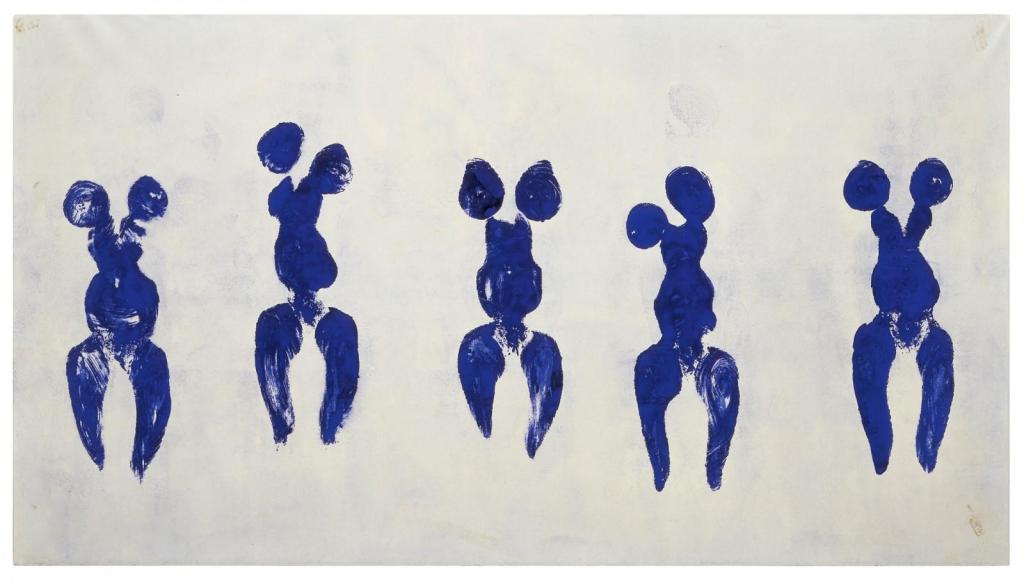
The show notes referenced American artist Dan Graham: “I want to show that our bodies are bound to the world whether we like it or not.” By choosing these words, Phoebe Philo, who evolves in a world centered around the physicality of the body, inscribes her practice and fashion in general into the wider artistic sphere. She is not the only designer who not only got inspired by the artist’s work but literally reproduced it onto the fabric, as her work was a clear reference to the Yves Saint Laurent Mondrian dress.
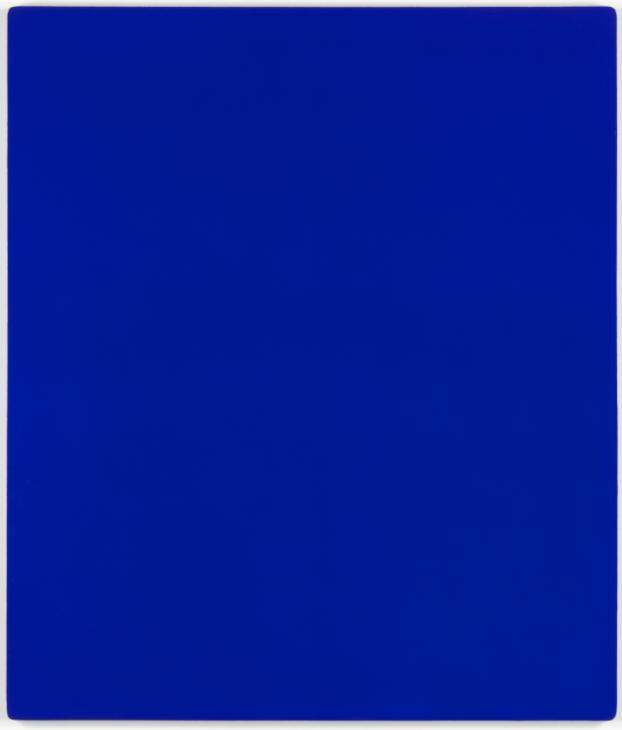
Beyond the literal reference to the body imprinted on the canvas, and, in Celine’s instance, a dress, the focus on the physicality of the craft was also at the center of Yves Klein’s process of creation. More than the mere representation of the bodies, Klein was interested in the performance of the creation of the art work. Women were treated as “human paintbrushes” in a performative show where they were covered in his IKB (International Klein Blue) and given directions as to how to position themselves on the canvas.
This ceremony took place in front of a perplexed audience. It the case of Anthropometrie de l’epoque bleue, it was preceded by Klein’s Monotone Symphony, (one note followed by silence inspired by John Cage’s 4’33 from 1952) and held in front of a large audience at the Galerie Nationale d’Art Contemporain. This practice inscribed Klein’s work in the happening movement, at the forefront of performance art, that emerged in the United States in the 1960s.
If Yves Klein is mainly famous for his International Klein Blue, he was always interested in classical sculpture and the representation of the body. His Anthropometries series contributed to the artistic movements breaking the boundaries between sculpture and painting, led by artists like Robert Rauschenberg. He crafted reproductions of famous artworks like the Venus d’Alexandrie and the Victoire de Samothrace entirely covered in his signature blue hue, pushing the monochrome in the three dimensional field.
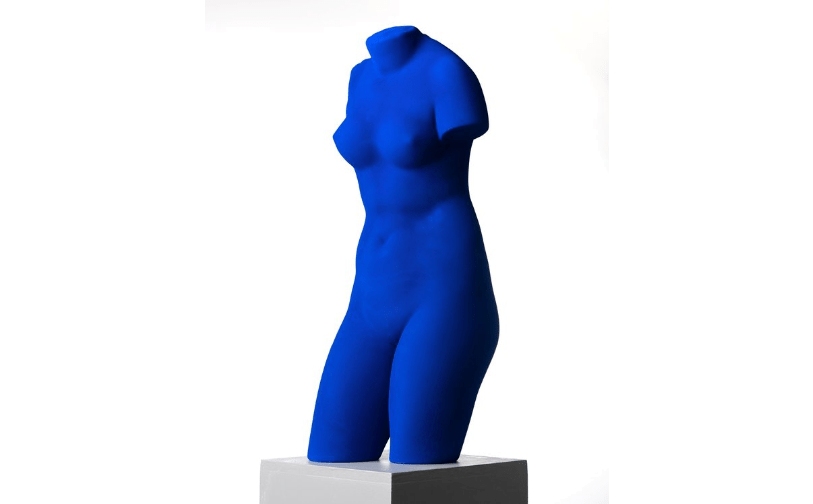
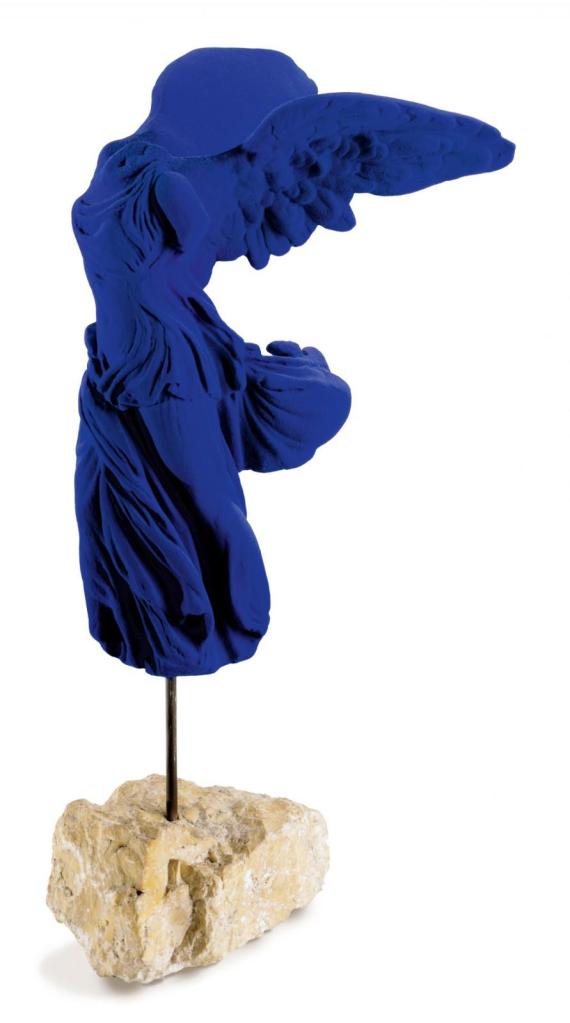
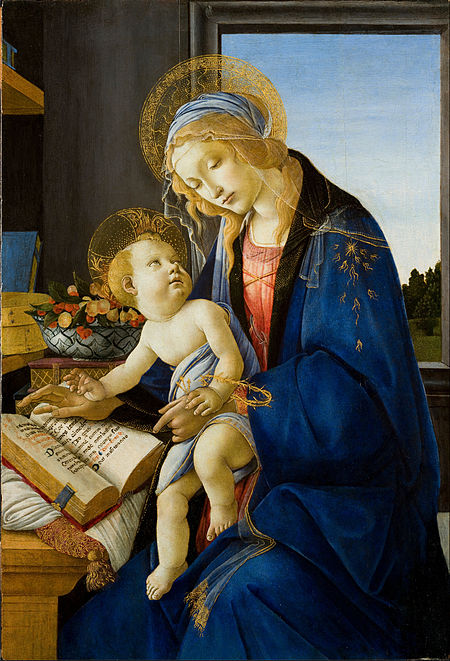
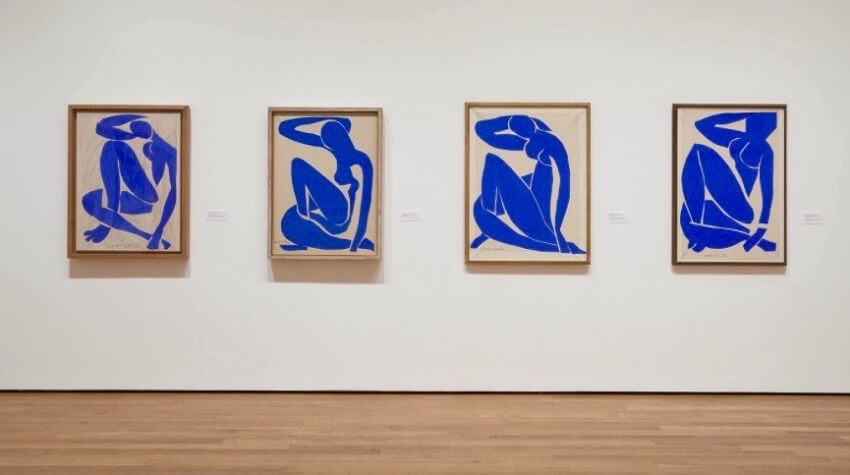
In fact, classical art and references were essential to Klein’s practice as his blue references the sky and nature, but also the traditional shade used to depict the mantle of the Virgin Mary in religious iconography of the Renaissance period. It also bears obvious similarity to Matisse’s 1952 Nu Bleu collage. His Anthropometries works also contributed to questioning the boundaries between figurative and abstract painting. Jackson Pollock’s Abstract Expressionism paintings embodied the importance of the process of making the artwork as the artist’s hand was the center, leaving the movement’s imprints to be the subject of the painting.
Klein goes one step further in as much as the making of the painting is a show in itself, but the imprints of the bodies are not only abstract references to the process but figurative elements in and of themselves, that have furthermore always been a privileged subject of art history. He also considered his blue to have a quality akin to pure space, imbued with immaterial value beyond the physical world. This modern medium treating a classical subject allows him to speak to the unconscious of the viewer by comparing himself to the Old Masters and Avant-garde at the same time, displaying potent art-historical self-awareness.
By choosing to print the Anthropometries works on her clothing, Phoebe Philo proposes a multidimensional inception of the body and, at the same time, of art forms. Her clothing are legitimate artworks but their main function is performative as they dress a moving body. She contributes in establishing fashion as a proper art form part of the wider cultural conversation referencing not only artists but movements. A fashion show is a modern performance as much as an artistic happening, and her citing an artist associated with Conceptual Art to present the collection inscribes her creation in the current zeitgeist.
 mabou
mabou 
Leave a comment