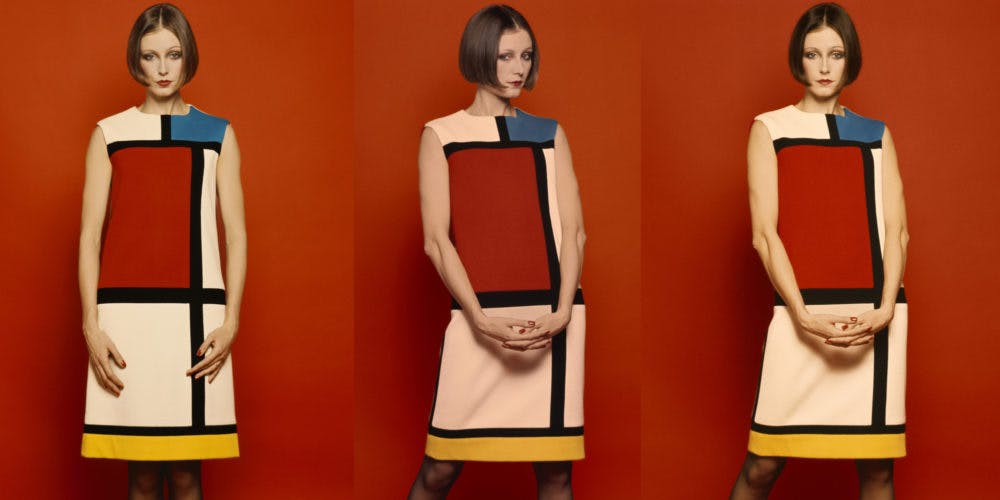
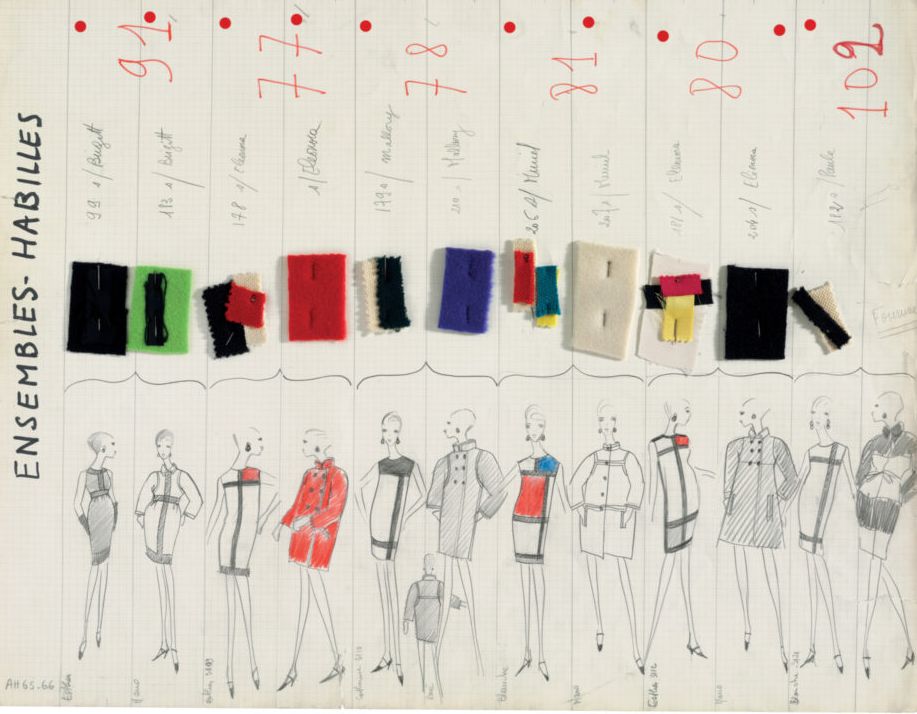
Mondrian dress by Yves Saint Laurent, 1965
A look at the premises of the intersection of fashion and art.
Unquestionably one of the most famous iterations of collaborations between art and fashion, the Mondrian dresses of 1965 were an instant commercial success that is still being discussed today. At a time where art and fashion were still distinct categories, even if designers such as Schiaparelli were investigating the potentiality of the intersection of art and fashion, and when Couture was a classic, rigorously codified craft, Saint Laurent proposed an incredibly modern garment. The Mondrian dress is a simple, apparently shapeless item of clothing, with straight construction lines echoing the paintings of Mondrian, and a simple color palette of primary colors, black and white.
It is above the knee, which was still new for the time (Mary Quant invented the miniskirt in 1962), and the focus was on remaining as loyal as possible to the artistic inspiration, rather than on complimenting women’s bodies. Representing the way Saint Laurent has changed his vision on Couture, the dress moves from being an architectural sculpture restraining women to being a practical dynamic item of clothing in which modern women could live and not only “be seen” and controlled. Yet, the artistic reference allows him to remain above pret-a-porter design and retain a cultural aura.

Indeed, Saint Laurent, who started his career working with Christian Dior, had a very classical take on Couture, with conservative lines, tailored dresses and a siloed garde-de-robe for every distinct occasion. Particularly instrumental in letting him explore his creativity was his discovery of Morocco and the saturated color of the Mediterranean sea that reminded him of his childhood in Oran. Created at the premises of this creative revolution, the Mondrian dress is one of the first forays of the designer outside the strict boundaries of classical couture.
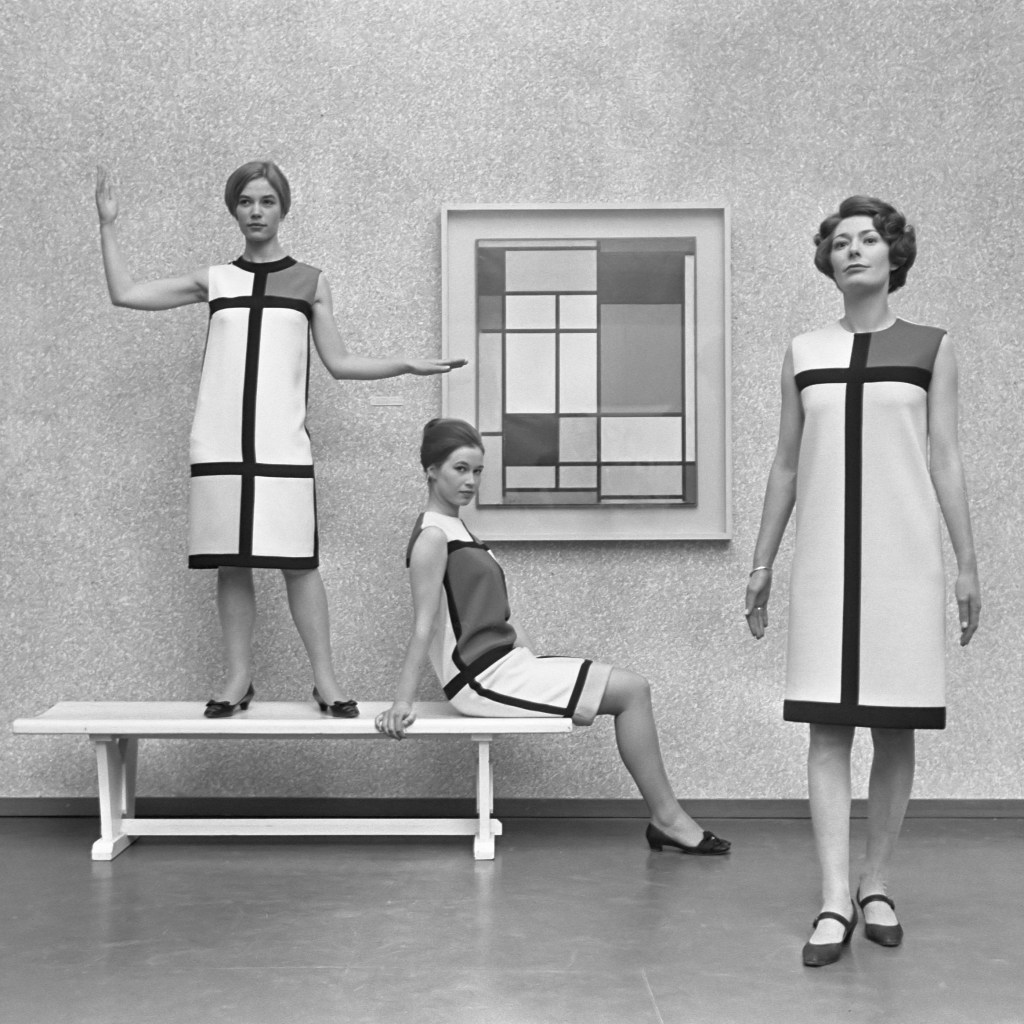
The Dutch artist Piet Mondrian is one of the most important modern artists of the twentieth century. Trained as a classical painter, he evolved to produce only abstract neoplastic paintings with an increasingly geometric language, which he is now globally known for. Mondrian was looking for higher values of aesthetic beyond movements and styles, similar to what Saint Laurent was doing building his Maison and reputation. In 1914, he said “Art is higher than reality and has no direct relation to reality”, that is why he leaned into abstraction aiming at universal beauty.
According to the design historian Stephen Bayley, Mondrian has become totemic beyond the art world and if his impact on future artistic movements like abstract expressionism, color field painting, and minimalism cannot be underestimated, his philosophy impacted modern creation at large. Considering for example one trope of minimalist art as the willingness to break the boundaries between painting and sculpture (with for example the “White Painting” of Robert Rauschenberg in 1951), one can see that this willingness to break the traditional boundaries of medium and genres can be applied to fashion. Especially at a time where haute couture and pret-a-porter are becoming equally important and the boundaries between what is acceptable or not are breaking down.
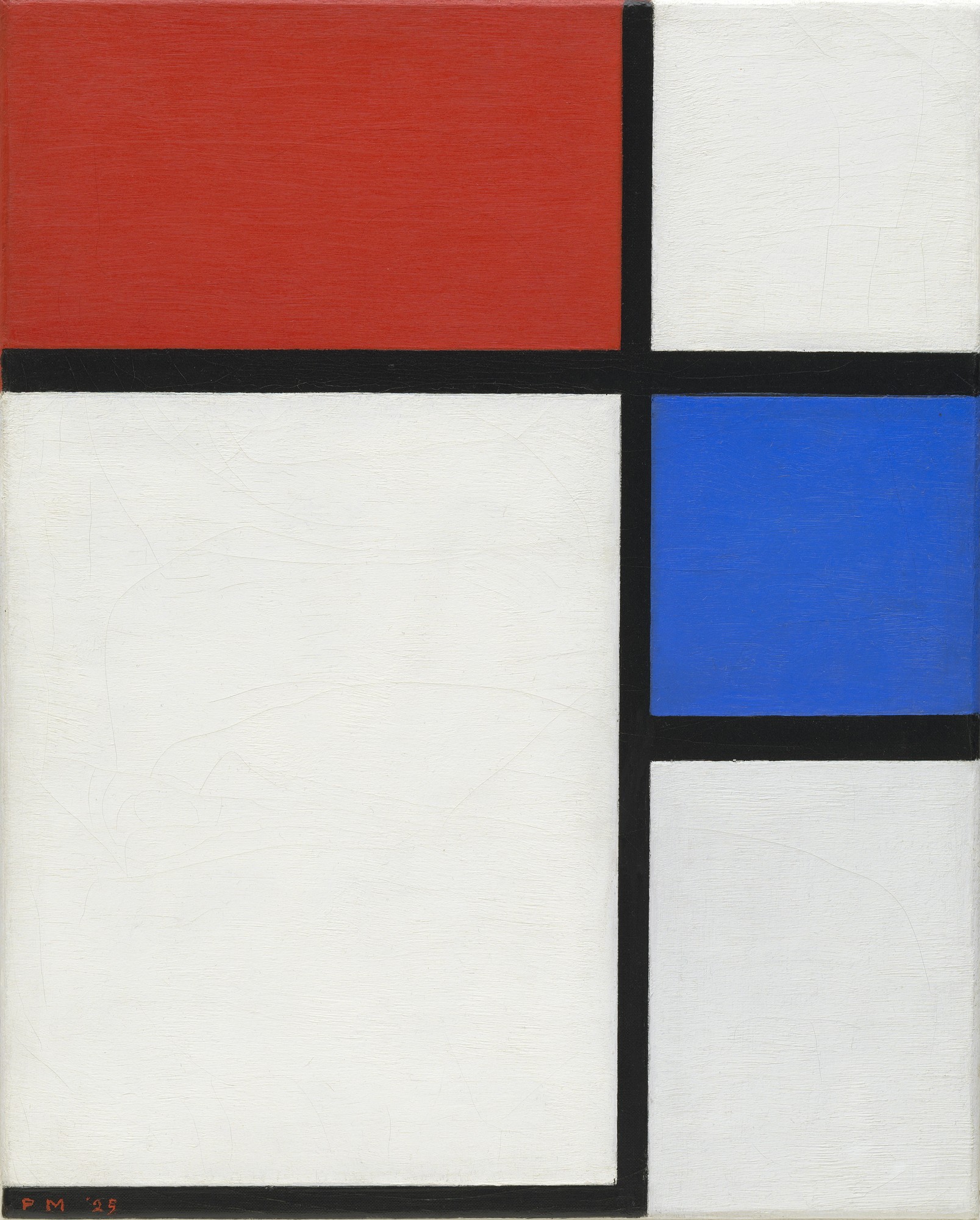

The final result gives Mondrian more relevance as a maker of modernity and cultural icon beyond the canvas and the creative circles of modernism since the Mondrian dress is a hit up to this day. Mondrian is not only a famous painter, he is a famous dress that is known by the fashion industry at large. On the other hand, Yves Saint Laurent is not only a couturier and a fashion designer, he is a legitimate artist who can be compared to modern an icon like Piet Mondrian. This feature increases the legitimacy of both creators and makes them relevant beyond their traditional spheres of influence, fine art for Saint Laurent, fashion for Mondrian, upholding each other.
This cultural longevity and success is certainly one of the reasons why fashion has multiplied artistic collaborations. By buying a Mondrian dress, women effectively bought a piece of history and an item that had an impact on the creative and cultural movements of the time. Arguably, every single collaboration happening nowadays is hoping to have a similar impact. Whether or not it is going to have a long-lasting impact, only time will tell, but what is certain is that it is a powerful marketing tool that boosts sales. Clients feel like being part of something higher than themselves. They are cultural tastemakers, in touch with what resonates with the highest standards of our societies. As always, this speaks to the unconscious and irrational side of human nature, ensuring the longevity of a luxury fashion industry which seems to always improve its marketing techniques to magnify its sales.
 mabou
mabou 
Leave a comment