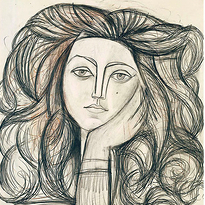

Defining Post-Covid Mannerism.
This year during Paris Fashion week, many brands, if not all, went back to real life shows and an almost normal succession of events from shows to after parties. Most designs expressed a need for a back to reality, just a bit more frivolous, shiny, and bubbly. Yet, Jonathan Anderson, artistic director of the LVMH-owned Spanish label Loewe insisted on acknowledging the extremely curious period humanity is getting out of. “We’ve had the pandemic, and now we have to come out of it differently,” he expressed. “I think it’s a moment of experimentation. If you’re going to reset after this period, you need to allow a moment to birth a new aesthetic. Start again.”
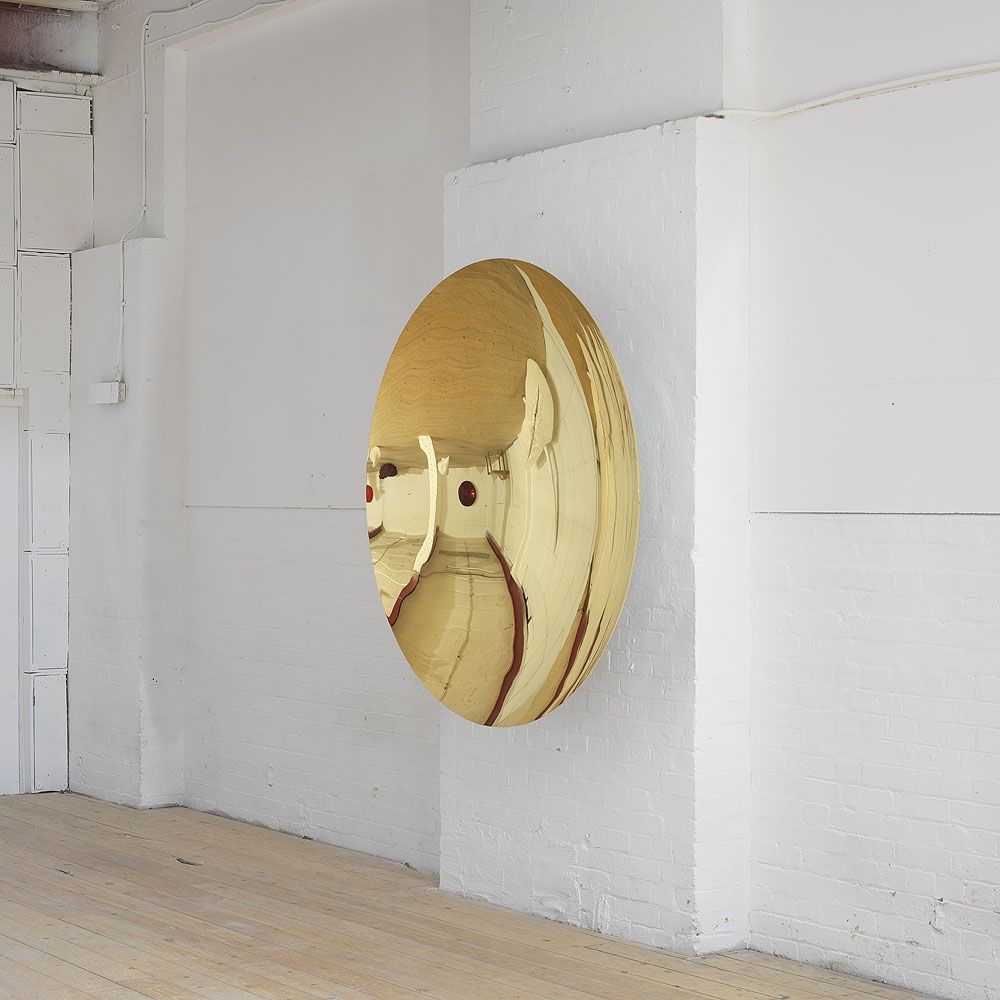
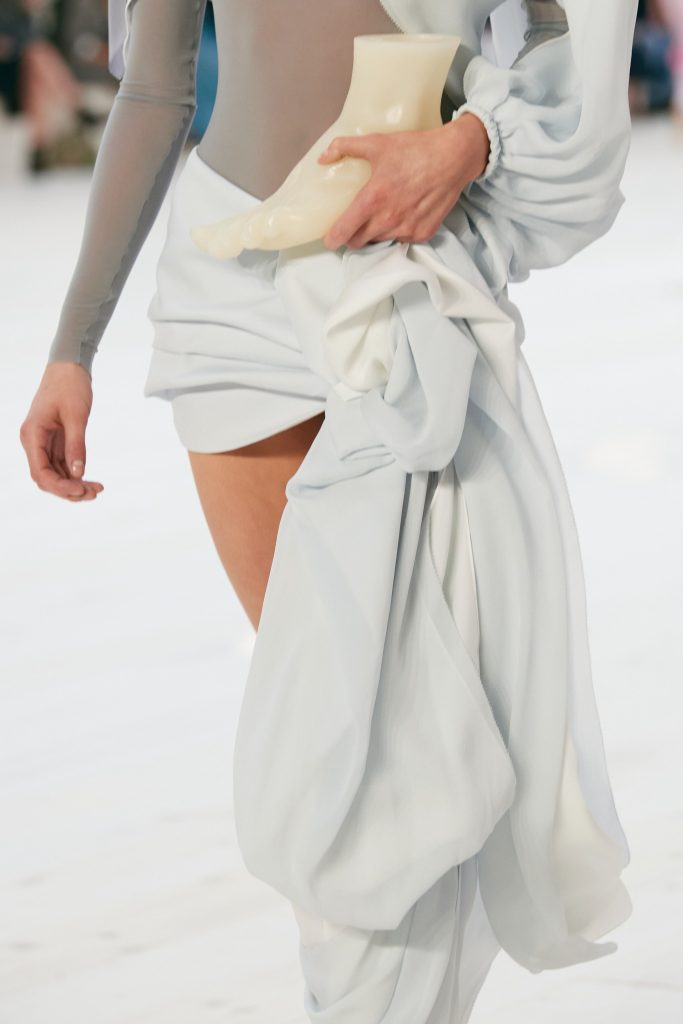
It is also worth mentioning that Anderson has been a patron of the art at least since he took the helm of Loewe in 2013, introducing the Loewe Foundation Craft Prize, and this interest shows in his collections. The SS22 show, inspired from the 15th century Florentine Mannerist artist Pontormo, expresses his willingness to challenge the status quo. What went down the runway were plain fitted dresses with inserted metal shapes exaggerating the hips, shoulders, or waist, in a sculptural fashion (modifying the shape of the body through fashion was one of the most important prongs of Martin Margiela‘s work in the 90s), shiny gilded torsos akin to contemporary art pieces by an artist like Anish Kapoor, and surrealist accessories as ready-mades a la Marcel Duchamp.
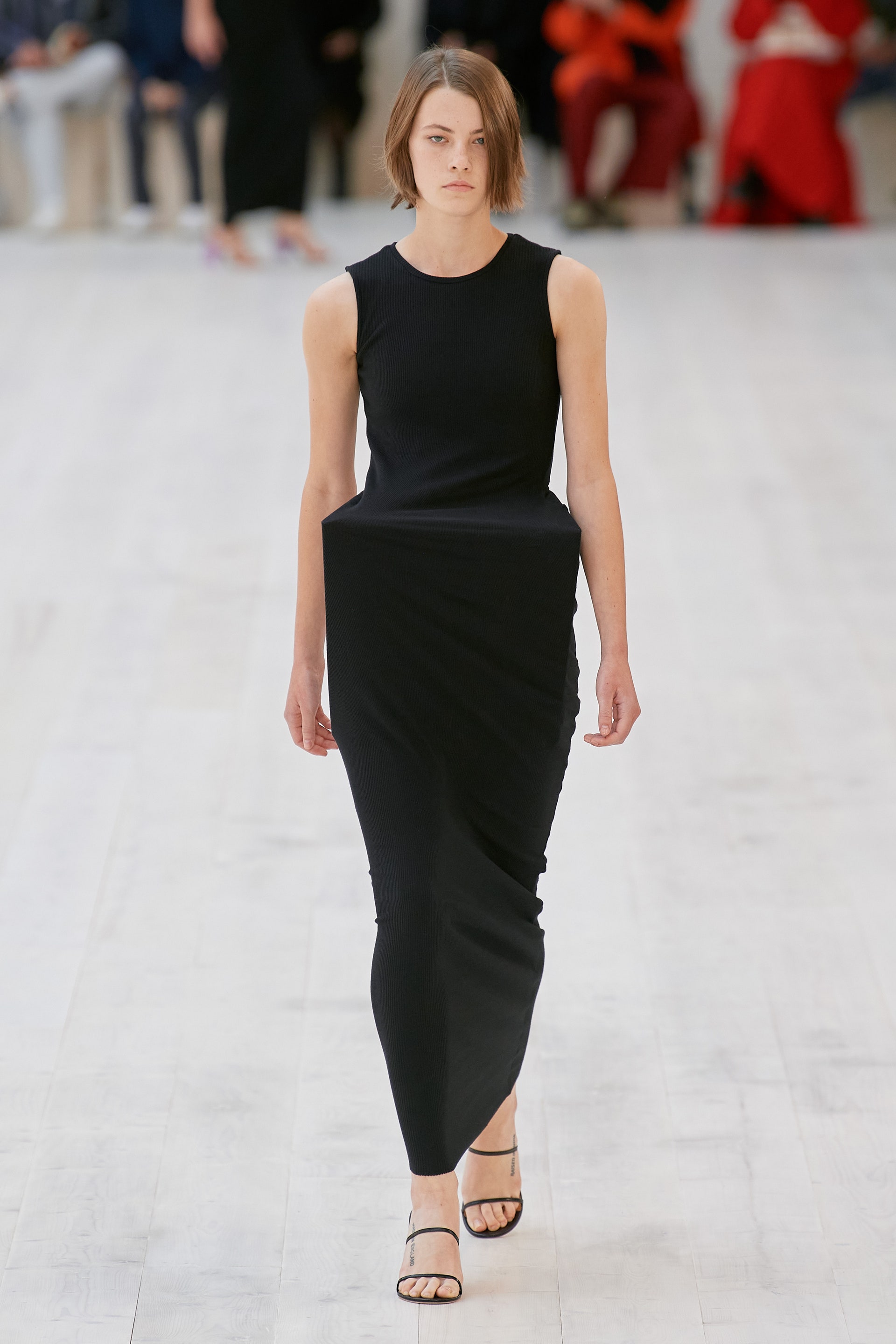

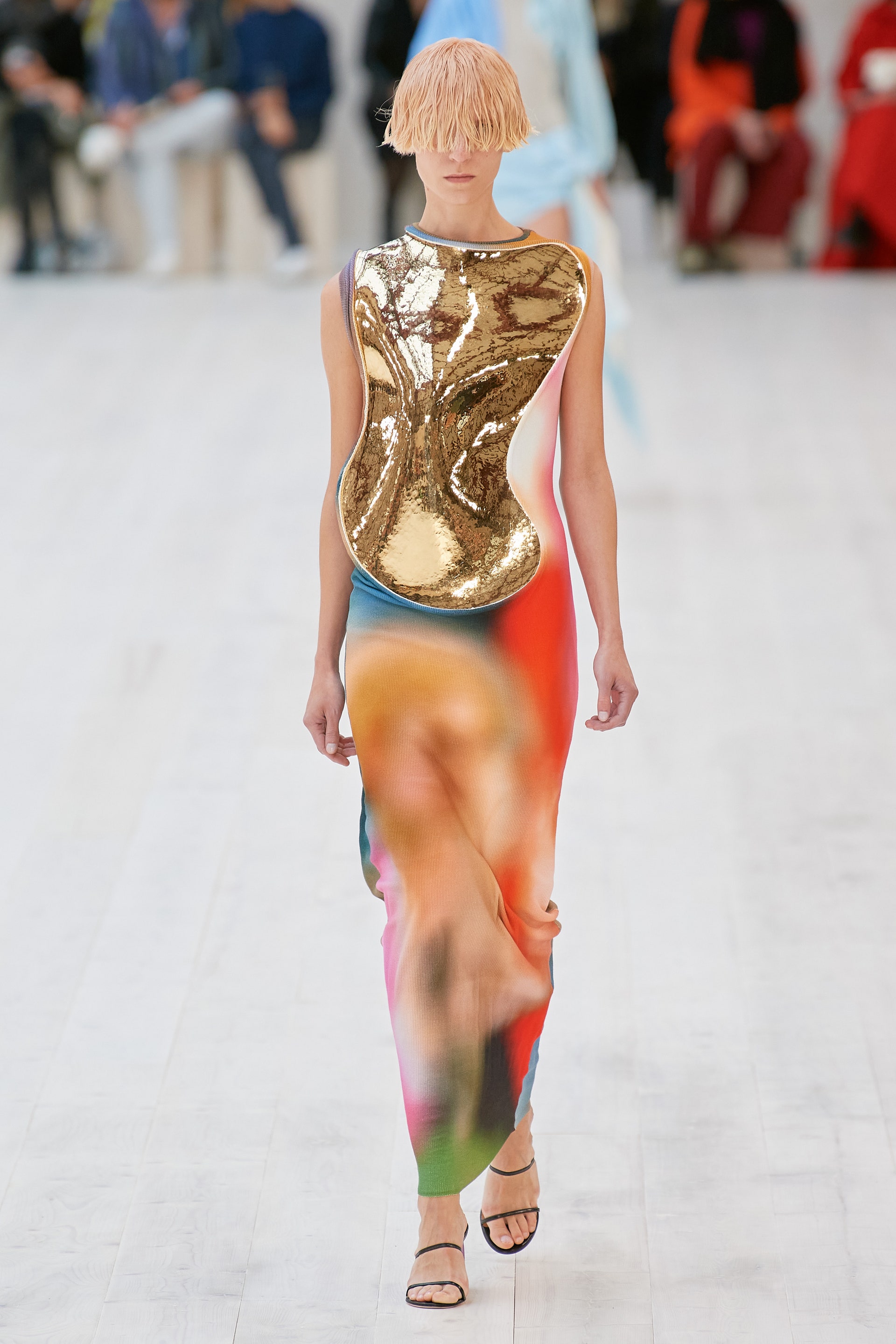

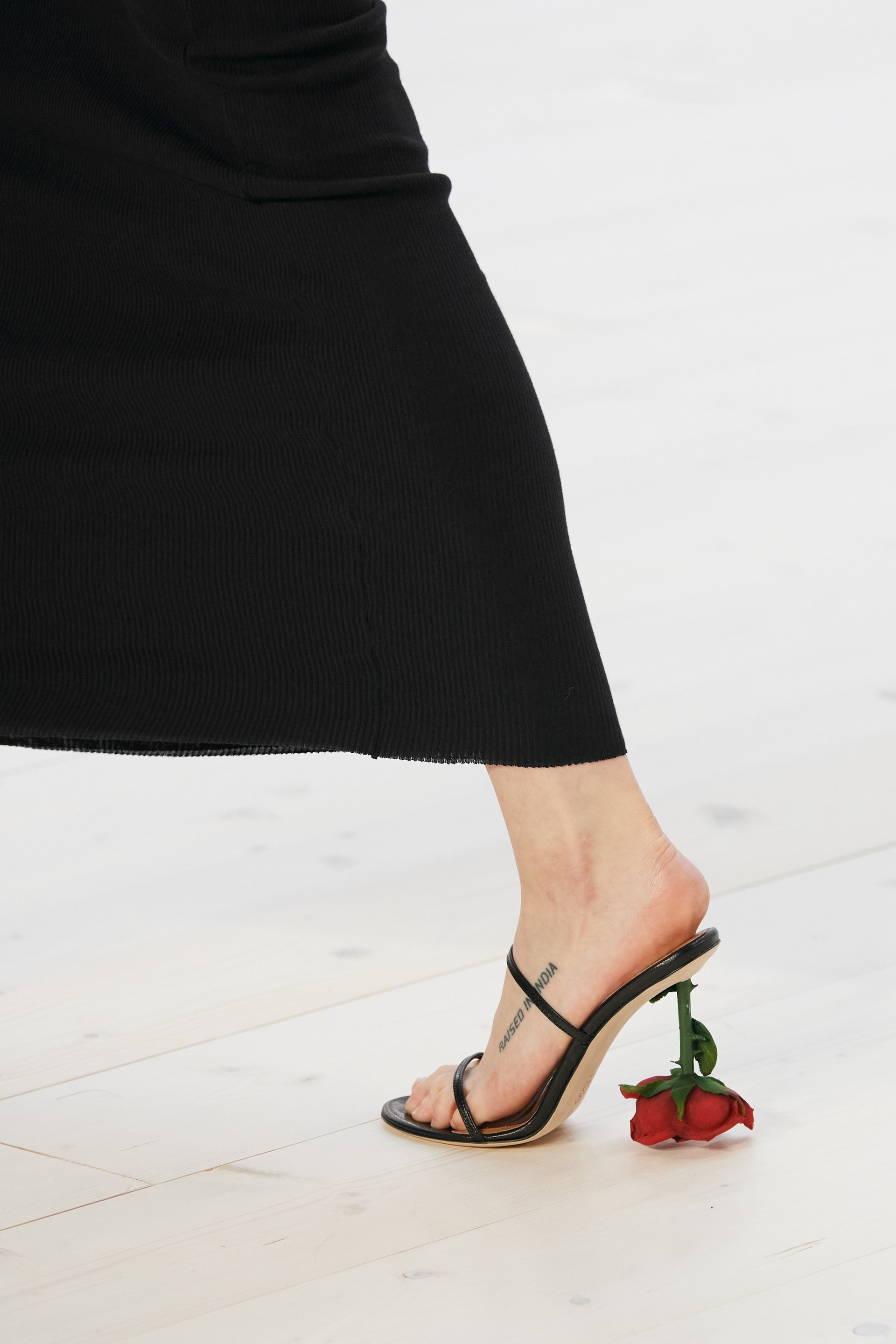
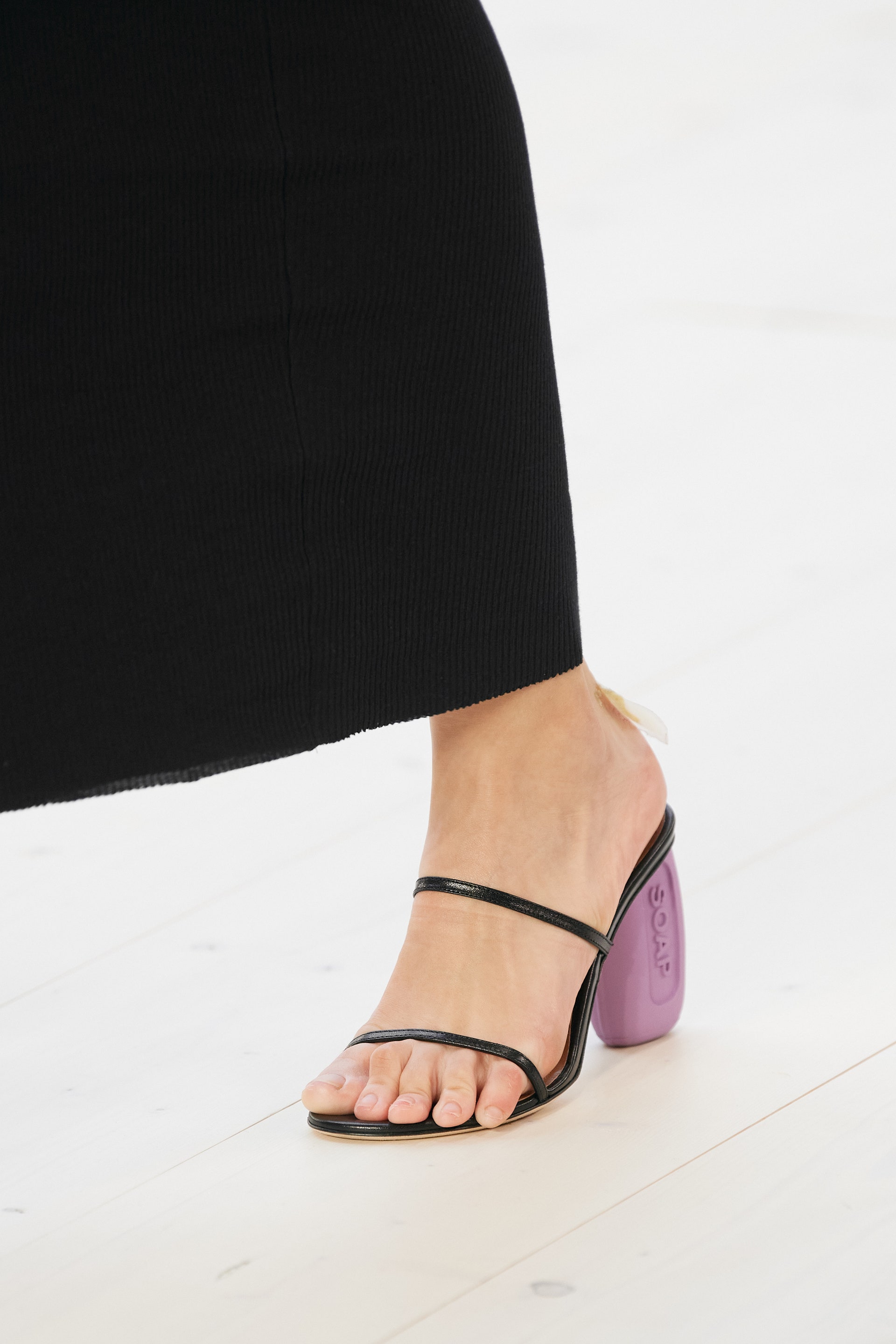

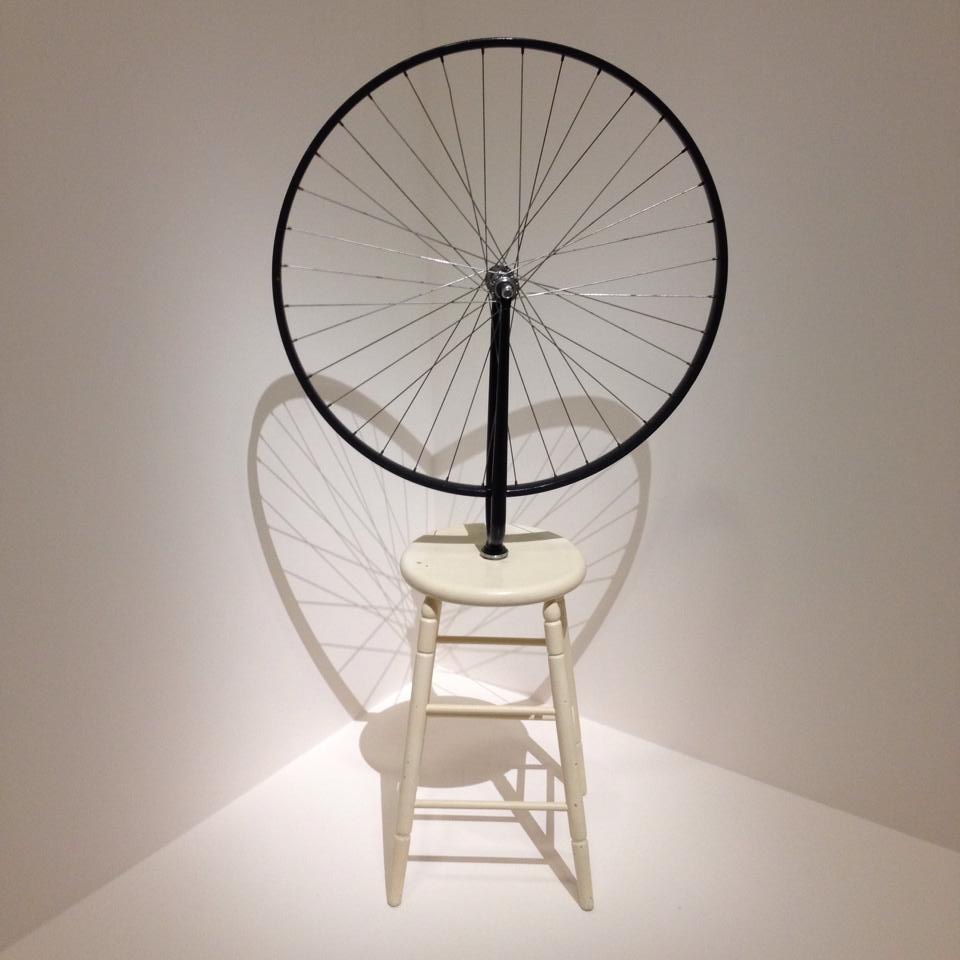
Bold shapes and strong creative statements made from several disparate elements characterized the show that aimed at grasping the shift of the transitional period we are experiencing. It did not totally make sense, but maybe it was also the point. Learning to let go of a sense of control and understanding every aspect of our lives to lean in the uncertain and unstated, the fortuitous and eccentric, for the sake of it. Interestingly, Pontormo also painted after a period of plague in Italy and translated the eccentricities of a society getting out of a period of high uncertainty. Critical in inspiring the Loewe show, the Deposition from the Cross painted between 1925 and 1928 for the Capponi Chapel is a color-loaded, bright, extremely modern composition. The intertwining of the bodies and the density of the scene precludes Baroque paintings and some of the references of a painter like El Greco.
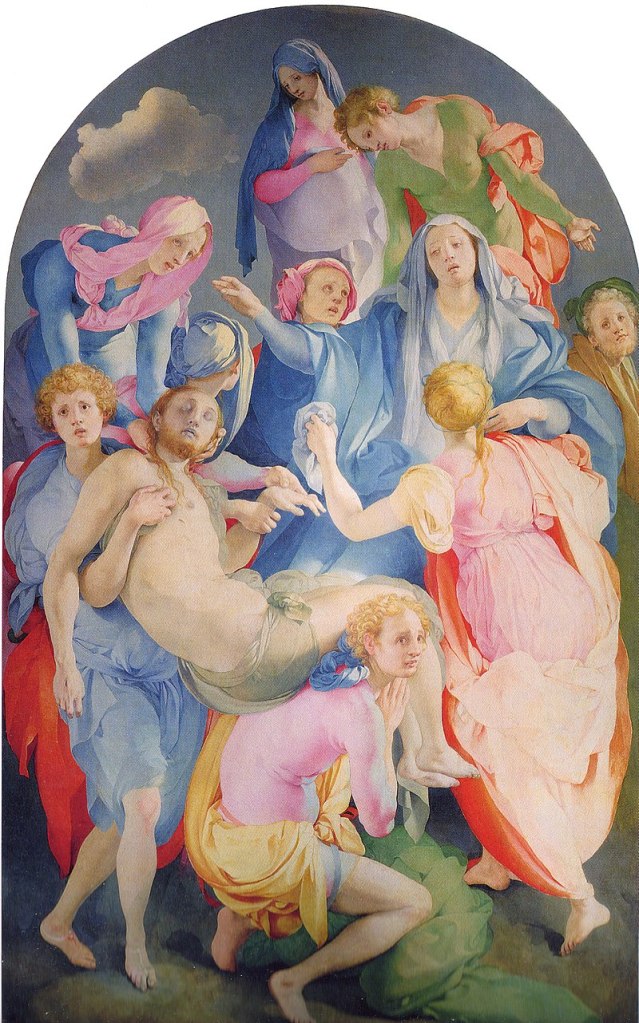
The most obvious pieces referencing Pontormo are probably the cape-like tops and puffy-knees pants that are clear hints to portraits of Florentine noble people wearing puffy sleeves in fashion at the time. But all-over printed dresses also have the same color language as the painting cited above. The way color is treated also references an artist like Gerhard Richter whose abstract paintings focus on translating the expressive power of color and of the medium he uses, playing between realism and abstraction, like Anderson.
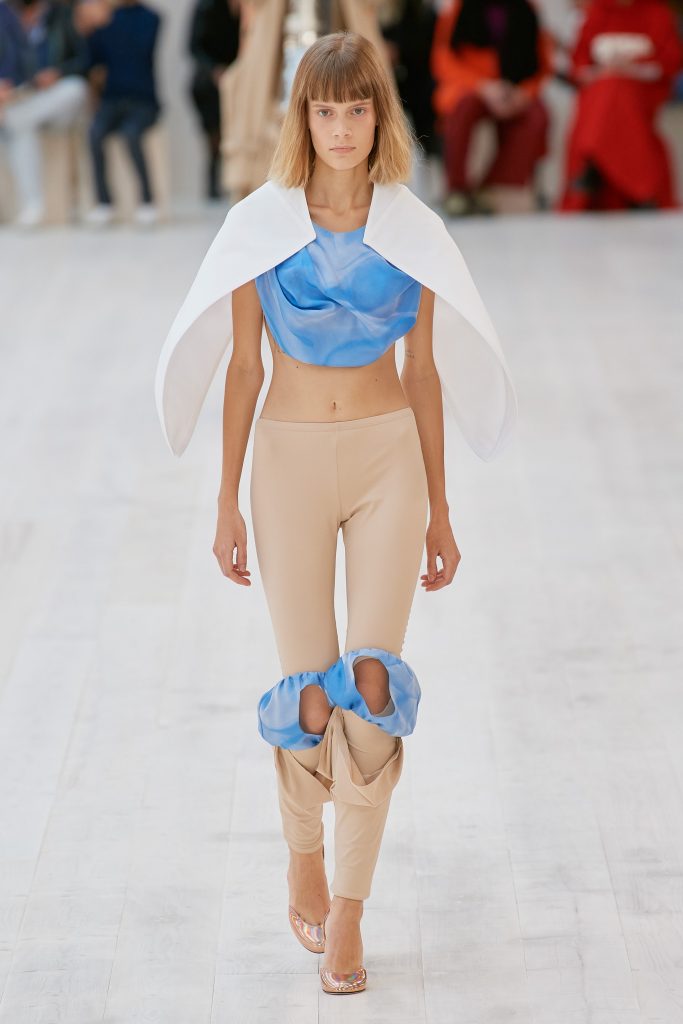


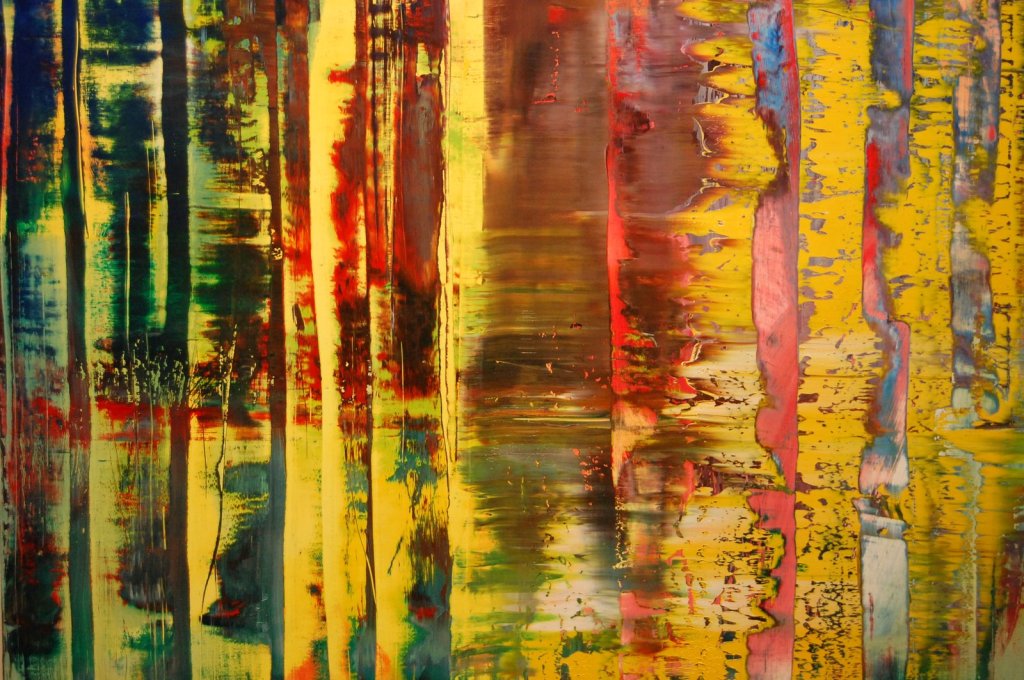
A recurring theme emerging from this collection, therefore, is the willingness to keep challenging the boundaries of fashion and art. Interestingly, by creating sculptural pieces inspired from paintings, Anderson challenges the traditional dichotomy between sculpture and painting on top of fashion. Indeed, one of the accessories that went down the runway is a sculpted torso clutch while some pieces at the end of the show were transparent resin cast chests and torsos. Another layer that can be identified is the staging of the body as a tool of artistic creation, Anderson sculpts bodies through clothes and elevates his craft to the rank of nude Antique sculptures, merging an array of artistic references to create a language of his own.
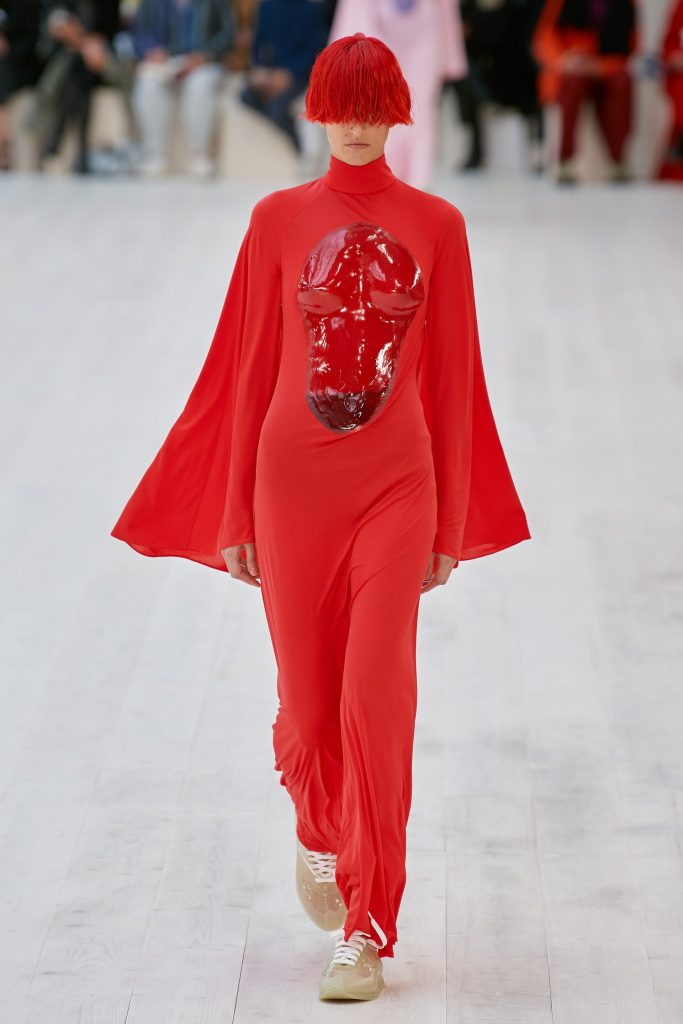
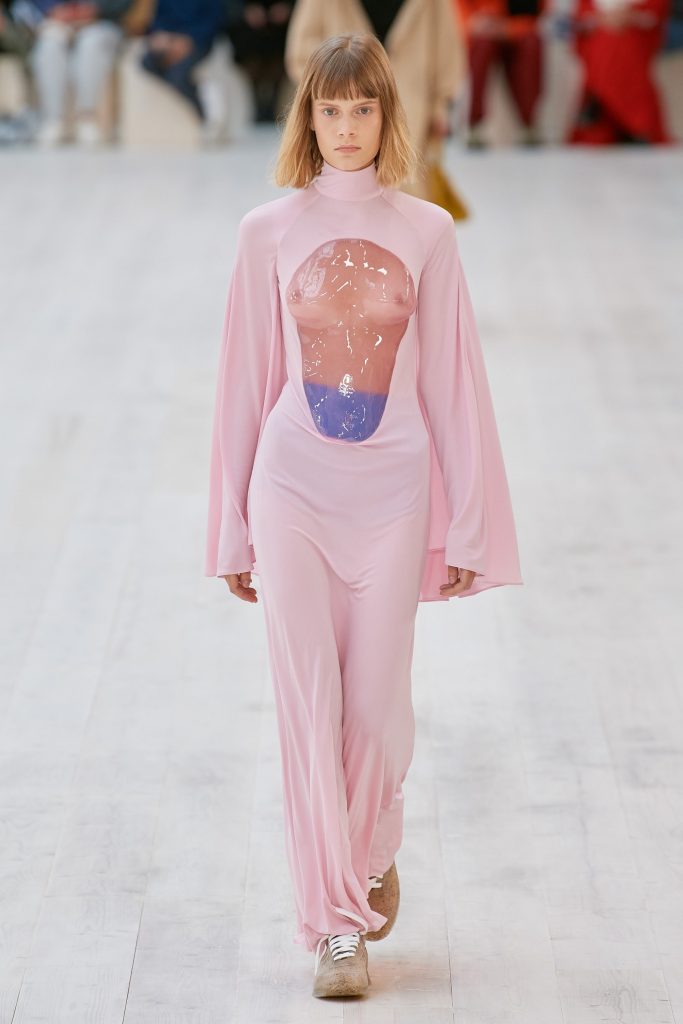


Anderson is probably several steps ahead in understanding the buoying energy that is about to emerge from 2 years of Covid-related restrictions and half empty lives. People will want and already want to party, they want to escape and are starting to grapple with the understanding that nothing is set in stone, and that one should seize the day, everyday. People are resigning, starting businesses and dreaming about things they would not even have considered possible before the pandemic. Anderson is translating all these interdependent feelings into his artistic creations and putting question marks in viewers minds. We are all invited to think outside the box, within the world and mind of the designer but also within our own realities. Fashion is the reflection of a society, of a time and place, and that is why it is constantly evolving, but, as Anderson is showing us, it can also be a potent predictor of the times to come.

 mabou
mabou 
Leave a comment