

When the most iconic American jeweler meets one of the most iconic Afro-American artists couple oversaw by the most iconic Afro-American artist of our time.
On August 24th 2021, Tiffany and Co., the storied American jeweler just acquired by the luxury giant LVMH, unveiled the first part of his new campaign « About Love » featuring the Beyoncé Knowles and Jay-Z. The picture displays the iconic Tiffany yellow diamond which, according to the Tiffany’s website, was worn by three women only (socialite Mrs. E Sheldon Whitehouse, actress Audrey Hepburn and artist Lady Gaga) since its discovery in 1877. It’s one of the largest and finest diamonds in the world and Beyoncé being the fourth woman to wear it is a powerful symbol.
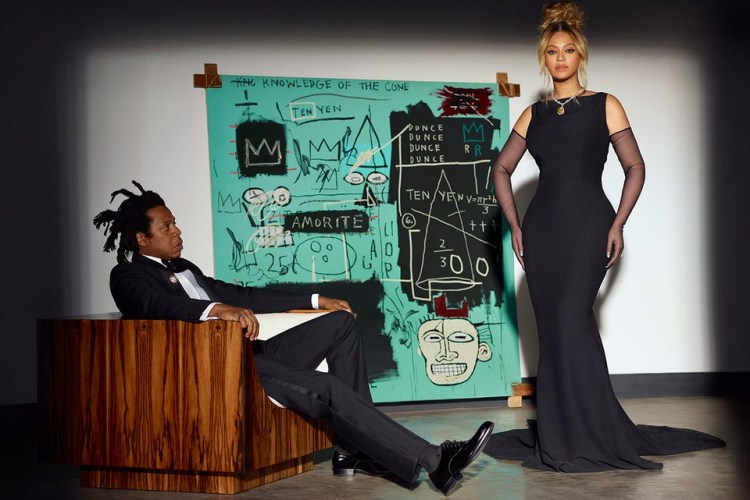
Indeed the campaign is the result of LVMH’s strategic efforts to overturn the slowing growth of the house over the last decades by attracting a younger, more hype audience. Representing the largest acquisition ever in the luxury industry, the Tiffany deal was worth $15.8B and was a rollercoaster for the media and the stock market during the pandemic.2 It eventually closed in January 2021 but the LVMH effect started as soon as rumors of the acquisition started appearing on mainstream media in November 2019.
Indeed, if Tiffany has been particularly successful in Asia and traditionally in America it has struggled to retain relevance, and the promise of an LVMH overturn was well received by investors and consumers alike ignoring the global sales slump of 2020 following the pandemic. Social media impressions, particularly on Instagram have been on the rise and the number of followers has increased since the announcement of the acquisition being on the rise ever since. The newly appointed Executive Vice President Alexandre Alrnault (former CEO of Rimowa) masters the art of overturning a brand by reaching a younger target audience. He works with cultural, artistic, and popular icons which is exactly what the Carters are. This choice testifies to the active effort from LVMH and Tiffany to embody more diversity within an industry that has traditionally catered to a white audience and within a house that has never put the representation of minorities at the center of its business model.
This effort is doubled by the display of the Jean-Michel Basquiat painting in the back of the campaign. Basquiat is a cultural icon and the first African American artist to have risen to fame2. Barely ever displayed in public « Equals Pi » (1982) features the iconic Tiffany blue, one of the jeweler’s most valuable brand asset. If there is no evidence that the painting was a nod to the jeweler, it has an old bond with jewelry as previously belonging to the Sabbadini family.
Plus, the truth is, it contributes greatly to making this campaign one of the most successful of 2021 and of the Tiffany & Co house altogether. The painting is to be displayed in the Tiffany flagship store set to reopen in the coming months, blurring the line between traditional stores and exhibition spaces elevating luxury shopping to the rank of cultural experience. Indeed, the mystical aura enjoyed by art as the greatest and finest form of human craft is transferred to the luxury industry considered the epitome of capitalism and conspicuous consumption. Luxury shops are now temples of culture and luxury products are pieces of art.

As pointed out before, it is not Arnault’s first effort to marry high luxury and art. At Rimowa, he was the driving force behind several collaborations with designers and artists like Alex Israel3 (and Daniel Harsham4 both for Rimowa Tiffany and Co. for that matter) in a effort to create « hype » around limited edition products. This was a key element of his strategy to take Rimowa from an obscure high-quality suitcase maker to a luxury giant and a maker of desirable high fashion products, expanding the offering outside travel products as the pandemic hit. So, indeed, this strategy is not new but it is highly effective, and Arnault is using the same recipe with new caliber references magnifying its effect, and, as time will probably tell, success. In fact, it looks like the market cannot get enough of it and the number of likes on Tiffany’s Instagram went from around 50k in late 2019 to more than 150k now, tripling one of the most important social media metrics while likes spiked significantly following the release of the Carters campaign’s.

Sources:
1. Please refer to the HBS article “LVMH’s Bid for Tiffany and Co” for a detailed explanation of the acquisition process. Subramanian Guhan, Zlatev Julian, Farook Raseem. “LVMH’s bid for Tiffany & Co., Harvard Business School, N9-921-049, 22 March, 2021. Accessed 13 Sept. 2021.
2. For more information about Basquiat: Artnet. Accessed 17 Sept. 2021.
3. For more about Alex Israel: Gagosian. Accessed 17 Sept. 2021.
4. For more about Daniel Arsham: Perrotin. Accessed 17 Sept. 2021.
 mabou
mabou 
Leave a comment